
Explore the legendary Mycenae with My Greece Tours! Immerse yourself in rich history on a Mycenae guided tour. Visit the Mycenae archaeological site and marvel at the iconic Lion Gate. Choose from private or small group Mycenae tours for a personalized experience. Ideal for a Mycenae day trip from Athens or as part of Mycenae and Epidaurus tour. Don’t miss the chance to uncover ancient wonders at Mycenae in Greece. Join us for unforgettable Mycenae excursions in the Peloponnese and step into the heart of history!
Welcome to My Greece Tours, where epic adventures await at the legendary Mycenae, steeped in history and myth. Come join us as we take you on an enriching journey through the Mycenae archaeological site, a place where Homeric tales come to life. Whether you’re embarking on a Mycenae private tour or joining a Mycenae day trip from Athens, you’ll discover ancient wonders like the iconic Lion Gate. Perfect for history enthusiasts and curious travelers, Mycenae tours offer a unique glimpse into the heart of Greece’s illustrious past. Let the stories and ruins captivate your imagination.
Mycenae Tours: Experience Legendary Archaeological Site
Discover the legendary Mycenae, an iconic archaeological site nestled in the Peloponnese, with My Greece Tours. Experience the grandeur of ancient history as you explore the ruins, including the awe-inspiring Lion Gate. Whether opting for a private or small group Mycenae tour, each journey reveals the stories and architectural feats of the Mycenaean civilization. Perfect for history enthusiasts, this unforgettable day trip from Athens offers a deep dive into Greece’s rich past and the myths that shaped it. Join us for an enriching adventure and uncover the secrets of Mycenae, captivating your imagination and appreciation for ancient wonders.
The tours below reach Mycenae from Athens and Nafplio with a licensed guide, most of them adding Epidaurus and Nafplio on the same day.
Highlights
- My Greece Tours offer immersive Mycenae guided tours, including private and small group options, from Athens or as part of a Mycenae and Epidaurus tour.
- The Mycenae archaeological site, with its iconic Lion Gate, allows visitors to explore ancient ruins and the civilization’s significant historical impact.
- Astonishing Mycenae and Epidaurus tours provide insights into ancient culture, featuring Epidaurus’ theatre and Mycenae’s historical significance.
- Private tours of Mycenae ensure personalized experiences, allowing for deeper exploration and understanding of this crucial archaeological site.
- Plan a day trip from Athens to Mycenae and Ancient Corinth, enjoying convenience and enriching historical narratives from expert My Greece Tours guides.
Discover the Rich History of Mycenae
Welcome to a journey through time as we explore the profound history of ancient Mycenae, one of Greece’s most iconic archaeological sites. Known for its impressive ruins, the ancient city of Mycenae offers a glimpse into a world long past, where myths, legends, and reality intertwine. This remarkable archaeological site holds tales of the mighty Mycenaeans, a civilization that thrived in ancient Greece and laid the foundations for future cultures to build upon. As you wander through the remnants of their architectural prowess, you’ll uncover stories carved in stone and feel the echoes of a vibrant past within these legendary ruins. Whether standing before the imposing Lion Gate or exploring the site’s massive walls and tholos tombs, each step unveils more about Mycenae’s rich history and its significance within ancient Greece.
Our Mycenae tours offer an engaging way to connect with the past, providing insights into the daily lives, innovation, and achievements of this influential civilization. You’ll not only hear but also feel the stories of heroes and kings, ancient rituals, and the mythic origins that shaped the cultural landscape of Greece. Join us on this unforgettable journey, and let the ancient city of Mycenae reveal its secrets to you, spark your imagination, and deepen your appreciation for Greece’s incredible archaeological heritage.
The Significance of Mycenae in Ancient Greece
Welcome to the legendary land of Mycenae, where ancient Greece’s rich history unfolds before your eyes. This archaeological site is one of Greece’s gems, offering an unparalleled glimpse into a civilization that thrived long ago. Mycenae, an ancient city pivotal in Greek history, sits majestically amid a rugged landscape, captivating travelers with its enigmatic past and timeless tales. The awe-inspiring Lion Gate, Mycenae’s most iconic structure, serves as a proud testimony to the architectural prowess of the ancient Mycenaeans. As you wander through the ruins, you’ll discover remnants of a society that played a significant role in shaping Greek culture. Mycenae wasn’t just a city; it was a hub of power and influence that left a lasting mark on the annals of history. This archaeological site, filled with remarkable artifacts and relics, offers fascinating insights into the beliefs and daily life of the ancient Greeks. Exploring Mycenae enables you to connect with Greece’s legendary past like never before.
Whether you’re here for a Mycenae tour or a private Mycenae excursion, the tales of kings, heroes, and gods will captivate your imagination. Join us at My Greece Tours, and let’s delve into the extraordinary significance of Mycenae in ancient Greece together. Ready to discover Mycenae’s legendary history?
The Rise and Fall of Mycenaean Civilization
The Mycenaean civilization, a pillar of ancient Greek history, flourished between 1600 and 1100 BCE. As the cornerstone of ancient Mycenae, this civilization set the stage for Greece’s future legacy. Mycenae, with its influential archaeological site, became a symbol of cultural prowess. At its peak, Mycenae’s rulers oversaw a vast network of settlements throughout mainland Greece. These ancient powerhouses were renowned for their fortresses, sophisticated architecture, and invaluable contributions to ancient culture. Yet, even such greatness wasn’t immune to decline. Several theories hint at disasters, including natural calamities and invasions, leading to the civilization’s downfall. Today, the site’s ruins offer a mesmerizing glimpse into their majestic past. The archaeological site stands as a testament to the intricate urban planning and architectural feats that characterized this ancient period. Visitors to Mycenae, especially those embarking on enlightening Mycenae tours, can feel the echoes of a once-thriving mysterious world. As you wander through the remnants of this significant era, the rise and fall of Mycenaean civilization becomes palpable. Walking through Mycenae’s ancient corridors allows us to reflect on the fleeting nature of empires and their everlasting impact on culture.

So, if you’re keen to uncover the mysteries of ancient Mycenae, plan a visit to this legendary destination for an unforgettable journey into the depths of history.
Exploring the Mycenae Archaeological Site
If you’re ready to dive into the heart of ancient Greek civilization, there’s no better place than Mycenae’s revered archaeological site. Nestled beautifully in the northeastern Peloponnese, this site offers a fascinating peek into a bygone era. Whether you’re an avid history buff or just seeking an enriching travel experience, our tours of Mycenae are tailored to uncover the mysteries of this once-mighty city. Picture yourself standing at the foot of the imposing Lion Gate, awed by the colossal stone lions ushering you into tales of heroic sagas and royal dynasties. As you weave through the captivating ruins, let your imagination transport you back to a world ruled by kings and gods. Our interactive tour provides insights into the culture and achievements of the Mycenaean civilization, making history come alive right before your eyes. Don’t forget to stop by the onsite museum, a treasure trove brimming with ancient artifacts that tell tales of Mycenae’s illustrious past.
Exploring the Mycenae archaeological site is truly a journey back in time, where every corner echoing stories of adventure, conquest, and brilliance. Ready to embark on a captivating journey? Join us, and let’s explore the iconic site where ancient myths meet historical marvels, ensuring an unforgettable adventure for all who visit.
Key Highlights of the Mycenae Archaeological Experience
Welcome to the legendary Mycenae, a place where history comes alive and the myths of ancient tales are vividly illustrated! At My Greece Tours, we’re thrilled to offer you an immersive journey through the Mycenae archaeological site where you’ll step back in time to discover the fascinating world of the Mycenaean civilization. Our expertly crafted tours are designed to showcase the key highlights of this renowned archaeological site. From the ancient fortifications to the treasures housed in the museum, every aspect of the Mycenae tours promises an enlightening experience. Immerse yourself in our interactive tour as we guide you through key highlights such as the Cyclopean walls, the awe-inspiring Lion Gate, and the mysterious royal tombs. These fascinating features offer a glimpse into the architectural prowess and cultural richness of the Mycenaean era.
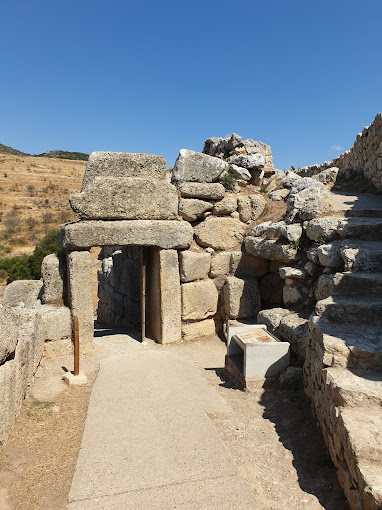
Don’t miss the chance to learn about the legacy of this influential civilization, while exploring one of Greece’s most celebrated landmarks. Our tours are tailored to ensure you gain a comprehensive understanding of the site’s historical significance, with insightful narration that brings the ancient world to life. So come and be captivated by the magic of Mycenae – a place where history, myth, and discovery intertwine.
| Key Sites | Historical Significance | Visitor Experience | Key Artefacts |
| Lion Gate | Main entrance to the citadel | Photo opportunities; Iconic Structure | Mycenaean Sculpture |
| Grave Circle A | Royal tombs and burial shafts | Guided tours available; Rich history | Gold masks, jewelry |
| Palace Complex | Central administrative hub | Impressive ruins; Panoramic views | Staircases, frescoes |
| Tholos Tombs | Beehive-shaped burial sites | Unique architectural designs | Funerary items, pottery |
This table highlights the essential elements of the Mycenae archaeological experience and the iconic Lion Gate.
Uncover the Mysteries of the Mycenae Lion Gate
Welcome to Mycenae, a legendary archaeological site steeped in history and mystique. One of the most captivating features you’ll encounter on your Mycenae tours is the enigmatic Mycenae Lion Gate. This monumental structure stands as a testament to the architectural prowess of ancient Mycenaean civilization. As you approach the Lion Gate, you can’t help but be amazed by the sheer size and precision of this ancient marvel. Towering over the entrance, this gateway is adorned with a stunning relief of two majestic lions, symbols of power and protection.
On your guided tours, you’ll have the opportunity to delve into the mysteries surrounding the Lion Gate. Who built it? What secrets does it hold? As you listen to the expert insights from your Mycenae private tour guide, you’ll uncover fascinating stories and theories, making your visit to the archaeological site truly enriching. The mysteries of Mycenae and its Lion Gate have intrigued historians and archaeological enthusiasts alike for centuries. The tales of its construction and purpose continue to captivate visitors’ imaginations.
Whether you’re taking a small group tour or a private excursion, exploring the profound mysteries of the Mycenae Lion Gate offers a unique glimpse into the ancient world. Every detail of this archaeological wonder invites you to marvel at the ingenuity of a civilization long past. So, get ready to step back in time and uncover the secrets of Mycenae on your unforgettable journey.
Where is Mycenae, and how do you reach it?
Mycenae stands on a hill rising 274 metres above sea level in Argolis, north-east Peloponnese, between Mount Profitis Ilias and Mount Sara. The citadel lies 1 km east of the village of Mykines, 122 km by road from central Athens and 25 km from Nafplio.
Travellers staying on the car-free island of Hydra cross to the mainland first: the Mycenae day trip from Hydra page covers the boat crossing, the road, Epidaurus, Nafplio and the citadel.
Travellers based on the isthmus drive south past Nemea: the Mycenae day trip from Corinth page covers the tours, the road, the monuments and the Corinthian sites that pair with the citadel.
Nafplio is the closest base for the citadel: the Mycenae day trip from Nafplio page covers the tours, the road, the monuments and the tickets.
The hill fills the north-east corner of the Argive plain and commands the easy routes north to the Isthmus of Corinth. Profitis Ilias rises to the north and Sara to the south, and two steep ravines cut the citadel off from both peaks: the Kokoretsa ravine on the north side and the Chavos ravine on the east and south sides. Mykines, called Charvati until 1916, sits 2 km east of the Corinth–Argos highway and 9 km north of Argos, and Corinth lies 48 km to the north. Drivers from Athens reach the site in 90 to 105 minutes without stops, on 3 roads in sequence:
- A8 Athens–Patras motorway: west to the Isthmus and across the Corinth Canal, the 6.4 km cut completed in 1893, on a bridge 45 metres above the water.
- A7 Corinth–Tripoli motorway: 22 km south to exit 4, signposted for Ancient Nemea, Nafplio and Mycenae.
- EO7 Corinth–Argos road: south to Fichti, where the branch road turns east through Mykines to the archaeological site.
From Nafplio, the 25 km drive north across the Argive plain takes 30 to 35 minutes. KTEL Argolida coaches on the Athens–Fichti–Argos–Nafplio line stop at Fichti, 3.5 km from the archaeological site, and the full run to Nafplio takes 2 hours to 2 hours 20 minutes. The Mycenae day trip from Athens covers the citadel in one day, the Mycenae and Epidaurus day trip from Athens adds the theatre of Epidaurus and the old town of Nafplio, and the Peloponnese tours hub compares multi-day routes through Argolis, Arcadia and Messinia.
How were the Cyclopean walls of Mycenae built?
Mycenae’s Cyclopean walls rose in 3 phases between 1350 and 1200 BC from unworked limestone boulders, laid without mortar and wedged with small stones. The walls measure 3 to 7 metres thick, and the largest blocks, at the gates, weigh over 20 tonnes.
The name comes from the Cyclopes, the one-eyed giants of Greek myth: Classical Greeks held that only the Cyclopes had the strength to lift such boulders. Pausanias, who saw the ruins of Mycenae in the 2nd century AD, repeated the tradition that the Cyclopes built these walls and the wall of Tiryns for King Proetus, and Pliny’s Natural History credits Aristotle with the tradition that the Cyclopes invented masonry towers. The builders never cut the boulders into regular blocks: they roughly hammer-dressed only the outer faces and kept cut conglomerate for the gateways. The surviving stretches stand 4 to 10 metres high, and the Cyclopean walls of Mycenae guide walks the full circuit. The 3 building phases ran in this order:
- Around 1350 BC: the first Cyclopean circuit enclosed only the summit and left Grave Circle A outside.
- Around 1250 BC: new west and south walls took in Grave Circle A, the Lion Gate and the North Gate opened, and the fortified area almost doubled.
- Around 1200 BC: a north-east extension added a sally port and the covered passage to the underground cistern.
The Lion Gate, the main entrance on the north-west side, stands on 2 monolithic jambs under a lintel of 4.5 × 2.0 × 0.8 metres. Above the lintel, the courses step inward to leave a relieving triangle, which diverts the weight of the wall onto the jambs and frames the limestone slab carved with 2 lionesses; the Lion Gate of Mycenae page covers the relief. The North Gate, a postern in the north wall, repeats the frame of 2 jambs and a lintel on a smaller scale, with no sculpture.
What were Grave Circles A and B at Mycenae?
Grave Circles A and B are the two royal cemeteries of early Mycenae. Circle B, outside the walls, holds 26 graves dated 1650 to 1550 BC; Circle A, inside the Lion Gate, holds 6 shaft graves of the 16th century BC and the gold masks.
Heinrich Schliemann opened Grave Circle A in 1876, guided by Homer’s Mycenae “abounding in gold” and by Pausanias’s report that Agamemnon lay buried inside the citadel, while the Greek ephor Panagiotis Stamatakis supervised the dig. Schliemann cleared 5 shafts, and Stamatakis found the sixth in 1877. The circle measures 27.5 metres across and held 19 burials: 8 men, 9 women and 2 children, with an estimated 15 kilograms of gold among the grave goods. On 30 November 1876, Grave V yielded the gold face that Schliemann named the Mask of Agamemnon, one of 5 gold masks from Graves IV and V; it predates the Trojan War of legend by 300 to 400 years. The Grave Circle A at Mycenae page describes each shaft.
Grave Circle B lies 117 metres west of the Lion Gate, inside a stone ring 28 metres across. Workmen found it in 1951 during work at the Tomb of Clytemnestra, and Ioannis Papadimitriou and George Mylonas excavated it from 1952 to 1954, labelling its graves with Greek letters against the Roman numerals of Circle A. Of its 26 graves, 14 are shaft graves, and none was looted in antiquity. The Grave Circle B at Mycenae page lists the burials, and the ancient treasures unearthed in Mycenae page follows the gold from the graves to the museum cases:
- Grave Circle A: the gold masks, the Silver Siege Rhyton and bronze daggers inlaid with gold, including a lion-hunt dagger from Grave IV.
- Grave Circle B: an electrum death mask from Grave Gamma and traces of a boar’s tusk helmet from Grave Nu.
- Display: the National Archaeological Museum in Athens shows the Mask of Agamemnon and the Circle A gold; the Archaeological Museum of Mycenae, on the north slope of the citadel, shows further finds.
What did the palace of Mycenae look like, and what is the secret cistern?
The palace of Mycenae crowned the summit, grouped around a Great Court and a megaron with a central hearth ringed by 4 columns. The secret cistern, built around 1200 BC, lies 15 metres underground at the foot of a 99-step corbelled passage.
The palace rose in terraces across the top of the hill, and the ramp from the Lion Gate climbed past Grave Circle A to reach it. Christos Tsountas uncovered the complex, fire gutted it at the close of the Bronze Age, and an Archaic temple to Hera later rose on the summit. East of the palace stand the Workshop of the Artists and Craftsmen and the House of Columns, named for the colonnades around its central court, and Greek restorers consolidated the throne room and its hearth in the early 1950s. The palace of Mycenae page maps each room; the core of the complex runs in this order:
- Grand staircase: a monumental flight from a lower terrace up to the Great Court.
- Great Court: an open courtyard with a columned portico, set directly in front of the megaron.
- Porch and vestibule: the 2 anterooms of the three-room Mycenaean plan.
- Megaron: a near-square throne room of 120 square metres, with a raised circular hearth, 4 roof columns, an opening above the fire, frescoed plaster walls and the throne against the wall beside the hearth.
The secret cistern belongs to the last extension of the walls, on the north-east side of the citadel. A corbelled passage runs through and under the wall and descends in 3 flights, 99 steps in all, to a chamber cut into the rock 15 metres below the surface. Clay pipes fed it from the Perseia spring, on higher ground 500 metres away, which kept water inside the walls during a siege; Pausanias linked the spring to Perseus, the mythical founder of Mycenae, who pulled up a mushroom, mykes in Greek, and found water flowing beneath it. The secret cistern of Mycenae page covers the descent step by step.
What is the Treasury of Atreus at Mycenae?
The Treasury of Atreus, also called the Tomb of Agamemnon, is a tholos tomb built at Mycenae between 1300 and 1250 BC. Its corbelled dome, 14.5 metres wide and 13.2 metres high, remained the widest and tallest dome in the world for over a thousand years.
The tomb lies 500 metres south-southwest of the Lion Gate of Mycenae, beside the modern road to the citadel. No inscription names its occupant, and robbers emptied the chamber in antiquity. The royal names date to the 18th century: Claude-Louis Fourmont called it the Tomb of Atreus after his visit in 1729 and 1730. Lord Elgin crawled in through the relieving triangle in 1802, and fragments of its green marble half-columns now sit in the British Museum. The full guide to the Treasury of Atreus covers the façade, the doorway and the dome.
- Dromos: an open passage 36 metres long and 6 metres wide, walled in conglomerate for the 19 metres nearest the door.
- Façade: 10.5 metres high, framing a doorway 5.4 metres high and 2.7 metres wide.
- Lintel: an inner block 8 metres long and 1.2 metres thick, weighing about 120 tons, the heaviest single stone known from Greek architecture.
- Chamber: 33 courses of cut limestone rising in shrinking rings to the apex.
- Side room: a 6-metre square chamber, a plan shared only with the Treasury of Minyas at Orchomenos.
Builders spent at least 20,000 worker-days on the tomb. Roman engineers broke its record with true domes at Baiae and in the Pantheon, yet the Treasury of Atreus remains the largest corbelled dome on earth. Closer to the Lion Gate, beside Grave Circle B, stands the Tomb of Clytemnestra, built around 1250 BC as the last tholos raised at Mycenae. Its chamber spans 13.4 metres, and fluted gypsum half-columns framed its doorway. The two tombs stand with the Tomb of Aegisthus and the Lion Tomb east of the Panagia ridge, the 4 largest of the 9 tholos tombs at Mycenae.
Who excavated Mycenae, and what did they find?
Heinrich Schliemann opened Grave Circle A at Mycenae in 1876, supervised by Panagiotis Stamatakis for the Archaeological Society of Athens. Christos Tsountas uncovered the palace in 1886, and Alan Wace led British School excavations from 1920, finding the first Linear B tablets in 1952.
Schliemann first dug 34 illegal test trenches in 1874, then returned in 1876 under a permit held by the Archaeological Society. He named a gold funerary mask from Grave V the Mask of Agamemnon, although the mask predates the Trojan War of legend by 300 to 400 years. Stamatakis recorded every burial, halted the removal of stone around the Lion Gate until its stability was checked, and completed the work after Schliemann left Mycenae in December 1876. The account of Heinrich Schliemann at Mycenae follows the shaft graves step by step.
- Panagiotis Stamatakis, 1876 to 1878: Shaft Grave VI, the Acropolis Treasure of gold vessels, jewellery and a signet ring, and a systematic photographic record of the finds.
- Christos Tsountas, 1886 to 1910: the palace and megaron, 103 chamber tombs and 3 previously unknown tholos tombs, including the Tomb of Aegisthus.
- Alan Wace, 1920 to 1955: a 3-phase chronology of the tholos tombs with Winifred Lamb, the ivory trio in 1939 and the first Linear B tablets in 1952.
- George Mylonas, 1957 to 1985: the Greek excavation of the citadel and the Cult Centre, after excavating Grave Circle B with John Papadimitriou.
Stamatakis shipped the finds to Athens, stored them in the basement of the National Bank, then arranged their public display in the Polytechneion, burial by burial; the gold now sits in the National Archaeological Museum. Tsountas rejected Schliemann’s link between the graves and the heroes of Homer, and he dated the tholos tombs after the shaft graves. Restoration work at the Tomb of Clytemnestra exposed Grave Circle B in 1951. Lord William Taylour and Wace’s daughter, Elizabeth French, ran the British excavations until 1969, and Spyros Iakovidis directed the Greek work from 1985. The wider history of Mycenae sets these finds in the story of the citadel.
What does the Archaeological Museum of Mycenae display?
The Archaeological Museum of Mycenae opened in July 2003 just northwest of the citadel. Its 3 halls show pottery, frescoes, clay figurines, Linear B tablets and grave goods from the site, plus a replica of the gold Mask of Agamemnon, whose original stays in Athens.
Construction began in 1984 and paused in 1985 for a rescue excavation, after the foundations of the south wing struck ancient remains. From 1998, staff moved about 35,000 excavated objects into the building and chose 3,000 of them for display. The entrance hall holds a model of the citadel, panels on the Perseid and Atreid dynasties, drawings by travellers from the 16th to the 19th century, and portraits of the excavators, from Schliemann and Tsountas to Wace, Mylonas and Iakovidis. The 3 halls run in a loop that starts and ends in that entrance hall.
- First hall: life on the citadel, with pottery from the end of the Stone Age to the fall of the palaces, finds from the House of Columns and the Artists’ Workshop, stirrup jars, clay cult figures from the Cult Centre and a fresco of women.
- Second hall: the cemeteries, with a painted clay larnax from Vraserka, figurines from Loupano and gold and faience jewellery from Asprochoma.
- Third hall: Geometric, Archaic and Hellenistic grave goods, finds from the Agamemnoneion and the shrine of Enyalios, and evidence for trade, administration, metalwork and seal engraving.
The Linear B tablets on show record palace business in the earliest written Greek. Wace found the first tablets at Mycenae in 1952, the same year Michael Ventris deciphered the script, and the site has yielded 88 Linear B documents in total. The museum door faces south, so visitors who leave the citadel of Mycenae by the North Gate reach it from the east, and visitors arriving from the main site entrance reach it from the west. Plan 40 to 60 minutes for the 3 halls. The Mycenae Archaeological Museum guide covers each class of find in detail.
Which frescoes, pottery and art come from Mycenae?
Excavations at Mycenae yielded the Mycenaean Lady fresco, the Warrior Vase, painted kylikes and stirrup jars, gold masks and cups, and an ivory group of 2 women and a child. The fresco, the vase, the masks and the ivory stand in the National Archaeological Museum in Athens.
The Mycenaean Lady, painted in the 13th century BC, shows a woman with long tresses, a headband, necklaces and wristlets, holding up a necklace in her right hand. Wall paintings of the period also depict hunts, bull leaping, battles and processions, and the Cult Centre produced the largest complete wall painting of the age, with 3 female figures. The guide to Mycenaean frescoes follows each painted fragment from the citadel.
- Pottery: kylikes, stirrup jars, alabastra, kraters and deep bowls in the Pattern style of spirals, chevrons, shells and octopuses, or the Pictorial style of chariots, horses and warriors.
- Warrior Vase: a krater of the 13th or 12th century BC, found by Schliemann on the acropolis, with a file of soldiers in helmets and greaves carrying spears and shields.
- Metalwork: the Mask of Agamemnon, the gold Nestor’s Cup, the Silver Siege Rhyton and a bull’s-head rhyton from the grave circles.
- Ivory: the ivory trio of 2 women and a child, 7.8 centimetres high, dated to the 15th and 14th centuries BC and found by Wace in 1939 near the megaron.
- Figurines: clay Phi, Psi and Tau figures, named after the Greek letters their arm positions resemble.
Pictorial pots originated in the Peloponnese, yet the majority has been found on Cyprus. Mycenaean pottery reached Tell el-Amarna and Saqqara in Egypt, Byblos in Lebanon, Troy and Miletus in Anatolia, and Lipari and Sicily in the west, so archaeologists date sites across the Mediterranean by its phases, from LH I to LH IIIC. The Mycenaean pottery guide lists the shapes and trade routes, and the Mycenaean art overview covers the gold, the ivory and the carved gems.
How did Mycenae and the other palace states run their kingdoms?
Mycenae, Pylos, Tiryns, Thebes and, after c. 1450 BC, Knossos were the leading palace states of Late Bronze Age Greece (c. 1600–1100 BC). A king called the wanax ruled each one, the lawagetas served as second-in-command, and scribes kept the accounts in Linear B.
Each palace divided its territory into provinces and smaller districts called damoi, and ran a palace economy without coinage that collected, stored and redistributed goods and labour. The clay tablets record the detail: Knossos counted 80,000–100,000 sheep grazing in central Crete, Pylos assigned every worker to one stage of textile production, and the palaces kept direct control of perfumed oil and bronze. Mycenae governed a territory estimated at two to three times the size of any rival kingdom. Linear B, adapted from Minoan Linear A, is the earliest written form of Greek: the English architect Michael Ventris deciphered it in 1952, building on the work of Alice Kober, and John Chadwick, who heard his BBC radio talk of 1 July 1952, became his co-author. The overview of the Mycenaean civilization follows its kingdoms, trade and collapse. The tablets name the officials and groups of every kingdom:
- Wanax: the king, written wa-na-ka, who presided over religious feasts, offerings and the distribution of goods, craftsmen and troops.
- Lawagetas: “the leader of the people”, ranked second-in-command beneath the wanax.
- Eqeta: the “followers”, a military aristocracy headed by the wanax and the lawagetas.
- Basileus: written qa-si-re-u, a local chief or court official, the title that later Greeks gave their kings.
- Damos: written da-mo, the people, who paid taxes and performed duties for the palace.
The Palace of Nestor, seat of the Pylos kingdom and source of its Linear B archive, stands on the route of the Pylos tours in Messinia.
The Minoans of Crete offer the sharpest contrast. They wrote Linear A, a script still undeciphered, and built palaces at Knossos, Phaistos and Malia, where Arthur Evans found little evidence of Minoan fortification; the mainland kings, by contrast, ringed Mycenae and Tiryns with Cyclopean walls from c. 1400 BC. Mainland builders simplified Cretan models but worked on a more monumental scale, and from c. 1450 BC a Greek-speaking elite ruled Knossos itself, adding a throne room to the old palace. The Minoan vs Mycenaean comparison sets their art, writing and burials side by side.
What gods did the people of Mycenae worship?
The people of Mycenae worshipped gods that later Greeks kept: Linear B tablets name Poseidon, Zeus, Hera, Hermes, Athena, Artemis and Dionysus, beside Potnia, “the Lady”. Poseidon, the chief god at Pylos, occurs more frequently on the tablets than Zeus, and shrines received animal sacrifice and votive offerings.
- Poseidon: po-se-da-o, worshipped with the title e-ne-si-da-o-ne, “Earth-shaker”.
- Zeus and Hera: di-we and e-ra, named with Drimios, a son of Zeus, on a Pylos tablet recording offerings.
- Potnia: po-ti-ni-ja, “Lady” or “Mistress”, a title joined to Athena at Knossos and to si-to po-ti-ni-ja, an agricultural goddess, at Pylos.
- Hermes: e-ma-a2, recorded on tablets from Pylos, Thebes and Knossos.
- Dionysus: di-wo-nu-so, a name read as “son of Zeus”.
Mycenae holds the only monumental cult complex found at any palace centre, a 13th-century BC group of shrines on the lower west slope of the citadel. Lord William Taylour and George Mylonas excavated it, and Mylonas gave the Cult Centre its name. In its temple, the Room of the Idols held a scarab of Queen Tiye of Egypt, wife of Amenhotep III, placed beside a cult statue. The largest complete wall painting of the age, three female figures read as goddesses, comes from the same complex. The “Lady of Mycenae”, a fresco of a woman holding a necklace, 53 by 70 centimetres, was recovered cracked but complete from the House of the High Priest on the citadel.
Beyond the citadel, worship centred on small shrines at Asine, Berbati, Malthi and Pylos and on sacred enclosures near Mycenae, Delphi and Amyclae. Priests and priestesses served named shrines, and phi- and psi-figurines found across Late Bronze Age Greece reflect one shared religion. Animal sacrifice and votive offerings passed into later Greek cult, and in the Archaic period a temple of Hera rose on the summit of the citadel. The page on the religion of Mycenae covers its priests, rites and offerings in depth.
What are the myths of Mycenae and the House of Atreus?
In myth, Perseus founded Mycenae and his Perseid line gave the city four kings, ending with Eurystheus. The Pelopid Atreus then took the throne, and his feud with his brother Thyestes carried a family curse down to Agamemnon, Clytemnestra and Orestes, the story of Aeschylus’ Oresteia.
According to Pausanias, Perseus, son of Zeus and Danaë, named the city after the cap (mykēs) of his sword’s scabbard or after a mushroom he picked on the site. His sons Electryon and Sthenelus ruled second and third, and Eurystheus, the fourth and last Perseid, died with all his sons in war against the Heracleidae. The people of Mycenae then crowned Atreus, maternal uncle of Eurystheus, and the throne passed to his line, the Atreids. The curse of the House of Atreus runs from Tantalus and Pelops to its final judgment, and the main figures of the cycle are:
- Atreus and Thyestes: sons of Pelops who fought for the throne; Aerope, wife of Atreus, passed a golden lamb to Thyestes, and Atreus took revenge by serving Thyestes his own sons at a feast.
- Agamemnon and Menelaus: the sons of Atreus, married to the sisters Clytemnestra and Helen; Agamemnon inherited Mycenae and Menelaus became king of Sparta.
- Clytemnestra and Aegisthus: the queen and her lover, a son of Thyestes, who ruled Mycenae after the murder of Agamemnon.
- Orestes and Electra: the children of Agamemnon, who returned to kill Clytemnestra and Aegisthus.
In the tragedians’ version, Agamemnon came home from Troy with Cassandra, daughter of Priam, and Clytemnestra killed him in his bath, caught in a net, in revenge for the sacrifice of their daughter Iphigenia at Aulis. The story of Agamemnon and the life of Clytemnestra follow each figure in full. Aeschylus staged the cycle as the Oresteia, the only surviving ancient Greek trilogy: Agamemnon, The Libation Bearers and The Eumenides won first prize at the Dionysia in 458 BC. The last play closes on the Areopagus in Athens, where a jury of 12 Athenian citizens splits evenly and the deciding vote of Athena frees Orestes.
How is Mycenae linked to the Trojan War?
According to Homer, Agamemnon, king of Mycenae, led the Achaean army against Troy. Homer calls his city “wide-streeted” and “rich in gold”, and the Catalogue of Ships in the Iliad gives the Mycenae contingent 100 ships, the largest in a fleet of 1,186.
In the Iliad, Agamemnon holds the supreme command in the final year of a ten-year war fought to win back Helen, wife of his brother Menelaus, and his quarrel with Achilles over the captive Briseis drives the plot. Hittite records of c. 1400 BC name Attarsiya, a warlord of Ahhiyawa, which scholars accept as the Hittite name for the Achaeans, and his name has been compared with Atreus. Heinrich Schliemann, convinced that Homer’s stories rested on historical truth, turned from Troy to dig at Mycenae in 1876. The Catalogue of Ships in Book 2 lists 29 contingents under 46 captains, and the entry for Mycenae reads:
- Leader: Agamemnon, king of Mycenae and supreme commander of the Achaeans.
- Ships: 100, against 90 for Nestor of Pylos and 60 for Menelaus of Sparta.
- Towns: Mycenae, Corinth, Cleonae, Orneae, Araethyrea, Sicyon, Hyperesia, Gonoessa, Pellene, Aegium and Helice.
- Lines: Iliad 2.569–580, directly before the Lacedaemonian entry.
Troy itself is the mound of Hisarlik near Çanakkale in Turkey, excavated by Frank Calvert and Heinrich Schliemann from 1871 and listed by UNESCO in 1998. Hittite texts call the city Wilusa and treat it as a vassal of their empire. Wilhelm Dörpfeld matched Homeric Troy to Troy VI, destroyed c. 1300 BC, while Troy VIIa, burned around 1180 BC with signs of enemy attack, is the other leading candidate, and Manfred Korfmann’s excavations of 1988–2005 added bronze arrowheads and fire-damaged human remains from layers of the early 12th century BC. The page on the Trojan War and Mycenae weighs the legend against the excavated evidence.
What is Tiryns, the sister citadel of Mycenae?
Tiryns is the Bronze Age citadel 20 km south of Mycenae by road and 5 km north of Nafplio. UNESCO inscribed both sites in 1999 as the Archaeological Sites of Mycenae and Tiryns, for their architecture and their place at the centre of Mycenaean civilization.
The walls made Tiryns famous. Homer called the town “mighty walled Tiryns”, and later Greeks credited the Cyclopes with the work, because they judged no human crew strong enough to lift the blocks. Pausanias, who saw the ruins in the 2nd century AD, wrote that 2 mules pulling together failed to shift even the smaller stones. The ramparts run 6 m thick and widen to 17 m where corbelled galleries pass through them, long passages under a triangular roof of inward-leaning stones. The surviving walls reach 7 m in places against an original 9 to 10 m, and in the second building phase the main gate took the form of the Lion Gate of Mycenae. Three springs supplied the citadel, 2 of them reached through tunnels in the north wall, so the garrison kept its water during a siege.
A ramp climbs from the east side to the palace, whose megaron held a throne against the right wall and a round hearth framed by 4 wooden columns, the plan of the throne hall at Mycenae. The citadel peaked between 1400 and 1200 BC; around 1300 BC, 10,000 people lived in the fortress and its lower town, and the count rose to 15,000 by 1150 BC, even after the palace fell around 1200 BC. Greek myth made Tiryns the home of Heracles during the Twelve Labours that King Eurystheus of Tiryns imposed on him. Heinrich Schliemann dug here for 5 months in 1884, Wilhelm Dörpfeld of the German Archaeological Institute then dated the ruins correctly, and in 1915 Apostolos Arvanitopoulos uncovered the Tiryns Treasure, a cauldron of gold and silver objects with a 15th-century BC Minoan signet ring. Our guide to the Tiryns citadel walks the galleries, the ramp and the megaron in order.
What can you see in Argos, the ancient rival of Mycenae?
Argos, 11 km south of Mycenae, is one of the oldest continuously inhabited cities in the world, settled for 7,000 years. Its sights are a 3rd-century BC theatre for 20,000 spectators, the Larissa castle, the Archaeological Museum and the Heraion sanctuary toward Mycenae.
Argos claimed the heroic past of the plain. Its legend made Perseus, founder of Mycenae, the grandson of King Acrisius of Argos, and under King Pheidon in the 7th century BC Argos ruled the cities of the Argolid and seized control of the Olympic Games from Elis. The rivalry closed in 468 BC, when Argive troops destroyed Mycenae and Tiryns and, according to Pausanias, moved their people to Argos. The theatre, cut into the slope of the Larissa hill, stood beside the agora, where a bouleuterion rose in 460 BC after Argos adopted democracy; in 1829 Ioannis Kapodistrias used it for the Fourth National Assembly of the new Greek state.
- Ancient theatre: 20,000 seats of the 3rd century BC, joined by a paved path to the Criterion, the ancient court of Argos.
- Larissa castle: a 12th-century Byzantine fortress on the 289 m summit, later held by the Franks, the Venetians and the Ottomans.
- Archaeological Museum: the Kallergis mansion on Saint Peter’s square, with the Lerna Room and Roman mosaics of Dionysos and the seasons.
- Heraion of Argos: the sanctuary of Hera, founded in the 8th century BC, 5 km from Mycenae, with a temple built between 420 and 410 BC.
In the Iliad, Hera names Argos, Sparta and “Mycenae of the broad streets” as the 3 towns she loves best, and her Heraion stands on the hills between the 2 rival cities, where the old temple burned in 423 BC. The museum spans finds from around 2000 BC to 600 AD, including a Roman copy of the Heracles by Lysippus and a clay figurine from Lerna, one of the oldest sculpted human figures in Europe. Our Argos travel guide adds the agora, the Roman baths and the Aspida hill with its Mycenaean chamber tombs.
What is Nemea, north of Mycenae, and why is its wine famous?
Nemea is the sanctuary of Zeus 18 km north of Mycenae by road, host of the Nemean Games from 573 BC. Its wine is famous because PDO Nemea reds come from 100% Agiorgitiko, the “Blood of Hercules” grape, grown on slopes up to 900 m.
Tours of Ancient Nemea led by an archaeologist, wine tours to the Nemea estates and private days from Nafplio or Athens are compared on the Nemea guided tour page.
The Temple of Zeus, built around 330 BC, carried 32 limestone Doric columns; 3 never fell, and restorers have raised 6 more since 2002, so 9 stand today. Athletes reached the Hellenistic stadium through a 36 m barrel-vaulted tunnel, the earliest known ancient Greek vault, where the name Telestas, an Olympic victor, is still scratched into the wall. The stone starting line keeps its toe grooves and the holes for a hysplex, the starting gate that gave runners an even start. The Nemean Games ran every 2 years in honour of Zeus as one of the 4 Panhellenic festivals, with Olympia, Delphi and Isthmia, and each victor won a crown of wild celery. Since 1996, runners in tunics have raced barefoot on the ancient track every 4 years.
Myth binds Nemea to the citadels of the Argolid. King Eurystheus of Tiryns sent Heracles here for his first labour: the hero strangled the Nemean lion, whose golden fur stopped his arrows, and skinned it with its own claw. Local legend says he drank Nemean wine after the fight, which is why Agiorgitiko, literally “Saint George’s grape”, carries the nickname Blood of Hercules. A second myth credits the Seven against Thebes with founding the games as funeral rites for the infant Opheltes, which explains the black robes of the judges. The site museum, built by the University of California and handed to Greece in 1984, displays jewellery from the Mycenaean cemetery at Aidonia. Walk the ruins with our Ancient Nemea site guide, learn the grape and its cellars in the Nemea wine guide, or reach the vineyards from the capital on a Nemea wine day trip from Athens.
How do you plan two or three days in the Argolid around Mycenae?
Base yourself in Nafplio, 26 km from Mycenae by road. Day 1 links Tiryns, Argos and Mycenae in a loop under 60 km; day 2 drives 140 km to Nemea, the Corinth Canal and back; day 3 covers Nafplio itself, from Palamidi to the Bourtzi.
Entry e-tickets, audio-guide tickets and tours with tickets included are set out on our Mycenae tickets page, with free and reduced entry and where to buy.
Nafplio, the capital of Argolis today, served as the first capital of modern Greece until 1834, and Ioannis Kapodistrias, the first head of the new state, was assassinated on the steps of its church of Saint Spyridon in 1831. The Venetians built the Palamidi fortress between 1711 and 1714 on a 216 m hill, with 8 bastions, 6 of them later renamed after ancient Greek leaders such as Leonidas and Miltiades. The Bourtzi, begun by the Venetians in 1471, guards the harbour from its islet and ran as a 12-room hotel from the 1930s. Our Nafplio travel guide covers the fortresses, the old town and the beaches.
- Day 1, Mycenaean loop: Nafplio to Tiryns 5 km, Tiryns to Argos 10 km, Argos to Mycenae 15 km, and Mycenae back to Nafplio 26 km.
- Day 2, Corinthia loop: Nafplio to Nemea 39 km, Nemea to the Corinth Canal 35 km, and the canal back to Nafplio 66 km.
- Day 3, Nafplio: the Palamidi fortress in the morning, the old town at midday, and a boat to the Bourtzi in the evening.
The Corinth Canal, completed in 1893, cuts 6,343 m through the Isthmus at sea level and measures 24.6 m across at the waterline, and our Corinth Canal day trip from Athens covers the bridges, the boat transits and the diolkos. Ancient Corinth sits beside the day 2 route, with 7 standing Doric columns of its mid-6th-century BC Temple of Apollo, as our Ancient Corinth guide shows. Two days cover the Mycenaean sites and Corinthia by car, and the third day in Nafplio needs no car.
What are the opening hours and tickets for Mycenae?
Mycenae opens at 08:00 from April to October and at 08:30 from November to March, closing between 15:30 and 20:00 by season. One joint ticket covers the citadel, the Archaeological Museum of Mycenae and the Treasury of Atreus.
The Greek Ministry of Culture sets the Mycenae timetable in half-month steps, and the museum keeps the same hours as the citadel. The last admission falls 20 minutes before closing, so a 20:00 close means entry by 19:40. Summer gives the longest window, 12 hours from 08:00 to 20:00, while winter shuts the gates at 15:30, so arrive by 13:00 to walk the full route.
- 1 November to 31 March: 08:30 to 15:30.
- April: 08:00 to 19:00.
- Late spring to 31 August: 08:00 to 20:00.
- 1 to 15 September: 08:00 to 19:30.
- 16 to 30 September: 08:00 to 19:00.
- 1 to 15 October: 08:00 to 18:30.
- 16 to 31 October: 08:00 to 18:00.
Buy the ticket at the Mycenae ticket office by the entrance or on the official Hellenic Heritage e-ticket platform, and keep it for the Treasury of Atreus, which stands outside the citadel walls. Admission to Mycenae is free for every visitor on 6 March, 18 April, International Museums Day, the last weekend of September, 28 October, and the first and third Sundays from 1 November to 31 March. Visitors under 25 from EU member states and under 18 from other countries enter free with a passport or ID card. The site closes on 1 January, 25 March, Greek Labour Day, Orthodox Easter Sunday, 25 December and 26 December, and opens 12:00 to 17:00 on Good Friday and 08:30 to 15:30 on Holy Saturday. Our how to visit Mycenae page covers the journey from Athens and Nafplio.
How long do you need at Mycenae, and which route do you walk?
Plan 2.5 hours at Mycenae: 90 minutes on the citadel, 40 minutes in the museum and 20 minutes at the Treasury of Atreus. The route climbs from the Lion Gate to the palace, drops to the North Gate and ends at the museum and the tomb.
Park beside the entrance, pass the ticket office and follow the path uphill to the Lion Gate, the north-west entrance of the Mycenae citadel. From there the loop runs through 8 stops in this order:
- Lion Gate: the monumental entrance in the Cyclopean wall, crowned by the lion relief.
- Grave Circle A: the royal burial enclosure just inside the walls, south of the gate.
- The ramp: the broad ascent that begins at the Lion Gate and climbs to the palace terraces.
- Palace and megaron: the summit complex, with a large courtyard and a 3-part hall of porch, vestibule and throne room.
- North-east extension: the walled annex added around 1200 BC to bring the underground water supply inside the defences.
- Cistern entrance: the mouth of a corbelled stairway that drops to a cistern 18 m below.
- North Gate: the second gate of the citadel, a smaller version of the Lion Gate, west of the cistern.
- Museum: the Archaeological Museum of Mycenae beside the entrance, on the way back to the car park.
Finish your Mycenae visit at the Treasury of Atreus, the tholos tomb on the west side of the modern road, 500 m south-southwest of the Lion Gate. Walk down the road or drive to its entrance, and show the same ticket. With 90 minutes only, keep to the Lion Gate, Grave Circle A, the palace and the North Gate, then drive to the tomb and skip the museum. In summer, walk the citadel first while the air is cool and treat the museum as the indoor break before the tomb. Add 30 minutes for Grave Circle B and the Tomb of Clytemnestra, which stand outside the walls west of the Lion Gate.
Is Mycenae suitable for children and visitors with limited mobility?
Mycenae suits children who walk 2 hours on rough ground, but the citadel is not wheelchair accessible: the ramp to the palace climbs over uneven stone, the cistern stairway is dark and steep, and shade is scarce. The museum offers accessible parking and toilets.
The Mycenae citadel crowns a hill 274 m above sea level, and every monument past the Lion Gate involves a climb on uneven stone and loose gravel. The approach from the ticket office to the gate is itself a steady uphill path. The cistern passage in the north-east corner descends by 99 steps under a corbelled roof, without light, and it suits no one with unsteady footing. Walking poles and shoes with grip make the ramp safer, and a slow pace with water stops suits the summit.
- Museum: the one indoor stop, with accessible parking and an accessible WC listed by the Ministry of Culture.
- Lion Gate and ramp: an uphill approach on uneven stone, where walking poles help.
- Palace summit: the highest point, reached by stepped paths with no shade.
- Cistern passage: unlit and slippery, so keep children and unsteady walkers at the entrance.
- Treasury of Atreus: the gentlest approach at Mycenae, a straight dromos 36 m long.
- Free entry: visitors with disabilities, plus one escort in cases of 67% disability.
For families, Mycenae works at the 08:00 opening or in the last 3 hours before closing. Pack 1 litre of water per person, sun hats and closed shoes, and turn the walk into a hunt: spot the 2 carved lions over the gate, count the 6 shaft graves of Grave Circle A, then stand under the 13.2 m vault of the Treasury of Atreus. Leave pushchairs in the car, because steps and loose stone block wheels on the ramp, and carry toddlers in a baby carrier instead. The museum gives children an indoor break between the citadel and the tomb, and every child under 18 enters Mycenae free.
When is the best time of day and year to visit Mycenae?
Visit Mycenae in April, late September or October, and enter at opening or in the last 3 hours before closing. July and August average highs above 33°C at nearby Argos, and day-trip coaches from Athens fill the Lion Gate from late morning to early afternoon.
The Mycenae citadel stands on a low plateau that dominates the Argive plain, between the peaks of Profitis Ilias at 805 m and Sara at 660 m. From the palace terrace, early-morning and late-afternoon light picks out the plain and its ridges in relief, while the noon sun flattens them in glare. Heat decides the rest, as the monthly means from the Argos station, 11 km south, show:
- April: mean daily high of 21.3°C, under the 08:00 to 19:00 timetable.
- June: mean daily high of 31.4°C.
- July: mean daily high of 34.0°C, the hottest month.
- August: mean daily high of 33.7°C.
- September: mean daily high of 29.7°C.
- October: mean daily high of 24.7°C, with closing at 18:30 or 18:00.
Day-trip coaches from Athens need 2 hours for the 120 km to Mycenae, so the Lion Gate is quietest at the 08:00 opening and again in the late afternoon, when the 20:00 summer closing leaves a 3-hour evening window from 17:00. In July and August, finish the citadel by 11:00 and spend the midday heat inside the museum. Spring and autumn also carry free-admission dates: International Monuments Day on 18 April and the European Heritage Days on the last weekend of September. Winter trades shorter hours, 08:30 to 15:30, for cool air and free entry on the first and third Sundays. A night in Nafplio, half an hour’s drive away, puts you at the Lion Gate for the 08:00 opening.
Guided Mycenae and Epidaurus Tour
Embark on an unforgettable journey through time with our Guided Mycenae and Epidaurus Tour, a must-do experience for history enthusiasts and culture seekers alike. These famed destinations in the Peloponnese offer a remarkable glimpse into ancient times. Our expert guide will lead you through Mycenae, a pivotal center of Greek civilization and home to the magnificent archaeological site that includes the iconic Lion Gate. As we explore ancient Mycenae, you’ll uncover the myths and legends that once echoed through its mighty walls. Meanwhile, Epidaurus, celebrated for its well-preserved theatre, stands as a testament to the artistic mastery of the ancient Greeks. This tour offers the perfect fusion of storytelling and discovery as we traverse the pathways of these extraordinary archaeological sites and admire the wonders that await. You’ll have the opportunity to wander through ancient structures and visit the museum, which houses priceless artifacts unearthed from these regions.
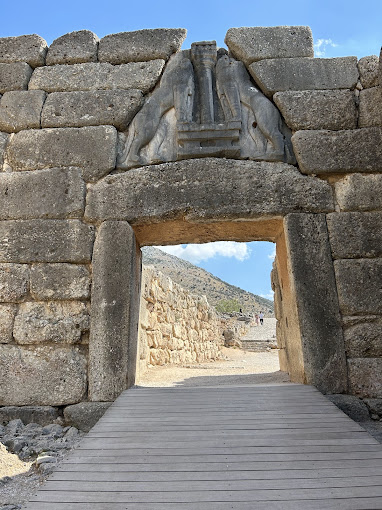
Our tours of Mycenae and Epidaurus ensure an intimate, educational, and engaging experience as you witness the splendor of these historic locales. Dive into the heart of ancient Greece and let the past come alive with our unparalleled guided tour, making memories that will last a lifetime.
What to Expect on the Mycenae and Epidaurus Tour
Embark on an incredible journey through time with the Mycenae and Epidaurus Tours, immersing yourself in the heart of ancient history. As you explore, expect a balanced fusion of educational and awe-inspiring moments that’ll leave you craving more. Begin your adventure at the legendary Mycenae, where the ancient ruins whisper secrets of a bygone era. Our guided tours provide fascinating insights into this remarkable archaeological site, where myths and facts intertwine, enriching your understanding of Mycenae’s historical significance. Next, marvel at the grandeur of the Epidaurus, renowned for its mesmerizing acoustics.
With our expert audio guide, every detail of this ancient theater comes alive, capturing your imagination and transporting you to ancient Greece. The well-preserved structures and captivating stories will make your tour unforgettable. Don’t miss the chance to explore the on-site museum, offering a glimpse into the life and art of the era. Our carefully curated Mycenae and Epidaurus Tours promise not only to enlighten but also to enchant every visitor. Whether you’re an avid history enthusiast or a curious traveler, this tour offers something for everyone. Join us as we uncover the layers of history and mystery embedded in these legendary sites, leaving you with memories for a lifetime.
Planning Your Perfect Mycenae Private Tour
Are you ready to experience the legendary allure of the Mycenae archaeological site? Planning a private tour to Mycenae is the perfect way to delve deeper into the ancient mysteries of this historic city. Imagine exploring the famous ruins, where every stone whispers stories of the past, with the guidance of an expert to enrich your journey. When embarking on tours to Mycenae, the key is to find a personalized experience that matches your interests and pace. With My Greece Tours, you can tailor your visit to include engaging narratives about Mycenae’s fascinating history and the rise and fall of its civilization. Our guided tours offer you the flexibility and in-depth knowledge that reveal the hidden wonders of this ancient site. As you walk through the iconic Lion Gate and explore the regal tombs and storied walls, you’ll feel as if you’re stepping back in time. Whether you’re coming from Athens or already staying in the beautiful Peloponnese, our customized tours ensure a seamless experience. Plan ahead, consider your preferences, and enjoy a captivating journey through Mycenae. Let us guide you to discover the magic and history of this captivating city, making your visit to the Mycenae archaeological site an unforgettable adventure.
Private cars and minivans with a licensed guide, from Athens, Nafplio or Corinth, with Epidaurus, Nafplio or the Corinth Canal added, are compared on the Mycenae private tour page.
Benefits of Choosing a Mycenae Private Tour
When you choose a Mycenae private tour, you’re embarking on a journey tailored just for you. One of the greatest benefits of a guided tour is the opportunity to explore Mycenae at your own pace without the rush of large groups. Imagine having the freedom to linger over the intricate details of the ancient Lion Gate, soaking in its rich history. Private tours Mycenae offer an exclusive experience that ensures your interests and curiosity are prioritized. Your guide’s personal attention allows for a deeper connection to Mycenae’s remarkable past, creating an enriching learning experience. Exploring Mycenae with a dedicated guide means you’ll have all your questions answered and can dive into the fascinating world of the Mycenae archaeological site with ease. Whether it’s the powerful architecture or the treasures housed in the museum, every aspect of Mycenae comes to life during a private tour. You’ll find the personalized recommendations invaluable, enriching your understanding of the birthplace of Mycenaean civilization.
Moreover, an exclusive Mycenae tour provides the luxury of an uncrowded atmosphere, making your visit all the more enjoyable. Incorporating a Mycenae private tour into your itinerary ensures a memorable journey into the heart of ancient Greece, filled with unique insights and unforgettable moments.
A Day Trip from Athens to Mycenae and Ancient Corinth
Embark on an unforgettable day trip from Athens that promises a journey through time as you visit the gateway to Greece’s illustrious past. Our expertly curated tours take you on an enriching exploration of the ancient ruins and legendary tales that make up the heart of the Mycenae and Ancient Corinth archaeological sites. As you depart from Athens, the scenic drive through the magnificent countryside sets the stage for a day filled with awe-inspiring discoveries. Your first stop is Mycenae, where you’ll wander among the remnants of the once-powerful ancient city. Here, the Lion Gate and storied ruins await, offering insights into the architectural prowess of Mycenae. You’ll delight in the admissions ticket to these historical treasures, ensuring a seamless experience. After exploring Mycenae, the journey continues to Ancient Corinth, a site that played a crucial role in Greek history. With its ancient temples and beautifully preserved ruins, Ancient Corinth offers a unique glimpse into the rituals and everyday life of its past inhabitants. Our tours provide the perfect blend of guided expertise and free time, allowing you to immerse yourself fully in the tales and tunes of this historic landscape. Join us for this enriching day trip, a perfect way to experience the wonders of Mycenae and Ancient Corinth from the comfort of Athens.
Tips for a Memorable Visit
If you’re dreaming of a journey through time, visiting the legendary archaeological site of Mycenae is an experience you won’t want to miss. To ensure your visit is unforgettable, consider these handy tips. First, it’s a great idea to book one of the exciting Mycenae tours. Whether you choose a small group or a private option, these tours will allow you to delve deeper into the fascinating history, making your visit truly memorable. The ancient ruins are vast, so wear comfortable shoes, and don’t forget your camera to capture every moment of the ancients. Hydration is key; bring a water bottle, especially if you’re exploring under the Greek sun. If you’re coming from Athens, there’s a convenient Mycenae day trip available, which can be paired with a guided tour to enhance your experience. This ensures you’ll have plenty of time to savor each marvel at the site. While there, keep an eye out for favorite highlights like the imposing Lion Gate and the majestic tombs. These iconic features are among the must-sees. By following these tips, your visit to Mycenae will not only be enlightening but truly memorable, leaving you with a deeper appreciation for the wonders of this ancient civilization.To further elevate your experience at Mycenae, consider incorporating these additional activities into your itinerary:
- Explore the Treasury of Atreus, an impressive beehive-shaped tomb dating back to the 14th century BCE.
- Walk through the Lion Gate, the iconic entrance adorned with two lionesses, symbolizing regal power.
- Visit the Archaeological Museum of Mycenae to marvel at ancient artifacts and frescoes.
- Take a guided tour to uncover stories and legends of Agamemnon and the Mycenaean civilization.
- Enjoy panoramic views from the Acropolis of Mycenae, offering breathtaking landscapes of the surrounding countryside.
- Wander through the newly restored Tomb of Clytemnestra for a glimpse into royal burial practices.
- Engage in a workshop on ancient pottery techniques to connect with Mycenaean craftsmanship.
- Delight in tasting local wines and foods inspired by ancient Mycenaean recipes nearby.These activities will immerse you in the rich historical tapestry of Mycenae, making your visit truly memorable.
Are you ready to embark on a journey through time? At My Greece Tours, we ensure your experience at the legendary archaeological site of Mycenae is unforgettable. From the majestic Lion Gate to the secrets of the Mycenae ancient city, every step uncovers tales of a glorious past. Whether you’re on a Mycenae day trip from Athens or enjoying a private Mycenae tour, our guides provide the stories and insights that bring the ruins to life. So join us today and discover the wonders of Mycenae, where every stone whispers the ancient lore of Greece.
What can I expect from a Mycenae tour with My Greece Tours?
On a Mycenae tour with My Greece Tours, expect an enriching journey through history at the legendary Mycenae archaeological site, featuring key highlights like the Lion Gate. Our tours offer both private and small group options, providing insightful narratives about the ancient Mycenaean civilization.
Are there day trips available from Athens to Mycenae?
Yes, My Greece Tours offers day trips from Athens to Mycenae. These trips provide a convenient way to explore the ruins and historical significance of this legendary site, including the iconic Lion Gate and tombs.
What are the benefits of taking a private tour of Mycenae?
Private tours of Mycenae offer a personalized experience, allowing for a more detailed exploration of the site. Your guide provides personalized attention and in-depth knowledge, enhancing your understanding of Mycenae’s rich history and significance.
Can I visit other sites with My Greece Tours besides Mycenae?
Absolutely! My Greece Tours also include options to visit Epidaurus, known for its ancient theatre, as part of our Mycenae and Epidaurus tours. These tours offer insights into the broader cultural and historical context of ancient Greece.
What should I bring for my trip to Mycenae?
When visiting Mycenae, it’s advisable to wear comfortable shoes and bring a camera to capture the site’s stunning ruins. Don’t forget to stay hydrated, especially if you’re visiting during warmer months, so a water bottle is essential.