
Mycenae is the great fortified citadel of the Argolid, set on a low hill in the Peloponnese near the modern village of Mykines in southern Greece. The site sits about a two-hour drive from Athens and around half an hour from Nafplio, which makes it an easy heritage stop on any tour of the region. A single ticket opens three linked places: the walled citadel on the hill, the on-site archaeological museum, and the great domed tomb beside the road below. The hill is open and exposed, so timing and simple preparation shape the whole visit. Plan a rewarding day among the oldest stones in Greece with My Greece Tours.
A visit divides neatly into the parts your ticket covers and the choices you make around them: how you travel, when you arrive, what you carry up the exposed hill, and which nearby sites you fold into the same day. The sections below cover getting to Mycenae, the one ticket and its three parts, the walk through the citadel, the best hours to come, and how the site pairs with the wider Argolid. For the full regional picture, our Mycenae travel guide sets each of these practical pieces against the deeper story of the place.
How do you get to Mycenae from Athens?
Mycenae lies about a two-hour drive from Athens, reached by the road south into the Argolid near the village of Mykines. It sits around half an hour from Nafplio, which makes a natural regional base for the visit.
The approach to Mycenae runs south from Athens across the Corinth isthmus and down into the Argolid plain, a drive of roughly two hours by car. The final stretch turns off toward the modern village of Mykines and climbs gently between hills toward the citadel, which rises on a low ridge with mountains standing behind it. A hire car gives the most freedom here, letting you pick your own arrival time and link the site to others in the region without waiting on a timetable. The road is straightforward and well marked, and the countryside of olive groves and low ridges makes the journey itself part of the day.
Coaches also run from Athens as part of organised tours, arriving in a cluster around the middle of the day. Staying overnight in Mykines village beside the site sidesteps that midday rush.
Nafplio makes the most comfortable base for reaching Mycenae, sitting around half an hour away by road along the edge of the Argolid plain. From the harbour town it is a short, easy drive out to the citadel and back. That lets travellers stay somewhere with tavernas, rooms and an evening waterfront while treating the ancient site as a morning excursion. A Mycenae day trip from Athens is the other common pattern. It folds the citadel into a longer loop through the Argolid before returning to the capital, and a guide handles the driving and the timing for you.
Either way the drive stays manageable, the parking sits close to the entrance, and the site slots easily into a wider tour of the ancient Peloponnese rather than demanding a journey of its own.
What does the Mycenae ticket cover?
One ticket covers three parts: the fortified citadel on the hill, the on-site archaeological museum, and the Treasury of Atreus beside the road below. All three sit within a short distance of each other near Mykines.
The single ticket at Mycenae is one of the tidiest arrangements in Greek heritage, opening three connected places on the same visit. The first is the fortified citadel itself, the hilltop stronghold entered through the famous carved gateway and crowned by the ruined palace. The second is the on-site archaeological museum, set on the slope just below the citadel. Here the finds from the graves and buildings are displayed close to where they were dug. The third is a great domed tomb beside the road a little below the main hill. Keeping all three under one ticket means the whole ancient centre reads as a single place rather than a scatter of separate charges.
You can move between the parts at your own pace, giving each the attention it deserves without paying again at every gate.
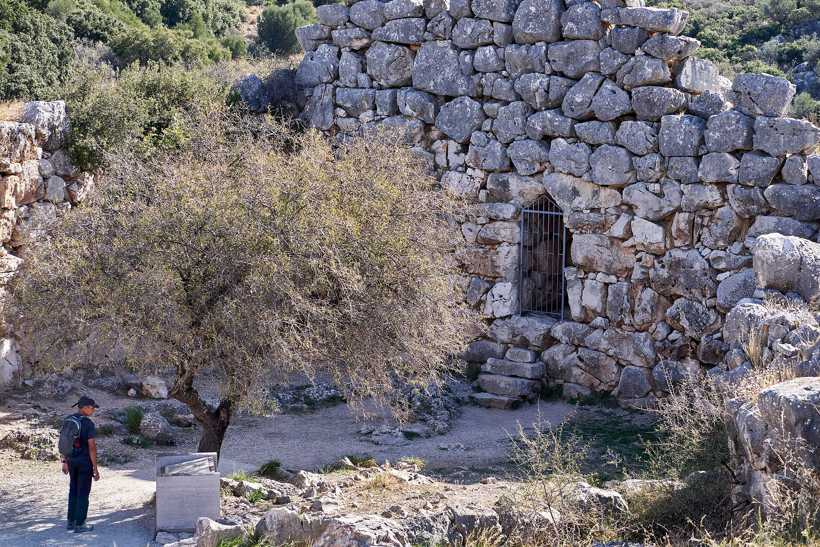
The great domed tomb below the road is worth the short detour, and the Treasury of Atreus shows the engineering ambition of the citadel’s builders at its clearest. Inside the citadel the massive walls themselves are part of the wonder, and the Cyclopean walls of huge fitted blocks give the fortress its brooding, defensive weight. The museum ties the stones to the people, gathering the objects that turned a hill of ruins into a named place in the deep past of Greece. The one ticket keeps everything together, so a thorough visitor can give real time to each part.
You read the walls, the tomb and the display cases as three chapters of the same account rather than rushing one to reach another, and nothing feels skipped for the sake of a second fee at the door.
What can you see inside the Mycenae citadel?
The main path climbs through the Lion Gate to the grave circle, then up to the ruined palace on the summit and down to the underground secret cistern. Each stop marks a different part of the fortified stronghold.
Entering the citadel of Mycenae means passing beneath a carved stone gateway that has stood for more than three thousand years. The Lion Gate remains the single most recognisable image of the whole site. Just inside lies the grave circle, a ring of royal shaft graves where the richest early finds in Greece were uncovered. From there the path climbs the slope of the hill, passing terraces and the outlines of houses and storerooms, toward the highest ground. The whole enclosure sits within the vast fitted walls. Every step upward comes with a view back over the ramparts to the plain and the mountains beyond.
The climb is steady rather than steep, though the ground is uneven stone throughout. Pausing to look back over the gateway and the grave circle rewards the effort at every turn.
At the summit stand the remains of the palace, the seat of the rulers who commanded this stronghold and its lands across the Argolid. From the top the view opens across the plain toward the sea, showing why the hill was chosen and held for so long. A stairway then descends into the rock to the underground secret cistern, a covered passage cut down to a hidden water supply that let the fortress hold out under siege. It is dark and steep, so a careful step and a little light help. The finds that once filled these buildings now sit in the display cases of the Mycenae archaeological museum on the slope below.
The display brings the bare walls of the summit back to life for anyone who visits it after the climb.
When is the best time to visit Mycenae?
Early morning and late afternoon are the coolest and quietest times to visit Mycenae. The middle of the day is busiest, when coaches arrive from Athens and the cruise ports, and the exposed hill grows hot.
The rhythm of a day at Mycenae is set by the coaches and the sun together. Around the middle of the day the car park fills as tour groups arrive from Athens and the cruise ports, and the exposed hilltop grows hot with little shade to soften it. An early start beats both crowds and heat, letting you walk up through the gateway and across the grave circle in cool, quiet air with the ramparts almost to yourself. Late afternoon works in much the same way, as the groups thin out and the light falls warm and low across the walls. Choosing either end of the day turns a busy monument into a calm one.
The open climb feels far more comfortable, and the photographs come out better with long shadows across the ramparts.
The season matters as much as the hour. The site opens daily, with longer hours in summer and shorter hours in winter. A summer visitor has more room to pick an early or late slot. A winter visitor works with a tighter window and should plan the arrival with more care around the shorter daylight. High summer brings the strongest heat to a hill that offers almost no shade. That sharpens the case for arriving soon after opening. The cooler months trade shorter daylight for gentler conditions on the slope and thinner crowds at the gateway.
Whatever the season, aiming for the quieter edges of the opening hours gives the citadel, the tomb and the museum the unhurried attention they reward, rather than a rushed loop between coach parties.
How does Mycenae fit a wider Argolid tour?
Mycenae pairs naturally with Nafplio, Epidaurus and Tiryns on a wider tour of the Argolid. Allow two to three hours for the citadel, the tomb and the museum, then build the rest of the day around the nearby sites.
Mycenae rarely stands alone, and the Argolid rewards travellers who string its ancient sites into a single day. The harbour town of Nafplio makes the obvious anchor, close enough for a base and full of tavernas. A short drive from the citadel opens the way to nearby Epidaurus with its great ancient theatre and to the fortress of Tiryns with its own vast walls. Allowing two to three hours at Mycenae covers the citadel, the tomb and the museum without rushing. That leaves the rest of the day free for one or two of these neighbours. A relaxed Nafplio visit rounds out an Argolid loop with cafes and a waterfront after a morning among the stones.
The short driving distances keep the day unhurried, so no leg of the loop eats into your time at each ancient place.
Simple preparation makes the citadel portion of that day comfortable. Sturdy shoes matter on the uneven stone of the climb, and water and a hat are advised because the hill is open and exposed with little shade to rest under. Carrying these frees you to give proper time to the gateway, the grave circle, the summit palace and the cistern rather than cutting the visit short in the heat. With the museum and the domed tomb added under the same ticket, two to three hours is a fair estimate for a thorough look.
That timing leaves the middle of the day for Epidaurus or Tiryns and the evening for Nafplio, turning a single ticket at Mycenae into the heart of a full and varied tour of the ancient Argolid.
Frequently Asked Questions
How long should you spend visiting Mycenae?
Allow two to three hours to see the whole of Mycenae without rushing, which covers the three parts of the single ticket comfortably. The fortified citadel takes the most time. The path climbs through the carved gateway to the grave circle, up to the ruined palace on the summit, and down into the underground secret cistern, all across uneven stone. The on-site archaeological museum on the slope below adds a further stretch, gathering the finds that give the bare walls their meaning. The great domed tomb beside the road below the hill needs only a short visit but repays the detour.
Travellers who arrive early or late in the day, avoiding the busiest middle hours when coaches gather, tend to move at a calmer pace and use the full two to three hours well. That span also leaves room in the day for the nearby sites of the Argolid, so the visit becomes one strong chapter of a wider regional tour rather than the whole of it.
What should you bring to Mycenae?
Sturdy shoes, water and a hat are the essentials for Mycenae, because the citadel stands on an open, exposed hill with little shade anywhere on the climb. The ground underfoot is uneven ancient stone from the gateway to the summit, so proper footwear steadies every step up the slope and down into the underground cistern. Water matters greatly on a hilltop that catches the full sun, especially through the hotter half of the year, and a hat guards against the strong light on the exposed ramparts. A careful step and a little light help in the dark, steep passage that descends to the secret cistern below the walls.
Beyond these basics the visit asks for little, since the single ticket already gathers the citadel, the museum and the domed tomb into one place. Arriving prepared for the heat and the rough ground lets you give full attention to the walls, the grave circle and the palace rather than cutting the climb short and missing the finest views over the plain.
Can you combine Mycenae with Nafplio and Epidaurus?
Mycenae combines easily with Nafplio and Epidaurus, and the three sit close together in the Argolid for a natural touring loop. Nafplio lies around half an hour from the citadel and makes a comfortable base, a harbour town of tavernas and waterfront strolls that suits an overnight stay or a leisurely lunch between sites. Epidaurus, with its famous ancient theatre, sits a short drive on and rounds out a day of Greek heritage with a very different kind of ancient place. The fortress of Tiryns, with its own huge walls, offers a further stop for travellers with time to spare.
A common plan gives the cool morning hours to the exposed hill of Mycenae, allowing two to three hours for the citadel, the tomb and the museum. The day then moves on to Epidaurus and settles into Nafplio for the evening. This pairing turns a single ticket at one citadel into the heart of a rewarding tour of the ancient Argolid, rather than an isolated stop on its own.