
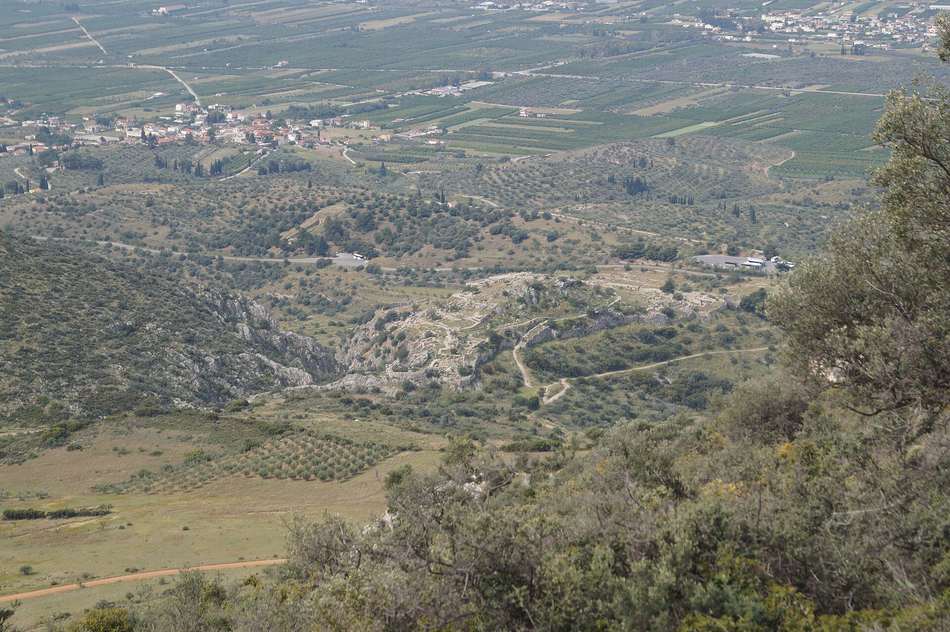
Mykines is the small modern village that sits at the foot of the archaeological site of Mycenae, in the Argolid region of the Peloponnese. It carries the name of the ancient city on the hill above and serves as the everyday base for reaching the citadel, the museum and the tholos tombs. A single main street runs through it, lined with hotels, rooms, tavernas and shops that cater to travellers who choose to stay the night. Citrus and olive farms spread out around the houses, and the countryside stays quiet after the day tours leave. Settle into the village and reach the ruins on your own terms with My Greece Tours.
Mykines gives Mycenae something rare among Greek archaeological sites: a living community right at its foot. Guests who sleep here can walk or drive up to the citadel early, before the coaches arrive, or return late once the crowds have gone. The village lies a short drive from Nafplio, Argos and the wider Argolid plain, with Corinth and Athens to the north. The sections below cover where the village sits, where to stay and eat, how it frames a visit to the ruins, and how it fits into a wider Peloponnese trip, drawing on our Mycenae travel guide.
Where is Mykines village near Mycenae?
Mykines village stands at the foot of the archaeological site of Mycenae, in the Argolid region of the Peloponnese. Citrus and olive farms surround it, and Nafplio, Argos and the Argolid plain lie a short drive away.
Mykines occupies a gentle rise of farmland in the northeast corner of the Argolid, beneath the hill that holds the ancient citadel. The village takes its name straight from the city above, and the two have shared the same ground for thousands of years. Fields of citrus and olive trees fold around the houses, giving the place the feel of a working agricultural settlement rather than a purpose-built tourist stop. The road up to the ruins climbs directly from the edge of the village, so the walk between bed and citadel stays short.
This position keeps Mykines close to the archaeology yet rooted in the quiet countryside of the Argolid, a base that belongs to its landscape rather than sitting apart from it. The village reads as part of the ancient story rather than a car park attached to it.
The wider region gathers a rich run of destinations within easy reach of the village. Nafplio, the elegant former capital with its harbour and Venetian fortresses, lies a short drive to the south. Argos, one of the oldest continuously inhabited towns in Greece, sits nearby on the plain, and the whole flat expanse of the Argolid opens out beyond. To the north the road leads toward Corinth and on to Athens, tying Mykines into the main routes across the Peloponnese. Guests who want to grasp the geography before arriving can read our guide to a Mycenae day trip from Athens, which traces the same roads that a village stay lets you slow down and explore in full.
That guide sets the geography in place before you arrive at the citadel gate.
Where can you stay and eat in Mykines village?
Mykines has hotels, rented rooms, tavernas and shops strung along its main street. Family-run guesthouses offer a simple, countryside stay, while the tavernas serve local Argolid food to travellers who linger overnight rather than passing through.
Accommodation in Mykines runs to hotels and rented rooms along the main street, most of them modest, family-run and close to the road up to the site. The scale stays small and the mood countryside-quiet, which suits travellers who want a genuine base rather than a resort. Rooms look out over citrus and olive farms, and the deep silence after dark is one of the things guests remember most. Staying in the village puts the citadel, the museum and the tholos tombs within a short reach each morning, so the day can start early and end late without a long transfer.
The village keeps its own steady rhythm, offering a restful pause between days spent walking the archaeology of the Argolid. Guests trade resort polish for the honest calm of a farming village.
Eating in Mykines means sitting at a taverna on the main street, often run by the same family that owns the rooms upstairs. Menus lean on the produce of the surrounding farms: olive oil pressed nearby, citrus from the groves, garden vegetables and local meat cooked in the unhurried Peloponnese way. The tavernas fill at lunch with day visitors, then thin out in the evening to the guests who have chosen to stay, giving dinner a calmer, more local feel. Shops along the street sell everyday supplies and regional goods for the road.
Travellers weighing a how to visit Mycenae plan often find that an overnight in the village turns a rushed midday stop into an unhurried, well-fed stay among the surrounding citrus and olive farms.
How does staying in Mykines help you visit Mycenae?
Staying in Mykines lets you reach the ruins early or late, away from the midday coach crowds. The citadel, the museum and the tholos tombs sit a short walk or drive above the village, so timing a visit becomes easy.
The clearest reward of a night in Mykines is control over timing. Day tours from Athens and Nafplio reach the site in the middle of the day, so the citadel fills with coaches around noon and empties again by late afternoon. A guest sleeping in the village can climb to the ruins soon after they open or in the softer light of early evening, walking the ramparts in relative quiet. The famous Lion Gate and the great walls read very differently without a crowd pressing through them, and photographs come easily when the paths are clear.
This freedom of timing is the single strongest argument for basing yourself in the village rather than arriving and leaving with the coaches. The site belongs to the early riser and the late walker in a way the noon visitor never sees.
A village stay also gives room to take in the whole site rather than its highlights alone. The Mycenae archaeological museum sits beside the citadel and rewards an unhurried hour among the finds, while the grave circles and the tombs cut into the slopes deserve their own slow walk. Down the road stands the Treasury of Atreus, the greatest of the tholos tombs, whose vast stone dome repays a visit made without a schedule bearing down. Guests can split all this across a long afternoon and a fresh morning, returning to the village between visits for shade, food and rest.
The archaeology opens up fully to those who give it more than a single passing hour, and a village bed makes that generosity of time possible.
What lies near Mykines for a wider Peloponnese trip?
Mykines sits within easy reach of Nafplio, Argos and the Argolid plain, with Corinth and Athens to the north. The village makes a countryside anchor for a broader tour of the northeast Peloponnese and its ancient sites.
The land around Mykines packs a full itinerary into short driving distances. Nafplio, with its harbour, fortresses and stone lanes, lies close to the south and makes an easy evening or day out from the village. Argos spreads across the plain nearby, and the wider Argolid gathers ancient theatres, sanctuaries and coastal towns within an hour’s drive. Roads run quietly through the citrus and olive farms that fill the flat land, so the driving itself stays gentle and scenic. A base in Mykines lets a traveller reach these places on separate days without long transfers, sleeping each night in the same quiet village and returning to the same taverna table.
The countryside setting turns the region’s sights into a series of relaxed outings rather than a rushed circuit.
Mykines also ties neatly into the main routes across the northern Peloponnese. The road north leads toward Corinth and its canal, then on to Athens, so the village fits into a larger loop for travellers touring by car. Those coming the other way often pair it with time on the coast or in the mountains beyond. A visit to Nafplio shows how close the elegant seaside town lies, and how naturally the two places combine. Basing yourself in the village and driving out each day gives the whole Argolid a calm, unhurried shape, with the ancient citadel of Mycenae as the anchor and the surrounding countryside as the reward for staying put.
The village keeps you close to the ruins while opening the whole northeast Peloponnese to unhurried day drives.
Why choose Mykines village as your base?
Mykines suits travellers who want to stay overnight beside the ruins rather than passing through. Quiet countryside, family tavernas and early or late access to the citadel make it a peaceful, convenient base for exploring the Argolid.
The case for Mykines rests on what a village stay quietly offers over a day tour. Guests who sleep here trade the rush of the coach schedule for the freedom to reach the citadel early or late, when the ruins stand almost empty and the light falls soft on the great walls. The village keeps its own countryside calm, with citrus and olive farms spreading out around the houses and silence settling over the main street after dark. Family-run rooms and tavernas give the stay a lived-in, local feel that a fly-by visit never touches.
Travellers who value slow mornings, honest food and time with the archaeology find their natural pace here, close to the ancient city yet rooted in a working modern village. The stay feels like a stretch of the real Argolid rather than a coach stop.
Mykines also earns its place through sheer position at the heart of the Argolid. A short drive reaches Nafplio, Argos and the wider plain, while Corinth and Athens lie along the road to the north, so the village works as a countryside anchor for a broader tour. The living community at the foot of the ruins gives Mycenae a warmth that few great archaeological sites can offer, a place to eat, sleep and rest within sight of the hill. Guests leave with both a full, unhurried visit to the citadel and a genuine sense of the quiet Peloponnese countryside around it.
The village turns a single monument into a proper stay, and that is its lasting reward for anyone willing to slow down and sleep at the foot of the hill.
Frequently Asked Questions
How do you get to Mykines village and reach the site?
Mykines lies in the Argolid region of the Peloponnese, reached by road from the north through Corinth or from Nafplio and Argos to the south. A hire car gives the most freedom here, letting you move between the village, the citadel and the sights of the wider region at your own pace. The village runs along a single main street, with hotels, rooms and tavernas gathered close together, and the road up to the archaeological site climbs directly from its edge. That short distance is the whole point of staying here, since the citadel, the museum and the tholos tombs all sit within an easy walk or drive above the houses.
Corinth and Athens lie along the road to the north, while Nafplio and Argos sit a short drive to the south. Mykines works best as a base you settle into, driving out to the region’s sights and returning each evening to a quiet village at the foot of the ancient city.
Is it worth staying overnight in Mykines rather than visiting on a day trip?
Staying overnight in Mykines changes the whole character of a Mycenae visit, and timing is the main reason. Day tours reach the citadel in the middle of the day, so the ruins fill with coaches around noon and empty again by late afternoon. A guest sleeping in the village can climb up soon after the site opens or in the softer light of early evening, walking the great walls and the Lion Gate in relative quiet. An overnight also gives room to take in the museum and the tholos tombs at an unhurried pace rather than rushing between them.
Beyond the ruins, the village offers a calm countryside evening among citrus and olive farms, with family tavernas serving local food and a deep silence after dark. The extra time turns a single monument into a proper stay. Travellers who value quiet, good food and space to absorb the archaeology find the overnight well worth it, especially in the busy months when the day crowds are heaviest.
What is Mykines village like away from the ancient ruins?
Away from the archaeology, Mykines is a small working village set among the citrus and olive farms of the Argolid plain. Life gathers along a single main street, where hotels, rented rooms, tavernas and shops sit close together and older residents pass the afternoon over coffee. The pace stays slow and the mood countryside-quiet, especially in the evening once the day tours have left and the coaches have gone. Farms surround the houses, and the smell of cooking drifts out from taverna kitchens along the street. Guests who stay here find a genuine community rather than a purpose-built tourist stop, with local produce on the plate and a calm that settles over everything after dark.
The village gives Mycenae a living present to set against its ancient past, a place where people still farm, cook and gather at the foot of the old citadel. That everyday, lived-in quality is exactly what draws travellers who want to feel the real countryside of the Peloponnese around the ruins.