
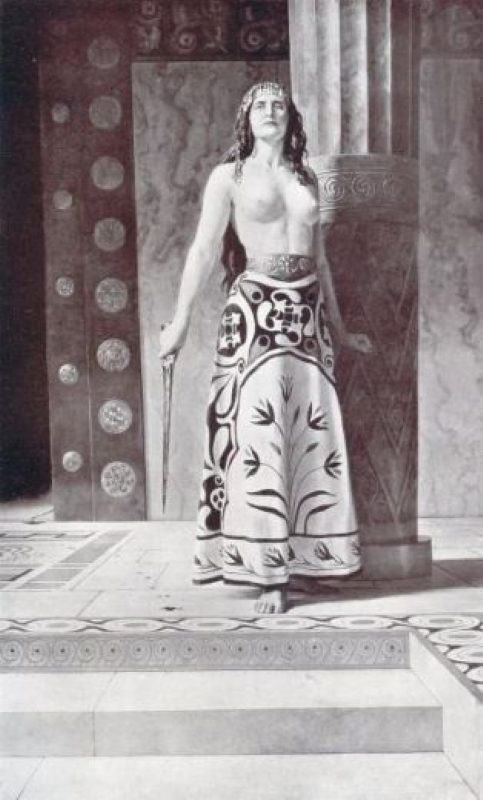
Clytemnestra stands among the darkest and strongest figures of Greek myth, the queen of Mycenae and wife of King Agamemnon. Daughter of Tyndareus and Leda, sister of Helen of Troy, she ruled the great citadel while her husband led the Greeks across the sea to war. Legend hands her a fierce will and a long memory for wrongs, a ruler who governed a kingdom alone through the years of the campaign. Her story runs through betrayal, murder and revenge, binding her name to the doomed royal house she married into. Explore the legends and stones of this ancient citadel with My Greece Tours.
This queen is remembered less for how she ruled than for what she did when her husband came home. Myth gives her a lover, a grievance and a plan, then a killing that echoes through later tragedy and a reckoning delivered by her own son. A great beehive tomb at the site carries her name in later tradition. The sections below cover her place in myth, her marriage, the murder of the king, the vengeance that followed, and where her legend meets the ruins today, all set within our Mycenae travel guide.
Who was Clytemnestra, queen of Mycenae?
Clytemnestra was the queen of Mycenae in Greek myth, wife of King Agamemnon. Daughter of Tyndareus and Leda and sister of Helen of Troy, she ruled the citadel while her husband led the Greeks against Troy.
Myth places Clytemnestra at the heart of the royal house of Mycenae, a queen married to the most powerful king of the Greek world. Her father was Tyndareus and her mother Leda, and her sister was Helen, whose flight to Troy set the whole war in motion. That family link binds two of the greatest stories of legend together, one sister the cause of the conflict, the other its bitter aftershock at home. Clytemnestra ruled a real place, a fortress of thick walls and a famous gate crowning a hill above the plain of Argos.
Legend paints her as clear-eyed and unbending, a woman who held authority in her own right rather than merely waiting in the shadow of an absent king. The myth grants her the full weight of a throne, not a decorative title borrowed from her husband.
The queen governed Mycenae through the long years of the campaign, tending the kingdom while its army fought far away. Legend gives her a mind that stored every wrong and weighed every debt, a ruler who watched the horizon for word of the fleet. Her strength is what makes her memorable, set against the softer roles myth usually hands the wives of warring kings. She commands her own story rather than serving as an ornament to her husband’s. The tale of Agamemnon cannot be told without her, and the pairing of king and queen sits at the dark centre of everything the House of Atreus came to mean in myth.
Her rule at the citadel gives the whole legend a queen worth the fear it later earns.
What drove Clytemnestra against her husband Agamemnon?
Myth says Clytemnestra never forgave Agamemnon for sacrificing their daughter Iphigenia to gain a fair wind for the fleet bound for Troy. That killing planted a grievance that grew across the ten long years of the war.
The wound at the root of her story was the loss of a child. To gain a favourable wind for the fleet gathering to sail against Troy, Agamemnon offered up their daughter as a sacrifice, an act myth treats as the seed of everything that follows. The fate of Iphigenia turned a wife’s love into a cold and settled hatred that no victory abroad could ever soften. The king won his wind and led the Greeks away, leaving behind a queen who would count the years and nurse the memory. That single decision reframed the marriage as a debt owed in blood, one she meant to collect the day he returned in triumph to the citadel.
Myth lets no distance of years or miles wear the grievance down to anything softer.
During the king’s absence the queen took Aegisthus, his cousin and rival within the royal house, as her lover. Legend joins their private grievance to an older feud, for Aegisthus carried his own claim against Agamemnon’s line and his own reasons for revenge. Together they ruled Mycenae and waited, turning the palace into a trap dressed as a welcome. The whole quarrel belongs to the wider curse of the House of Atreus, a dynasty myth marks for generations of kin killing kin. The queen’s patience is part of her power in the story, a grievance kept sharp and ready across the entire span of the distant war.
Two wrongs feed one purpose here, and the palace waits with her for the first sail to break the far horizon.
How did Clytemnestra kill King Agamemnon at Mycenae?
According to the story, Clytemnestra welcomed Agamemnon home in triumph, then struck him down in his bath with the help of Aegisthus. The murder of the returning king forms the darkest scene tied to Mycenae in myth.
Agamemnon came home to Mycenae crowned with the glory of the fallen city, expecting the honours due a conquering king. The queen met him with a show of welcome, spreading a rich path for his feet and speaking the words of a loyal wife. That greeting was the mask over the killing to come. Legend has her strike him down in his bath, the most defenceless moment of a warrior’s return, cutting short the man who had won the greatest war of the age. Aegisthus stood with her in the deed. The victor of the Trojan War fell not on any battlefield but at his own hearth, undone by the grievance he had planted himself.
The greatest homecoming of the age became the setting for the queen’s long-planned revenge.
The murder turns Clytemnestra into one of the fiercest figures in all of Greek legend, a queen who judged and executed the most feared king of the Greeks. The act reads as revenge rather than mere ambition, payment for a daughter given up to the winds. Myth grants her no hesitation and no plea for pity in the moment of the killing. She names her reason plainly and stands over the deed as its author. This scene fixed her forever in the later tragic tradition, the wife who became the executioner, and it drew the long curse of her adopted house one grim step nearer to its violent close.
The killing at the hearth stands as the single act that defines her name for good. Her partner in the killing was Aegisthus, the usurper who then seized the throne of Mycenae.
What was Clytemnestra’s fate after the murder?
Her son Orestes later avenged his father by killing Clytemnestra and Aegisthus, matching one killing with another. That act of vengeance drew the curse of the House of Atreus toward its long-awaited end in myth.
The blood spilled at Mycenae did not settle with the death of the king. Her son grew up marked for vengeance, bound by the code of his world to answer his father’s murder in kind. The story of Orestes turns on that terrible duty, a child raised to strike down his own mother and her lover. He returned to the citadel and killed them both, matching one killing with another and closing the circle of revenge that his father’s sacrifice had first set turning. The queen who had ruled and killed met her end at the hand of the child she bore, the last great act in the family’s long chain of ruin.
Legend spares her no mercy at the close, delivering the reckoning through the one person she could not have guarded against.
This closing killing pushes the curse of the royal house toward its end, the point where the cycle of blood at last begins to break. Myth treats the deed as both justice and fresh horror, for a son who kills his mother earns no clean triumph. The queen’s death completes her story on the same dark terms she lived it, revenge answered by revenge within a single doomed family. Her name from that point belongs to tragedy, the strong and terrible woman whose grievance and fall carried the House of Atreus to the very edge of its long, self-devouring legend and beyond.
The vengeance that ends her also frees the surviving royal line at last from its own long weight of blood answered by blood.
Where does Clytemnestra’s legend meet the ruins of Mycenae?
A great beehive tomb at the site bears her name in later tradition, tying the queen’s dark legend to the standing stones. Visitors walk the citadel where myth sets her rule, her welcome and the murder of the king.
The ruins of Mycenae give the legend a solid place to stand. A great beehive tomb near the fortress carries the queen’s name in later tradition, one of the tall corbelled chambers dug into the hillside below the walls. The Tomb of Clytemnestra links the darkest woman of the myth to a real and lasting monument, a stone room that visitors can enter and stand within today. The chamber belongs to the same world as the citadel above, thick walls, a famous gateway and a hill that commands the plain of Argos.
Legend and landscape meet here, the story of a killing queen anchored to a structure that has held its shape across untold centuries of weather, earthquake and slow ruin, still drawing travellers up the same ancient road.
Standing at the site brings the whole grim tale within easy reach. This is the fortress myth gives Clytemnestra to rule, the hill where she watched the horizon for the returning fleet and the hall where she is said to have welcomed the king home to his death. Her tomb, her marriage and her vengeance all belong to these stones, layered onto the more general story of the doomed royal house that the ruins carry from age to age. Walking the great gate and the beehive grave in a single visit turns an ancient legend into something you can truly see and touch.
Clytemnestra keeps her place among the darkest and strongest figures tied to Mycenae, her name still spoken aloud beside its weathered and enduring walls.
Frequently Asked Questions
Was Clytemnestra a real queen or purely a figure of myth?
Clytemnestra belongs to Greek myth rather than recorded history, and her tale should be read as legend woven around a real place. Mycenae itself was a genuine and mighty citadel, a fortress of thick walls and a famous gate crowning a hill above the plain of Argos, and its ruins still stand today. The stories of its royal house, the queen, her husband and their doomed family, come down through later poetry and tragedy rather than through any archive of fact. Legend names her the wife of King Agamemnon, daughter of Tyndareus and Leda, and sister of Helen of Troy.
A great beehive tomb at the site carries her name in later tradition, which shows how tightly the myth and the monument grew together over time. Reading her as a figure of legend, tied to real stones, gives the fairest sense of who Clytemnestra was and why her name endures among the darkest and strongest of Mycenae.
Why is Clytemnestra remembered as such a formidable figure?
Clytemnestra earns her fierce reputation through what she did rather than through her title alone. Myth gives her a grievance she never let go, the sacrifice of her daughter Iphigenia to gain a fair wind for the fleet bound for Troy, and the patience to hold that grievance across the ten long years of the war. She ruled Mycenae in her husband’s absence, took Aegisthus as her lover, and struck the returning king down in his bath. That combination of authority, memory and decisive violence sets her apart from the softer roles myth usually hands the wives of warring kings.
She commands her own story, names her reasons plainly, and answers a killing with a killing of her own. Her later death at the hand of her son Orestes only deepens the darkness of the legend. The strength people remember is this refusal to fade into the background of a great man’s tale, which is why she stands among the most terrible figures tied to Mycenae.
How does Clytemnestra fit into the wider story of the House of Atreus?
Clytemnestra sits at the dark centre of the House of Atreus, the royal line myth marks for generations of kin killing kin. She married into the family through King Agamemnon, and her own actions carried its curse a long step further. The sacrifice of Iphigenia gave her a reason for revenge; her killing of Agamemnon, aided by his cousin and rival Aegisthus, added a fresh murder to the family’s chain of blood. Her son Orestes then avenged his father by killing her and Aegisthus, matching one killing with another and drawing the curse toward its end.
Each act answers an earlier wrong within the same doomed dynasty, so the queen is both a victim of the family curse and one of its most active agents. Her marriage, her vengeance and her fall belong entirely to this larger legend, which is why her story cannot be separated from the wider ruin of the House of Atreus at Mycenae.