
Mycenaean religion was the system of gods, cult and ritual practised across Bronze Age Greece at powerful centres such as Mycenae. The clay tablets found in the palaces name deities familiar from later Greek worship, and a group of shrines inside the citadel served as a focus for ritual life. Worshippers brought offerings of food, oil, wine and animals to the gods, and priests and priestesses tended the cults. The rich graves of the age hint at strong ideas about honouring the dead, though much about belief stays out of reach. Step into that older world of gods and shrines with My Greece Tours.
This early faith forms a bridge between the older cults of the Aegean and the gods worshipped across classical Greece, rooted in centres like Mycenae. The tablets give names and offerings rather than stories, so the picture stays partial and open to careful reading. The sections below cover the gods named in the records, the cult centre inside the citadel, the offerings and ritual, the priests who served, and the questions that remain unanswered. For the wider setting, our Mycenae travel guide places this cult against the palace, walls and tombs of the site.
Which gods did the religion of Mycenae worship?
The religion of Mycenae worshipped deities recorded on the Linear B tablets, including names familiar from later Greek worship such as Zeus, Hera, Poseidon, Hermes and Dionysus, alongside other gods whose names later faded from memory.
The clay tablets from the palace archives give the clearest window onto the gods of Bronze Age Greece, listing deities as recipients of gifts and offerings. Among them stand names later central to Greek worship. Zeus appears as the sky father, Hera beside him, Poseidon as a leading power of the sea, and Hermes and Dionysus each already present in the record. Their appearance on these tablets pushes the roots of such familiar figures deep into the Bronze Age, long before the poets shaped their later stories. This continuity marks one of the striking findings drawn from the decipherment of the script.
It ties the cult of a citadel like Mycenae directly to the religion of classical Greece that followed in the centuries after, and it gives the site a firm place at the head of a long tradition.
The same records also carry names of deities who did not survive into later worship, gods and goddesses whose cults faded as the centuries passed. This mix of the familiar and the lost shows a religious world both connected to what came after and distinct in its own right. The tablets treat these figures as active recipients of oil, grain and livestock rather than as characters in tales, so the divine emerges through accounts and lists alone. Anyone tracing the Mycenaean civilization meets its gods first through these dry administrative entries.
The lists quietly preserve the earliest layer of a religion that went on to shape the whole Greek tradition to come, a layer that would otherwise have been lost entirely. Without the tablets, this faith would survive only in stone and buried gold, its gods left nameless.
What was the cult centre inside the citadel of Mycenae?
The cult centre at Mycenae was a group of shrines within the walls of the citadel, holding figurines, altars and painted images used in ritual. It gave the community a dedicated space set apart for worship and offering.
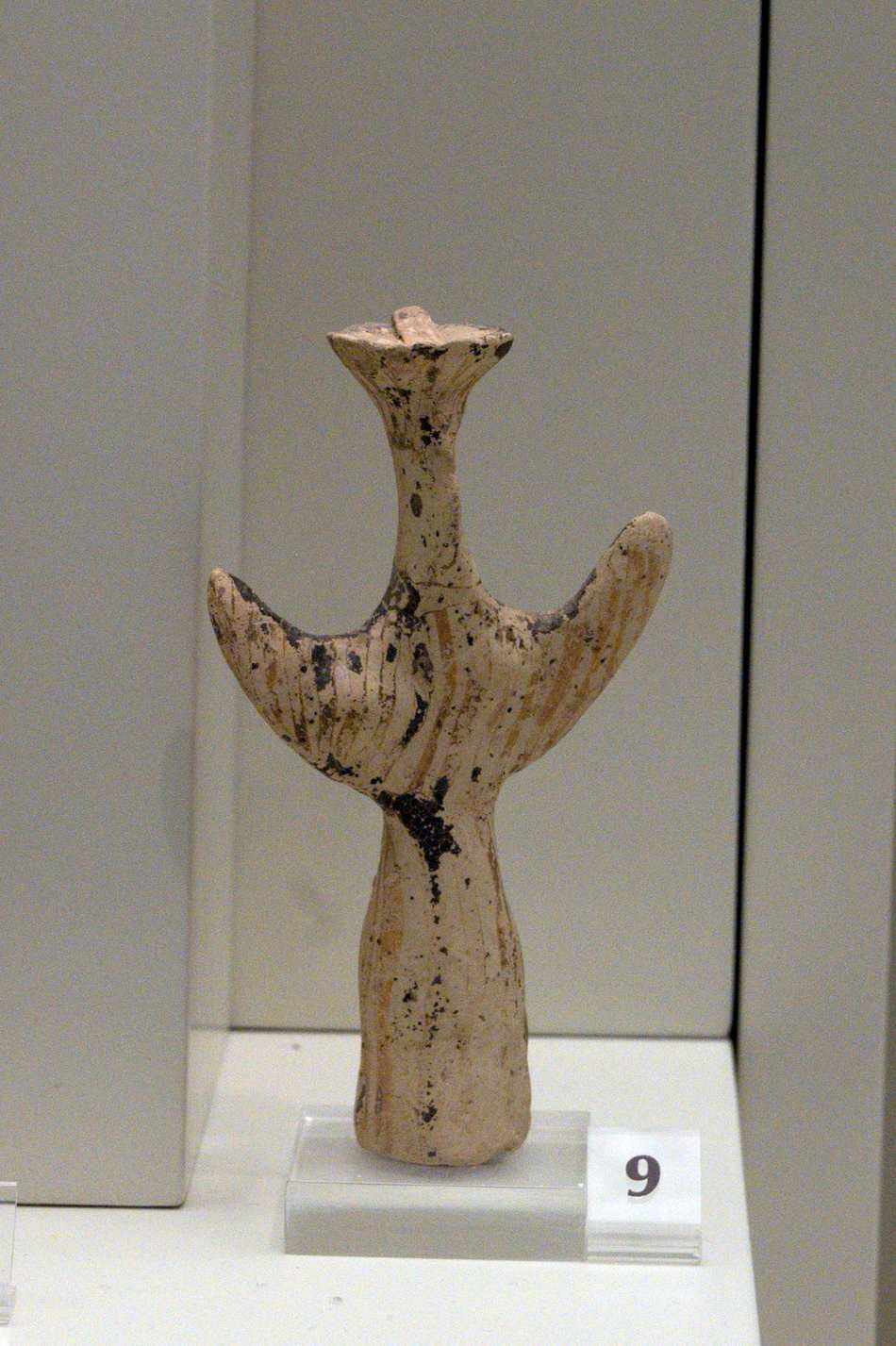
Inside the great walls of the citadel stood a cluster of buildings set aside for worship, known to us today as the cult centre. Here archaeologists found altars, painted images and rooms fitted for ritual, together with figurines shaped for religious use rather than for daily life. The placement matters: the shrines sat within the defended heart of the settlement, close to the seat of power, which shows how tightly religion and rule were bound together at Mycenae. This was not worship pushed to the margins but a sacred quarter woven into the citadel itself, sharing its stout protection and its central place in the everyday life of the whole community.
The gods stood close to the ruler, guarded by the same great walls that held back the world outside.
The finds from these shrines give a rare physical trace of belief in a culture that left behind no scripture. Figurines with raised arms, painted plaster and the fittings of ritual all point to ceremonies carried out in fixed, purpose-built spaces. The cult centre stands close to other landmarks of the site, so a visit ties belief to the wider stone record of the age. Travellers who explore the palace of Mycenae pass near this sacred quarter. The two together show a world where the throne room and the shrine shared one hill. Each drew meaning from the other within a single guarded citadel, and neither stood far from the other in daily life.
Ritual and rule went hand in hand on this hill, so the visitor who walks the cult centre reads the mind of those who ruled.
How did Mycenaeans make offerings to their gods?
Mycenaeans made offerings of food, oil, wine and animals to the gods, gifts recorded on the tablets as contributions to deities and their sanctuaries. These offerings formed the practical core of worship across the palace centres of the age.
Worship in the Bronze Age turned on the gift, and the tablets set out those gifts in plain administrative detail. Deities and their sanctuaries received oil, grain, wine and livestock, entered in the records much as any other payment or allocation drawn from the palace stores. This accounting habit means we know the substance of worship, the what and the how much, even in cases where the meaning and the prayers behind it stay entirely silent. Offerings tied the human community to the divine through a steady exchange, and the palace, as keeper of the stores, stood at the very centre of organising and dispatching these gifts out to the gods and their shrines.
The same hand that ran the economy also ran the cult, drawing goods from the herds and fields for the gods.
The scale and regularity of these entries show religion as a managed part of palace life rather than a private matter alone. Oil pressed nearby, animals from the herds and produce from the surrounding land all flowed toward the shrines under official record. This is why the Linear B archives matter so deeply for belief: they preserve the mechanics of cult where later sources give only myth. The reading of these tablets turns the shrines from empty rooms into places of active exchange. They received named goods for named gods, entry by entry. This grounds the whole religion of Mycenae firmly in the concrete daily traffic of oil, wine and grain that moved through the palace.
What looks like a dry ledger becomes a record of faith in action, each line a gift once carried to a shrine.
Who led worship in Mycenaean religion?
Priests and priestesses served the cults of Mycenaean religion, tending the shrines and the offerings. The king may also have held a religious role, binding sacred duty to royal power at the very head of the community.
Religious life needed people to carry it, and the record points to priests and priestesses who served the shrines and managed the gifts brought to the gods. These figures appear in the tablets as part of the wider order that the palace oversaw, holding a recognised and standing place in the community. Their duty joined the human world to the divine, keeping the round of offering and ritual in steady motion at the sacred spaces of the citadel. The presence of dedicated religious servants shows worship as an organised, ongoing institution rather than a loose set of private acts scattered here and there through the course of daily life.
Their titles and rations appear in the same records that track the wider workings of the state, which places them within the settled structure of the palace world.
Power and worship drew close together at the top of Mycenaean society, and the king himself may have carried a sacred role alongside his rule. This blending of throne and shrine fits a world where the cult centre sat inside the citadel beside the seat of authority. The link between sacred and royal duty runs through the wider record of the age, seen also in the imagery of Mycenaean art, where ritual scenes and divine figures appear on frescoes and carved gems. Leadership of worship, then, reached from the priestess at the shrine to the king on his hill, weaving religion through every single level of a settlement built for both power and prayer.
The gods were not a matter apart from government but bound tightly into it, tended by named servants and perhaps by the ruler at their head.
What remains uncertain about the religion of Mycenae?
Much about Mycenaean belief and the afterlife stays uncertain, since the tablets record offerings and names rather than teachings or prayers. The rich graves suggest strong ideas about honouring the dead, yet their exact meaning remains beyond firm reach.
The tablets that reveal so much also mark the limits of what we can know, for they list gods and gifts without ever setting down what people actually believed. There are no prayers, no sacred stories and no account of the afterlife, only the plain accounts of oil and grain sent to named deities. This silence leaves the inner life of the religion largely dark, so scholars read the offerings, the shrines and the images with real care rather than with certainty. What survives is the outward frame of worship, the act and the divine name, while the thought behind it stays a matter of cautious interpretation drawn from scattered fragments alone.
The tablets tell us that people gave, and to whom they gave, but never quite why, so the heart of the belief remains beyond our full grasp.
The graves speak where the tablets fall quiet, and their richness hints at deep concern for the dead and perhaps for a life beyond. Gold, weapons and fine goods buried with the powerful suggest strong ideas about honour and remembrance, even where the exact belief remains hidden from view. The water system reached by the secret cistern shows the same drive to master a hostile world. The history of Mycenae traces the shaft graves and great domed tombs that each make a statement about death and status. The dead were sent off with wealth and ceremony, and that care tells us the afterlife mattered.
Its shape in the Mycenaean mind stays one of the enduring open questions of this early religion, still debated by those who study it.
Frequently Asked Questions
How do we know about Mycenaean religion today?
Most of what we know comes from two kinds of evidence: the Linear B tablets and the physical remains of the shrines themselves. The tablets, written in an early form of Greek, list gods and the offerings sent to them, giving names such as Zeus, Hera and Poseidon in a clear Bronze Age setting. The shrines of the cult centre inside the citadel add altars, figurines and painted images, the physical stage on which ritual once took place. Together these two sources reveal the outward shape of worship, its gods, its offerings and its sacred spaces. What they do not give is doctrine, prayer or story, so the beliefs behind the practice stay partly hidden from us.
This mix of written lists and excavated shrines lets scholars reconstruct the framework of the religion with real confidence, while still treating its inner meaning as a careful reading rather than settled fact drawn from a complete surviving record.
Is Mycenaean religion the same as the later Greek gods?
It is closely related but not identical, and the difference genuinely matters. The Linear B tablets name deities who later became central to classical Greek worship. Zeus, Hera, Poseidon, Hermes and Dionysus all appear, which shows that these figures reach back into the Bronze Age. In that clear sense Mycenaean religion forms a genuine root of the later tradition. The tablets also list gods whose names faded and left no trace at all in classical worship, so the two systems do not map neatly onto each other. The rich mythology of the later Greeks, with its shaped stories and defined characters, is also missing from the Mycenaean record. That record gives names and offerings rather than tales.
Mycenaean religion is best understood as a bridge between the older Aegean cults and the gods of classical Greece. It shares key deities while keeping its own distinct shape and its own set of lost figures.
Can you still see religious sites at Mycenae?
Yes, and the cult centre ranks among the most rewarding parts of any visit to the citadel today. Within the walls a group of shrines has been uncovered, the sacred quarter where ritual and offering once took place close to the seat of power. Here the foundations, the altars and the spaces that held figurines and painted images survive for visitors to walk among. Seeing the shrines set inside the defended citadel makes clear how tightly religion and rule were joined in this world, sharing one protected and central hill. The finds themselves, the figurines and painted plaster, are largely kept in museums, so the site shows the stone frame while the delicate objects sit under glass elsewhere.
A walk through Mycenae takes in this cult centre alongside the palace, the great walls and the tombs, letting the religion of the Bronze Age stand beside its power and its dead within one remarkable place.