
Mycenaean art is the art of Bronze Age mainland Greece, seen at its richest at Mycenae, the leading centre that gives the whole civilization its name. It gathers goldwork, wall frescoes, painted pottery, carved gems, ivory and worked bronze into one confident style. The shaft graves of Mycenae yielded gold funerary masks, inlaid daggers, cups and jewellery of remarkable skill, while palace walls carried coloured scenes of women, processions and the hunt. Potters made fine vases traded across the Aegean, and craftsmen cut tiny sealstones and shaped ivory into delicate figures. Set this rich heritage into a wider Greek journey with My Greece Tours.
Mycenaean art reveals the wealth, skill and taste of the rulers of Mycenae, from the treasure buried in the shaft graves to the paint that once brightened palace walls. The style drew on the earlier Minoan art of Crete, yet chose stronger lines, firmer order and warlike subjects such as soldiers, chariots and the chase. Much of the finest work is now shown in the museums at the site and in Athens. The sections below cover the goldwork, the frescoes, the pottery, the smaller crafts and where you can see it all, part of our fuller Mycenae travel guide.
What is Mycenaean art and why is Mycenae its centre?
Mycenaean art is the art of Bronze Age mainland Greece, seen richest at Mycenae, the leading centre that names the civilization. It covers goldwork, frescoes, pottery, carved gems, ivory and worked bronze made for its rulers.
Mycenaean art belongs to the Bronze Age of mainland Greece, and Mycenae stands at its heart as the leading centre that gives the whole civilization its name. The wealth, skill and taste of the rulers of Mycenae shaped the finest surviving work, from the treasure sealed in the shaft graves to the painted walls of the palace on the citadel above. The art spans a broad reach of craft: goldwork for masks and jewellery, frescoes for the palace rooms, fine painted pottery, tiny carved sealstones, worked ivory and cast bronze.
Each of these grew under the patronage of powerful lords who wanted their rank and standing shown in lasting, precious form, and Mycenae carried that ambition further and more richly than any other mainland site of the age.
The story of this art at Mycenae runs tightly alongside the story of the citadel itself and the rulers who held it through its long peak. The rise of the Mycenaean civilization across the mainland gave a settled, wealthy court the means to gather gold, employ skilled painters and support fine craftsmen over long generations. Trade brought raw materials and fresh ideas from across the Aegean world, while the strength of the state gave the palace workshops a steady demand for luxury goods. The result is an art rooted deeply in power and display.
It was made to mark the standing of a warrior aristocracy in life, and to accompany its leaders into the grave with a splendour that few other early European centres of the age ever matched.
What goldwork came from the shaft graves of Mycenae?
The shaft graves of Mycenae yielded gold funerary masks, inlaid daggers, cups and jewellery of remarkable skill. These treasures crowned the dead of a warrior aristocracy and count among the richest finds of the Bronze Age Aegean.
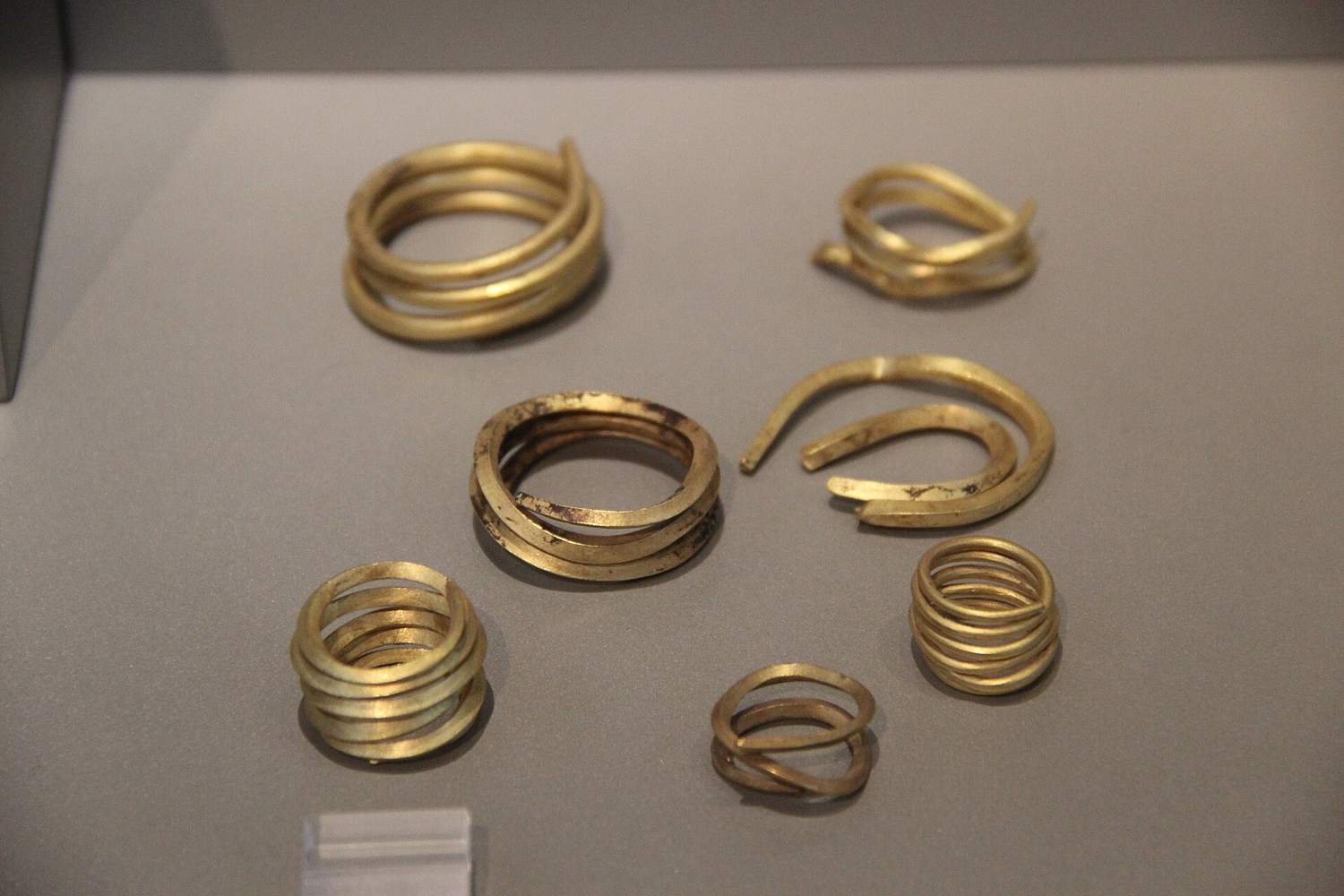
The shaft graves of Mycenae hold the most famous treasure of Mycenaean art, a great hoard of gold that fixed the site firmly in the imagination of the whole world. Buried with the dead of an early ruling line, the graves gave up thin gold funerary masks beaten to cover the faces of the departed, along with inlaid daggers, cups, diadems and a wealth of fine jewellery. The daggers in particular show extraordinary craft, their blades inlaid with scenes of the hunt and running animals worked in gold, silver and dark niello.
Every piece speaks of a court that could command precious metal and the very finest hands to work it, and that chose to seal such wealth away in the ground with its leaders.
The single most celebrated find is the Mask of Agamemnon, a gold funerary mask that has long become the very face of Mycenae for visitors and scholars alike. It sat among a group of masks, cups and weapons that together display the marked taste of the early lords of the citadel for gold above all other precious materials. The metalwork favours the strong lines and clear sense of order typical of Mycenaean art. The hunting scenes and armed figures on the inlaid daggers, meanwhile, plainly announce the warlike spirit of the whole culture that made them.
This goldwork forms the core of what the shaft graves teach us, the wealth, skill and proud self-image of the men and women who once ruled Bronze Age Mycenae.
What did the frescoes on the palace walls of Mycenae show?
The palace walls of Mycenae carried coloured frescoes of women, processions and the hunt. Painted in bright mineral tones, they lined the grand rooms of the citadel and showed the ceremony, dress and pastimes of its ruling court.
The palace walls of Mycenae carried coloured frescoes that once brightened the grand rooms of the citadel with lively scenes of women, ceremonial processions and the hunt. Painted directly onto wet plaster in bright mineral colours, these wall paintings turned the halls of the rulers into settings of display, where visitors met images of elegantly dressed figures, ranked processions and the eager pursuit of game. The subjects closely match the taste seen in the goldwork: order, rank and the chase, all of it fitting for a warrior court that prized both refinement and raw strength.
Much survives only in scattered fragments today, yet enough remains to show painters of real skill working to a confident and settled house style right across the walls of the palace of Mycenae.
These frescoes belonged to the wider complex of the palace of Mycenae, the great seat of the lords who commissioned the finest art of the site. The painted processions and finely dressed women echo forms first developed in the earlier Minoan art of Crete. The Mycenaean hand, though, favoured stronger outlines and a firmer sense of order, and it added its own clear taste for hunting and armed subjects to the older repertoire. Colour played a large part in the whole effect, with warm reds, deep blues, yellows and blacks all drawn from natural mineral pigments.
The frescoes let us picture the palace not as bare grey stone but as a bright, richly decorated stage for the ceremony and daily life of the rulers of Mycenae.
What was Mycenaean pottery like and how far did it travel?
Mycenaean potters made fine decorated vases with clear, ordered patterns and painted scenes. These wares travelled widely, traded across the Aegean and beyond, and rank among the most recognisable and far-reaching products of the culture.
Mycenaean pottery ranks among the most widespread and recognisable products of the whole culture, made by potters who shaped fine vases and then painted them with clear, ordered decoration. Cups, jars, jugs and tall stirrup jars carried patterns of spirals, marine motifs and, in the grander pieces, figured scenes of people and animals. The painting favours the same firm lines and settled sense of order that mark Mycenaean art as a whole, giving the pottery a disciplined, confident and unmistakable look. These vases were made in real quantity by skilled hands.
They served both everyday use and the display tables of the wealthy, and their steady quality carried the reputation of the mainland workshops far beyond the borders of Greece itself and across the wider sea.
One striking survival is the Warrior Vase, a painted krater showing a long file of armed soldiers marching off with their spears and shields, a perfect image of the warlike taste of the culture. Beyond such showpieces, the everyday decorated vases of Mycenae travelled widely. Traded across the Aegean and out into the eastern Mediterranean, they still turn up on distant sites today as clear and lasting proof of a busy exchange. This long reach makes the pottery a key witness to the trade and influence of Mycenae, spreading the confident style of the mainland far and wide across the open sea.
For visitors today, the vases offer the clearest and most portable line into the daily craft and the long commercial arm of Bronze Age Mycenae.
Where can you see Mycenaean art today?
Much of the finest Mycenaean art is shown in the museums at the site and in Athens. Gold masks, daggers, jewellery, frescoes, pottery and carved gems from Mycenae fill these collections and reward a close, unhurried visit.
Much of the finest Mycenaean art is now shown in museums, split chiefly between the site of Mycenae itself and the great national collection held in Athens. At the citadel, the on-site Mycenae archaeological museum keeps its finds close to the ground where they were unearthed. Visitors can move from the shaft graves and palace straight to the very objects those places yielded. Here you meet painted pottery, gold jewellery, carved gems and faithful copies of the greatest pieces, all of it set within the very landscape of the ancient ruling centre.
Seeing the art beside the walls, graves and gates it came from gives a depth that no display case alone can ever match, tying each object to its place with rare and lasting clarity.
The most celebrated treasures are held in the great national collection in Athens, where they draw visitors from right across the world. Chief among them stand the gold masks and inlaid daggers of the shaft graves of Mycenae, the very heart of the display. Alongside the goldwork sit painted pottery, fresco fragments, delicate ivory figures and the small carved sealstones that show the fine delicacy of Mycenaean craft. The gems and the clay tablets beside them also carry traces of the Linear B script, linking the art directly to the record-keeping of the palaces of Mycenae.
Between the site museum and the Athens galleries, a visitor can follow Mycenaean art in full, from raw gold and bright fresco to the smallest engraved gem worked by its patient craftsmen.
Frequently Asked Questions
How did Minoan art shape Mycenaean art?
Mycenaean art drew heavily on the earlier Minoan art of Crete, borrowing its forms, subjects and techniques as the mainland centres grew rich and ambitious. Painted processions, elegantly dressed women, marine motifs on pottery and the very craft of fresco all owe much to the Cretan example. The Mycenaean hand, though, reshaped what it took. It favoured stronger lines, a firmer sense of order and a clear taste for warlike subjects such as soldiers, chariots and the hunt, matters that suited a warrior aristocracy. Where the Minoan style could feel free and flowing, the Mycenaean version tends to feel structured and controlled.
The result is an art that shares a common Aegean root yet stands on its own, marked by the values of the mainland lords who paid for it. Seen across the goldwork, frescoes and pottery of Mycenae, this blend of borrowed skill and native taste gives Mycenaean art its distinctive character.
What materials and crafts did Mycenaean artists work in?
Mycenaean artists worked across a wide range of materials, each demanding its own skill and serving the display of a wealthy court. Goldwork stood highest, seen in the funerary masks, inlaid daggers, cups and jewellery of the shaft graves of Mycenae. Painters covered palace walls with coloured frescoes of women, processions and the hunt, using mineral pigments on plaster. Potters shaped and decorated fine vases that travelled across the Aegean in trade. Beyond these, craftsmen cut tiny sealstones from hard gems, carved and inlaid ivory into delicate figures and ornaments, and cast and worked bronze for weapons and tools.
This breadth shows a society that supported specialists across whole trades at once, from the goldsmith to the wall painter to the gem cutter. Taken together, the crafts reveal the wealth, skill and taste of the rulers of Mycenae, who commissioned precious objects in every medium available to the Bronze Age world.
Why is Mycenaean art important for understanding Bronze Age Greece?
Mycenaean art matters because it opens a direct window onto the wealth, skill and taste of the rulers of Bronze Age Greece, a world otherwise known mostly through ruins and later legend. The gold masks and daggers of the shaft graves reveal a warrior aristocracy that prized precious metal and fine craft. The palace frescoes show the ceremony, dress and pastimes of the court, while the widely traded pottery maps the reach of mainland trade across the Aegean and beyond. Sealstones, ivory and bronze fill out the picture of a busy, skilled society rich in crafts.
The art also records how the mainland took Minoan ideas and turned them to its own firmer, more warlike ends, marking a distinct culture rather than a mere echo of Crete. For any visitor to Mycenae, the surviving art gives the fullest and most human sense of the people who built the great citadel and ruled from behind its walls.