
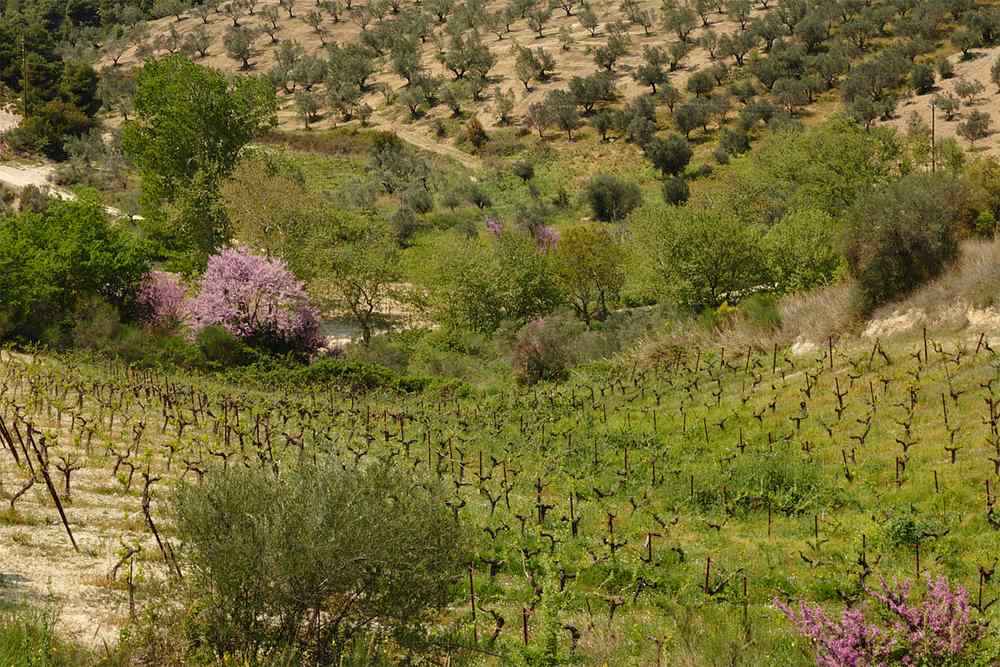
A Nemea wine day trip from Athens reaches Greece’s premier red-wine region in about 90 minutes, with rolling Agiorgitiko vineyards, family-run winery tastings and the ancient Temple of Zeus nearby. Make it effortless with a guided wine tour or skip-the-line tickets from My Greece Tours for the perfect blend of wine and history.
This rewarding wine-and-history escape is a highlight of the Athens travel guide. The sections below cover whether it is worth it, the Agiorgitiko grape, the wineries, ancient Nemea, how to get there, when to visit and the best way to do it.
Is Nemea worth a wine day trip from Athens?
Yes. Nemea is Greece’s leading red-wine region, 90 minutes from Athens in the north-eastern Peloponnese. It grows the prized Agiorgitiko grape and hosts dozens of wineries with tastings and vineyard lunches. The ancient Temple of Zeus nearby pairs wine with classical history.
For a wine drinker, a day trip to Nemea ranks among the most rewarding excursions from Athens. It combines open scenery, a serious native red and a dose of antiquity. Nemea lies about 120 kilometres south-west of the capital in the Argolid, a drive of roughly ninety minutes. This is the heart of Greek red-wine production and the country’s most famous wine region.
The rolling hills here run from sun-warmed valleys to cool, high-altitude slopes. Vineyards of the celebrated Agiorgitiko grape carpet the whole zone. The area holds wineries of every size, from internationally acclaimed estates to small family-run operations. Producers welcome visitors for tastings, cellar and vineyard tours, and lunches among the vines.
Beyond the wine, the archaeological site of ancient Nemea sits right in the region. Its standing Temple of Zeus and restored stadium let you pair a tasting with a classical monument. Fine Greek wine, quiet countryside and ancient ruins together make Nemea a satisfying day out from the city. It builds on the city tastings in the Athens wine tasting guide. The grape is the star of the region.
Where is Nemea and how far is it from Athens?
Nemea sits in Corinthia, in the north-eastern Peloponnese, about 120 kilometres south-west of Athens. The drive covers roughly 90 minutes via the A7 motorway toward Corinth, crossing the Corinth Canal. Nemea forms one of Greece’s largest quality wine zones.
Nemea straddles the boundary of Corinthia and the Argolid in the north-eastern Peloponnese. The wine zone gathers around the modern town of Nemea and the village of Ancient Nemea. From central Athens the drive covers about 120 kilometres, which translates to roughly ninety minutes on the motorway in normal traffic. The route crosses the Corinth Canal, the narrow channel that separates the Peloponnese from the Greek mainland.
The zone itself is far from flat. Vineyards climb from valley floors near 250 metres to high terraces above 800 metres on the flanks of the surrounding mountains. That altitude spread gives Nemea distinct pockets of climate within a compact area. Cooler high sites ripen the grapes slowly and hold acidity, while warmer valley plots deliver riper, rounder fruit. The result is one of the largest quality wine appellations in Greece, all within a short drive of one another.
What is Nemea known for in wine?
Nemea is Greece’s most important red-wine region and the home of the Agiorgitiko grape. It carries the PDO Nemea appellation, a protected designation of origin covering 100% Agiorgitiko reds. The zone ranks among the largest quality wine areas in the country.
Nemea built its reputation on one grape and one colour. This is red-wine country first, and the red in question is Agiorgitiko, grown here more widely than anywhere else in Greece. The name Nemea on a label signals the PDO Nemea appellation, a protected designation of origin under European law. Under those rules, a wine labelled PDO Nemea must be a dry red made entirely from Agiorgitiko grown within the demarcated zone.
The appellation covers a large territory by Greek standards, which gives Nemea both scale and range. Everyday bottles priced for weeknight drinking sit alongside barrel-aged, single-vineyard reds built to improve for a decade. That breadth is exactly what makes Nemea rewarding to explore over a day. You can taste the same grape rendered light and juicy at one estate, then deep and structured at the next. Nemea also produces rosé and white wines from other grapes, though these fall outside the red-only PDO rules.
Altitude shapes the character of Nemea reds as strongly as the grape itself. The appellation splits informally into three bands, and tasting across them is a large part of the region’s interest. Low-altitude vineyards on the valley floor ripen fully and give soft, fruit-forward wines for early drinking. Mid-slope sites balance ripeness with freshness. The highest terraces, on cool mountain flanks, hold acidity and firmer tannin, and their wines reward cellaring. A well-planned day often tastes one estate from a warm valley plot and another from a cooler hillside, so the contrast between the two lands clearly on the palate. Vintners here talk about their sites with the same pride you find in longer-established European regions.
What is the Agiorgitiko grape?
Agiorgitiko is the signature red grape of Nemea, nicknamed the “Blood of Hercules”. It yields soft, velvety reds with cherry and dark-berry fruit and gentle tannins. All PDO Nemea reds are 100% Agiorgitiko, ranging from juicy young wines to structured, age-worthy bottles.
At the heart of a Nemea wine experience stands Agiorgitiko, the native red grape that made the region famous. It ranks among the finest of Greece’s indigenous varieties. The name translates as “Saint George’s grape”, a nod to its deep local roots, and folklore ties it to the “Blood of Hercules” poured in the region’s myths. The variety thrives across Nemea’s varied terroir and produces the country’s best-loved red wines.
Agiorgitiko wins people over with an approachable, generous character. In its typical form it gives soft, fruity, velvety reds packed with red cherry, plum and dark-berry flavours. Smooth, gentle tannins and a rounded texture make it easy to enjoy and friendly at the table. That drinkability is a large part of why the grape travels so well beyond Greece.
The grape sits so central to the region that law requires all PDO Nemea reds to be 100% Agiorgitiko. Producers also render it as medium-sweet and sun-dried sweet styles outside the dry-red PDO. The variety flexes from light, juicy young wines to deeply coloured, structured, age-worthy reds. The most serious bottlings come off the cooler, higher-altitude vineyards. Tasting Agiorgitiko in its homeland, across all those expressions, is the great pleasure of a Nemea visit. It pairs cleanly with the region’s hearty food. The wineries themselves deliver the experience.
What do you do on a Nemea wine day trip?
A Nemea wine day trip visits two or three wineries for tastings and cellar or vineyard tours, with lunch among the vines. Trips often pair the wineries with ancient Nemea, Ancient Corinth or the Corinth Canal. A guided tour handles booking, transport and driving.
A typical Nemea day settles into an easy rhythm built around two or three winery visits. At each estate you taste a flight of Agiorgitiko and other wines, walk the cellar and often the vineyard, and hear how the family or team works the land. Tastings run with expert guidance, so you learn to read the differences between a young valley red and an oak-aged hillside bottling. A platter of local cheese, cured meat and olives frequently accompanies the wine.
Lunch is the anchor of the day. Many estates serve a table of regional dishes matched to their reds, taken on a terrace with the vineyards falling away below. Between stops you drive quiet country roads through the vines, with the mountains as a backdrop. The pace stays relaxed rather than packed, which suits a day built around wine.
Most visitors fold in one cultural stop to round out the outing. The archaeological site of ancient Nemea sits inside the wine zone and takes under an hour to see. Ancient Corinth and the Corinth Canal lie directly on the route back to Athens. Pairing two or three wineries with one monument gives the day both depth and variety without any rush.
A realistic timeline helps set expectations before you go. Leaving Athens at around nine in the morning puts you at the first estate before eleven, in good time for a tasting. A second winery and lunch fill the early afternoon, and a third stop or the ancient site rounds out the day by late afternoon. That leaves a comfortable return drive to Athens before evening. Booking each tasting to a rough time slot keeps the schedule from bunching, since estates prefer to know when a group is arriving. The unhurried pace is the point: a Nemea day trip rewards lingering over a glass and a view rather than racing between stops.
Which wineries can you visit in Nemea?
Nemea holds dozens of wineries open to visitors, from acclaimed estates such as Gaia, Skouras and Semeli to family cellars. They offer tastings, vineyard and cellar tours, and lunches among the vines. Tastings start from around €10. Most take visitors by appointment.
The real joy of a Nemea day trip lies in the wineries themselves, and the region offers a range to suit every level of wine knowledge. Nemea holds dozens of producers, from large, award-winning estates to small, characterful family cellars. Well-known names such as Gaia Estate, Domaine Skouras and Semeli Estate sit alongside operations where the winemaker greets you in person. Both ends of that scale reward a visit.
Estates open their doors for guided tastings of Agiorgitiko and other wines, plus tours of the cellars and vineyards. At the larger ones you can add a meal or a platter of local food, eaten among the vines with sweeping views over the wine country. The welcome tends to be warm and unhurried, which is part of Nemea’s appeal against busier, more commercial wine regions abroad.
Tastings usually deliver good value, often starting from around €10, and let you compare styles and vintages with expert commentary. One practical point matters above the rest: most wineries are not walk-in operations. Call or email two or three days ahead to arrange your visits, particularly at weekends or during the September harvest. Planning two or three winery stops makes for an ideal day. The variety and the warmth of the welcome carry the visit. The area also holds ancient history.
Choosing which estates to pair rewards a little thought before the trip. A common approach mixes one larger, well-equipped estate with a purpose-built tasting room and one smaller family cellar for a more personal welcome. The larger estates handle groups smoothly and often run set tasting menus, so they suit a first stop and a confident introduction to the grape. The family cellars trade polish for intimacy, and the winemaker’s own account of the vintage tends to stay with you. Spacing the two by a short drive through the vineyards, rather than clustering them, also gives the palate a rest and the day a natural shape. A guided tour usually curates this balance for you, matching the estates to the group’s interest and pace.
What is ancient Nemea and the Temple of Zeus?
Ancient Nemea is an archaeological site in the wine region, one of the four great venues of the Panhellenic Games. Its highlight is the fourth-century BC Temple of Zeus, with tall Doric columns re-erected, alongside the stadium and its athletes’ entrance tunnel.
A rewarding bonus of a Nemea wine day trip is the depth of ancient history in the region. You can fold a significant classical site into the same outing as your tastings. Ancient Nemea ranked as one of the four great venues of the Panhellenic Games, beside Olympia, Delphi and Isthmia. The site hosted the Nemean Games every two years in honour of Zeus, drawing athletes and spectators from across the Greek world.
The centrepiece is the imposing Temple of Zeus, a Doric temple of the fourth century BC. Several of its tall, elegant columns were re-erected in recent decades. They now stand dramatically against the surrounding hills and vineyards, a striking sight in the middle of wine country. The scale of the temple gives a clear sense of how important the sanctuary once was.
Nearby lies the ancient stadium, remarkably preserved, with the stone start line for the foot races still in place. Athletes entered through a vaulted tunnel, and you can walk the same passage into the arena. A well-arranged site museum displays finds and explains the games. According to myth, the games commemorated the infant Opheltes, and the site ties to one of the labours of Heracles, the slaying of the Nemean lion. This blend of wine and antiquity makes the day especially rich. It echoes the great ancient sites in the Delphi day trip guide. Reaching Nemea is straightforward.
Can you combine Nemea with other ancient sites?
Yes. A Nemea wine day trip pairs naturally with ancient Nemea’s sanctuary of Zeus and stadium, plus Ancient Corinth and the Corinth Canal on the route back. Mycenae and Nafplio lie a short drive south, linking wine, classical ruins and a harbour town.
Nemea sits in one of the richest corners of the Greek world for antiquity, which makes it easy to build a wine-and-history day. The sanctuary of Zeus at ancient Nemea, with its temple and stadium, forms the natural cultural anchor inside the wine zone. Adding it costs under an hour and needs no detour, since the site sits among the vineyards you are already visiting.
The route between Athens and Nemea passes close to two more landmarks. Ancient Corinth, with its Temple of Apollo and Roman remains, lies just off the motorway near the canal. The Corinth Canal itself, a narrow cut through solid rock, rewards a brief photo stop from the road bridge. Either fits neatly into the drive without adding real distance.
Travellers who want a fuller day can push a little further south into the Argolid. Mycenae, the Bronze Age citadel of Agamemnon, and the elegant harbour town of Nafplio both sit within a short drive of Nemea. That turns the outing into a loop of red wine and layered history. For most visitors, though, two or three wineries plus ancient Nemea already fill a satisfying day.
When is the best time for a Nemea wine trip?
Spring and autumn suit a Nemea wine trip best, when the weather stays mild and the vineyards look their finest. September, during the grape harvest, brings the liveliest atmosphere but the busiest cellars, so book ahead. Summer runs hot, and winter is quiet.
A little timing turns a Nemea day trip into a stronger experience. Spring and autumn are the most rewarding windows to visit. The weather stays pleasant, and the vineyards look their finest, lush and green in spring, golden and busy in autumn. Both seasons give comfortable walking weather for the vineyards and the archaeological site.
September stands out on the calendar. The grape harvest runs in full swing, and the region buzzes with energy and wine events among the vines. That vintage-time atmosphere is the most alive Nemea gets all year. It is also the busiest stretch for the cellars, so advance booking becomes essential rather than optional if you visit then.
The shoulders of the year need a little care. High summer turns hot on the valley floor, which makes midday vineyard walks tiring, though morning visits stay fine. Winter is quiet and green, but some smaller wineries cut their hours or open by appointment only. A quick call ahead in the off-season confirms who is open on your chosen day.
How do you get to Nemea from Athens?
Nemea lies about 120 kilometres south-west of Athens, a roughly 90-minute drive via the A7 motorway toward Corinth and Tripoli, then the Nemea exit. Public transport is impractical for winery-hopping, so driving or an organised wine tour with a driver works best.
Reaching Nemea by road is straightforward, but how you travel matters more than usual on a wine trip because of the tastings. By car, the region lies around 120 kilometres south-west of Athens, a drive of roughly ninety minutes. You follow the A7 motorway out of the city toward Corinth and Tripoli, cross the Corinth Canal, and take the exit for Nemea. The wine country then spreads out in the hills beyond the toll.
Public transport falls short for a wine day trip. The wineries scatter across the countryside, and no convenient bus network links them, so driving or an organised tour becomes essential. A rental car gives independence for those confident on Greek motorways and happy to manage the wine responsibly.
The wine itself drives the most important choice. Tastings involve alcohol, so a guided wine tour with a professional driver lets everyone taste freely and safely. Drivers going independently should nominate a designated non-drinking driver and spit or limit their pours. Guided tours from Athens handle the transport, the winery bookings and often a meal and a stop at ancient Nemea, removing the logistics. An early start makes the most of the day either way. The wider routes appear in the getting around Athens guide. The right plan turns it into a smooth day.
Do you need a designated driver for wine tasting?
Yes, if you drive yourself. Nemea tastings pour real measures across two or three estates, so someone must stay sober behind the wheel. The easiest fix is a guided wine tour from Athens with a professional driver, letting the whole group taste freely.
Wine tasting and driving do not mix, and Nemea makes that plain. A day here typically covers two or three estates, with a poured flight at each and wine over lunch. Greek drink-driving limits are strict and enforced, and the country roads between vineyards demand full attention. Someone in the party must therefore stay clear of the wine if you travel by car.
Two clean solutions cover it. The first is a designated non-drinking driver who spits or skips the tastings for the day. The second, and the reason most visitors book a tour, is a guided wine trip from Athens with a professional driver at the wheel. On a guided tour nobody has to abstain, and nobody navigates unfamiliar roads after tasting.
A guided tour also folds in the bookings, the timing and often the lunch and the ancient site. That turns a logistics-heavy outing into a simple pick-up and drop-off. For a group or a couple who both enjoy wine, the guided option almost always makes the day easier and safer. The questions below cover the points visitors ask most.
Frequently Asked Questions
How far is Nemea from Athens?
Nemea sits about 120 kilometres south-west of Athens, roughly a 90-minute drive via the A7 motorway toward Corinth and Tripoli, then the Nemea exit. The route crosses the Corinth Canal. Public transport is impractical for reaching the scattered wineries, so a car or a guided wine tour with a driver is the best way to make the trip.
What wine is Nemea famous for?
Nemea is famous as Greece’s most important red-wine region, producing wines from the native Agiorgitiko grape. By law, all PDO Nemea reds are 100% Agiorgitiko, a soft, fruity, food-friendly red. Styles range from easy-drinking young wines to structured, age-worthy bottles off the higher-altitude vineyards.
Can you visit Nemea wineries as a day trip from Athens?
Yes. Nemea works well as a day trip from Athens, since the drive runs only about ninety minutes each way. A typical day covers two or three wineries with tastings and lunch, often paired with the ancient site. Book the cellars ahead, and use a guided tour or a designated driver because of the wine.
Do you need a tour to visit wineries in Nemea?
No, but a tour makes it easier. Independent travellers with a rental car can book wineries directly and drive themselves, provided one person stays sober. A guided wine tour from Athens handles transport, bookings and often lunch and ancient Nemea, and lets everyone taste freely, which is why most first-time visitors choose it.
Can you combine Nemea wine tasting with ancient sites?
Yes. The archaeological site of ancient Nemea, with its fourth-century BC Temple of Zeus and preserved stadium where the Nemean Games were held, sits right in the wine region. Ancient Corinth and the Corinth Canal lie on the route back, so most wine day trips pair tastings with classical history in one day.
What is the best time of year to visit Nemea?
Spring and autumn are the best seasons for a Nemea wine trip, with mild weather and vineyards at their most attractive. September, during the grape harvest and wine events, brings the liveliest atmosphere but the busiest cellars, so book ahead. Summer runs hot at midday, and winter is quiet with reduced winery hours.