
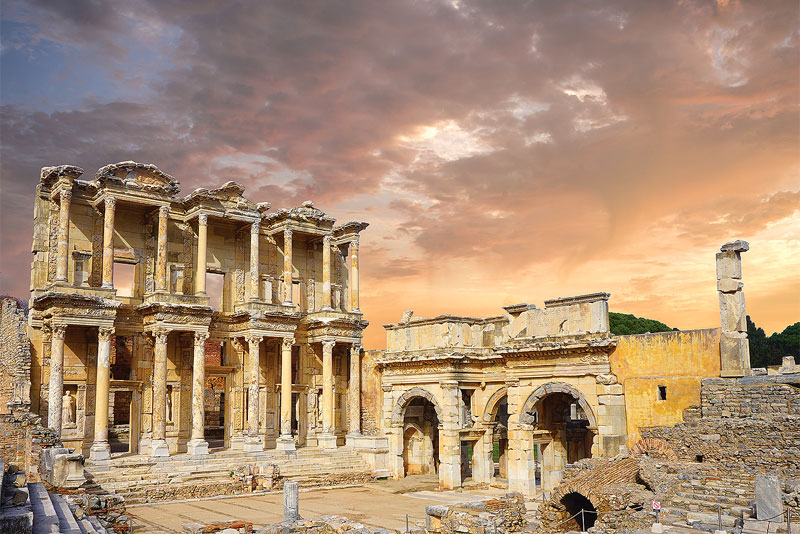
Embark on unforgettable Ephesus Tours with My Greece Tours! Discover the enchanting landscapes and rich history of Ephesus, Turkey. Delight in private Ephesus tours or day trips from Izmir and Kusadasi, guided by local experts. Experience the renowned Library of Celsus, Great Theatre, and inspiring Christian heritage sites. Capture stunning photography spots throughout the ancient ruins. Perfect for history buffs, families, or those seeking off-the-beaten-path adventures. Book your Ephesus guided tour today and step into the marvels of the Ephesus UNESCO site!
Embark on a journey through the sands of time with My Greece Tours as your expert guide in Ephesus! Discover why this ancient city, nestled between Greece and Turkey, is an unmissable UNESCO site. Dive into its rich history and archaeology with our fantastic Ephesus tour packages. From the breathtaking Library of Celsus to the grandeur of the Great Theatre, there’s something for everyone, be it families, history buffs, or off-the-beaten-path explorers. So grab your imagination (and your camera!), and let’s explore Ephesus like never before. Because, let’s face it, ruins have never been this much fun!
Overview
Embark on an unforgettable journey with My Greece Tours through the enchanting landscapes of Ephesus, where history mingles with mystery at every corner. Our Ephesus Tours, whether private or guided, whisk you away to explore must-see marvels like the iconic Library of Celsus, the towering Great Theatre, and the vibrant echoes of ancient city life. Ideal for history buffs, families, or the bold explorer seeking hidden gems, you’re guaranteed an experience that combines whimsy with wonder. Pack your curiosity (and camera), and delve into the Ephesus archaeological site, where the stones whisper secrets, and your guide animates tales from days of yore. Ruins have never been this much fun!
- Explore Ephesus with expert guides and enjoy history coming alive through tailored, humorous tours and engaging storytelling.
- Visit iconic sites like the Library of Celsus and Great Theatre, capturing stunning photos and soaking up history.
- Ephesus is perfect for history enthusiasts and families, offering private tours and off-the-beaten-path adventures.
- Conveniently reach Ephesus from Kusadasi or Izmir, and explore its rich archaeological site with ease.
- Our Ephesus Tours promise unforgettable experiences, blending ancient wonders with modern comfort and insights.
Discovering the Ephesus Ancient City
Get ready for an adventure like no other as you step into the Ephesus archaeological site, a legendary gem shimmering with history and culture. Our Ephesus Tours are the perfect gateway to this treasure trove, where ancient Ephesus unfolds its secrets one cobblestone at a time. From the mighty Ephesus city gates to the awe-inspiring Library of Celsus, every nook is a testament to times gone by. As you wander through Ephesus, prepare to feel as if you’ve entered a time machine whisking you through the marvels of this enchanting city. If there’s a city calling for your curiosity, it’s Ephesus. Embrace the energy and discover why the ancient city of Ephesus is the stuff of legend. Uncover the heart of Ephesus city life and marvel at the architectural brilliance that awaits. This city is not just a tourist spot, it’s a living museum!
Gather your sense of wonder, because Ephesus city promises a journey where stories etched in stone come to life.
Navigating through ancient Ephesus has never been this exhilarating!
Highlights of the Ephesus Ancient City Tour
Taking an ephesus tour is like walking through the pages of history, and boy, do we have tales to tell! Our Ephesus Tours dive deep into the rich tapestry of ancient Ephesus, offering a profound exploration through our expertly crafted ephesus tour packages. Discover the grandeur of the Library of Celsus and the bustling Agora in a way that even the gods of Mount Olympus envy. Dedicated guides escort you in small, interactive groups, ensuring your experience is lively and full of laughter. Unlike any regular tour, our tours ephesus offerings immerse you in tales of emperors and myth as each stone whispers its ancient secrets. Plus, it’s the perfect chance to snap unforgettable shots at renowned photography spots. Ancient Ephesus won’t be just any destination; it’ll be the stage where myths come alive, making every moment irreplaceable. So, let our knowledgeable guide transport you through time during this epic tour ephesus, where history, culture, and a touch of humor await your arrival!After exploring these historic marvels, consider indulging in these top activities to make your visit even more memorable:
- Attend a traditional Turkish carpet weaving demonstration and discover the artistry behind these beautiful crafts.
- Savor the local cuisine with a visit to a nearby village for an authentic Turkish lunch.
- Engage in a guided photography tour to capture the stunning landscapes and architecture of Ephesus at the perfect angle.These suggestions provide a perfect blend of excitement and culture.
Understanding the Historical Significance of Ephesus
Ah, Ephesus! The ancient, yes, I said ancient, marvel located in western Turkey that’s steeped in history and wonder! When you embark on Ephesus Tours, you’re diving into a world where the past dances with the present. Ephesus, with its rich historical essence, was a thriving civilization that whispered stories of glory and grandeur. This historical gem isn’t just any site; it’s a window into the lives of our ancestors. A visit to ancient Ephesus feels like sifting through the pages of a living history book, where every corner tells tales dating back centuries. As you meander through Ephesus, you’ll understand the brilliance of ancient architects who sculpted stunning monuments that still stand today. When it comes to Ephesus Tours, our adventures are meticulously crafted to ensure you soak up every historical detail. So, if you’re passionate about ancient wonders and have a penchant for the historical tales of Ephesus, our tours will be your ultimate ticket to unravel the mysteries of this ancient city. Ephesus isn’t just a visit, it’s an experience!
Ephesus Tours: Tailored Adventures
Ready to embark on the ultimate adventure through the captivating world of Ephesus? Our Ephesus Tours are designed to offer an unforgettable journey through ancient history. Dive into the enchanting realms of Ephesus and traverse through time with our specially crafted Ephesus tour packages! Each tour ensures a personalized experience, perfect for both history buffs and casual wanderers alike. Whether you’re exploring solo or with family, our tours Ephesus style are tailored for all kinds of travelers. Walk through the ruins, marvel at the captivating art, and immerse yourself in stories that date back millennia.
With countless options of Ephesus tours, you’ll find the perfect fit for your travel dreams. These tours provide not just a glimpse into ancient life but a deep cultural appreciation of Ephesus’ historical significance. So why wait? Dive into this travel adventure, where each corner tells a story and every stone whispers secrets of the past. Join us and make your next adventure an epic Ephesus tour you won’t forget!
Why Choose Ephesus Guided Tours?
Set off on an exciting journey through the timeless wonders of Ephesus with expert tour guides leading the way! Our Ephesus Guided Tours take the stress out of navigating the intricate history so you enjoy the fascinating tales that have echoed through centuries.
Whether you’re interested in the benefits of a guided tour or exploring at a leisurely pace with a private Ephesus guide, our tours are tailored for every traveler. Ephesus Tours provide the chance to marvel at the stunning ruins and uncover the secrets of the ancient city. Our expert guides are passionate about making history come alive, offering insights that are usually reserved for the adventurous. With options for both private Ephesus tours and group excursions, you dive into Ephesus’s vibrant past with maximum convenience and comfort. For those with an insatiable curiosity about the ancient world, Ephesus guided tours present the ultimate travel experience, ensuring your journey is rich in discovery and sprinkled with humor!
Benefits of Private Ephesus Tours
Embarking on a private Ephesus adventure is like having the entire ancient city whisper its secrets directly to you! With our meticulously curated Ephesus tour packages, your own private Ephesus guiding expert leads the way, ensuring you see every hidden treasure and iconic highlight at your pace. Forget the cattle-herding crowds of generic Ephesus tours; these private escapades give you the freedom to truly dive into the history and marvel at the ruins of Ephesus. From the moment you first experience Ephesus to the poignant final reflections, the tailored experience means no detail is overlooked. It’s the ultimate choice for those craving firsthand experiences of the magic that Ephesus holds.
What’s more, these custom tours Ephesus aren’t a one-size-fits-all deal. They’re designed to suit your interests, making every moment as engaging and enlightening as possible. Experience the grandeur, the mystery, and the tranquility as it was meant to be seen, with no rush and all the time to soak in this ancient masterpiece. Ephesus? Consider it explored, your way!
Exploring Selcuk Ephesus from Kusadasi
Get ready to dive into a magical journey from Kusadasi to the treasure trove of Selcuk Ephesus! Just a hop, skip, and a jump away from Kusadasi, the ancient city of Ephesus awaits with secrets waiting to be unwrapped by eager travelers. Embark on one of our delightful Ephesus Tours, and you’ll find yourself transported back in time to when grandiose structures graced this Turkey hotspot. Whether you’re a history buff or just in it for the exquisite storytelling and sights, experiencing Selcuk Ephesus is an absolute must! Our expertly crafted Ephesus Tours promise a whirlwind of wonder at every turn. Picture this: the delicate carvings on the Library of Celsus, and the bustling aura of ancient theaters echoing with footsteps from another era. Remember, travel isn’t just about kilometers; it’s about immersing yourself in history. And what’s better than having glorious Ephesus right at your doorstep in Kusadasi? So tighten your shoelaces and come, let us guide you through the splendid corridors of time!
How to Reach Selcuk Ephesus from Kusadasi
Embarking on Ephesus Tours is nothing short of a thrilling adventure, and it all begins with knowing how to reach Selcuk Ephesus from your cozy haven in Kusadasi. Nestled just a short drive away, the logistical journey is as smooth as olive oil on a Greek salad! The most convenient mode of travel is hopping on one of the frequent tours that kick off from the bustling port of Kusadasi. Alternatively, if you’re feeling the spirit of adventure, renting a motorcycle offers a chance to soak in the scenic views between Kusadasi and Selcuk Ephesus. For those lounging in Izmir, a swift transfer from the port ensures you’re at the heart of the Ephesus marvels in no time at all.
Choosing a port transfer service or a guided tour package is also highly recommended. So, start your journey to Ephesus equipped with these handy tips, and explore the wonders of ancient civilizations through our phenomenal Ephesus Tours.
Shore Excursions and Day Trips
Ready to embark on an exciting journey through time with our shore excursions and day tours of Ephesus? Whether you’re arriving from a cruise or planning a quick escape from city life, our excursions are perfect for those wanting a taste of the ancient world. We’ve got shore excursions that whisk you away into the heart of Ephesus, allowing you to explore the archaeological marvels and feel the echoes of history beneath your feet. Our expertly crafted day tours ensure you miss none of the entrancing details. From the moment you step off the ship, our excursions team is there to orchestrate a seamless and enriching adventure.
Each day on tour promises discovery, knowledge, and just a sprinkle of ancient magic. Whether it’s a quick day trip you’re after or a more leisurely stroll through centuries past, our excursions guarantee you’ll leave with stories to share and memories to treasure. So, when the urge to travel hits, join us for a day of unforgettable exploration through Ephesus. Patch those toga dreams together and dive into a truly remarkable excursion experience!
| Travel Options | Highlights | Duration |
| Guided Tour | Celsus Library, Grand Theatre | Half-Day |
| Private Excursion | House of the Virgin Mary, Terrace Houses | Full-Day |
| Self-Guided Visit | Temple of Artemis, Ephesus Museum | Flexible |
| Group Day Trip | Isa Bey Mosque, Basilica of St. John | Full-Day |
This table offers a concise overview of travel options and highlights for visiting Ephesus, capturing the spirit of adventure and history.
Must-See Sites in Ephesus Turkey
Welcome to the heart of ancient Ephesus, where history whispers through every stone! Embark on a spectacular journey with Ephesus Tours, where Turkey’s ancient treasures await your discovery. Begin your adventure at the Ephesus Museum, where artifacts tell the saga of eons gone by. Dive deep into the fabric of Ephesus, feeling the ancient world spring to life around you. Don’t miss the awe-inspiring Library of Celsus, standing as a testament to the thirst for knowledge in ancient Ephesus. Among the crown jewels of Ephesus Tours are the sites like the Grand Theatre, where echoes of past performances linger. As you stroll through this magnificent city, let our guided tours Ephesus illuminate the tales behind the temples and columns. Whether it’s a day tour or an in-depth exploration, our expertly crafted tours Ephesus ensure you don’t just visit, you experience. Revel in the wonder of Ephesus, where the timeless beauty of Turkey’s history beckons. Pack your bags, and let’s explore the enchanting sites of ancient Ephesus together!
Exploring the Library of Celsus and Beyond
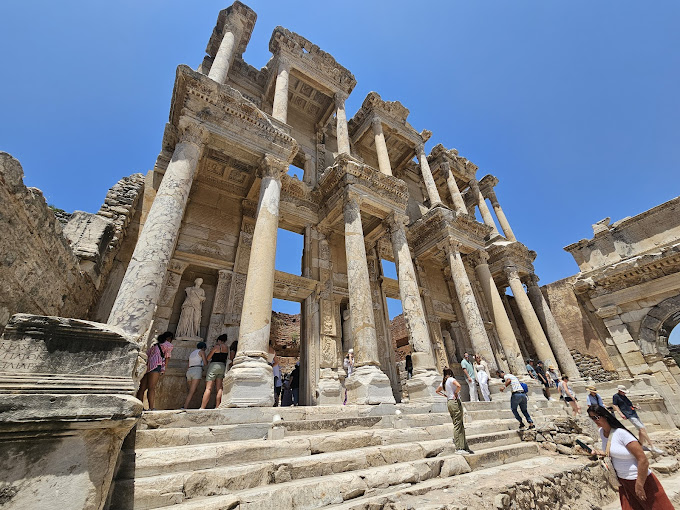
Welcome to the enchanting journey of Ephesus Tours, where the stories of ancient civilization come alive. Embark on this magnificent expedition to the ancient heart of Ephesus, known far and wide for the iconic Library of Celsus. This legendary city once thrived as a bustling metropolis in ancient times, drawing scholars, traders, and adventurers alike. As you wander through the very heart of Ephesus, you’ll marvel at this enduring testament to ancient architecture and wisdom. Tours Ephesus will guide you through the Library of Celsus, unraveling tales of its historical significance. Witness the intricate details that make it a standout landmark in Ephesus. But wait, there’s more!
On your Ephesus Tours, venture beyond the library and indulge in the mysteries that lie within the broader expanse of Ephesus. From hidden alleyways to majestic temples, your adventure continues beyond the realms of ordinary tours Ephesus. Join our Ephesus Tours and explore these captivating wonders, ensuring your journey through Ephesus is as timeless as the history etched in its stones.
Best Photography Spots in Ephesus
Looking to capture the perfect shot during your Ephesus Tours? You’re in for an ancient adventure with a multitude of amazing photography sites in Ephesus. First, make your way to the iconic Library of Celsus, where the beautifully preserved facade is an undeniable epic backdrop. Don’t miss the chance to snap the Great Theatre, standing proudly as one of Ephesus’s colossal attractions. For spellbinding angles, head to Curetes Street, where enchanting remnants unfold photographic potential at every turn. It’s not just about ancient architecture; the view from Ephesus’s Marble Street serves as a picturesque setting for any Ephesus adventure. While exploring your Ephesus Tour, remember to venture to the less explored The Odeon. A haven for those seeking a quieter moment amid ancient ruins. Feeling adventurous?
Capture stunning panoramic photographs from the top of Mount Koressos, overlooking the grand sweep of Ephesus. In Ephesus, wherever you point your camera, you’re certain to frame a piece of history. Add Ephesus Tours to your itinerary for an unforgettable photography adventure.
Embark on an unforgettable journey through the corridors of time with our Ephesus Tours and immerse yourself in the magic of the Ephesus ancient city! Whether you fancy an Ephesus private tour, a fun-filled Ephesus family-friendly tour, or an insightful Ephesus guided tour, we’ve got you covered! Ready to experience the wonders of the Ephesus archaeological site? Let the ancient whispers guide you with My Greece Tours and learn what to expect when visiting these ruins.
Joyful adventures await, packed with history, humor, and heaps of Greek-turkey charm!
Plan around the weather and the crowds with our guide to the best time to visit Ephesus, season by season.
A leading city of the New Testament, Ephesus in the Bible ties Paul, John and the Virgin Mary to the first of the Seven Churches of Revelation.
On the slope of Mount Pion lies the Cave of the Seven Sleepers, the grotto of the legend honoured by Christians and Muslims alike.
For the full story of the city, read the history of Ephesus, from its Greek founding to its Roman golden age and Byzantine decline.
Short on time? Our guide to one day in Ephesus sets out the downhill route and a sample itinerary for the whole site.
The spine of the ancient city is Curetes Street, the marble avenue running down from the Hercules Gate to the Library of Celsus.
In the hills above Selcuk sits Sirince village, a Greek-built wine village of white houses, an easy add-on to an Ephesus day.
On Curetes Street stands the ornate Temple of Hadrian, its arch crowned by the bust of Tyche, one of the best-preserved facades at Ephesus.
The statues and mosaics lifted from the site fill the Ephesus Archaeological Museum in Selcuk, home to the two Artemis statues.
Travelling from the Turkish capital? See our guide to Ephesus from Istanbul, a day trip built around a short flight to Izmir.
Plan the entry fees and passes with our guide to Ephesus tickets, covering the site, the Terrace Houses and opening hours.
On the hill in Selcuk stands the Basilica of St John, the great church Justinian raised over the tomb of the Apostle John.
Inland travellers reach the ruins from the regional capital: see our guide to Ephesus from Izmir, by road or the Izban train.
Halfway up Curetes Street, the Terrace Houses of Ephesus, the Houses of the Rich, preserve mosaics and frescoes under a protective roof.
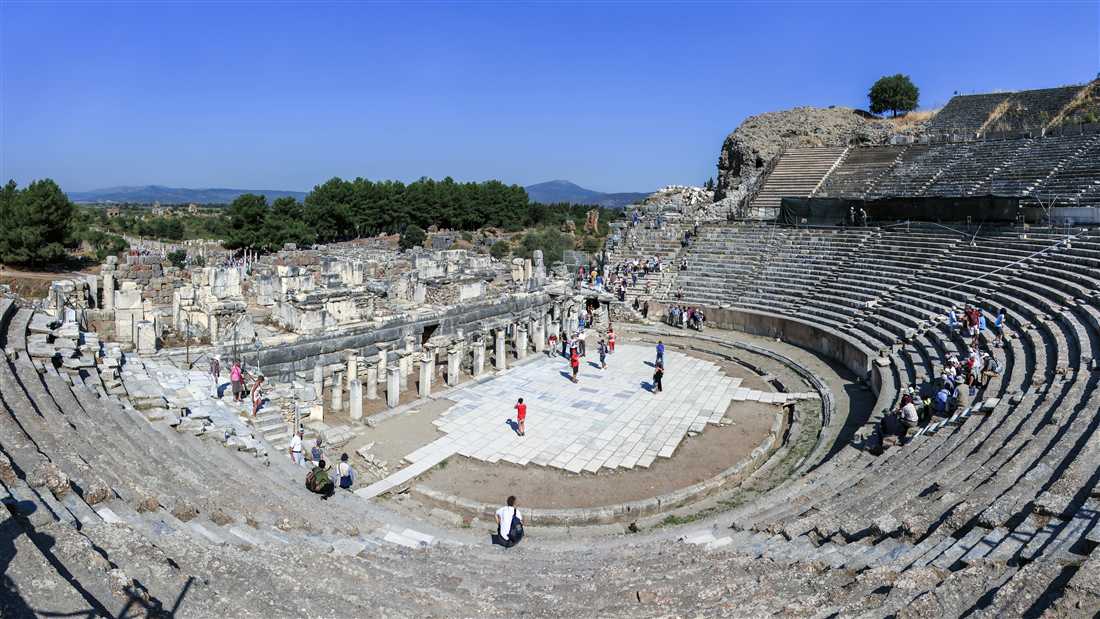
The climax of the site is the Great Theatre of Ephesus, the largest theatre of the ancient world, seating 25,000 above the harbour road.
The city’s greatest sanctuary was the Temple of Artemis, one of the Seven Wonders of the Ancient World, whose single column still stands near Selçuk.
On the hill above the ruins stands the House of the Virgin Mary, the pilgrimage shrine held to be Mary’s last home.
Cruise passengers reach the site in under half an hour: see our guide to Ephesus from Kusadasi, the flagship shore excursion from the port.
The signature monument of the ancient city is the Library of Celsus, the reconstructed two-storey Roman library facade at the foot of Curetes Street.
What is Ephesus and why is it worth visiting?
Ephesus is an ancient Greek and Roman city on Turkey’s Aegean coast, near Selçuk and Kuşadası, ranked among the best-preserved classical cities in the Mediterranean. It served as the capital of Roman Asia and holds UNESCO World Heritage status.
Greek settlers from Athens founded Ephesus in the Archaic period, and the city rose to prominence under the Ionian League. Rome absorbed it into the province of Asia in 129 BC and made it the provincial capital, seat of the proconsul, and the largest metropolis of the eastern empire after Alexandria and Antioch. At its height the population reached 250,000, drawn by the harbour trade, the cult of Artemis, and a road network linking the Aegean to inland Anatolia. Visitors touring the wider region pair the site with a Greece Tours itinerary across the eastern Aegean.
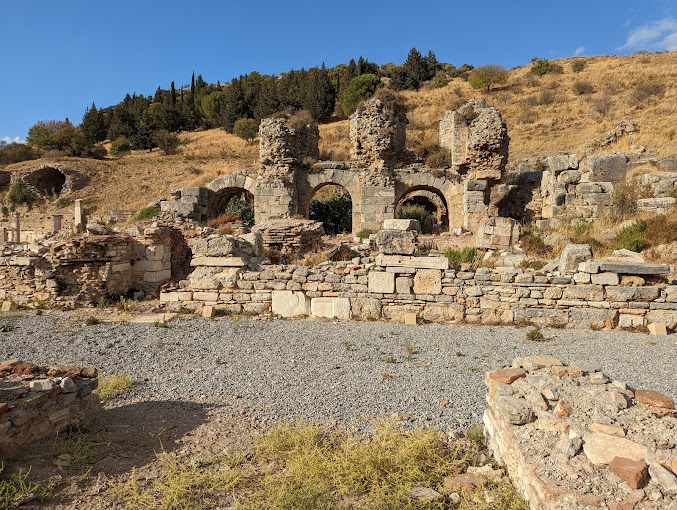
The archaeological zone stretches across two colonnaded avenues, a marble-paved civic centre, and a residential hillside excavated by Austrian teams over more than a century. What survives is unusually complete: standing façades, intact street grids, mosaic floors, and public fountains fed by aqueducts. Ephesus also anchors early Christian history as the home of one of the seven churches of Revelation and the destination of the Apostle Paul, who lived and preached here.
- Capital status — administrative centre of the Roman province of Asia.
- Preservation — standing marble monuments rather than foundation stubs.
- Scale — a walking route of roughly three kilometres through the excavated core.
- Heritage listing — inscribed on the UNESCO World Heritage List.
- Layered history — Ionian Greek, Hellenistic, Roman, and early Christian remains on one site.
The harbour silted up and the coastline retreated, which stranded Ephesus inland and froze its urban fabric in place. That accident of geography protected the city from later rebuilding, and the result is a Roman streetscape that reads almost as a plan. A day at Ephesus delivers monumental architecture, dense epigraphy, and a direct line into the daily life of a Mediterranean capital.
The city changed sites twice across its history. The earliest settlement clustered around the Temple of Artemis, the Hellenistic king Lysimachus relocated the population to the valley between Panayır and Bülbül hills, and the Byzantines withdrew to the fortified hill of Ayasuluk in Selçuk as the harbour failed. Each move left ruins, and the modern archaeological park preserves the Lysimachian and Roman core in its fullest state. Emperors from Augustus to Hadrian funded temples, baths, and fountains here, and the marble that lines the avenues came from the quarries of nearby Mount Panayır and the coloured stone trade of the eastern Mediterranean.
How do you get to Ephesus?
Ephesus sits three kilometres from Selçuk, about twenty minutes from the Kuşadası cruise port, and roughly one hour from İzmir. Day trips also run from the Greek island of Samos by ferry and from Istanbul by domestic flight into İzmir Adnan Menderes Airport.
The Kuşadası cruise terminal is the closest deep-water port, and shore excursions cover the twenty-minute transfer by coach or private car along the coastal highway. İzmir, the regional hub, connects to Ephesus by a one-hour drive on the O-31 motorway or by suburban rail to Selçuk followed by a short taxi ride. Selçuk itself is the gateway town, holding the train station, the bus terminal, and the Ephesus Archaeological Museum.
The Greek island of Samos lies directly across the narrow strait, and a passenger ferry crosses to Kuşadası in about ninety minutes, which makes Ephesus a realistic single-day excursion from the eastern Aegean islands. Travellers arriving from Istanbul take a domestic flight of about seventy-five minutes to İzmir, then continue overland to the site.
- Kuşadası cruise port — 20 minutes by road, the standard shore-excursion route.
- İzmir — 1 hour by motorway, or rail to Selçuk.
- Selçuk — 3 kilometres, walkable, cyclable, or a five-minute taxi.
- Samos ferry — 90 minutes across the strait to Kuşadası.
- Istanbul — 75-minute flight to İzmir, then overland transfer.
Two site entrances serve visitors: the Upper Gate near the Magnesia road and the Lower Gate near the ancient harbour. Groups arriving by coach enter at the Upper Gate and walk downhill through the city to exit at the Lower Gate, which turns the visit into a continuous descent rather than a loop. Private drivers reposition to the Lower Gate to collect passengers at the end.
Travellers on the Greek islands reach the site on a day trip: see our guide to Ephesus from Samos, the ferry-and-tour crossing from the island to the ancient city.
What are the must-see monuments at Ephesus?
The essential monuments are the Library of Celsus, the Great Theatre, the Temple of Hadrian, the Terrace Houses, Curetes Street, the Odeon, Marble Street, and the Gate of Augustus, all reachable on one downhill walk through the excavated city.
The route from the Upper Gate passes the civic quarter first, then descends the sloping main avenue to the monumental core around the library, and finishes along the harbour approach. Each monument marks a distinct function of the Roman city, from government to entertainment to commerce.
- Library of Celsus — the two-storey marble façade that defines the city’s image.
- Great Theatre — the vast hillside auditorium above the harbour road.
- Temple of Hadrian — an ornate Corinthian shrine on Curetes Street with carved reliefs.
- Terrace Houses — the wealthy residential complex with mosaics and frescoes.
- Curetes Street — the colonnaded avenue lined with fountains, shops, and statue bases.
- Odeon — a covered council chamber and small concert hall seating 1,400.
- Marble Street — the polished processional route linking theatre and library.
- Gate of Augustus — the triple-arched entrance to the commercial agora.
The Temple of Hadrian carries a delicate arch with a Tyche keystone and a Medusa relief over the porch, and it stands as the most photographed structure after the library. The Odeon, built into the upper city near the state agora, hosted the boule, the municipal council, and doubled as a roofed performance space. The Gate of Augustus opens onto the Tetragonos Agora, the square commercial market where harbour goods changed hands.
Curetes Street ties the sequence together, running from the Hercules Gate down to the library plaza, flanked by the Trajan Fountain, the Scholastica Baths, and rows of honorific statue pedestals. Walking it end to end is the spine of any Ephesus visit.
Marble Street carries the deep grooves of ancient cart wheels and links the theatre plaza to the library, and a carved footprint, a female head, and a heart pressed into one paving slab point toward a brothel that stood on the corner. The Gate of Augustus bears a trilingual dedication to the emperor, his wife Livia, and his family, cut into the marble lintels that framed the entry to the market. The Odeon’s semicircle of seats faces the state agora, where the council debated civic affairs and the priests of the imperial cult performed public rites. These smaller monuments fill the gaps between the headline structures and complete the reading of Ephesus as a working city.
What is the Library of Celsus?
The Library of Celsus is a two-storey marble façade completed in AD 117 as a monumental tomb-library honouring the Roman senator Tiberius Julius Celsus Polemaeanus. It held roughly 12,000 scrolls and its front carries statues of the four cardinal virtues.
Celsus governed the province of Asia as proconsul, and his son Gaius Julius Aquila financed the building as both a memorial and a public library. Celsus lies buried in a marble sarcophagus in a vaulted chamber directly beneath the ground floor, which makes the structure a rare fusion of grave monument and scholarly institution. The reading hall behind the façade stored scrolls in wall niches with a double-wall cavity that buffered the manuscripts against damp.
The façade uses a deliberate optical trick: the columns of the lower storey grow taller toward the centre and the platform curves, which exaggerates the width and height when viewed head-on. Four statues in the lower niches personify the qualities attributed to Celsus.
- Sophia — wisdom.
- Arete — virtue and excellence.
- Ennoia — thought and intelligence.
- Episteme — knowledge.
The originals stand in the Ephesus Museum in Vienna, and the statues on site are casts. Austrian archaeologists reassembled the collapsed façade from its scattered blocks in a process of anastylosis, fitting the original marble back into its ancient position wherever the fragments allowed. The rebuilt front rises to nearly sixteen metres and terminates the vista down Curetes Street, which is why it functions as the visual climax of the whole route through the city.
What is the Great Theatre of Ephesus?
The Great Theatre of Ephesus is the largest surviving theatre of the ancient world, seating roughly 25,000 spectators in a horseshoe cavea cut into Panayır Hill. Saint Paul faced the silversmiths’ riot here, and the venue still stages concerts.
The auditorium climbs the hillside in three tiers of stone seating divided by horizontal walkways and radiating stairways, rising more than thirty metres above the orchestra. Builders began the theatre in the Hellenistic period and Roman engineers enlarged it under the emperors Claudius and Trajan, adding a three-storey stage building faced with columns, niches, and statuary. The acoustics carry a speaking voice from the stage to the top row without amplification.
The theatre opens directly onto the Harbour Street, so audiences streamed in from the port and the marble avenues below. Beyond drama and music, it served as the assembly point for the city’s citizens, and the Acts of the Apostles records the crowd here shouting for two hours in defence of Artemis against Paul’s preaching.
- Capacity — approximately 25,000 seats across three tiers.
- Cavea — a horseshoe of stone benches set into the natural slope.
- Stage building — a multi-storey façade of columns and sculpture.
- Function — theatre, gladiatorial contests, and civic assembly.
- Modern use — a venue for concerts and cultural events.
From the upper rows the view runs down the arrow-straight Harbour Street toward the plain that was once the sea, which fixes the theatre’s role as the meeting point of the maritime city and its people. The scale alone explains why Ephesus counted as a first-rank Roman metropolis.
What are the Terrace Houses of Ephesus?
The Terrace Houses are the luxury hillside residences of Ephesus’s Roman elite, nicknamed the Houses of the Rich. They preserve intact mosaic floors, wall frescoes, marble cladding, and private courtyards, and enter on a separate ticket beneath a covered walkway.
Two blocks of residences climb the slope opposite the Temple of Hadrian, built on stepped terraces so that each house’s roof formed the courtyard of the one above. Seven grand residences share party walls around peristyle courtyards, and the wealthiest occupied more than 900 square metres over multiple storeys. Hypocaust heating warmed the rooms through underfloor flues, and clay pipes delivered running water to private latrines and basins.
A modern protective roof shelters the whole complex, and raised glass walkways carry visitors above the excavation while conservators continue piecing together thousands of fresco fragments. The decoration ranks among the finest domestic art surviving from the Roman world.
- Mosaic floors — geometric and figural panels in coloured stone.
- Wall frescoes — painted scenes of theatre, myth, and portraiture.
- Marble halls — reception rooms clad in imported coloured marble.
- Underfloor heating — hypocaust systems beneath the living quarters.
- Peristyle courtyards — colonnaded private gardens at the heart of each home.
One residence preserves a marble-panelled hall with a fresco of the Muses, and another retains a mosaic of Dionysus and painted portraits of philosophers. The separate ticket keeps the crowds thin, so the Terrace Houses offer the quietest and most detailed encounter with private Roman life anywhere on the site. Reserve at least forty-five minutes for the walkway circuit.
How do you visit Ephesus from a Kuşadası cruise ship?
Cruise passengers dock at the Kuşadası terminal and reach Ephesus in twenty minutes by coach or private car. Small-group and private shore excursions handle transfers, guiding, and skip-the-line entry, and return travellers to the ship well before all-aboard.
Ships berth directly at the Kuşadası pier, so no tender is needed, and passengers walk off the gangway into the port for their pre-arranged transfer. The standard shore excursion runs a coach to the Upper Gate, walks the city downhill with a licensed guide, and collects the group at the Lower Gate, which avoids backtracking uphill in the heat. Private tours substitute a car and a dedicated guide, set their own pace, and add or drop stops on request.
Timing is the governing constraint, and reputable operators build in a return buffer against traffic and queues so passengers reboard before the ship’s all-aboard call.
- Berthing — alongside the Kuşadası pier, no tender required.
- Transfer — 20 minutes each way by coach or private car.
- Small-group tour — shared guide, fixed itinerary, lower cost.
- Private tour — dedicated car and guide, flexible route and pace.
- Return buffer — schedules leave slack against the all-aboard deadline.
A typical cruise excursion spends three to four hours ashore, combining the archaeological site with the House of the Virgin Mary and a stop at the Temple of Artemis or a village lunch. Booking a guide who holds an official Turkish licence secures priority entry and accurate commentary, and choosing a private option guarantees the timing needed to protect the sailing.
How long do you need at Ephesus and what does a tour include?
Ephesus needs two to four hours as a minimum. A standard tour combines the archaeological site with the House of the Virgin Mary and the Temple of Artemis, and bundles skip-the-line entry, a licensed guide, and hotel or port transfers.
The core walk through the city from the Upper Gate to the Lower Gate takes about ninety minutes at an unhurried pace, and adding the Terrace Houses extends it by forty-five minutes. Half-day tours cover the headline monuments, while full-day itineraries fold in the surrounding pilgrimage and archaeological sites and a lunch stop.
A guided package removes the friction of tickets, orientation, and logistics, and delivers the historical context that turns marble ruins into a legible city.
- Ephesus archaeological site — the two-avenue walk through the excavated centre.
- House of the Virgin Mary — the pilgrimage chapel on Bülbül Mountain.
- Temple of Artemis — the wonder-of-the-world site outside Selçuk.
- Skip-the-line entry — priority access at the gates.
- Licensed guide — an official Turkish tourism-board guide.
- Transfers — pickup from the cruise port, İzmir, or Kuşadası hotels.
Full-day options add the Basilica of Saint John, the İsa Bey Mosque, and the hilltown of Şirince with a lunch of local produce and wine. The Terrace Houses carry a separate ticket that premium tours include on request. Water, sun protection, and closed walking shoes matter on the marble paving, which grows slick and hot underfoot. Two hours satisfies a cruise stop; a full day suits travellers who want the pilgrimage sites and the museum together.
What is the best time to visit Ephesus?
Spring and autumn deliver the best conditions at Ephesus, with mild temperatures and thinner crowds. Early morning or late afternoon avoids the midday heat and the peak of cruise-group traffic. The site opens year-round.
April, May, September, and October hold daytime temperatures in the comfortable range and keep the marble paving cool enough for a long walk. Summer brings intense Aegean heat with little shade across the open ruins, so a July or August visit demands an early start before the sun climbs. Winter stays mild and quiet, and clear cold days give the emptiest streets and the sharpest light for photography.
Cruise ships concentrate their passengers between mid-morning and early afternoon, which floods the library plaza and the theatre in a predictable window.
- Spring — April and May, wildflowers, mild air, moderate crowds.
- Autumn — September and October, warm days, cooling evenings.
- Early morning — first entry beats the heat and the coach groups.
- Late afternoon — golden light and departing tour buses.
- Winter — the quietest streets and the coolest walking.
Entering at opening or in the last two hours before closing puts the visitor ahead of or behind the cruise wave, which clears the Curetes Street sightlines and the library façade for unobstructed views. The gates operate every day of the year, with extended summer hours and shorter winter ones, so checking the seasonal closing time before arrival protects the end of a long walk downhill.
What else is near Ephesus?
Near Ephesus lie the House of the Virgin Mary on Bülbül Mountain, the Temple of Artemis, the Basilica of Saint John in Selçuk, the hillside village of Şirince, and the Ephesus Archaeological Museum, each within a short drive of the ancient city.
The House of the Virgin Mary crowns Bülbül Mountain above Ephesus, a small stone chapel identified as the final home of Mary and a pilgrimage destination endorsed by successive popes. The Temple of Artemis, one of the Seven Wonders of the Ancient World, stood on the plain below Selçuk, and a single reconstructed column now marks the vast footprint of the sanctuary that drew worshippers across the Mediterranean.
Selçuk itself carries the Basilica of Saint John, built by the emperor Justinian over the apostle’s traditional tomb on Ayasuluk Hill, alongside the İsa Bey Mosque and a Byzantine fortress.
- House of the Virgin Mary — the pilgrimage chapel on Bülbül Mountain.
- Temple of Artemis — a Seven Wonders sanctuary marked by one standing column.
- Basilica of Saint John — Justinian’s church over the apostle’s tomb in Selçuk.
- Şirince — a hillside village of Ottoman-Greek houses, fruit wine, and olive groves.
- Ephesus Archaeological Museum — the Selçuk museum holding the site’s finest finds.
Şirince sits eight kilometres uphill from Selçuk, a former Greek settlement of whitewashed houses producing fruit wines, olive oil, and handicrafts along stepped lanes. The Ephesus Archaeological Museum in Selçuk safeguards the movable treasures from the excavation, including the two marble statues of Artemis of Ephesus with their tiers of carved symbols. Together these sites turn Ephesus from a single monument into a full day of interlocking Greek, Roman, Byzantine, and Ottoman heritage across the Selçuk plain. The whole cluster fits inside a ten-kilometre radius, so a single guided itinerary threads the ancient city, the pilgrimage chapel, the wonder sanctuary, and the Byzantine basilica without a long transfer between them.
Frequently Asked Questions About Ephesus
Where is Ephesus and how do you reach it?
Ephesus lies beside Selçuk in Izmir Province on Turkey’s Aegean coast, about 20 minutes from the Kusadasi cruise port and an hour from Izmir. Ferries from the Greek island of Samos reach it in a day trip.
How long do you need to visit Ephesus?
A focused visit to the archaeological site runs two to three hours; a full guided tour that adds the House of the Virgin Mary and the Temple of Artemis fills four to five hours, the standard Kusadasi shore-excursion length.
What is the most famous monument at Ephesus?
The Library of Celsus is the signature monument of Ephesus, a reconstructed two-storey marble facade built in the second century AD as a monumental tomb-library, and the image most associated with the ancient city.
The Isa Bey Mosque at Selcuk stands among the finest works of Anatolian beylik architecture, below Ayasoluk Hill.
Compare the three bases in the guide to where to stay near Ephesus — Selcuk, Kusadasi and Sirince.
New to the region? The guide to how to get to Ephesus covers Selcuk, Izmir airport, the train, the Kusadasi cruise port and which gate to enter.
On Marble Street stands the brothel of Ephesus, marked by the famous footprint advertisement opposite the Library of Celsus.
Beside the Scholastica Baths stand the public latrines of Ephesus, the Roman communal toilets with their marble bench seats over running water.
Seven kilometres from the ruins lies Pamucak beach, the long sandy Aegean shore for a swim after a morning at Ephesus.
Find your way with the Ephesus map and walking route, from the Upper Gate down Curetes Street to the Library, theatre and harbour.
Beyond the ruins, see the best things to do in Selcuk — the museum, the Basilica of St John, Ayasuluk Castle and Sirince.
At the top of the city sits the Odeon of Ephesus, the small roofed theatre and council house on the State Agora.
Above Selcuk rises Ayasuluk Castle, the hilltop fortress beside the Basilica of St John with fifteen towers and a wide view to Ephesus.
Among the marble stand the beloved cats of Ephesus, the resident colony that greets visitors on the Library steps and warm stones.
At the top of the city rose the Temple of Domitian, the first imperial cult temple of Ephesus on Domitian Square.
From the Library runs Marble Street, the paved processional avenue to the Great Theatre with its cart ruts and footprint carving.
Below the theatre stretches the Arcadian Way, the grand colonnaded Harbour Street that once ran to the sea, lit by lamps at night.
The Prytaneion was the town hall of the upper city, home of the eternal flame, where the Beautiful and Great Artemis statues were found.
On Domitian Square stands the Pollio Fountain, the arched nymphaeum honouring the builder of the aqueduct that watered Ephesus.
Beside the Library stands the triple-arched Gate of Mazeus and Mithridates, the monumental entrance to the Commercial Agora built for the emperor Augustus.
At the head of Curetes Street rises the Memmius Monument, honouring the grandson of the dictator Sulla on Domitian Square.