
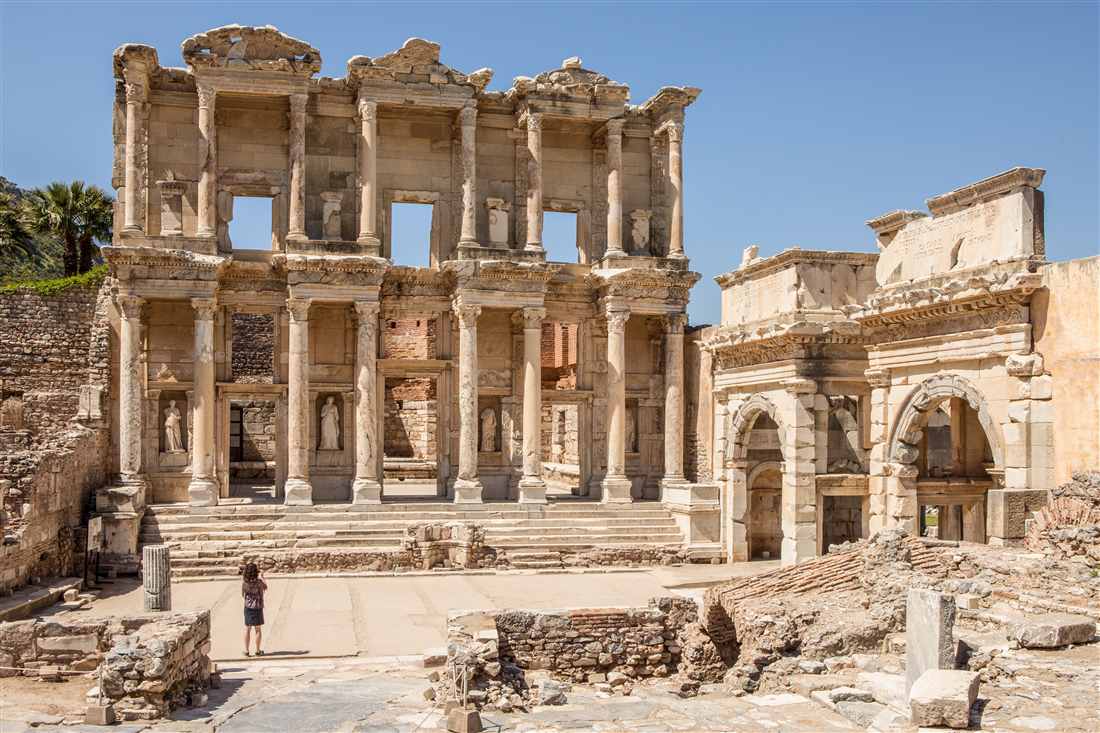
The best time to visit Ephesus is spring, from April to May, and autumn, from September to October, when the weather is warm but mild and the crowds thin out between the peak summer heat and the wet winter. Plan the whole trip with Greece Tours.
This guide covers the best time to visit Ephesus in full: the ideal seasons, the weather through the year, the best time of day, when the site is least crowded, what each season is like, how the Kusadasi cruise ships affect the crowds, what to pack, the opening hours by season, and a month-by-month rundown.
What is the best time to visit Ephesus?
The best time to visit Ephesus is spring, from April to May, and autumn, from September to October. These shoulder-season months deliver mild daytime temperatures of 20-27C, dry skies, wildflowers or a golden harvest landscape, and far thinner crowds than the packed summer peak.
Ephesus sits on the Aegean coast of Turkey near Selcuk and Kusadasi, and its climate divides the year into a punishing summer and a comfortable set of shoulder months. April, May, September and October each pair warm sunshine with air temperatures that let a visitor walk the entire marble site without heat exhaustion. Spring adds green hills and blooming poppies across the ancient theatre slope; autumn adds a warm sea for a post-visit swim and the grape harvest in the hillside village of Sirince. Both windows keep the archaeological zone open for the full daylight span, so a morning tour clears the ruins before the afternoon warms.
Crowd volume follows a similar curve. The July and August peak funnels cruise passengers, tour buses and independent travellers onto the same shadeless streets between 10am and 2pm, while April, May, September and October spread visitors thinner across the day. A spring or autumn arrival at the 8am opening gives an hour of near-empty terraces before the first Kusadasi coaches roll in. Planning a wider Aegean itinerary through Greece Tours lets a traveller slot Ephesus into the same mild-weather window that suits the Greek islands opposite.
The ranking of the four best months tips slightly by priority:
- May — warm, dry, long daylight, green landscape; the strongest all-round month.
- September — warm sea, settled skies, thinning summer crowds; the strongest autumn month.
- April — cooler, greenest hills, lowest spring crowds; a light jacket for mornings.
- October — mild, harvest season in Sirince, quiet ruins by month end.
A visitor who wants heat for a beach day tolerates June; a visitor who prizes empty ruins and low cost accepts the cool damp of March or November. The core recommendation holds: aim for the spring or autumn shoulder, arrive at opening, and reserve the summer midday for shade and water.
What is the weather like at Ephesus through the year?
Ephesus has a Mediterranean climate: hot dry summers with daytime highs of 33-38C, mild wet winters of 10-15C, and warm dry spring and autumn shoulders around 20-27C. Rain concentrates in the November to March window; June through September stays almost rainless.
The summer months of June, July and August define the extreme end of the range. Midday air temperatures climb to 33-38C, and the exposed marble of Curetes Street radiates additional heat, pushing the felt temperature past 40C at ground level. Humidity from the nearby Aegean adds to the load. Rainfall in these months drops to near zero, so the site stays dust-dry and glaring under a cloudless sky from morning to dusk.
Winter reverses the pattern. December, January and February bring highs of 10-15C and night lows of 4-8C, with the bulk of the annual rainfall arriving as showers and steady grey spells. The hills around Selcuk turn green, the crowds vanish, and the light sits low and soft across the ruins. Rain leaves the marble slick, so sturdy grip matters most in these months. Snow is rare at this sea-level site, though the surrounding mountains whiten.
The shoulder seasons hold the sweet spot. Spring warms from 18C in early April to 27C by late May; autumn cools from 28C in early September to 20C by late October. Both keep rain light and skies mostly clear. Sea temperatures track behind the air: cold at 16C in spring, a swimmable 24-25C through September.
The yearly weather bands break down as:
- Summer (Jun-Aug): 33-38C, near-zero rain, intense sun, high humidity.
- Autumn (Sep-Oct): 20-28C, light rain by late October, warm sea.
- Winter (Nov-Feb): 10-15C, peak rainfall, low soft light.
- Spring (Mar-May): 16-27C, greenest landscape, wildflowers.
The practical takeaway ties weather to comfort: sun protection dominates the summer, waterproofing and grip dominate the winter, and the shoulders demand only a light layer for cool mornings. To pair the site visit with the practicalities of entry, review the Ephesus tickets options before the trip.
What is the best time of day to visit Ephesus?
The best time of day to visit Ephesus is the first hour after the 8am opening or the last two hours before closing. Both windows dodge the midday cruise crush and the fiercest sun on the shadeless marble, delivering cooler air and clearer photographs.
The archaeological site has almost no shade. Curetes Street, the Library of Celsus facade, the Great Theatre and the agora all sit under open sky, so the walk between 11am and 3pm exposes a visitor to the full solar load. In summer this window is genuinely draining; in spring and autumn it is merely warm. An 8am arrival at the upper Magnesia Gate entrance lets a traveller descend the slope with the sun still low and the terraces empty, reaching the Library before the coach parties funnel up from the lower Koressos Gate.
The late afternoon offers the mirror image. From 4pm the cruise passengers return to Kusadasi to re-board, the coach fleet thins, and the light softens onto the honey-coloured stone of the Celsus facade, which faces to catch the western sun. Photographers favour this hour for the warm glow and the absence of crowds in the frame. The trade-off is heat still stored in the marble from the day, so water stays essential.
A time-of-day plan for a summer visit runs:
- 8:00-9:30am: enter at the upper gate, walk downhill in cool air and low crowds.
- 9:30-11:00am: reach the Library and Terrace Houses before the cruise peak.
- 11:00am-3:00pm: the crush and the heat; the window to avoid.
- 4:00pm-close: return for soft light and departed crowds.
Direction of travel matters as much as timing. Entering at the top and walking down saves the legs and puts the sun at the back for the descent past the fountains and temples. A visitor building a full-day plan finds a detailed hour-by-hour route in the guide to one day in Ephesus, which sequences the Terrace Houses and museum around the cool morning slot.
When is Ephesus least crowded?
Ephesus is least crowded on winter weekdays, and during the shoulder-season months of April, October and November on any midweek day without a cruise ship docked in Kusadasi. Crowd size tracks the cruise calendar more tightly than the season alone.
Three factors stack to determine how busy the ruins feel: the month, the day of the week, and whether cruise ships are berthed at the Kusadasi port 20 kilometres away. A single large cruise ship discharges thousands of passengers who reach the site in a coordinated coach wave between 9am and 1pm. On a day with two or three ships in port, the Curetes Street bottleneck near the Library packs shoulder to shoulder even in a quiet month. On a ship-free weekday in low season, the same street stands nearly empty.
The calendar layers on top. January and February hold the fewest visitors of the year, with the cool wet weather deterring all but the committed. March, November and early April stay quiet as the cruise season winds down or has not yet ramped up. May and September see moderate crowds that thin sharply outside the 10am-1pm cruise window. Midweek days everywhere beat weekends, when regional and domestic visitors add to the tour traffic.
To land the quietest possible visit, stack the factors:
- Pick a low-season month: January, February, March, November.
- Choose a weekday: Tuesday to Thursday over the weekend.
- Check the Kusadasi cruise schedule: target a day with zero ships in port.
- Arrive at 8am: claim the first hour before any coach wave.
The interaction of these levers explains why a July weekday with no ships in port beats a May Saturday with three ships docked. A traveller arriving on a day-trip from the coast benefits from checking the port calendar first; the route in from the resort strip is set out in the guide to Ephesus from Kusadasi, which times the transfer to reach the gate ahead of the ship coaches.
What is Ephesus like in summer?
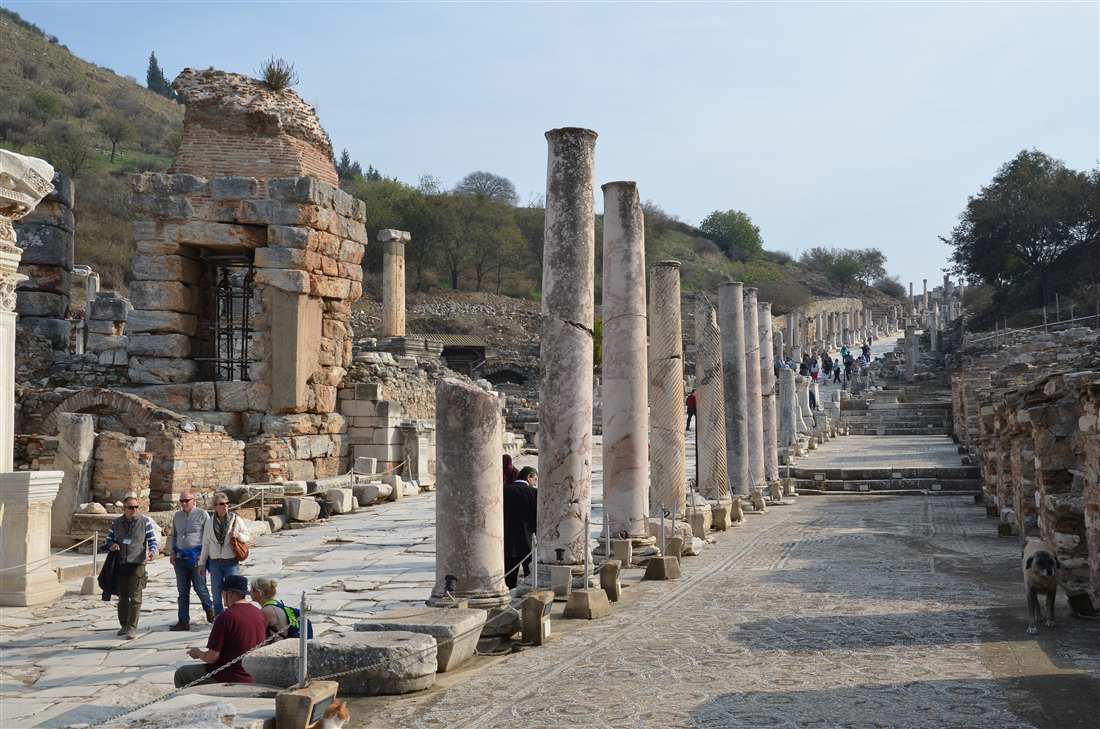
Ephesus in summer is hot, bright and busy. Daytime temperatures reach 33-38C with no shade on the marble streets, the largest crowds of the year arrive by coach and cruise, and a visitor needs water, a hat and sun cream to walk the full site in comfort.
July and August form the harshest stretch. The sun beats onto the pale limestone and marble of Curetes Street and the theatre steps, which store and re-radiate heat, so the felt temperature at ground level climbs past 40C by early afternoon. There is no natural canopy across the main axis; the only relief is the sheltered interior of the roofed Terrace Houses, which cost an extra ticket and hold cooler air. Dehydration and sunstroke are the real summer risks, not the ruins themselves.
Crowds peak in lockstep with the heat. The European school holidays, the height of the Kusadasi cruise season and the general summer travel wave converge, so the Library forecourt and the theatre fill densely between 10am and 2pm. Coach parks at both gates run full, and the queue for the Terrace Houses lengthens. The combination of heat and density makes the midday hours the least pleasant of the entire year to be on site.
A summer visit still works with the right kit and timing:
- Water: at least 1.5 litres per person; refill points are limited.
- Sun protection: a wide-brim hat, high-factor cream, sunglasses.
- Timing: enter at 8am, finish the open streets by 11am.
- Footwear: breathable closed shoes for the hot uneven marble.
June opens the summer with slightly gentler highs around 32C and a fraction fewer crowds before the school holidays peak. A summer traveller who commits to the early start and carries enough water experiences the full monument without the worst of the heat, then retreats to Sirince or the coast for the afternoon. The tickets and gate logistics for a hot-season visit sit within the Ephesus destination overview.
What is Ephesus like in spring?
Ephesus in spring is at its most beautiful. April and May bring warm days of 20-27C, hillsides of wildflowers and poppies, green slopes around the theatre, dry skies and moderate crowds, making the shoulder the ideal window for a comfortable and photogenic visit.
Spring transforms the landscape that frames the ruins. The winter rains leave the hills of Selcuk and the Ayasuluk fortress green, and by April poppies, daisies and wild fennel bloom among the fallen columns and along the Sacred Way to the Temple of Artemis. The marble reads warm against the fresh vegetation, and the air carries the scent of herbs off the surrounding slopes. Morning temperatures start cool at 12-15C and warm to a comfortable 22-27C by afternoon, ideal for the full downhill walk.
Crowds in spring stay moderate and manageable. April holds the lower volume as the cruise season builds slowly; May brings more coaches but spreads them across longer daylight. Outside the 10am-1pm cruise window, the streets stay open and walkable. The weather is reliably dry by May, with the last spring showers tapering through April, so a visitor plans an outdoor day with confidence.
Spring rewards a few small preparations:
- A light layer: mornings sit at 12-15C before warming.
- Comfortable shoes: the greenery hides uneven ground off the main paths.
- A camera: the wildflower-and-marble contrast is the year’s best.
- An early start: the cool morning gives empty terraces.
May stands out as the single strongest month of the year: long daylight, dependable dry weather, warm but not fierce temperatures, and a landscape at its greenest before the summer scorch browns the hills. A spring visitor pairs the ruins with a walk up to the Temple of Artemis and the Basilica of St John in Selcuk, both a short distance away, without the heat that makes such add-ons a chore in summer.
What is Ephesus like in autumn?
Ephesus in autumn is warm, settled and calmer. September and October bring highs of 20-28C, a sea still warm at 24C for a post-visit swim, dry stable weather, the grape harvest in nearby Sirince, and crowds thinning steadily from the summer peak.
September carries the tail of summer warmth without its ferocity. Daytime highs hold at 27-28C early in the month and ease toward 24C by its close, while the Aegean stays warm at 24-25C from the long summer heating, so a morning at the ruins pairs neatly with an afternoon swim on the Kusadasi coast. The skies stay dry and clear, and the light lengthens golden across the Celsus facade in the late afternoon.
October cools further to 20-24C and brings the first light rains by month’s end, but the weather stays largely stable and the landscape takes on autumn tones. The season coincides with the grape harvest in Sirince, the hillside village 8 kilometres from the site famous for its fruit wines, so an autumn visit combines the monument with a harvest-time tasting in the vineyards above the coast. The mild air makes the uphill walks around Selcuk pleasant again.
Crowds decline through the autumn:
- Early September: moderate, as summer traffic tapers.
- Late September: lighter, warm sea, strong all-round conditions.
- October: quiet, especially midweek, as the cruise season winds down.
- Late October: the first showers, the thinnest crowds of the shoulder.
Autumn rivals spring for the title of best season, and the choice between them turns on priorities: spring for wildflowers and the greenest hills, autumn for a warm sea and the harvest. A September visitor arriving at opening walks the Library forecourt in near solitude, then spends the warm afternoon on the coast, extracting the fullest use of a single settled day.
What is Ephesus like in winter?
Ephesus in winter is mild, wet and quiet. December through February brings highs of 10-15C, the year’s peak rainfall, the fewest visitors, shorter opening hours, and a low soft light across the ruins that photographers prize despite the grey damp spells.
Winter is the wettest stretch of the Ephesus year. Showers and longer grey spells arrive through December, January and February, greening the hills and leaving the marble slick underfoot. Daytime highs sit at 10-15C, and night lows drop to 4-8C, so a warm layer and a waterproof outer matter. Snow is rare at this sea-level site, and cold snaps pass quickly, but the damp lingers and the paths hold puddles between the columns.
The reward for the weather is solitude. Winter holds the fewest visitors of the year: the cruise season pauses, the coach fleet thins to a trickle, and a midweek visitor walks Curetes Street and the Library forecourt almost alone. The low winter sun rakes across the ruins at a shallow angle, throwing long shadows and warming the pale stone to gold in the clear spells, a light impossible to find under the high summer glare.
Winter demands a few adjustments:
- Waterproofs: a rain jacket and grippy soles for wet marble.
- Layers: a warm mid-layer for 10-15C days and cool wind.
- Shorter hours: the site closes earlier; the last entry moves up.
- Flexible timing: target a clear-sky gap between fronts.
The trade weighs empty ruins and dramatic light against damp weather and a shorter visiting day. A winter visitor who accepts the rain risk and packs for it walks the greatest monument of the ancient Aegean coast in a stillness the peak months never allow, then warms up over a meal in Selcuk. The full winter opening schedule and entry rules sit within the Ephesus tickets detail, which lists the seasonal last-entry time.
How do cruise ships affect the best time to visit?
Cruise ships drive the midday crush at Ephesus. Vessels dock at Kusadasi from spring through autumn and send thousands of passengers to the site by coach between 9am and 1pm, so planning around the port schedule matters more than the season for avoiding crowds.
Kusadasi is one of the busiest cruise ports on the Turkish Aegean, and Ephesus is its flagship shore excursion. A single large ship discharges thousands of passengers, and the shore-excursion coaches deliver them to the site in a tight window so passengers return before departure. The result is a predictable daily surge: the Library forecourt and the Curetes Street bottleneck pack densely from mid-morning to early afternoon, then empty as the coaches head back to the port for re-boarding.
The cruise calendar runs heaviest from May to October, with a shoulder either side. On a day with three or four ships berthed, the site absorbs a crowd that dwarfs the independent visitor traffic; on a day with none, even a peak-summer weekday feels open. Because the port publishes its ship schedule in advance, a traveller checks the Kusadasi arrivals for a chosen date and picks a zero-ship or single-ship day, sidestepping the crush that the season alone does not predict.
Planning around the ships follows a clear method:
- Check the port calendar: look up Kusadasi cruise arrivals for the date.
- Favour zero-ship days: the quietest visit at any time of year.
- Beat the coach wave: arrive at 8am, ahead of the 9am shore excursions.
- Use the late slot: after 3pm the ship passengers have departed.
The lesson for timing is that the cruise schedule overrides the seasonal average. An independent traveller who lands on a ship-free day in June enjoys thinner crowds than one who arrives on a three-ship day in April. A day-tripper from the resort strip who wants to arrive ahead of the coaches finds the timed route in the Ephesus from Kusadasi guide, which sets the transfer to reach the upper gate before the first shore excursion.
What do you pack for the Ephesus weather, and what are the opening hours by season?
Pack water, a hat, sun cream and sturdy closed shoes for the shadeless marble. Ephesus keeps long summer hours, opening at 8am and closing near 7pm in the warm months, and shorter winter hours closing near 5pm, with the last entry set an hour before closing.
The site rewards preparation for its two defining features: no shade and uneven ancient paving. Sun protection tops the list from April to October, when the exposed marble bakes under a clear sky. Footwear matters year-round, because the streets are worn, polished and slick when wet. Water is essential in the warm months, since refill points inside the site are limited and the walk from the upper gate to the lower gate covers well over a kilometre of open ground.
The seasonal packing list divides cleanly:
- Summer (Jun-Sep): 1.5+ litres of water, wide-brim hat, high-factor sun cream, sunglasses, breathable closed shoes.
- Shoulder (Apr-May, Oct): a light layer for cool mornings, sun cream, comfortable walking shoes, a small water bottle.
- Winter (Nov-Mar): a warm mid-layer, a waterproof jacket, grippy soles for wet marble, a compact umbrella.
- All year: a small backpack, a charged phone for photos, cash for the Terrace Houses supplementary ticket.
Opening hours shift with the season and the daylight. Through the warm half of the year the gates open at 8am and the site stays accessible into the early evening, giving the long day that suits an early-morning start and a late-afternoon return. Through the cool half the closing time pulls forward to the late afternoon as the light fades, compressing the visiting day. The last entry falls before the stated closing time in every season, so a late arrival risks a locked gate.
Two rules protect a visit against the timetable:
- Arrive well before the last entry, which sits an hour ahead of closing.
- Confirm the current seasonal hours and any holiday changes before travel.
The Terrace Houses and the on-site sequencing keep their own timing within the day, so a visitor allows two to three hours for the full ground plus the roofed complex. The current entry price, combined-ticket structure and seasonal timetable sit within the Ephesus tickets reference, which the traveller checks alongside the packing list before setting out.
Month by month, when is the best time to visit Ephesus?
Month by month, May and September rank highest, April and October follow closely, June and November stay comfortable, and December through March trade cold damp weather for the emptiest ruins. July and August bring the fiercest heat and the densest crowds of the year.
The first quarter holds the cold, wet, quiet months. January runs 10-13C with peak rain and the fewest visitors of the year, the light low and the hills green. February matches January, marginally drier by its end. March warms to 15-18C, the wildflowers begin, and the cruise season has not yet ramped, so the crowds stay light while the weather turns friendlier for the outdoor walk.
The spring and early-summer core delivers the year’s finest conditions. April climbs to 20-22C with the greenest hills and blooming poppies, crowds still moderate. May reaches 24-27C, dry and long-lit, the strongest all-round month. June opens the heat at 30-32C with fuller crowds as the school holidays and cruise season build, still workable with an early start.
The high-summer and autumn stretch splits sharply:
- July: 33-36C, no rain, densest crowds, shadeless glare; early start essential.
- August: 34-38C, the year’s hottest, peak cruise and holiday traffic.
- September: 27-28C easing to 24C, warm sea, thinning crowds; a top-two month.
- October: 20-24C, first light rains late, harvest in Sirince, quiet midweek.
The final months return to the low season. November cools to 15-18C with rising rainfall and sparse crowds, a mild quiet window for a visitor who accepts the shower risk. December drops to 11-14C with steady rain and the emptiest streets, the winter light raking gold across the marble in the clear gaps. The month-by-month verdict points a comfort-first traveller to May or September, a crowd-averse traveller to March or November, and a solitude-seeker to the wet stillness of January and February.
Frequently Asked Questions
What is the best time to visit Ephesus?
The best time to visit Ephesus is spring, April to May, and autumn, September to October. These shoulder seasons bring warm, mild weather in the low to mid-twenties Celsius and far thinner crowds than the hot, busy summer.
What is the best time of day to visit Ephesus?
Enter Ephesus at opening in the early morning or in the late afternoon. The marble streets carry no shade, so the cooler hours avoid the midday heat and the crush of cruise groups that fills the site from late morning.
Is Ephesus too hot in summer?
Summer at Ephesus is hot and shadeless, with July and August temperatures around 33 to 38 degrees Celsius on the open marble. A summer visit needs water, a hat and sun protection, and an early or late start to escape the peak heat.