
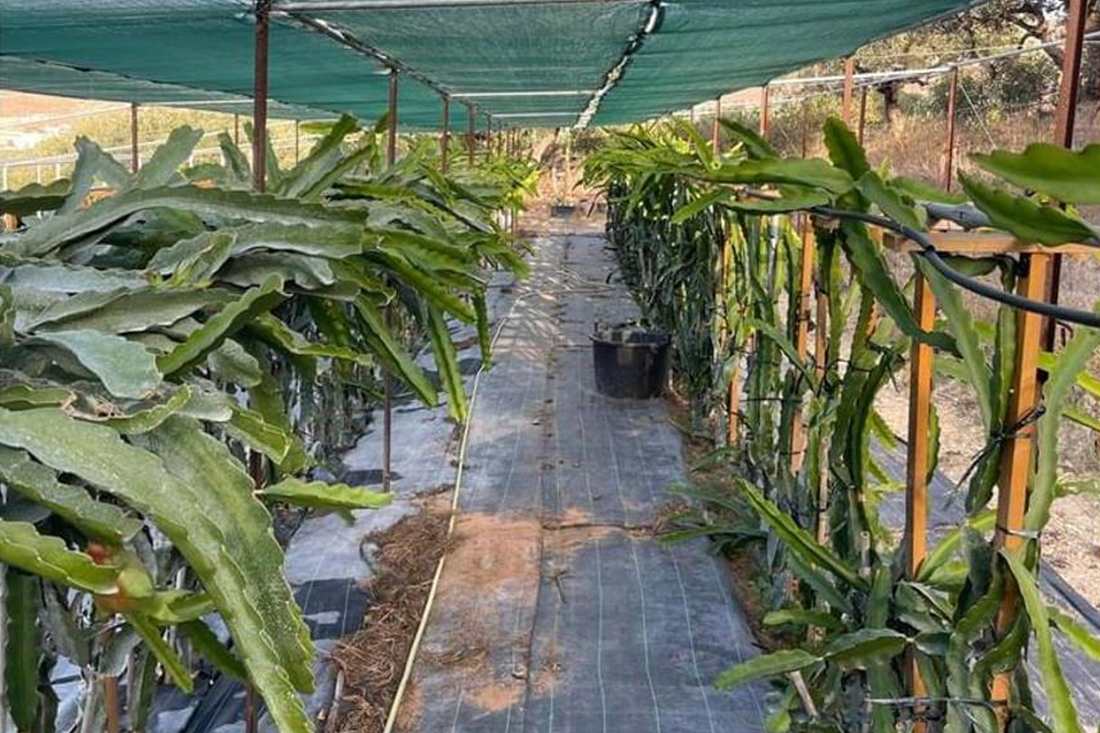
A Crete dragon fruit farm grows the pink, cactus-born fruit in the countryside around Heraklion, beside old olive trees. Guided farm tours walk the rows of climbing plants, show the flowers and end with a fresh tasting. Tours across the rest of the country are listed on Greece Tours.
The sections below cover the tours, where the farms are, how the fruit grows, the climate, the visit, the olive grove, pollination, the varieties, the tasting, the season, who it suits, inclusions, getting there and booking, with links into the Crete pages. The tours shown are checked on GetYourGuide and Viator.
What is a Crete dragon fruit farm?
A Crete dragon fruit farm is a working farm near Heraklion that grows pitaya. Pitaya is the fruit of a climbing cactus from Central America. Visitors walk the rows, learn how the plant grows and taste the fruit.
Dragon fruit is also called pitaya or pitahaya, its Spanish names. The main species is Selenicereus undatus, native from Mexico to Honduras. The genus name comes from the Greek word selene, meaning moon, as the flowers open at night.
On Crete the crop is new. One family in Prassas added dragon fruit to its olive land after olive oil prices fell. A Cretan travel source calls this the first organised dragon fruit cultivation on the island.
Farm visits also run on Naxos and Mykonos. A Crete dragon fruit farm stands apart, because its main crop comes from the tropics. A food tour across Crete covers the island’s dishes.
Which Crete dragon fruit farm tours can you book?
Four tours cover a Crete dragon fruit farm visit near Heraklion. Two GetYourGuide tours run at farms in Prassas and Voutes. A Viator private tour runs at the Prassas farm. A brunch tour there adds a farmers’ meal.
- Traditional Olive Grove and Dragon Fruit Farm Tour (GetYourGuide): Prassas, a guided walk with a drink at the end.
- Heraklion: Dragon Fruit Farm Tour & Fresh Tasting (GetYourGuide): Voutes, a guided tour with evening flower pollination.
- Heraklion: Olive Grove and Dragon Fruit Farm Private Tour (Viator): Prassas, the same farm walk booked through Viator.
- Olive and Dragon Fruit Farm Tour with Cretan Farmers Brunch: Prassas, a private 2-hour visit with brunch.
Cretan Dragon Farm runs the three Prassas tours. Alex Alexakis, the farmer, leads the walks in Greek and English.
These tours begin and end at the farm gate. The host greets guests there, then leads them through the olive grove and the dragon fruit rows.
I&M Dragon Fruit Farm runs the Voutes tour. Its visit includes a night-time pollination activity.

Where is the Crete dragon fruit farm?
Each Crete dragon fruit farm with tours sits close to Heraklion. Cretan Dragon Farm lies in Prassas, east of the city. I&M Dragon Fruit Farm lies in Voutes, a hill village south of the city. Both are short drives.
- Heraklion: the island capital and the starting point for both farm visits.
- Prassas: a rural area about 10 minutes’ drive east of Heraklion, at 110 metres.
- Voutes: a hill village 12 km from Heraklion, at 240 metres.
- Dia: an island in the bay of Heraklion, in view from the Prassas farm.
The Prassas farm stands at Evangelismou 135, off Agiou Alexandrou Street. A sign reading Dragon Farm Crete marks a right turn uphill. The car park lies 50 metres up, on the right.
From the Crete dragon fruit farm at Prassas, the sea lies about one kilometre away. Voutes sits higher, on a hill with wide views over the Heraklion area.
How does dragon fruit grow on a Crete dragon fruit farm?
On a Crete dragon fruit farm, the plant grows as a climbing cactus. Its green stems grip a post with small roots that grow in the air. Farmers train the stems upwards, add shade where needed and water with care.
- Stems: green, fleshy and three-sided, with small spines.
- Aerial roots: roots along the stems that cling to a support.
- Posts: upright supports that lift the stems off the ground.
- Shade: partial cover of around 30% that eases strong sun.
- Water: deep watering, with the topsoil left to dry in between.
In the wild, the cactus climbs trees and rocks to 10 metres or more. Farm plants trained on posts stay at about 2.5 to 3 metres.
Stems left on the ground face a higher risk of rot and fungus. Wet soil also rots the roots. A Crete dragon fruit farm therefore needs sandy, well-drained ground.
Growers raise new plants from seeds or from stem cuttings. A cutting is a firm, dark green stem piece of 25 to 45 cm long.
Why does the Cretan climate suit a Crete dragon fruit farm?
A Crete dragon fruit farm near Heraklion benefits from mild winters, long sunny summers and little frost. Dragon fruit cannot stand freezing weather, and frost is rare in Heraklion. The dry climate also spares the flowers from heavy rain.
Winter nights in Heraklion rarely drop below 9°C. Dragon fruit takes damage below 0°C and survives only short frosts. Mild coastal winters keep the stems safe.
The fruit needs at least 18°C to form. Heraklion averages around 26°C in July, with about 12 hours of sun a day. Summer days stay warm from June to September.
Heraklion gets about 464 mm of rain a year, with more in winter. Heavy rain makes the flowers drop and the fruit rot. Dry summers mean a Crete dragon fruit farm relies on watering. The plant handles heat up to 38 to 40°C.
What happens step by step on a Crete dragon fruit farm tour?
A Crete dragon fruit farm tour starts with a welcome at the farm gate. Then a host walks you through the olive trees and cactus rows. The visit ends at a table with coffee, tea or fresh fruit.
On the Prassas Crete dragon fruit farm tour, the GetYourGuide plan has two parts. A guided walk takes about 1 hour. A break of about 30 minutes follows.
- Welcome at the gate, where the host meets your group.
- Walk among the olive trees while the host explains the grove.
- Visit the snail farm, where snails are raised as a Cretan delicacy.
- Walk through the dragon fruit rows and see the climbing cactus up close.
- Pick your own dragon fruit when ripe fruit is on the plants.
- Sit on the patio for a drink and a tasting.
The snail farm recycles cuttings from the dragon fruit plants. The snails eat these green clippings, so little goes to waste. Snails, called chochlioi in the local dialect, are a prized dish on Crete.
The I&M Crete dragon fruit farm in Voutes runs a different plan. Guests walk through the farm and learn how each variety grows. The visit includes a night-time part, when the flowers open and get pollinated.
What does the olive grove add to a Crete dragon fruit farm tour?
The olive grove adds the older half of the story. On the Prassas Crete dragon fruit farm, one family has grown olives for more than five decades. Guests learn how the trees are grown, harvested and turned into oil.
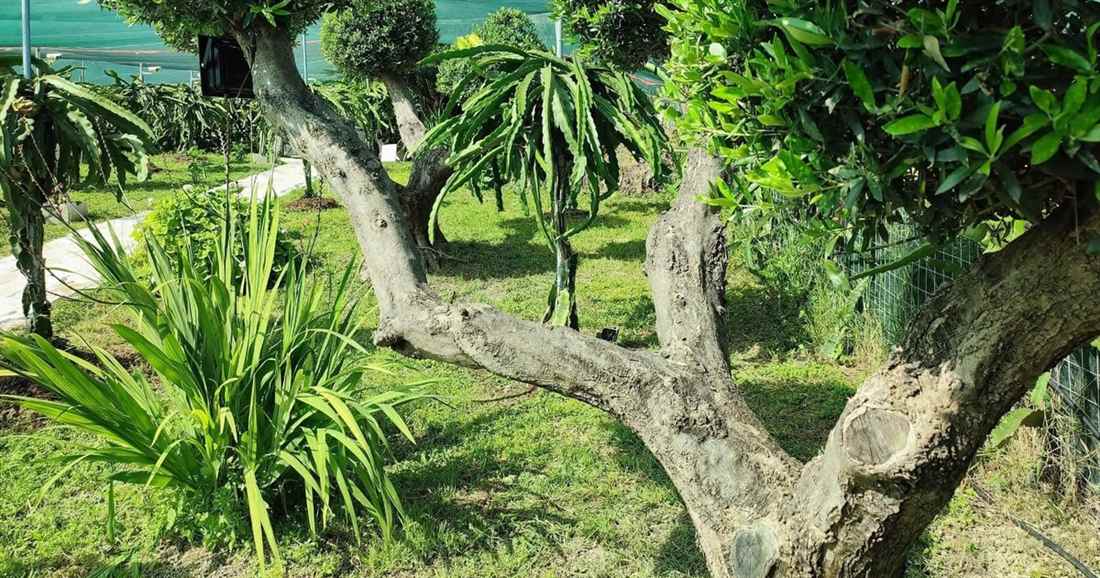
The family once made olive oil and raisins from the same land.
During the walk, you can see and touch the harvest tools and try them yourself. For more on the oil, see Crete olive oil and olive oil tasting on Crete.
How are the flowers pollinated on a Crete dragon fruit farm?
Dragon fruit flowers open for one night only. In the wild, bats and moths carry the pollen. On a Crete dragon fruit farm, growers do this job by hand. They move pollen from one flower to another.
Each white flower can reach 35 centimetres across. It has a sweet smell that draws night insects. By the following evening, the flower has wilted.
Where dragon fruit is a new crop, natural pollinators are scarce. Hand pollination fills that gap and raises the number of fruits. Pollen from a second, different variety gives a better fruit set, meaning more flowers turn into fruit.
- Wait for dark, when the flower opens fully.
- Collect pollen from the flower of one plant.
- Place it on the stigma, the sticky tip at the centre of another flower.
- Finish by early morning, before the flower starts to fade.
- Wait 4 to 8 weeks for the fruit to form.
Bees visit the open flowers in the early morning. At the I&M Crete dragon fruit farm in Voutes, guests watch hand pollination in the evening.
Which dragon fruit varieties grow on a Crete dragon fruit farm?
The I&M Crete dragon fruit farm grows varieties from three groups, sorted by the colour of skin and flesh. These are red with white, red with red, and yellow with white. Each group has its own named types.
The farm listings do not name each plant. Below are the named types that farming sources describe, one line each. Botanists place these climbing cacti in one plant group, called Selenicereus.
- Selenicereus undatus: pink-red skin, white flesh and black seeds, the type seen in shops.
- Selenicereus costaricensis: red skin, pinkish-red flesh and black seeds.
- Selenicereus megalanthus: bumpy yellow skin, crisp white flesh, and the sweetest taste.
- American Beauty: pink skin and deep purple flesh; it sets fruit with its own pollen.
- Vietnamese White: mild white flesh, and a strong pollen giver for other plants.
- Palora: a yellow-skinned type with very sweet white flesh.
On a Crete dragon fruit farm, unripe fruit has green flesh. As it ripens, the flesh turns its final colour, depending on the variety. The skin carries fleshy scales that look like a dragon’s, which gives the fruit its name.
What do you taste on a Crete dragon fruit farm?
At the I&M Crete dragon fruit farm, you taste fresh dragon fruit and a natural juice. At Prassas, you pick coffee or a dragon fruit and Cretan herb tea. Then you try the farm’s own olive oil.
Ripe dragon fruit tastes mildly sweet, like a cross between kiwi and pear. The juicy flesh is crunchy, with tiny black seeds that you eat too. Unripe fruit has almost no flavour.
The Prassas Crete dragon fruit farm owner calls the fruit rich in vitamin C and calcium. It also holds iron, magnesium and antioxidants, which protect cells from damage. A 100-gram serving has about 57 calories and 3 grams of fibre.
The Prassas farm also sells olive oil, olives, its harvested dragon fruit and dragon fruit tea. A separate brunch tour serves omelette, dolmadakia (stuffed vine leaves), vegetable pies, salad and dakos rusks. For more Cretan flavours, add a Heraklion food tour, a Crete cheese tasting or a Crete cooking class.
When is the season on a Crete dragon fruit farm?
The main season on a Crete dragon fruit farm runs from late spring to September. Flowers open on warm summer nights, and fruit ripens one to two months later. Cretan Dragon Farm opens its gates to visitors in this window.
Flower buds form at the tips of the stems about 21 days before they open. Each flower opens in the evening and lasts a single night. A healthy plant repeats this cycle through the warm months.
A plant nursery in Rethymno, on Crete, says the cactus bears fruit three to six times a year. For weather month by month, see the guide on when to visit Crete.
- Late spring: first buds on the stem tips
- Summer: night flowers and young green fruit
- High summer: ripe fruit, cut from the stems by hand
- Out of season: green climbing stems, the olive grove and the snail farm
Who suits a Crete dragon fruit farm tour?
Families, couples, private groups and cruise visitors in port enjoy a Crete dragon fruit farm tour. The farm walk fits all fitness levels. The tours at Prassas are not wheelchair accessible, as the farm ground is uneven.
Children enjoy the spiky fruit, the snails and the chance to pick their own fruit. One listing leaves out babies under 1 year and people over 95. On the brunch tour, infants sit on an adult’s lap.
The Viator and brunch tours at Prassas are private, so only your group walks with the guide. Service animals are welcome. More family days out appear in the guide to Crete with kids.
The I&M tour at Voutes includes an evening walk for the pollination. It suits older children and adults happy to stay out after dark. The shorter Prassas tour fits easily into a day in port.
How long does a Crete dragon fruit farm tour last, what is included, and how do you get there?
A Crete dragon fruit farm tour at Prassas lasts 1.5 to 2 hours. A guided walk and a drink are included. The I&M tour at Voutes adds fresh fruit and juice. Guests reach both farms by car or taxi.
- GetYourGuide walk at Prassas: 1.5 hours in total, with a drink
- Viator private tour at Prassas: about 2 hours, with Greek coffee or espresso
- Farmers brunch version: the farm walk plus a Cretan farm brunch and water
- I&M tour at Voutes: fresh dragon fruit, natural juice and the night pollination
Prassas lies 7 km from Heraklion, in the hills behind the city. Both farms sit off the main roads, so a car or taxi reaches the gate.
The listings name no hotel pick-up, so a taxi or hire car covers the drive. For a base near the farms, see where to stay in Crete. For a rougher mountain drive on another day, try a Crete jeep safari.
How do you book and cancel a Crete dragon fruit farm tour?
You book a Crete dragon fruit farm tour online on GetYourGuide or Viator. The Cretan Dragon Farm website sells tickets too. All three listings give a full refund if you cancel at least 24 hours before the start.
Each Crete dragon fruit farm listing shows its start times once you pick a date. Viator confirms the booking at once and sends a mobile ticket. Guests book the private Prassas tour about 25 days ahead on average.
Cancel through the same website you booked on. A cancellation inside the last 24 hours gets no refund. The brunch tour at Prassas follows the same 24-hour rule.
Frequently Asked Questions
Can you take produce home from a Crete dragon fruit farm?
Yes. The Prassas farm sells olive oil and olives packed for travel. It also sells dragon fruit tea and any fruit you picked yourself. Its website runs an online shop too. Fruit ordered there is cut to order, so it arrives fresh.
Are dragon fruit flowers edible?
Yes. A plant nursery on Crete notes that the yellow-green flowers are edible as a tea. The flowers stay open from night until the next morning. On a Crete dragon fruit farm, each spent flower’s base swells into young fruit in about a week.
What are the opening hours at Cretan Dragon Farm?
The farm opens from 08.00 to 20.00 between late spring and September. Its green hillside looks out across the sea to the island of Dia. After the Crete dragon fruit farm, round off the day with a wine tasting near Heraklion.
Can you stay overnight on a Crete dragon fruit farm?
Yes, at Prassas. The family has added a glamping area inside the property. Glamping means camping in nature without giving up modern comforts. Guests wake up among the olive trees and dragon fruit rows of the Crete dragon fruit farm.
How does the farm grow fruit without heavy chemicals?
The Crete dragon fruit farm at Prassas uses no heavy pesticides. It feeds its plants with organic fertiliser. Unwanted dragon fruit cuttings and leaves feed the farm’s snails, along with fresh olive tree clippings. Snails are a sought-after delicacy on Crete.