
A Naxos farm tour is a visit to a working family farm in the villages of Naxos, with its animals, crops and kitchen, and a cooking class, a tasting or a meal at the farm table. Tours across the rest of the country are listed on Greece Tours.
The sections below cover the tour formats, where the farms are, farm cooking, the olive oil and honey breakfast, the Tragea farm, the children’s edition, the Kouros of Melanes and the Temple of Demeter, the local produce, getting there, the season and booking, with links into the Naxos pages. The tours shown are checked on GetYourGuide and Viator.
What is a Naxos farm tour?
A Naxos farm tour is a half-day visit to a working family farm on the island, where guests walk the crops, meet the animals and eat what the land produces. Tours run from two to four hours.
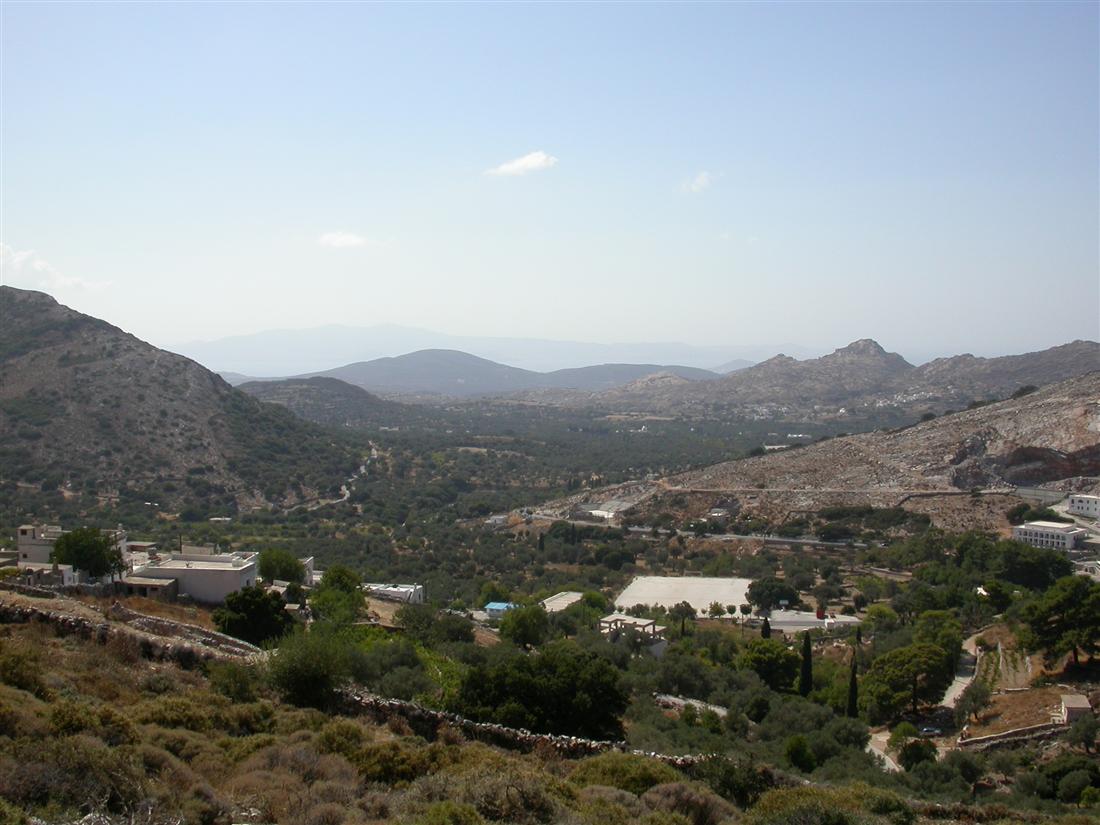
Naxos holds more farmland than any other Cycladic island. Rain gathers on Mount Zas, the 1,001 metre peak above Filoti, and that water keeps terraces, olive groves and vegetable plots alive through the dry months. Farm tourism grew from this: instead of shipping produce to hotels, families open their gates and cook for visitors.
The farms sit inland, away from the beach strips at Agios Prokopios and Plaka. Sangri, Melanes, the Tragea valley and the slopes above Yastra all hold working holdings within a short drive of Naxos Town. A Naxos farm tour runs in a small group, with the host family leading the walk and the kitchen.
Which Naxos farm tour formats can you book?
A Naxos farm tour comes in seven shapes, from a farm walk with cooking and Greek dancing to a children’s edition, with olive oil and honey breakfasts, farm-to-table lunches, herb walks, wood-fire cooking and a family table with live music in between.
The Greek Familia in Sangri runs a four-hour Naxos farm tour that opens with a walk through vegetable gardens, continues with feeding goats, donkeys, ducks and chickens, and finishes with a cooking session and a dance lesson. Bread is baked in the farm oven, vegetables are picked, and the meal is shared.
Perivoli, near Melanes, builds its day around a wood oven. Guests collect eggs, cross the olive grove, walk the potato fields and sample seasonal fruit, then cook an omelette, zucchini balls and a main dish such as briam over the fire. The Flerio family table in Melanes closes its day with live violin and lute.
- Farm walk with cooking class and Greek dancing, four hours, Sangri
- Olive oil and honey tasting with breakfast, two hours, Yastra
- Farm-to-table cooking class with lunch, three and a half hours, Yastra
- Tragea farm experience with animals and herbs, two hours
- Children’s farm tour, two hours, Sangri
- Wood-fire cooking class, four hours, Melanes
Where are the farms on a Naxos farm tour?
The farms on a Naxos farm tour sit inland: Sangri in the south-west, Melanes and Flerio close to Naxos Town, the Tragea valley around Halki and Filoti in the centre, the Yastra slopes in the north-west, and Potamia just outside the capital.
Sangri village lies about 11 kilometres south of Naxos Town, a drive of roughly 13 minutes. The Greek Familia keeps its gardens, animals and kitchen here, and the family explains the history of the village of Sangri during the Naxos farm tour. Melanes is a small village inland from the coast; Perivoli sits near it, ten minutes from Naxos Town, and Estia Kouros Empeiria works the Flerio ground beside the village.
The Tragea valley runs from Halki up to Filoti, and its olive groves cover the fertile soil below Mount Zas. A Naxos farm tour in the valley starts in Drymalia and passes villages such as Kaloxylos, Damalas and Kerami, part of the Naxos villages circuit. The Korres estate at Yastra lies between 200 and 450 metres above sea level, half an hour from Naxos Town and two kilometres from Abram Beach.
What happens on a Naxos farm tour with a cooking class?
A Naxos farm tour with a cooking class starts in the garden and ends at a shared table. Guests pick the vegetables, herbs and fruit they will use, then chop, knead and simmer with the host and eat the dishes together.
The garden is the first stop on a Naxos farm tour with cooking. At Perivoli the basket holds tomatoes, artichokes and potatoes from the family plots, fruit from roughly one hundred trees, and eggs lifted from the coop that morning. The wood oven in the yard does the rest, and what comes out are recipes handed down in the family.
At the Korres estate above Yastra the session runs three and a half hours with Markos, a co-owner and professional chef, and the meal is a seasonal salad, two appetisers and one main course. Basiliko in Potamia cooks for vegetarians, vegans and guests who avoid gluten. The wider picture of island kitchens belongs on the guide to Naxos cooking classes.
- Walking the gardens, orchards and fields
- Picking vegetables, fruit and herbs
- Meeting and feeding the farm animals
- Cooking over a wood fire or an open flame
- Sharing the meal with local wine and bread

Which Naxos farm tour includes olive oil and honey tasting with breakfast?
The olive oil and honey tasting with breakfast is a Naxos farm tour of two hours at the Korres estate at Yastra. Guests walk the olive grove, enter the apiary with the beekeeper, taste both products and eat a farm-to-table breakfast.
The walk follows the terraces of the estate’s olive grove, where the host explains the oil-producing varieties, the organic cultivation and the harvest. The apiary visit comes next on this Naxos farm tour: Manolis, a co-owner and beekeeper, hands out protective suits and opens the hives, then explains pollination and what the bees do for the vineyards and the olive trees. Naxian honey comes largely from thyme nectar.
The morning ends at the old farmhouse with a guided tasting of estate olive oil and honey, then breakfast in the courtyard: bread, oil, honey, eggs and seasonal produce, with the mountains behind. Small numbers keep the courtyard calm. The products themselves are covered on the page about Naxos olive oil tasting.


What does the Tragea Naxos farm tour show?
The Tragea Naxos farm tour is a two-hour walk around a family smallholding in the valley of the same name. It shows ponies, donkeys, horses and chickens, then moves through aromatic herbs and ends with a tasting of liqueurs.
The animals come first on this Naxos farm tour. Ponies, donkeys, horses and chickens were part of daily life in mountainous Naxos, and guests can approach and stroke them in the yard. The pace is slow and the group stays small, so children and adults each get time with the animals.
The walk then turns to herbs and wild plants. Spearmint and arbaroriza grow on the hillside, and the host explains how each one is used in cooking, in folk tradition and in the household. Guests touch and smell the plants as they go, and two of them flavour the liqueurs poured at the end of the walk.
The visit closes with a tasting of traditional liqueurs and products made from the herbs met on the route. The meeting point sits in Drymalia, inside the olive belt that runs from Halki to Filoti. This Naxos farm tour is not suitable for guests with mobility difficulties, and closed shoes are worth packing.

Is there a Naxos farm tour for children?
Yes, there is a Naxos farm tour for children at The Greek Familia in Sangri. The children’s edition lasts two hours, and young guests collect vegetables, gather eggs, feed the animals and taste bread baked on the farm.
The children’s Naxos farm tour trims the day to its hands-on parts. Children meet cows, sheep, goats and chickens, help with feeding, cut vegetables in the garden and lift eggs from the coop. At the end they share homemade bread with local products, and no screens are allowed during the visit.
- Meeting the cows, sheep, goats and chickens
- Helping with the morning feed
- Picking vegetables in the garden
- Collecting eggs from the coop
- Tasting homemade bread with local products
Two hours suits short attention spans, and this Naxos farm tour provides transfer to and from the site, water and the bread tasting. The listing is marked as accessible for wheelchairs, which helps families with pushchairs. Families with older children can join the four-hour version in Sangri or the Tragea walk in Drymalia. More ideas sit on the page about Naxos with kids.
Can a Naxos farm tour be combined with the Kouros of Melanes or the Temple of Demeter?
Yes. A Naxos farm tour at Estia Kouros Empeiria includes a guided walk to the Kouros of Melanes while lunch cooks, and the Sangri farms sit within minutes of the Temple of Demeter at Gyroulas.
The Kouros of Flerio lies in a village garden in Melanes. The statue is 4.7 metres long and carved from Naxian marble, unfinished and still showing the chisel marks of the mason. A second kouros of 5.0 metres lies in the quarry nearby, and each weighs between 5 and 7 tonnes.
Both figures date from the Archaic period, when sculptors worked the island’s marble for temples and sanctuaries. Guests on the Flerio farm day walk over to the statue while the food cooks, then return for lunch. The site is written up on the page about the Kouros of Flerio at Melanes.
The Temple of Sangri stands at Gyroulas, 1.5 kilometres south of Ano Sangri, a short drive from the Sangri farms, so one afternoon can hold a Naxos farm tour and the sanctuary. It was raised in the Late Archaic period from Naxian marble, with five columns across the front. The full story is on the page about the Temple of Demeter on Naxos.
Which products does a Naxos farm tour show?
A Naxos farm tour shows the island’s working crops and livestock: potatoes, citrus for kitron, wild herbs, olives and olive oil, honey, wine, figs and cheese. Guests meet each one where it grows or is made.
Potatoes are the flagship. Naxian potatoes grow well in the fertile southern soil, and Perivoli walks guests through its potato fields and serves them fried at the table. Citrus matters through kitron, the citron liqueur made from the fruit of the citron tree. The first distillery opened in Halki, in the Tragea valley. Naxian honey carries the scent of thyme, and the olive groves around Perivoli and the Korres estate press extra virgin oil.
Cheese from sheep and goat milk is the other staple, made in the island’s sheepfolds and mitata, and it turns up on every farm table. The tasting side of that story is covered on the page about Naxos cheese tasting. Figs, grapes and pomegranates round off the list in late summer.
- Naxian potatoes from the southern fields
- Citron fruit and leaves for kitron liqueur
- Wild herbs such as thyme, spearmint and arbaroriza
- Olives and cold-pressed extra virgin olive oil
- Thyme honey from the estate apiaries
- Figs, grapes and pomegranates in late summer
How do you get to a Naxos farm tour?
A Naxos farm tour is reached by car, taxi or the operator’s own pickup. Perivoli lies about ten minutes from Naxos Town, the Sangri farms around thirteen minutes, and the Yastra estate about thirty minutes up the mountain.
Driving is the simplest choice for a Naxos farm tour. Perivoli has a large car park at its gate, and the Sangri farm sits 11 kilometres south of Naxos Town, roughly 13 minutes away. The Korres estate is half an hour from town, and the final stretch of road there is unpaved.
Pickup is offered on the cheese-making farm days and on the Flerio day, which includes transfers. The children’s farm tour in Sangri includes transfer to and from the farm, and Basiliko arranges transport for an extra charge. Guests who book a taxi arrange the return trip in advance, as the inland lanes are quiet after dark.
- Perivoli, Melanes: ten minutes from Naxos Town
- Sangri farms: 11 kilometres, 13 minutes
- Tragea and Halki: 16 kilometres from Naxos Town
- Filoti, below Mount Zas: 18 kilometres
- Korres estate, Yastra: thirty minutes, final stretch unpaved
- Basiliko, Potamia: transport on request


Which months suit a Naxos farm tour?
A Naxos farm tour runs from spring to autumn, with the season framed by two markers: the cheese-making and pottery day runs from 16 April to 31 October, and the driest stretch of the island runs from late spring to August.
Rain decides the shape of the year for a Naxos farm tour. Naxos takes its heaviest rainfall in December, January and February, when the terraces fill and the island turns green. From late spring the rain stops almost completely, and the fields rely on the water stored over the winter.
Spring brings mild air and growing crops, and the farm gardens are at their fullest. High summer is hot at midday, which suits the morning and late afternoon start times used by the farms. Autumn cools the island again and the harvest work moves through the olive groves and vegetable plots.
The cheese-making farm keeps fixed hours between 11:00 and 16:30 inside its April to October window. The inland farms sit at altitude, so temperatures fall after sunset, and a light layer helps on evening sessions even in high summer. Booking a Naxos farm tour in April, June or September gives comfortable walking weather.
How do you book and cancel a Naxos farm tour?
A Naxos farm tour is booked online, either through the farm’s own page or through a tour platform, and the listings allow free cancellation up to 24 hours before the start time for a full refund.
Booking opens weeks ahead for a Naxos farm tour, and the smaller days fill first, so the calendar matters. Month by month, weekend places go before weekday places. Perivoli keeps its wood-fire class to ten people on the platform listing, and the other wood-fire version caps the group at 15 travellers, so early booking protects the date.
Payment is taken on the day or held until later, and the platform sends a mobile ticket that needs no printing. Cancellation terms are standard across the listings: cancel at least 24 hours before the start and the full amount returns. A Naxos farm tour in high season is worth reserving a month ahead.
- Free cancellation up to 24 hours before the start
- Reserve now and pay later on the booking platforms
- Mobile tickets, no printing needed
- Group size: ten at Perivoli, up to 15 on the other wood-fire listing
- Choose a start time between 11:00 and 16:30 at the cheese-making farm
Frequently Asked Questions
How long does a Naxos farm tour last?
The short versions run two hours: the Tragea walk in Drymalia and the children’s day at The Greek Familia. The cooking days run longer. Perivoli takes four hours, the Korres class three and a half hours, and the cheese-making farm three and a half hours for the visit and the brunch.
Do Naxos farm tours include transport?
Not always. Perivoli has a large car park and easy road access ten minutes from Naxos Town, and guests drive themselves. Transfers are included on the children’s day in Sangri and on the Flerio day beside Melanes, and pickup is offered on both cheese-making farm experiences. Basiliko arranges transport for an extra charge.
What do you wear on a Naxos farm tour?
Closed shoes, comfortable clothes and a hat, with sunscreen and water for the summer months, are what the listings ask for. The ground is rough in the gardens and on the herb walk. Light layers help on the higher farms, where the air cools after sunset, and sunscreen matters from spring onwards.
Are Naxos farm tours suitable for young children?
The children’s edition at The Greek Familia is built for them, at two hours with feeding, vegetable picking and egg collecting. The Tragea walk suits families as well, with ponies and donkeys to stroke. One of the four-hour cooking and dancing days is pitched at adults, so a Naxos farm tour of that length suits teenagers better than toddlers.