
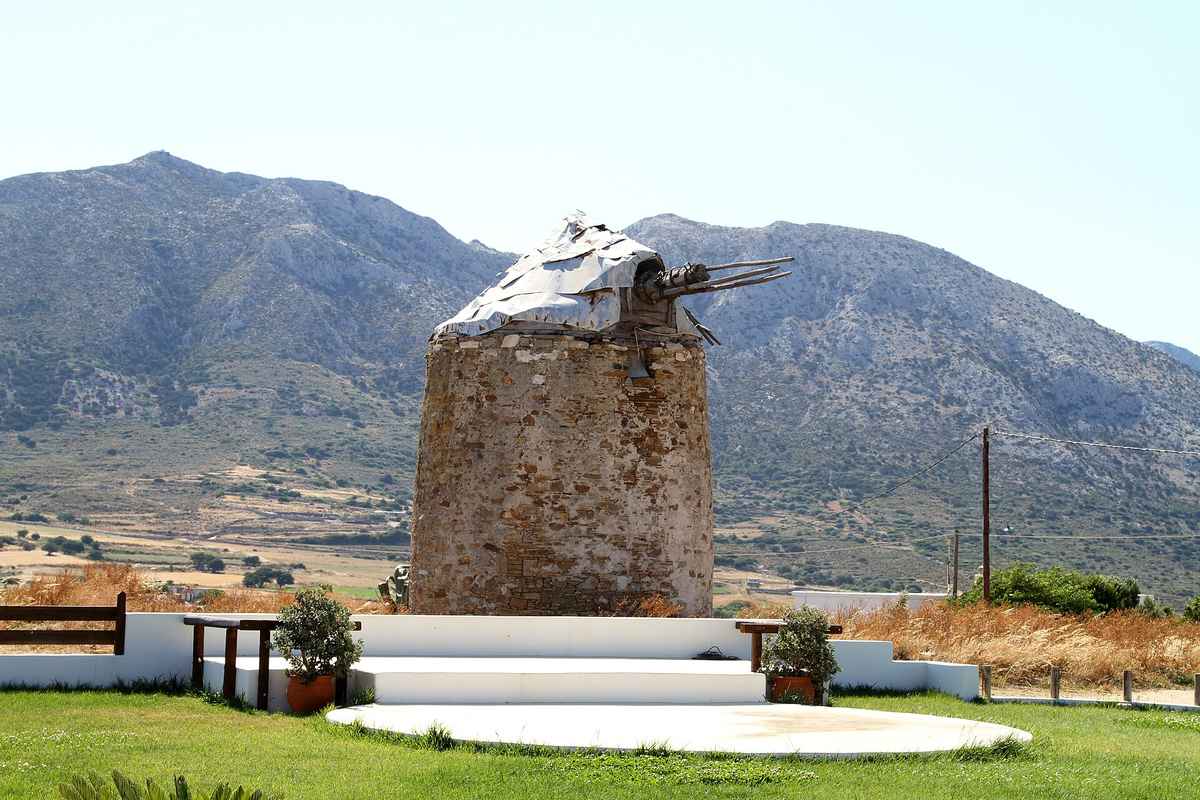
Sangri sits in the fertile heart of Naxos, a peaceful cluster of inland villages that many island visitors overlook in favour of the coast. Spread across a green plateau of vineyards, olive groves and old stone terraces, it offers a slower, more authentic side of the largest Cycladic island. Here you find Byzantine churches, Venetian towers and quiet lanes where daily life still follows the rhythm of the land. Sangri also serves as a natural gateway to the ancient Temple of Demeter and the Bazeos cultural centre. It is an ideal spot for travellers who want history, countryside and calm in a single trip, and it is easy to reach on a guided tour with My Greece Tours.
Sangri pairs beautifully with the wider inland heartland described in our Naxos travel guide, giving context to its churches, towers and ancient sites. The sections below cover what Sangri actually is, the churches, towers and monasteries you can see, how the village connects to the Temple of Demeter, the nearby Bazeos Tower arts centre, and practical advice on how to visit this quiet corner of Naxos.
What is Sangri on Naxos?
Sangri is a cluster of quiet inland villages in central Naxos, made up mainly of Ano (Upper) and Kato (Lower) Sangri, set on a fertile plateau of vineyards and olive groves that has been farmed and settled since antiquity.
The name Sangri usually refers to two neighbouring settlements, Ano Sangri and Kato Sangri, which together form one of the most historic rural communities in the interior of Naxos. Ano Sangri sits a little higher, a compact village of whitewashed houses, narrow lanes and small squares that look out over the surrounding fields. Kato Sangri lies below it on the plain, closer to the ancient sites. The wider area is a broad, fertile plateau ringed by low hills, where farmers still grow grapes, olives and cereals. This agricultural richness is exactly why people have lived here for thousands of years, long before the coastal resorts of modern Naxos existed.
Walking through Sangri, you sense a place shaped by continuity rather than tourism. Old fountains, threshing floors and dry-stone walls sit beside working farms, and the pace of the day is slow and unhurried. Because it lies inland, Sangri has escaped the heavy development of the beaches, keeping its traditional Cycladic character largely intact. It is a fine base for anyone wanting to understand the real countryside of the island rather than just its shoreline. To appreciate how Sangri fits into the wider network of hill settlements, it helps to see it alongside the other historic villages of Naxos, which share the same blend of farming, faith and Venetian-era heritage.
That heritage is written most clearly in the area’s remarkable churches and towers.
What churches, towers and monasteries can you see in Sangri?
Sangri is dotted with small Byzantine churches, fortified Venetian towers and old monasteries, including the important Timiou Stavrou (Holy Cross) monastery, reflecting centuries of religious life and the island’s medieval defensive architecture.
The Sangri area is often called one of the richest parts of Naxos for medieval and Byzantine monuments. Scattered across the fields and hillsides are dozens of small churches and chapels, some dating back many centuries, several preserving faded wall paintings and simple stone-built domes. These modest buildings tell the story of a deeply religious rural community that raised places of worship close to its farms and homes. Alongside them stand the pyrgoi, the fortified tower houses built during the Venetian period, when local landowners needed protection. Their thick walls and defensive design still rise above the plateau, giving the countryside a quietly dramatic, castle-like character that surprises many first-time visitors.
The best known religious site here is the Timiou Stavrou monastery, dedicated to the Holy Cross, a fortified monastic complex that once served as both a spiritual centre and a refuge in troubled times. Its solid walls and enclosed courtyard show how faith and defence went hand in hand in the Cyclades. Exploring these churches, towers and the monastery on foot is one of the great pleasures of a visit, rewarding slow wandering and curiosity. Together they form a living open-air museum of the island’s layered past. That same depth of history reaches even further back, because just a short distance from these medieval monuments lies one of the most important ancient temples in the Cyclades.
How does Sangri connect to the Temple of Demeter?
Sangri sits right beside the ancient Temple of Demeter at Gyroula, a beautifully restored marble sanctuary dedicated to the goddess of grain and harvest, which lies in the fields just south of Kato Sangri.
A short walk or drive from Kato Sangri brings you to the Temple of Demeter at the site of Gyroula, one of the oldest and most significant monuments on the island. Built entirely from the fine white marble that Naxos is famous for, this sanctuary honoured Demeter, goddess of grain, fertility and the harvest, a fitting dedication given the fertile plateau that surrounds Sangri. The temple has been carefully reconstructed from its original fallen blocks, so visitors can appreciate its elegant proportions and understand how such sacred buildings once looked. A small on-site museum displays finds from the excavations and explains the temple’s history and importance.
The link between Sangri and the temple is more than geographical. For millennia this plain fed the surrounding communities, and it made sense to build a shrine to the goddess of agriculture in the very fields she was believed to protect. Standing among the marble columns with the plateau stretching out around you, the connection between land, faith and daily survival becomes vivid and real. The site is peaceful, rarely crowded, and easy to combine with a wander through Sangri itself. Ancient sanctuaries are only one layer of the area’s heritage, however, for close by stands a very different kind of landmark that has been given a striking new life.
What is the Bazeos Tower nearby?
The Bazeos Tower is a restored Venetian-era tower near Sangri, once a monastery and defensive stronghold, now transformed into a respected cultural centre hosting art exhibitions, concerts and the popular Naxos Festival each summer.
Rising from the plain a short distance from Sangri, the Bazeos Tower is one of the most striking buildings in the Naxian interior. Tall, square and built of solid stone, it began life as a fortified monastery of the Holy Cross before passing into the hands of the Bazeos family, whose descendants carefully restored it. Its imposing form is a classic example of the tower architecture that once dotted the Cycladic countryside, designed to guard against pirates and to signal the wealth and status of its owners. Today the tower stands proudly renovated, its clean lines and honey-coloured masonry glowing in the strong island light.
What makes the Bazeos Tower special now is its role as a lively arts and festival centre. Each summer it hosts the Naxos Festival, a programme of exhibitions, concerts, theatre and literary events that draws visitors and artists alike, turning a medieval stronghold into a hub of contemporary culture. Walking through its restored halls and courtyard, you experience both the depth of the island’s history and its living creative spirit. It is an easy and rewarding stop on any trip into central Naxos. With so much to see between the villages, the ancient temple and this cultural landmark, the practical question is simply how best to reach and explore the Sangri area.
How do you visit Sangri on Naxos?
Sangri lies about eleven kilometres inland from Naxos Town, an easy twenty-minute drive along the main road toward the mountain villages, making it a relaxed half-day trip by car, tour or organised excursion.
Reaching Sangri is straightforward. From Naxos Town, the island’s main port and capital, you follow the central road that heads inland toward Halki and the Tragaea valley, and Sangri appears clearly signposted after a short, scenic drive through farmland and low hills. The route is well surfaced and gentle, suitable for a hire car, scooter or organised excursion. Most visitors combine Sangri with the Temple of Demeter and the Bazeos Tower, since all three lie close together, and often continue on to other inland treasures. Because the area is quiet, parking is easy and the atmosphere is calm even in the busy months, a welcome contrast to the crowded coast.
Give yourself at least half a day to do the area justice, allowing time to wander the lanes of Ano and Kato Sangri, visit the ancient temple, and step inside the Bazeos Tower. Comfortable shoes, water and sun protection are sensible, as much of the exploring is done on foot under open sky. A stop for coffee or a home-cooked meal in a village taverna rounds off the trip beautifully, offering a taste of genuine Naxian hospitality. Whether you drive yourself or join a guided excursion, Sangri rewards unhurried, curious travellers. Plan your visit and tours through our Naxos travel guide.
Frequently Asked Questions
Where exactly is Sangri located on Naxos?
Sangri is situated in the central, inland part of Naxos, roughly eleven kilometres from Naxos Town, the island’s main harbour and capital. It sits on a fertile plateau in the interior, between the coast and the higher mountain villages of the Tragaea valley such as Halki. The community is made up mainly of two settlements: Ano Sangri, the upper village perched slightly higher on the hillside, and Kato Sangri, the lower village on the plain closer to the ancient sites. Reaching it is easy, since a good main road runs inland from Naxos Town toward the mountains and passes near the village, with clear signposting.
The drive takes around twenty minutes through attractive countryside of vineyards, olive groves and open fields. Because Sangri lies away from the beaches, it stays peaceful and uncrowded throughout the year, giving travellers a quiet, authentic base from which to explore the historic heart of the island at their own pace.
Is Sangri worth visiting compared to the beaches of Naxos?
Sangri offers a completely different experience from the beaches, and for many travellers that is exactly its appeal. While the coast is known for long stretches of sand and lively resorts, Sangri gives you the island’s history, countryside and traditional character in a calm, uncrowded setting. In and around the village you can see Byzantine churches, Venetian tower houses, the Timiou Stavrou monastery, the ancient marble Temple of Demeter and the restored Bazeos Tower cultural centre, all within a short distance of one another. This concentration of monuments makes it one of the most rewarding inland destinations on Naxos. It is ideal for a half-day trip that balances a beach-based holiday with something deeper and more memorable.
Visitors who enjoy walking, photography, archaeology or simply escaping the crowds will find Sangri especially satisfying. Rather than choosing between coast and countryside, most people combine the two, using days at the beach and half-days inland to experience the full richness of the island.
What can you do and see around Sangri in a single visit?
A visit to Sangri easily fills a relaxed half-day and can be extended to a full day if you like to linger. Begin by wandering the lanes of Ano and Kato Sangri, admiring the whitewashed houses, small squares, old fountains and the many little Byzantine churches scattered across the surrounding fields. From there, head to the nearby Temple of Demeter at Gyroula, a beautifully reconstructed marble sanctuary set among the fertile plains, with a small museum explaining its history. A short distance away stands the Bazeos Tower, a restored Venetian stronghold that now serves as an arts and festival centre, well worth a look for its architecture and cultural programme.
Along the way you can spot the fortified tower houses and the historic Timiou Stavrou monastery that give the area its distinctive medieval feel. Finish with coffee or a traditional meal in a village taverna, savouring local produce and genuine Naxian hospitality before continuing on to explore more of the island’s beautiful interior.