
Thessaloniki and Athens are the two great cities of the Greek mainland, and a traveller planning a trip often has to choose between them or split the days across both. Athens carries the weight of the classical world, its skyline crowned by the Acropolis and its museums holding the record of ancient Greece. Thessaloniki runs along the curve of the Thermaic Gulf with a Roman, Byzantine, and Ottoman past worn lightly across a compact, walkable centre. Each city rewards a different kind of visit, and the honest answer to which one wins depends on what a traveller wants from Greece. Weigh the two side by side and shape the right route with My Greece Tours.
The choice turns on monuments, museums, food, pace, day-trip range, island access, and the practical cost of a bed and a meal. The sections below cover how the two cities differ in size and rhythm, whose ancient sites and museums pull ahead, where the eating and the nightlife run stronger, and what lies within a day’s reach of each base. The later parts weigh island access, weather by season, the direct train that links the two, and a clear recommendation by traveller type, with the guided Thessaloniki tours ready to anchor the northern half of any trip.
How do Thessaloniki and Athens differ in size and pace?
Athens is the far larger city, a sprawling capital of several million whose centre spreads across many districts. Thessaloniki is the compact second city of Greece, its core small enough to cross on foot in under an hour.
Athens holds a metropolitan population several times that of Thessaloniki, and the scale shows in the traffic, the metro lines, and the reach of the built-up area from the coast to the mountains. The capital moves at the pace of a major European hub, dense and busy, with the ancient core ringed by neighbourhoods that each carry their own character. A visitor covers the sights across a wide map and leans on the metro to bridge the distances between the Acropolis, the museums, and the seaside suburbs.
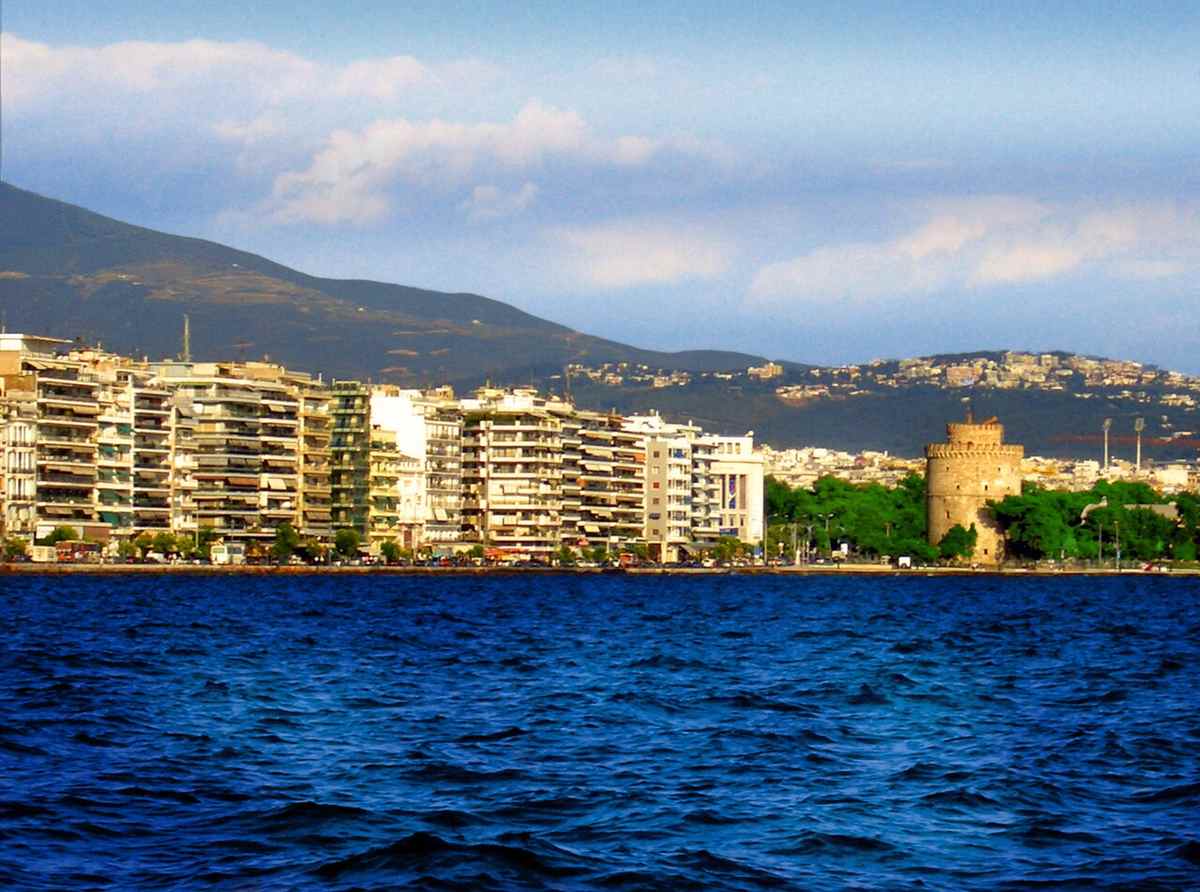
Thessaloniki reads as a single stretch of waterfront and the grid of streets that climbs behind it. The centre runs from the port in the west to the White Tower in the east, a promenade walk of a little over an hour end to end. The old upper town rises above the modern grid, and the Roman monuments sit within a few blocks of one another. That tight geography lets a traveller see the headline sights on foot without a single ride on public transport.
The difference in scale sets the mood of each stay. Athens rewards the visitor who wants the energy of a capital and a deep bench of things to do across a full week. Thessaloniki suits the traveller who prefers to settle into one walkable quarter, learn a handful of cafés, and feel the rhythm of a city that locals still fill after dark. Neither pace is better in the abstract, and the fit depends on the trip a traveller has in mind.
The layout of each base also shapes where a traveller sleeps. Athens spreads its lodging across the Plaka lanes, the Koukaki blocks under the Acropolis, and the Kolonaki slopes, each district a different price and mood, and the metro ties them to the sights. Thessaloniki keeps its beds within a short walk of the seafront. A traveller who books near Aristotelous Square or the Ladadika reaches the monuments, the markets, and the promenade on foot, a pattern the guide to where to stay in Thessaloniki sets out in full.
Which city has the better monuments and museums?
Athens holds the classical monuments and the deepest museums, led by the Acropolis and the National Archaeological Museum. Thessaloniki answers with a rare unbroken run of Roman, early Christian, Byzantine, and Ottoman sites in one walkable centre.
Athens carries the monuments that define ancient Greece for the wider world. The Acropolis rises over the city with the Parthenon, the Erechtheion, and the Temple of Athena Nike, and the Ancient Agora and the Roman Agora spread below the rock. Its museums run deep, from the Acropolis Museum built to hold the sculptures of the hill to the National Archaeological Museum, whose halls gather the finds of the whole country. A first-time visitor to Greece comes for this concentration of the classical past, planned best with a full guide to the Athens museums.
Thessaloniki tells a later and more layered story, and it tells it within a compact core. The Arch of Galerius and the Rotunda mark the Roman capital of the tetrarchy, and the Roman Forum lies two streets north. A group of early Christian and Byzantine churches carries the UNESCO listing that runs through the city. Their frescoes and mosaics span a thousand years of the eastern empire, set out in a full survey of the Byzantine churches of Thessaloniki. The White Tower on the seafront and the lanes of the upper town add the Ottoman chapter to the record.
The museums of the north hold their own weight, even if the collections run smaller than the Athens halls. The Archaeological Museum of Thessaloniki keeps the gold of ancient Macedon, and the Museum of Byzantine Culture traces the art of the medieval city. The choice comes down to the era a traveller wants to read. Athens delivers the classical age at its grandest, while Thessaloniki offers the Roman, Byzantine, and Ottoman centuries in one continuous circuit that the mosaics of the Rotunda open in full.
The way a visitor covers the sites differs as much as the sites themselves. In Athens the monuments spread across a wide archaeological zone under the rock, and a single ticket bundles the Acropolis with the agoras and the smaller ruins, best walked over a full day. In Thessaloniki the Roman, Byzantine, and Ottoman monuments cluster within a compact grid. A traveller strings the arch, the Rotunda, the forum, and the churches into one loop, a route the guide to things to do in Thessaloniki maps out step by step.
Where do you eat and drink better in Thessaloniki or Athens?
Thessaloniki carries a strong reputation as the food capital of Greece, with a dense mix of tavernas, meze bars, and a young cafe culture. Athens matches its range with a broader, more international dining scene across many neighbourhoods.
Thessaloniki earns its name as the eating city of the country through a cuisine shaped by refugees from Asia Minor and the flavours of the wider Balkans and the Levant. The Modiano and Kapani markets sell the raw materials a step from the meze bars that cook them, and the Ladadika quarter packs tavernas into a grid of restored warehouses. The city invented the bougatsa breakfast and pours the local tsipouro late into the night, a scene mapped out across the restaurants of Thessaloniki.
Athens spreads its tables across a wider and more varied map, from the tavernas of Plaka to the modern kitchens of Kolonaki and the buzzing bars of Koukaki and Exarcheia. The capital pulls talent and produce from the whole country and the islands beyond, so the range runs from old-school grill houses to tables that read the seasons closely. A visitor eats broadly in Athens and finds a deeper bench of high-end and international rooms than the north can show.
The signature dishes point to the split between the two tables. Thessaloniki claims the bougatsa, the coiled cheese and custard pastry of the northern breakfast, alongside the mussel and pepper plates that trace back to Asia Minor. Athens leans on the souvlaki and gyros of the grill houses, the seafood of the coastal tavernas, and the mezedes of the old quarters. Both cities pour Greek wine and tsipouro, though the north sits closer to the vineyards of Naoussa and the Macedonian plain that supply them.
The nightlife tilts the other way in feel, if not in sheer size. Thessaloniki holds a large student population. The bars along the waterfront and in the lanes behind Aristotelous Square stay full through the week, an easy scene to fall into and set out in the guide to Thessaloniki nightlife. Athens runs later and louder across more districts, with rooftop bars over the lit Acropolis and clubs that push toward dawn. The northern city wins on intimacy and value, while the capital wins on scale and variety.
Which city is easier to walk, closer to the sea, and better value?
Thessaloniki edges ahead on walkability and the daily feel of the sea, with a flat waterfront promenade at the heart of the city. Hotel rates and dining costs in the north typically sit below the Athens equivalent.
Thessaloniki wears the sea on its front step. The promenade runs unbroken along the gulf from the port to the concert hall, past the White Tower and the sculpture gardens, and locals walk it every evening at sunset. The flat, linear centre makes the city one of the most walkable in Greece, and a traveller crosses from a Roman monument to a seafront café in minutes. The full stretch of that waterfront, from Aristotelous to the tower, sets the scene for the classic White Tower photograph.
Athens meets the sea only at its edges, along the Riviera that runs south from the centre toward Cape Sounion. The historic core sits inland under the Acropolis, so a beach day means a tram or a drive to the coastal suburbs of Glyfada and Vouliagmeni. The centre itself climbs and dips across hills, and the distances between the main sights run longer than in the north. A visitor walks a great deal in Athens but leans on the metro to link the spread-out quarters.
On cost, the north generally comes in lighter on the wallet. Hotel rates in Thessaloniki typically sit below the Athens equivalent for a similar standard, and a meal with tsipouro in a Ladadika taverna tends to cost less than a comparable Athens table. Athens draws far heavier tourist crowds at the headline sites, and the queues at the Acropolis in high season dwarf anything at the Thessaloniki monuments. The northern city offers a calmer, cheaper base, while the capital charges the premium of its fame.
The crowds also change the shape of a family trip. Athens spreads its draws across a wider map, from the Acropolis to the coastal beaches and the interactive museums. That range suits older children and a longer stay, and the planning runs through a guide to Athens with kids. Thessaloniki keeps everything close, so a family walks from a Roman monument to an ice cream on the promenade without a transfer, an easier rhythm for younger children and a shorter break.
What are the best day trips from each city?
Athens reaches Delphi, the Argolid, and Cape Sounion within a day. Thessaloniki opens the beaches of Halkidiki, the monasteries of Meteora, Mount Olympus, and the royal tombs of Vergina.
Athens sits at the centre of the classical mainland, so its day trips read like a list of the ancient sites. Delphi lies within a half-day drive to the north-west under Mount Parnassus, and the Argolid to the south holds Mycenae, the theatre of Epidaurus, and the harbour town of Nafplio. Cape Sounion caps a peninsula with the Temple of Poseidon over the sea, an easy half day from the city. The spread of routes gives Athens the richest set of ancient day trips in the country.
Thessaloniki answers with a wider mix of coast, mountain, and Macedonian past. The three fingers of Halkidiki carry some of the best beaches on the mainland within a short drive, and Mount Olympus, the seat of the ancient gods, rises above the coast to the south. The monasteries of Meteora stand on their rock pillars to the south-west, and a fuller list of these routes runs through the guide to Thessaloniki day trips.
The northern base also opens the heartland of ancient Macedon, which Athens cannot reach in a day. Vergina holds the royal tombs of the Macedonian kings, the burial of Philip the Second among them, its gold and its painted façades kept in a museum built under the mound. Pella, the birthplace of Alexander, lies on the same plain to the west. A traveller who wants the story of Alexander and his father draws it from the north, while the classical Athenian world stays the strength of the south.
The two sets of day trips rarely overlap, which strengthens the case for pairing the cities. Delphi, Sounion, and the Argolid belong to the classical and mythic south and sit within the Athens orbit alone. Halkidiki, Meteora, Olympus, and Vergina belong to the north and reach only from Thessaloniki in a comfortable day. A traveller who bases in both cities collects the oracle of Delphi and the tombs of Vergina, the theatre of Epidaurus and the pillars of Meteora, on the same holiday.
Which city works better for the islands and the seasons?
Athens is the gateway to the Greek islands, with the port of Piraeus and a major hub airport feeding the whole Aegean. Thessaloniki reaches the Sporades and the northern Cyclades in summer but sits far from the main routes.
Athens holds the keys to the islands. Piraeus is the largest passenger port in the country, and ferries fan out from its quays to the Cyclades, the Saronic islands, and Crete through the year. The Athens airport links to the island airfields and to cities across Europe, so a traveller can pair a few days in the capital with a hop to Santorini, Mykonos, or Naxos with ease. Anyone building an island trip into a Greek holiday leans on Athens as the natural launch point.
Thessaloniki sits at the top of the mainland, away from the dense island clusters of the south. Summer ferries run from the nearby port of the region to the Sporades, and a seasonal line reaches a handful of the northern Cyclades, yet the choice stays narrower than the fan of routes out of Piraeus. A traveller set on island hopping through the Aegean fits Thessaloniki as a northern add-on rather than a base, and reaches the wider network through Athens.
The seasons shape each city in their own way. Athens bakes through the height of summer, when the crowds at the Acropolis peak and the heat pushes visitors to the coast, and it rewards a spring or autumn trip most. Thessaloniki runs a touch cooler and wetter through the year, its seafront pleasant from spring into the mild autumn, though its winters turn grey and damp. The guide to the best time to visit Thessaloniki sets out the month-by-month picture for the north.
The winter months split the two cities most sharply for a visitor. Athens stays open and mild enough to walk the ancient sites through the cold season, and its museums and covered agoras carry a wet day well. Thessaloniki keeps its indoor draws, the markets, and the tavernas alive through winter, yet its promenade and its day trips to the coast lose their pull under grey skies. Spring and autumn serve both cities best, warm enough for the sea and clear of the summer crush.
How do you travel between Athens and Thessaloniki, and how many days does each deserve?
A direct intercity train links the two cities in roughly four to five hours, and a domestic flight covers the hop in under an hour. Athens rewards three to four days, while Thessaloniki fills two to three.
The train is the smooth way to join the two cities. A direct intercity service runs several times a day along the upgraded main line and covers the route in roughly four to five hours, station to city centre, with the faster departures at the quicker end of that band. The seats are comfortable and the ride passes the plains and hills of central Greece, so a traveller who has the time treats the journey as part of the trip rather than a chore to endure.
Flying suits the traveller in a hurry. A domestic flight between the two airports takes under an hour in the air, and the frequent departures make a same-day connection simple, though the transfers at each end eat into the saving. The drive covers close to five hundred kilometres down the national motorway and runs to roughly five hours behind the wheel, useful for the traveller who wants to stop at Meteora, Olympus, or Delphi on the way, and best paired with a look at Athens car rental.
On the length of each stay, Athens carries more to see and holds the visitor longer. Three to four days let a traveller take the Acropolis, the major museums, the old quarters, and a day trip to Delphi or the Argolid, planned well on a guided Athens walking tour. Thessaloniki packs its headline sights into a tighter core, so two to three days cover the Roman monuments, the Byzantine churches, the food, and a run out to Halkidiki or Vergina.
The clear recommendation depends on the traveller. A first-time visitor to Greece, a lover of the classical world, or anyone building an island hop should base in Athens for its monuments, its museum depth, and the ferries out of Piraeus. A repeat visitor, a food-led traveller, or a budget-minded couple after a calmer walkable break should choose Thessaloniki for its markets, its seafront, and its lower daily cost. A history buff who wants both the classical south and the Macedonian north should not choose at all and should ride the train to see the two.
The best trip, for the traveller with a week or more, joins the two by rail into one route across the mainland. A traveller can open in Athens for the classical world, ride the train north, and close in Thessaloniki for the Byzantine and Ottoman city and the beaches of Halkidiki. The pairing reads the whole span of Greek history from the Parthenon to the Rotunda, and a Thessaloniki itinerary slots neatly onto the end of an Athens week.
Frequently Asked Questions
Is Athens or Thessaloniki better for a first visit to Greece?
Athens suits a first visit to Greece. The Acropolis, the Ancient Agora, and the National Archaeological Museum gather the classical world in one city, and the port of Piraeus opens the islands beyond. Thessaloniki fits a second trip or the traveller who has seen the capital and wants a calmer, food-led city with a different span of history.
Is Thessaloniki cheaper than Athens?
Thessaloniki generally comes in lighter on the wallet. Hotel rates in the north typically sit below the Athens equivalent for a similar standard, and meals in a taverna tend to cost less than a comparable Athens table. The northern city also draws smaller crowds at its monuments, which keeps the daily pace and the queues easier than the capital in high season.
How do you get from Athens to Thessaloniki?
A direct intercity train links the two cities in roughly four to five hours, with several departures a day along the main line. A domestic flight covers the hop in under an hour in the air, and the drive runs close to five hundred kilometres down the national motorway, or about five hours behind the wheel with stops at Meteora or Delphi possible on the way.
How many days do you need in each city?
Athens rewards three to four days, enough for the Acropolis, the main museums, the old quarters, and a day trip to Delphi or the Argolid. Thessaloniki fills two to three days, which cover the Roman monuments, the Byzantine churches, the market food scene, and a run out to Halkidiki or the royal tombs of Vergina.
Which city has better food, Athens or Thessaloniki?
Thessaloniki carries the stronger food reputation and calls itself the eating capital of Greece, with dense markets, meze bars, and a cuisine shaped by refugees from Asia Minor. Athens matches the range across a wider, more international scene and a deeper bench of high-end tables. The north wins on value and character, while the capital wins on sheer breadth of choice.
Can you visit both Athens and Thessaloniki in one trip?
Yes, and the pairing makes a strong route across the mainland. A traveller with a week or more opens in Athens for the classical sights, rides the intercity train north in a few hours, and closes in Thessaloniki for the Byzantine and Ottoman city and the beaches of Halkidiki. The two cities together read the full span of Greek history from the Parthenon to the Rotunda.