
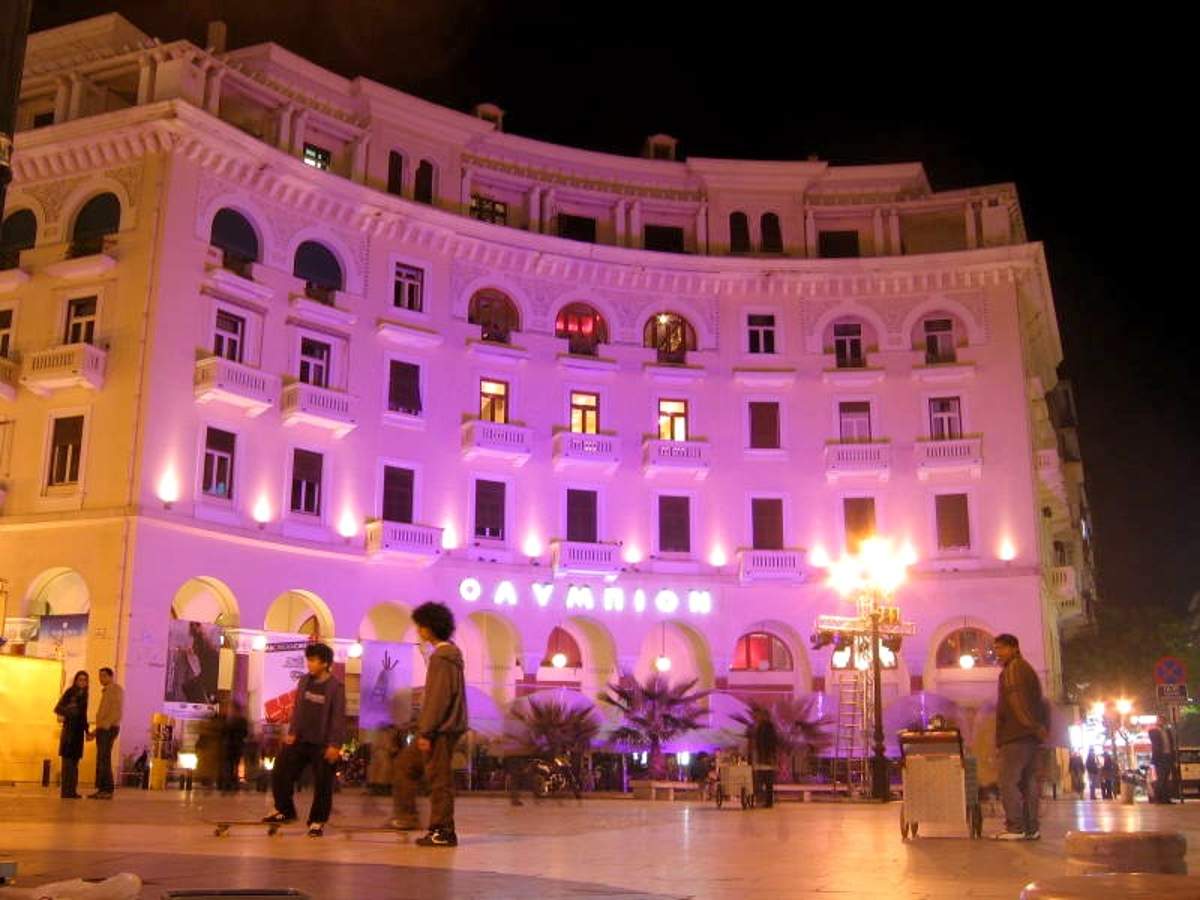
Thessaloniki runs one of the liveliest night scenes in Greece, powered by a student population that keeps the bars full across the whole year rather than only through summer. The night moves by district, from the restored warehouses near the port to the dense bar lanes inland and the open waterfront, and each quarter keeps its own crowd and its own hour. Reading the map of neighbourhoods matters more than chasing one address, because the character shifts street by street. This guide sets out the areas, the venue types, and the timing that shape an evening out, so the night slots cleanly into a wider trip planned with My Greece Tours.
The sections below cover the going-out districts of Ladadika, Valaoritou, and the waterfront, the calmer quarters of the Upper Town and Kalamaria, the venue types from the ouzeri to the cocktail bar, the live-music and rebetiko rooms, and the timing that runs on the Greek clock. Each answer names an area or a style and the crowd it suits, so the plan works for a solo traveller, a couple, or a group. A guided evening turns a first night into a route with context, and it pairs with the wider lineup of Thessaloniki tours.
What Is a Night Out in Thessaloniki Like?
Thessaloniki keeps one of Greece’s densest night scenes, driven by its large student population and running all year rather than only in summer. The centre stays walkable, the crowd mixes ages, and the night starts late.
The student body sets the tempo. Two of the country’s largest universities feed tens of thousands of young residents into the centre, and that population keeps the bars trading through term time rather than leaning on the tourist season. The result is a scene that stays alive on a Tuesday in November just as it does on a Saturday in July, which sets the city apart from the island resorts that shut for winter. Prices stay lower than Athens or the islands to match the student pocket, and the venues turn over fast as new bars open in old shopfronts. A visitor reads the city as a place that lives for the night out rather than staging one for tourists.
The geography keeps the night compact. The going-out districts cluster within the flat grid between Egnatia Street and the seafront, so an evening can move from a meze table to a bar to a club on foot inside a short radius. The Thermaic Gulf edges the whole centre, and the waterfront promenade gives the night an open horizon that the inland lanes lack. Taxis fill the gap for the Upper Town climb or the ride home, and they stay cheap by European measure. This density means a first-time visitor needs no car and no fixed plan, since the districts sit close enough to sample in one night.
The crowd reads broad rather than narrow. Students fill the cheaper bars, professionals take the cocktail rooms and the waterfront, and older locals hold the tavernas and the rebetiko halls, so no single age owns the night. The mix runs friendly and safe, with a relaxed dress code across most rooms and an easy pace that favours long conversation over spectacle. Couples, solo travellers, and groups all find a comfortable corner, and the same street often carries a loud club and a quiet meze table side by side. The breadth is the point, and it lets a visitor tune the evening from calm to loud without leaving the centre.
The night connects to the rest of the trip. A day of Roman ruins, Byzantine churches, and the White Tower rolls naturally into an evening of meze and bars, since the sights and the going-out lanes share the same central grid. Planning the dark hours alongside the daytime things to do in Thessaloniki keeps the two halves of the day linked rather than treated apart. The late Greek clock leaves the whole evening open after dinner, so a visitor rarely has to choose between sightseeing and the night out. Reading the city this way turns the after-dark hours into a core part of the visit rather than an afterthought.
Where Do You Go Out in Ladadika?
Ladadika packs the restored warehouse quarter behind the old port with tavernas, mezedopoleia, and bars around pedestrian lanes. The mix of food and drink makes it the easiest district for a relaxed first night out.
Ladadika takes its name from the olive-oil warehouses that once filled its low stone buildings near the harbour. The quarter survived the great fire and the decline that followed, and a restoration turned the painted facades and cobbled lanes into a protected going-out district. The streets around the central square carry the densest run of tables and bars, and the pedestrian layout keeps cars out, so the crowd spills onto the pavement across the warm months. The look rivals the drink as a reason to come, since the restored warehouse fronts give the quarter a character the newer bar zones lack.
The blend of food and drink defines the district. Tavernas, mezedopoleia, and ouzeris share the lanes with wine bars and cocktail rooms, so an evening can start with a shared meze table and slide into drinks without moving far. The format suits a group that wants to eat and drink in one spot rather than plan a route across the city. Pairing the meal with the bars reads best here, and a look at the nearby Thessaloniki restaurants helps a visitor set the food half of the night before the drinking starts.
The crowd runs mixed and the mood stays relaxed. Ladadika draws tourists staying near the port alongside locals out for a traditional evening, so the district reads as welcoming rather than exclusive. The pace favours a long dinner and a slow drink over a hard night of clubbing, which makes it the natural opening move for a first night in the city. Families and older visitors read the pedestrian lanes as easy and safe, and the early-evening service suits diners who cannot wait for the late local hour. The quarter rewards a slow pace, which matches the rhythm the whole city keeps.
What Makes Valaoritou the City’s Bar Quarter?
Valaoritou turned a grid of old textile workshops into the densest bar and club cluster in the city. Each room keeps its own music and look, and the crowd runs young, local, and late into the night.
Valaoritou sits a short walk inland from the port, in the grid of former textile workshops and wholesale stores that once ran the city’s rag trade. The industry moved on and left the ground-floor shells empty, and a wave of bars, clubs, and music rooms filled them over recent decades. The quarter kept its worn industrial face, with exposed brick, iron shutters, and painted signage that now reads as character rather than neglect. This raw look pulls a design-minded and student crowd after dark, and it marks Valaoritou as the sharp edge of the city’s night rather than its polished front.
The bars pack tight and vary by room. One doorway opens on a vinyl bar playing rock, the next on a cocktail room, the next on a club that runs until dawn, so the street itself becomes the night’s menu. The density lets a group move between rooms in minutes without a taxi, sampling the music styles until one fits. The quarter leans younger and more local than Ladadika, and the prices sit at the student end of the range. This concentration of bars in one grid is the reason Valaoritou tops the list for a visitor who wants the loud, late side of the city.
The energy runs latest here. Kitchens and bars serve well past the standard hours, and the clubs keep going until the small hours, so the quarter reads as the natural late stop after a meal elsewhere. Weekends turn the lanes into the busiest nightlife ground in the city, and the noise carries through the grid into the early morning. A traveller who wants the night on the doorstep weighs a base nearby, so a look at where to stay in Thessaloniki pays off before booking. A light sleeper reads the quarter as a place to visit rather than sleep beside.
Where Do the Waterfront and Aristotelous Draw the Crowd?
The Nea Paralia waterfront lines the gulf with cafes, cocktail spots, and floating bars, while Aristotelous Square and Navarinou hold cafes that shift into bars after dark. Both suit an open, slower evening by the sea.
The Nea Paralia promenade runs the redesigned waterfront from the White Tower along the gulf, past gardens, cycle paths, and open lawns that draw the whole city out for the evening. The cafes along the front pour the iced freddo that fuels the city by day and turn to cocktails and wine after dark. The tables face the water and the sunset over Mount Olympus across the bay. Floating bars moored along the edge add a night out on the water itself. The stretch reads as the place for an open-air evening at an easy pace rather than a loud club night, and the breeze off the gulf keeps it comfortable in the heat.
The Aristotelous and Navarinou area holds the daytime cafe culture that slides into the evening. Grand Aristotelous Square opens onto the sea and fills with cafe tables under its arcades, while the pedestrian lanes around Navarinou pack a younger student crowd into a tight run of cafe-bars. The same table that serves a morning freddo pours a cocktail after dark, so the ground never fully empties between day and night. This blur of cafe and bar is the everyday face of the city’s social life, and it gives a visitor an easy, low-key entry to the night without a plan or a booking.
The waterfront suits a calmer night than the inland lanes. The walk itself is the draw, and the tables read as pauses within it, so a visitor strings a coffee, a cocktail, and a sunset stroll into one loose stretch rather than a hard night of bar-hopping. Couples and families read the open front as the easy option, and the promenade stays busy and safe late into the evening. The scene here trades the noise of Valaoritou for space and a view, which makes it the choice for an evening that leans relaxed over loud.
What Kind of Night Do Ano Poli and Kalamaria Offer?
The Upper Town, Ano Poli, keeps quiet tavernas and cafes with gulf views above the walls rather than clubs, while Kalamaria to the southeast holds a calmer local scene. Both suit a slow evening away from the crowds.
The Upper Town climbs the hillside above the Byzantine walls, in the timber-and-plaster quarter that escaped the great fire and kept its Ottoman street plan. The going-out here means a quiet taverna, a wine table, or a cafe on a terrace looking down over the whole city to the gulf, rather than a bar or a club. The views seal the appeal, and the light over the water at dusk turns a plain drink into an event. A wander through historic Ano Poli before dinner, past the walls and the old churches, folds the sightseeing into the evening and rewards the climb with the best outlook in the city.
Kalamaria stretches southeast along the coast as a residential district with a calmer, more local night. The neighbourhood sits away from the tourist centre, so its cafes, tavernas, and bars cook and pour for regulars rather than visitors, and the prices ease as the crowds thin. The seafront here carries its own run of cafe-bars along the water, quieter than the central promenade but with the same gulf view. A traveller staying in the southern districts, or one after a night among locals rather than tourists, reads Kalamaria as the natural ground for an easy evening.
These calmer quarters balance the loud centre. The Upper Town and Kalamaria give a visitor a way to end an evening slowly, with a view and a quiet table, after a louder start in Valaoritou or Ladadika. Reaching the Upper Town takes a climb or a short taxi, while Kalamaria sits a tram or bus ride from the centre, so both trade a short distance for a calmer room. Older travellers, couples, and anyone after conversation over volume read these districts as the antidote to the packed bar lanes below.
What Are the Main Venue Types in Thessaloniki?
The night runs through the kafeneio and cafe, the ouzeri, tsipouradiko, and mezedopoleio for small plates with a drink, the rebetiko and live-music rooms, the theatrical bouzoukia, and the cocktail bars and clubs.
The cafe anchors the daytime and the early night. The kafeneio, the old coffee house, and the modern cafe both run from morning coffee through to a midnight drink, so the same table carries a visitor across the whole day. Greeks nurse a single freddo for an hour at a stretch, treating the cafe as a social base rather than a quick stop. The format blurs the line between day and night, since a cafe fills with coffee drinkers in the afternoon and cocktail drinkers after dark without ever closing in between. This all-day rhythm is the backbone of the city’s social life.
The ouzeri, tsipouradiko, and mezedopoleio pair a drink with small plates. Each carafe of ouzo or tsipouro arrives with a fresh plate of meze, from grilled octopus to fried cheese, so the eating and the drinking move together in rounds through a long sitting. The northern pomace spirit tsipouro gives the city its own accent on the meze table, alongside the anise ouzo of the south. This slow, social format is the reason a Greek evening stretches past midnight rather than ending in an hour, and a guided Thessaloniki food tour reads the culture clearly before a self-guided night.
The bars and clubs cover the louder end. Cocktail rooms mix a serious drinks list for a professional crowd, vinyl and music bars build a night around a genre, and clubs run dance floors until dawn at the weekend. The rebetiko halls and the theatrical bouzoukia hold the live-music tradition, which the next section takes on its own. This range, from a quiet coffee house to a dawn dance floor, lets a visitor build a night at any volume, and the venue types often sit on the same street so the switch takes minutes.
How Do Rebetiko and Live Greek Music Shape the Night?
Rebetiko halls and live-music rooms carry the Greek urban song tradition, while the bouzoukia stage a late, theatrical night of Greek pop. Both run into the early hours and pull a mixed crowd of locals and visitors.
Rebetiko grew from the ports and refugee quarters of the early twentieth century, when the population exchange carried the urban song of Asia Minor into cities like Thessaloniki. The music leans on the bouzouki and the baglama, and its songs of hardship, love, and the margins still fill live rooms across the centre. A rebetiko night means a small stage, a band, and a crowd that knows the words, rather than a dance floor. The tradition ties the night out directly to the city’s refugee history, which makes it more than background music for a visitor who wants the depth behind the melody.
The bouzoukia stage the loud, theatrical end of Greek nightlife. These large live-music clubs put a lineup of Greek pop and laiko singers on a stage that runs from late night until dawn. Tables get booked for the show, and flowers are thrown at the performers in the old style. The night starts late even by local standards, rarely warming up before one in the morning, and it holds a crowd out for a special occasion rather than a casual drink. A bouzoukia night reads as a full evening’s commitment and a distinctly Greek spectacle, unlike anything in the quiet bar lanes.
Live music runs wider than rebetiko and the bouzoukia. Small rooms across Valaoritou and the centre stage rock, jazz, and singer-songwriter sets on any given night, and the student crowd keeps the live scene busy through term time. The Upper Town and the old tavernas carry acoustic Greek music at a gentler volume for a dinner crowd. This spread means a visitor can match live music to any mood, from a raucous rebetiko hall to a quiet guitar over a meze table. The music stays a core thread of the city’s night rather than an occasional extra.
When Does a Night Out in Thessaloniki Start?
A Thessaloniki night runs late. Dinner fills the tavernas from nine at night, bars build after midnight, and clubs fill later still, so an evening stretches into the early hours, especially at the weekend.
The Greek clock sets the whole rhythm. Dinner rarely starts before nine at night, so the tavernas and mezedopoleia stay quiet through the early evening and fill as the hour grows late. A visitor who arrives at seven for dinner finds an empty room and a slow kitchen, while the same table hums by ten. Reading this clock rather than fighting it opens the city at its liveliest, and it explains why an early tourist dinner misses the crowd the locals bring later.
The bars follow the late dinner. Drinking rooms in Ladadika and Valaoritou fill after midnight, once the meal winds down, and the clubs reach their peak in the small hours rather than at opening. The pattern means a full night runs in stages: a long dinner, a move to the bars around midnight, and a club or a live room after that. A visitor who paces the evening to this order lands in each venue at its best hour rather than sitting alone in an empty bar too early.
The weekend stretches the night furthest. Friday and Saturday run the latest and the busiest, with the bar lanes packed until the early morning and the clubs going past dawn, so a weekend visitor plans for a genuinely late night. Weekdays ease the pace, though the student population keeps the bars trading even midweek, unlike a resort town that empties outside the weekend. Pacing the trip around this rhythm, with a later start and a slow build, matches the visit to the way the city actually moves after dark.
How Does the Scene Change Between Summer and Winter?
Thessaloniki goes out all year. Summer pushes the night to the open waterfront and rooftop bars, while winter fills the indoor rooms, the rebetiko halls, and the cocktail bars, so the student-driven scene never pauses for a season.
Summer shifts the night outdoors. The heat pushes the crowd to the open waterfront, the rooftop bars, and the breezy Upper Town terraces, and the tables fill well after dark once the day’s warmth drops. The city quietens as locals head for the beaches of nearby Halkidiki, so the centre stays walkable even at the peak of the season. The floating bars and the seafront cafes read at their best through the warm months, when an open-air night by the gulf beats any indoor room.
Winter drives the night indoors without slowing it. The bougatsa counters, the covered meze rooms, the rebetiko halls, and the cocktail bars trade through the cold months, and the student population keeps the centre busy across term time. The crowds thin from the summer peak, so a winter visitor finds the bars calmer and the booking pressure light while the scene stays fully alive. This year-round energy sets Thessaloniki apart from the island resorts, which shut for winter and leave the night to the cities.
The shoulder seasons of spring and autumn read as the sweet spot. Mild evenings suit both the open waterfront and the indoor lanes, the crowds ease from the summer peak, and the student term keeps the bars full. The night runs at its most comfortable either side of high summer. A visitor with a choice of dates leans toward these months for the balance of weather and crowd. The city rewards a night out in any season, given how little the scene depends on the tourist calendar.
What Should Visitors Know Before Going Out?
The centre is walkable, taxis are cheap and easy for the Upper Town or the ride home, dress stays relaxed across most rooms, and the scene runs safe and mixed. Late timing and a loose plan matter most.
The centre covers the night on foot. The going-out districts sit close in the flat grid between Egnatia and the sea, so a visitor walks between a meze table, a bar, and a club without a car. Taxis fill the gaps for the climb to the Upper Town or the ride home in the small hours, and they stay cheap by European measure. The compact layout is the practical key to the city’s night, since it lets a visitor sample the districts in one evening rather than committing to a single spot.
The dress code stays relaxed across most of the scene. Bars and tavernas welcome a casual look, and only the bouzoukia and the smarter cocktail rooms lean dressier for a night out. Prices sit below Athens and the islands, in step with the student pocket, so a night of meze, drinks, and a club rarely strains a budget. Reservations help at the weekend for a table in a busy bar or a bouzoukia show, while a walk-in works midweek and across the calmer districts without a plan.
The scene runs safe and mixed. The centre stays busy and lit late into the night, the crowd spreads across ages, and solo travellers and couples move easily between rooms without trouble. Standard city care with belongings covers the practical side, and the friendly pace of the bars makes the night easy to read for a first-time visitor. Building the going-out hours into a wider plan of sights, food, and rest turns the night into a core part of a Thessaloniki visit rather than a loose add-on at the end.
Frequently Asked Questions
Which district is best for a first night out in Thessaloniki?
Ladadika reads as the easiest first night. The restored warehouse quarter behind the port blends tavernas, mezedopoleia, and bars around pedestrian lanes, so a visitor eats and drinks in one spot without needing a route, and the relaxed, mixed crowd makes it welcoming for a first evening.
What time does nightlife start in Thessaloniki?
The night runs late. Dinner fills the tavernas from nine at night, the bars build after midnight, and the clubs peak in the small hours. A visitor who arrives for an early dinner finds quiet rooms, so pacing the evening to the late Greek clock lands in each venue at its liveliest.
Is Thessaloniki good for nightlife in winter?
Yes. The large student population keeps the bars, meze rooms, rebetiko halls, and cocktail bars trading through the cold months, so the scene runs all year rather than only in summer. Winter drives the night indoors and thins the crowds, which leaves the bars calmer and easier to book.
Where do you go for bars and clubs in Thessaloniki?
Valaoritou holds the densest run of bars and clubs, in a grid of former textile workshops that now pack vinyl bars, cocktail rooms, and dance floors into a short radius. Ladadika mixes bars with tavernas, while the waterfront and Aristotelous lean toward cafes and cocktails at an easier pace.
Is Thessaloniki nightlife safe for visitors?
Yes. The centre stays busy and lit late into the night, the crowd mixes ages, and solo travellers and couples move between rooms easily. The going-out districts sit close on foot, taxis are cheap for the ride home, and standard care with belongings covers the practical side.
What is rebetiko and where can you hear it?
Rebetiko is the Greek urban song tradition that grew from the refugee quarters of the early twentieth century, built on the bouzouki and songs of hardship and love. Live rebetiko rooms across the centre and the Upper Town stage it late into the night for a crowd that sings along.