
Thessaloniki rewards travellers who pick the right base. Greece’s second city packs Roman ruins, Byzantine churches, a seafront promenade and a deep food scene into a compact grid you cross on foot. The area you book shapes the trip. The walkable centre suits sightseeing, Ladadika delivers late nights, and the Upper Town trades hills for silence and views. This guide breaks down each district by who it fits, how loud it gets, and how far you sit from the White Tower and the markets. Plan your rooms and your days around the sights that matter to you with My Greece Tours.
The sections below cover every neighbourhood worth booking, from the grand arc of Aristotelous Square to the residential calm of Kalamaria. Each area carries trade-offs in price, noise, transport and walking distance, and the right pick depends on whether you travel for museums, dining or a quiet retreat by the sea. Read the area profiles, match them to your priorities, then lock in your stay and your Thessaloniki tours in one place. The map that follows moves from the busy core outward to the suburbs and the airport.
Where is the best base in Thessaloniki for a first visit?
The city centre around Aristotelous Square suits a first visit best. You sleep a ten-minute walk from the White Tower, the Roman Forum, Tsimiski shopping and the Modiano and Kapani markets, with the seafront at the door.
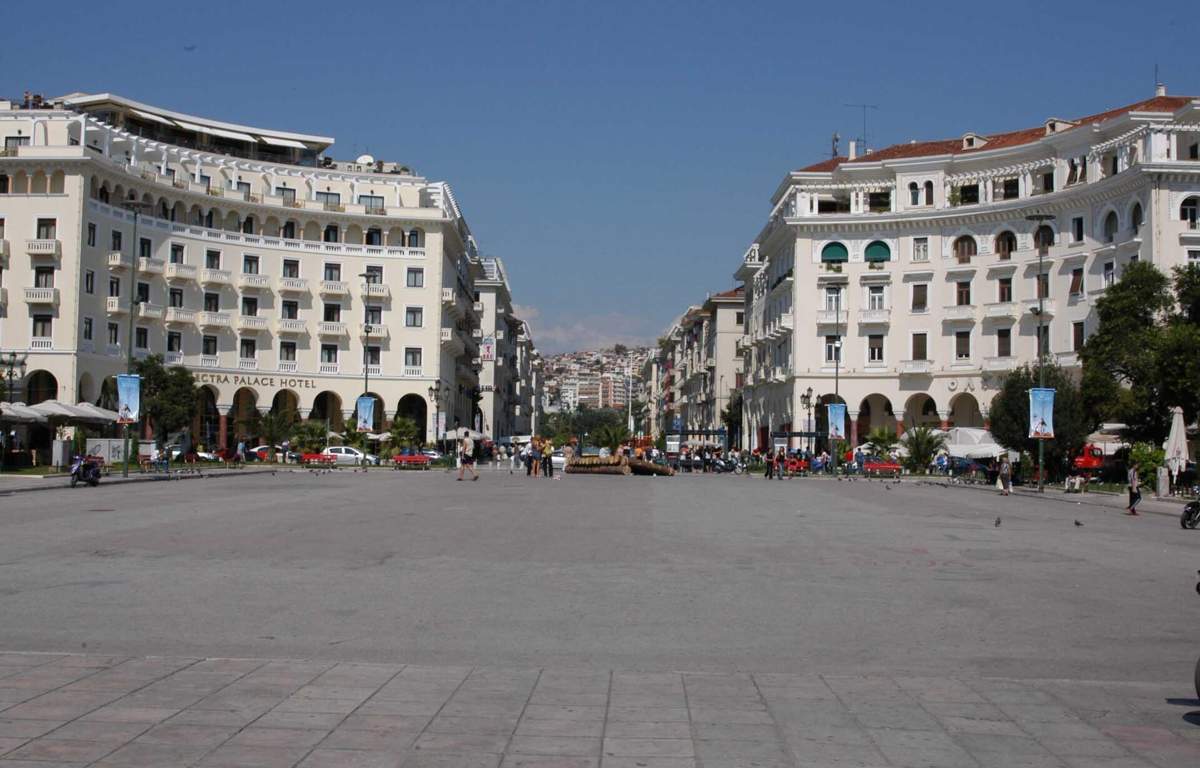
Aristotelous Square opens straight onto the water and forms the natural heart of the grid. Rooms here range from grand facades on the plaza to quieter side-street addresses off Tsimiski and Mitropoleos. The location earns its price, because you reach almost every headline sight on foot and return to base between stops rather than crossing town.
The centre keeps you close to the daily rhythm of the city. Cafes fill Nikis Avenue along the shore, shoppers work the length of Tsimiski, and the covered stalls of the Modiano and Kapani markets sell fish, olives and spices a couple of blocks inland. A first-timer wastes no time on transfers and slots more sights into each day.
Booking the core also puts the evening within reach. Ladadika and the Valaoritou bar streets sit at the western edge, so dinner and a drink stay a short stroll from your pillow. First-time visitors who want to link the museums, the ruins and the best things to do in Thessaloniki without a car find the centre the logical choice.
The centre also flexes for weather and energy. A rainy afternoon retreats to the covered markets, the Rotunda or a museum a block away, and a spare hour slots in a coffee on Aristotelous before the next sight. Guests who dislike long transfers between attractions treat this walkability as the point of the base.
The core suits a tight schedule best. Sights, food, shopping and the seafront cluster inside a walkable square, so a two-day visit loses no time in transit and threads six or seven landmarks into a single loop. First-timers on a short break get the fullest day from a central room.
What makes Aristotelous Square and the seafront so convenient?
Everything sits within one walkable grid. From a room near the square you reach Nikis Avenue, the White Tower, Tsimiski’s shops and the Ladadika restaurants on foot, with coastal buses covering longer hops.
The seafront runs in an almost straight line from the port to the White Tower and on to the redesigned promenade. Nikis Avenue traces that shore, lined with cafes that fill from breakfast to the small hours. A room a block back from the water buys quiet at night and a two-minute walk to the sunset view.
Distances stay short in every direction. The White Tower stands at the eastern tip of the old front, the Roman Forum and the Rotunda climb the slope behind Egnatia, and the markets hide between them. You measure the whole route in minutes, not tram stops, which is why the centre earns its reputation as the easiest base.
The grid also shelters landmark churches inside its blocks. Agia Sofia and Panagia Chalkeon rise between shops and apartment buildings, so history turns up on the way to dinner. Guests who value proximity over square metres accept smaller rooms here in exchange for stepping straight into the action each morning.
The waterfront edge also sets the daily pulse. Runners and cyclists pass at dawn, the fishing boats and the port cranes frame the far end, and the boats to the beaches leave from the same shore. A room near the front turns the sea into the backdrop for every coming and going.
Is Ladadika a good area to stay in Thessaloniki?
Ladadika is the top pick for dining and nightlife. The restored warehouse district packs tavernas, bars and live music into pedestrian lanes a short walk from the centre. Light sleepers pay for it in noise after midnight.
Ladadika once stored oil and grain by the harbour, and the low ochre warehouses now hold ouzeries, mezze houses and cocktail bars. The lanes close to traffic in the evening and fill with tables, buskers and crowds that spill from door to door. Foodies who want dinner and drinks at their feet book straight into this pocket.
The location doubles as a launchpad for the rest of town. The port gate, the centre and the seafront all sit within a ten-minute walk, so you sightsee by day and stay put by night. A stay here pairs neatly with a Thessaloniki food tour that threads the same markets and mezze counters.
The trade-off is volume. Music and chatter carry through the narrow streets past midnight, especially from Thursday to Sunday. Request a room facing an inner courtyard or an upper floor, and treat Ladadika as a choice for night owls rather than early risers chasing a silent room.
The district rewards food-led travellers by day too. Morning coffee and bakeries fill the quiet lanes before the tables come out, the fish market and the meat halls sit a short walk inland, and lunch in a warehouse taverna sets up an afternoon of sightseeing. The pocket earns its keep around the clock.
The setting itself adds to the stay. The low warehouses carry painted signs and iron balconies from the harbour’s trading past, lantern light warms the cobbles after dark, and the port sits a block away. Guests soak up the atmosphere between courses without walking far from the door.
Is Ano Poli, the Upper Town, worth staying in?
Ano Poli suits travellers wanting quiet, history and views. The Upper Town survived the great fire, so cobbled lanes, Ottoman houses and the Byzantine walls remain. The trade-off is steep hills and a downhill walk to the centre.
Ano Poli is the district the flames spared, and it kept the timber-framed houses, tiny chapels and winding alleys the lower city lost. The Byzantine ramparts crown the ridge, the Trigonion Tower marks the corner, and the Vlatades Monastery sits among gardens. A room up here trades the grid for postcard streets and church bells.
The reward comes at sunset. The walls and the tower look down over the rooftops, the bay and Mount Olympus across the water, and the panorama ranks among the finest in the country. Guests who prize atmosphere and a slower pace over instant access to shops and museums find their match on this hillside.
The catch is the climb. The lanes rise sharply, cars struggle on the cobbles, and every trip to the centre ends with a stiff walk back up. Bring sturdy shoes, plan a taxi or a bus for the return leg, and weigh the effort against the calm and the view before you book.
The hill repays the effort with texture the lower city lacks. Cats doze on doorsteps, small kafeneia serve regulars, and the ramparts open onto viewpoints at every turn in the lane. Photographers and slow walkers linger here, treating the neighbourhood itself as the attraction rather than a place to sleep.
What is Nea Paralia and the waterfront like for a stay?
Nea Paralia, the redesigned waterfront, offers calm and open sea. The promenade runs from the White Tower past gardens, sculptures and the Umbrellas landmark toward the concert hall. Rooms here trade nightlife for sunsets and quiet.
The new seafront stretches southeast from the White Tower along a wide, car-free promenade. Themed gardens break the walk, Zongolopoulos’s Umbrellas sculpture catches the light, and cyclists and joggers own the path from dawn. A base along this stretch swaps the market bustle for sea air and space to breathe.
The setting favours a restful trip. Sunset over the bay draws walkers to the railing every evening, and the Megaro Mousikis concert hall anchors the far end. Couples and slower travellers who want a room with a view and a gentle morning route lean toward this side of the centre.
Distance is the only cost. The markets, the Roman Forum and the busiest tavernas sit a longer walk back toward Aristotelous, so you swap instant access for calm. The bargain works well for guests who treat the promenade itself as part of the holiday rather than a corridor to somewhere else.
The redesigned front also keeps families and walkers content. Themed pocket gardens, a shaded playground and wide, flat paths run the length of the shore, and cafes with sea views break the route. Guests who plan long strolls and slow evenings by the water lean toward this stretch over the busy grid.
Where do families stay in Thessaloniki?
Kalamaria fits families best. The seaside suburb southeast of the centre stays residential and calm, with parks, marinas and space that the dense grid lacks. Buses and the coastal road link it to the sights on a longer ride.
Kalamaria spreads along the coast beyond the concert hall and feels like a town of its own. Leafy streets, playgrounds, a marina and seafront cafes give children room to roam, and apartment-style rooms with kitchens suit a family stretching a budget across breakfasts and snacks.
The pace here calms the whole trip. Traffic thins, the promenade continues past the centre’s crowds, and evenings stay gentle rather than boisterous. Parents who want a safe, low-key base with sea views and an early bedtime routine find Kalamaria a comfortable fit away from the bar streets.
The distance asks for a plan. The centre lies a bus ride or a short drive up the coast, so day trips into town need a little scheduling. Families who value space and quiet over stepping straight into the market crowds accept that swap gladly.
The suburb also feeds a family routine. Bakeries, supermarkets and casual grills line the residential streets, the marina and the coastal path give an easy evening walk, and the beaches of the southeast coast lie within a short drive. Parents pairing city sights with pool and beach time find the base flexible.
Group size shapes the pick inside the suburb. A family of four fits a two-bedroom apartment near the marina, a stroller rolls easily along the flat coastal path, and the calmer traffic eases the daily routine. Households travelling with young children weigh that ease against the ride into the centre.
Is the train station and Vardaris area worth booking?
The station and Vardaris area is the budget choice. Rooms near the railway and the west end of Egnatia cost less and keep you a short walk or bus ride from Aristotelous. The streets look plainer at night.
The zone around the railway station and Vardaris Square handles the city’s transport rather than its charm. Bus links, the station and the road west all converge here, which keeps room rates lower than the polished blocks near the water. Value-hunters and early departures gain the most from the address.
Practicality is the draw. You reach Aristotelous in a fifteen-minute walk or a couple of bus stops, and onward travel to the airport, the ferries or the highway starts at your door. Backpackers and travellers counting every euro trade a little atmosphere for a lighter bill.
Manage expectations after dark. The streets run wide and workaday, quieter and less scenic than the seafront, and the polish drops off toward the station. Stick to the busier avenues at night, and treat the area as a functional, affordable perch rather than a destination in itself.
The location still keeps the city in reach. The west end of Egnatia runs straight into the historic core, the archaeological sites and the markets sit along the walk, and buses shorten the trip in poor weather. Travellers who spend their waking hours out sightseeing lose little by sleeping here.
Where do you sleep for an early flight from Thessaloniki airport?
For a dawn flight, book near the airport or in Perea and Kalamaria along the southeast coast. These spots cut the transfer to minutes and skip a groggy taxi across the city. Daytime flyers lose nothing by staying central.
Thessaloniki airport sits southeast of the city, past Kalamaria and the coastal suburbs. A room in Perea, Nea Michaniona or by the terminal turns a pre-dawn departure into a short hop rather than a long ride through empty streets. The saving in stress outweighs the plainer surroundings for one night.
The trade is scenery for sleep. The airport strip lacks the markets, the promenade and the tavernas, so it serves a single purpose. Travellers arriving late or leaving at first light book it as a bookend to the trip, not as their main base in the region.
Balance the stay across nights. Spend the sightseeing part of the visit in the centre or on the seafront, then shift out to the coast for the final evening before the flight. That split keeps the holiday central and the departure smooth without a rushed morning taxi.
Transfer time drives the decision. The airport road runs clear before dawn, yet a taxi from the centre still adds a chunk to a five in the morning start, and rideshare cover thins at that hour. A coastal room turns that gamble into a ten-minute run and a calmer wake-up.
Which area fits nightlife and which fits a quiet stay?
Night owls book Ladadika or the Valaoritou bar quarter, both minutes from the centre. Anyone chasing calm picks Ano Poli, Nea Paralia or Kalamaria. The centre sits between the two, loud on weekends.
Nightlife concentrates in two pockets. Ladadika brings tavernas and cocktail bars in restored warehouses, and the Valaoritou quarter turns former textile blocks into a dense grid of bars and clubs. A stay in either puts the last drink a stagger from bed, at the cost of noise into the early hours.
Quiet clusters at the edges. Ano Poli offers hillside silence, Nea Paralia trades bustle for sea breeze, and Kalamaria keeps a residential hush past the concert hall. Travellers who wake early or sleep light gravitate to these districts and commute the short distance in for the sights.
The centre splits the difference. Weekend evenings ring with music near the bar streets, yet upper floors and inner-courtyard rooms a block or two back stay calm. Matching your room’s position to your bedtime weighs as heavily as the neighbourhood name on the booking, so read the map before you commit.
The two moods sit close enough to mix in one trip. A short walk or a single bus stop links the bar streets to the quiet edges, so a night out in Ladadika ends back in a calm room on the seafront or the hill. Guests rarely have to trade the whole stay for a single evening out.
How do you get around Thessaloniki from each area?
Thessaloniki runs on foot, buses and a new metro line beneath the centre. The core, Ladadika and the seafront connect by walking. Kalamaria, Vardaris and the airport rely on buses, the metro or taxis.
The historic centre is flat and tight, so walking covers the White Tower, the markets, the Roman Forum and the churches without a ticket. The seafront promenade extends that reach along the coast on foot. Guests based in the core rarely touch public transport during a short city break.
The wider city leans on buses and the metro. City buses fan out along the coast to Kalamaria and inland to the station and the university, and the underground line threads the centre for quick crossings. Taxis stay affordable for the airport run or a late return from the bar streets.
Terrain decides the effort. Flat ground makes the centre and the seafront easy on the legs, while Ano Poli demands stamina on its cobbled climbs. A base on the hill pairs best with the odd taxi uphill, and the same links that ease city travel also open the door to day trips from Thessaloniki toward the coast and the mountains.
Tickets and timing stay simple across the network. A single fare covers the bus, machines and kiosks sell it near the stops, and the metro runs quick, air-conditioned hops beneath the traffic. Walkers cover the core, riders reach the suburbs, and taxis fill the late-night gaps at a fair price.
How long do you need in Thessaloniki?
Two to three nights cover Thessaloniki. Two nights handle the White Tower, the Roman and Byzantine sites, the markets and the food. A third night adds Ano Poli at sunset or a slower seafront day.
Two nights form the honest minimum for the core. One full day walks the seafront, the White Tower, the Rotunda and the Roman Forum, and a second grazes the Modiano and Kapani markets, the Byzantine churches and the museums. That pace sees the headline city without a sprint.
A third night lifts the trip from checklist to comfort. The extra day buys a leisurely Ano Poli sunset, a long lunch, the archaeological and Byzantine culture museums, or a stretch of the promenade with a coffee. Building a clear Thessaloniki itinerary keeps the days balanced between sights, food and rest.
Longer stays open the surrounding region. Extra nights free up excursions to the beaches of Halkidiki, the archaeological sites of Vergina and Pella, or the caves and vineyards inland. Match the number of nights to your appetite for excursions, and pick the base that keeps your priority sights closest.
Season nudges the count upward. Warm months invite long seafront evenings, beach afternoons and lazy market mornings that a two-night dash cuts short, so a spring or autumn city break stretches better across three or four nights. Travellers chasing food and culture reward themselves with the extra time.
Which area gives the best value for money?
The station, Vardaris and the upper streets off Egnatia give the best value. Rates drop a short walk from the water while the sights stay within reach. Prices climb toward Aristotelous and the seafront in summer.
Room rates track distance from the shore. The closer a booking sits to Aristotelous, Nikis Avenue and the White Tower, the more it costs, and the further inland or west it moves, the lower the price. A base a block or two up the slope keeps the sights walkable and trims the nightly bill.
The upper reaches of the grid reward a hunt. Streets above Egnatia toward the Rotunda and the Ano Poli approach mix guesthouses and small hotels at gentler rates than the plaza, with the climb as the only real cost. Value seekers who accept a short walk gain the most from this band.
Timing shifts every price. Rooms peak across summer, the September trade fair and festival weekends, then ease in spring and autumn when the weather still favours walking. Booking the shoulder months and a block or two back from the water stretches a budget furthest without giving up the centre.
Room type widens the gap further. Studios and apartment rentals with a kitchen undercut hotel rates over a longer stay and cut the breakfast bill, and guesthouses on the upper streets often beat the seafront on price for the same walk to the sights. Matching the format to the trip trims the total.
Small choices compound the saving. A room without a sea view, a stay that skips the fair dates, and a walk in place of a taxi each trim the bill on their own. Stacking them lets a careful traveller sleep two blocks from Aristotelous for the price of a plainer suburb.
Where do couples stay in Thessaloniki?
Couples lean toward Ano Poli for sunset views or the seafront near Nea Paralia for sea-view rooms and calm mornings. The centre also works for pairs who want dinner, bars and museums a short walk from the pillow.
Ano Poli sets the romantic tone. Small guesthouses tuck into the old lanes, terraces look over the rooftops to the bay, and the walls glow at dusk while church bells drift across the hill. Pairs who want a quiet, atmospheric hideaway with a view book their splurge night up here.
The seafront offers a softer, slower romance. Rooms facing Nikis Avenue and Nea Paralia frame the water, the promenade invites a long evening stroll to the White Tower, and breakfast by the shore starts the day without a crowd or a queue. This side suits couples who rank the view above the buzz.
The centre earns its place for social pairs. Dinner in Ladadika, cocktails on Valaoritou and a nightcap on a rooftop bar all sit within a short walk of a central room, so the night ends on foot rather than in a taxi. Access, not scenery, is the draw here.
A split stay blends both moods. One night on the hill for the sunset and the terrace, the rest near the water or the grid for the sights and the food, gives a couple the postcard view and the easy access across a single trip without a hard compromise.
What suits solo travellers and backpackers?
Solo travellers and backpackers cluster in the centre and around Ladadika, where hostels, social bars and walkable sights keep costs and effort low. The station and Vardaris zone adds cheaper beds a short walk west.
The centre keeps a solo trip simple. Hostels and budget rooms sit around Egnatia and the approach to Aristotelous, dorm beds cut the nightly cost, and common rooms make it easy to meet other travellers before heading out to the sights on foot.
Ladadika supplies the social side. The pedestrian lanes fill with tavernas and bars where a solo visitor slots into the crowd, and the short, well-lit walk back to a central bed keeps late nights low on hassle. Group tours and bar nights start from this pocket.
The station and Vardaris band stretches a thin budget. Beds near the railway run cheaper, onward buses and trains wait at the door, and the fifteen-minute walk to the centre costs nothing. Backpackers chaining cities across the region trade polish for the saving.
Solo comfort comes down to routine. The flat centre walks easily by day, the busy avenues and the seafront stay lively into the evening, and buses or a cheap taxi cover the odd late return. Sticking to the animated streets after dark keeps a solo stay relaxed.
Is a coastal base near Thessaloniki worth it?
A coastal base in Perea, Kalamaria or the southeast suburbs suits beach days and airport departures. These spots trade central sights for sea swims, calmer streets and a gateway toward Halkidiki, at the cost of a bus or drive.
The southeast coast turns a city break into a seaside one. Perea and the suburbs beyond the airport line up beaches, waterfront tavernas and calmer streets, so mornings start with a swim rather than a market crowd. Travellers who want sand within reach of the city gain the most.
The coast doubles as a springboard south. The road toward Halkidiki and its three peninsulas runs straight from these suburbs, which shortens the drive to the beaches of Kassandra and Sithonia. A base here fits a trip that pairs the city with a stretch of coastline.
Proximity to the terminal seals the practical case. The airport sits along this same shore, so an early flight becomes a short hop from Perea or Kalamaria rather than a dawn dash across town. The saving in sleep and stress carries real weight before a departure.
The cost is the daily commute. The centre lies a bus ride or a drive up the coast, so museum-and-market days need a plan and a little travel time. Beach lovers and drivers accept the trade, while sightseers on a short visit keep to the walkable core instead.
Frequently Asked Questions
Is Thessaloniki walkable?
The historic centre is compact and flat, so the White Tower, the seafront, the markets, the Roman Forum and the main churches all connect on foot. A base near Aristotelous Square puts most headline sights within a fifteen-minute walk. The Upper Town adds steep climbs, and the suburbs sit a bus ride out, yet the core itself rewards walking above every other way to get around. Flat pavements, short blocks and pedestrian streets make the grid friendly for children, older travellers and anyone carrying a camera through a long day of sights.
Do you need a car in Thessaloniki?
A car is a burden inside the city. Parking is tight, the centre runs on foot, and buses, the metro and taxis cover the rest. Rent a car only for excursions to Halkidiki, Vergina or the mountains, and pick it up on the day you leave town rather than parking it through your whole stay. For the city itself, walking and public transport handle everything. A rental collected at the airport on departure day skips the parking headache and still opens the road to the beaches and the archaeological sites beyond the ring road.
Which area is safest in Thessaloniki?
Thessaloniki is a broadly safe city, and the seafront, Aristotelous, Ano Poli and Kalamaria all stay comfortable day and night. The streets around the railway station and Vardaris feel rougher after dark and quieter than the coast, though they remain manageable with normal care. Keep valuables close in the crowded markets and on busy buses, and stick to the lively avenues late at night.
Is the centre or the seafront better for a short trip?
The centre wins for a short trip built on sightseeing, because it keeps the markets, the ruins and the museums at your feet. The seafront and Nea Paralia suit travellers who rank sunsets, sea air and calm over instant access. A room a block back from Nikis Avenue blends both, pairing the promenade view with a two-minute walk into the grid.
When is Thessaloniki busiest for hotels?
Rooms fill and rates rise across the summer, over the September international trade fair, and on festival and concert weekends. Spring and autumn bring mild weather, thinner crowds and softer prices, which makes them the sweet spot for a city break. Book well ahead for any weekend or a fair date, and target the shoulder season for the best mix of value and comfort. Midweek nights outside the fair also run softer than weekends, so a Tuesday-to-Thursday stay near the water can cost less than a Friday arrival in the same room.
Can you stay in Ano Poli without a car?
You can stay in Ano Poli car-free, and travellers who want quiet and views often do. City buses climb the hill, taxis handle the steepest returns, and the walk down to the centre takes fifteen to twenty minutes. Plan the uphill leg by bus or cab after a long day, pack comfortable shoes for the cobbles, and treat the descent as part of the sightseeing.