

Skopelos boat tours leave from the harbour at Skopelos Town and the bay of Agnontas, opening a coast that the road never reaches. A pine-covered island in the Northern Sporades, Skopelos hides remote north-coast beaches, sea caves and a protected marine zone offshore. Traditional caiques and larger day boats run the routes, mixing sightseeing with swimming and snorkelling stops through the summer season. Plan the whole trip with Greece Tours.
The choice of trips runs wide. Round-the-island cruises call at beaches such as Glysteri, Sares and Perivoliou. Sea-cave visits reach hollows like Tripiti. Longer excursions cross into the Alonnisos Marine Park in search of the Mediterranean monk seal. Film-led cruises trace the Mamma Mia coast, while island hops link Skopelos with Skiathos and Alonnisos. Each format matches a different pace, from a short bay swim to a full sailing day.
Where do Skopelos boat tours depart from?
Skopelos boat tours depart mainly from the harbour at Skopelos Town, the island’s largest port on the northeast coast.
The main harbour at Skopelos Town anchors the island’s boat-tour trade, sitting below the amphitheatre of white houses that climbs the hillside above the water. Excursion boats moor along the quay beside the fishing caiques and the ferry berths, so booths and boards advertising trips line the waterfront through the season. The port faces northeast, giving a direct run toward the north-coast beaches and the open water toward Alonnisos. Boats leave through the morning and return in the late afternoon, timing the day around the calmest hours. The old town rises straight from the harbour, so travellers reach the quay on foot from most lodging in the centre.
Anyone planning the wider trip finds the ferry and transfer detail set out in the guide on how to get to Skopelos.
Agnontas offers the second departure point, a small bay about eight kilometres south of Skopelos Town along the coast road. The harbour shelters behind a headland, lined with fishing boats and seafood tavernas under the trees. Its position on the south coast gives boats a shorter run toward the western beaches and the Mamma Mia shore, away from the northerly meltemi that stirs the northeast. Agnontas doubles as the island’s backup ferry port, taking the ferries when strong north winds close the main harbour at Skopelos Town. Boat trips and water taxis use the bay through the summer, drawing on its calmer water and easy road access.
The short drive from town brings travellers to a quieter, more local launch point than the busy central quay.
Departure choice shapes the day, since the two harbours open different stretches of coast. Skopelos Town suits trips heading north and east toward Glysteri, the sea caves and the marine park, while Agnontas favours the western and southwestern beaches. Wind decides the practical option on any given day, as the enclosing island blocks the meltemi on the south coast and exposes the north. Operators shift routes to the sheltered side when the wind rises, so a trip advertised from one harbour runs from the other in rough weather. Checking the departure point at booking avoids a wasted drive across the island.
Both harbours sit within a short taxi or car ride of the main resorts, and the overview of things to do in Skopelos places the boat trips among the island’s wider draws.
The waterfront at Skopelos Town forms the natural base for arranging a trip, since the booking boards, ticket booths and moored boats gather along one quay. Travellers compare routes, durations and boat types in person before committing, reading the day’s conditions off the harbour itself. The port stays busy from mid-morning as boats load and depart, then quiet through the middle of the day before the fleet returns near sunset. Cafés and tavernas line the quay, so a wait for departure passes over a coffee with the boats in view. Parking sits tighter in the town centre than at Agnontas, pushing drivers to the edges of the old town.
Reaching the harbour early secures a place on the popular routes, which fill fastest through the peak weeks of summer.
What types of boat tours run from Skopelos?
Skopelos boat tours split into traditional caiques and larger day boats. Caiques carry small groups on short coastal runs, while day boats take bigger numbers on full-day cruises.
Traditional wooden caiques form the backbone of the smaller trips from Skopelos. These fishing-style boats carry modest numbers of passengers, giving a slower, closer experience of the coast than the larger vessels. Caiques run short coastal hops to nearby beaches, sea-cave visits and half-day swimming trips, anchoring in coves the road never reaches. Their shallow draught lets them nose close to the cliffs and into narrow inlets, and their open decks put passengers near the water. Crews often come from island families with long fishing roots, so the running commentary carries local knowledge of the coast. The caique suits travellers after an unhurried, personal trip rather than a packed cruise.
This traditional format keeps the Sporades boating character alive, tracing the same shoreline that fishermen have worked for generations off the island of Skopelos.
Larger day boats handle the longer and busier routes from the harbour at Skopelos Town. These vessels carry bigger groups across a full day, running round-the-island cruises, crossings to Alonnisos and trips into the marine park. Their size gives a steadier ride in open water, shaded seating and space to move about between stops. Onboard facilities cover the basics for a full day at sea, and the crew organises the swimming stops and the timing along the route. The day boats suit families and groups who want a structured cruise with room to spread out. Their range reaches farther than the caiques, opening the outer islands and the distant north-coast beaches within a single trip.
This format trades the intimacy of the caique for reach, comfort and a fixed schedule across the day.
Beyond the standard fleet, water taxis and private charters fill out the range of trips from Skopelos. Water taxis run short, direct hops between the harbour and the popular beaches, dropping and collecting swimmers on a fixed timetable through the day. They suit travellers wanting beach access without a full cruise, especially to bays that the road reaches slowly. Private charters take a boat and crew for a group’s own use, setting the route and the pace to the day’s plan. Charters open flexible itineraries, from a family beach morning to a tailored run along the coast, though they carry a higher cost than the shared trips.
This spread of formats, from shared caique to private hire, lets travellers match the boat to the day rather than fitting the day to a single fixed cruise.
Choosing between the formats comes down to pace, group size and the stretch of coast in view. A caique gives the closest, quietest run to nearby beaches and caves, ideal for a relaxed half day near the harbour. A day boat opens the outer islands and the marine park, trading intimacy for reach and a fixed full-day schedule. A water taxi suits a straight beach transfer, and a charter fits a group wanting its own route. Wind and season narrow the practical choice, since the smaller boats stay closer to shelter when the meltemi blows. Reading the day’s conditions and the desired range against the boat type sets up the right trip.
Travellers weighing the beaches themselves against a cruise find the shore detail in the guide to Skopelos beaches.
What does a round-the-island cruise from Skopelos include?
A round-the-island cruise from Skopelos circles the coast to reach remote beaches the road never touches.
The round-the-island cruise traces the full coast of Skopelos, reaching shores that no road serves. Boats leave the harbour at Skopelos Town, run north past the wooded headlands, and follow the coast toward the beaches of the north and northwest. The route opens a side of the island that most visitors never see, where pine forest drops straight to the sea and coves hide below unbroken cliffs. Anchor stops break the cruise for swimming in clear, deep water off the boat. The full circuit covers the length of the coast across a day at sea, timing the run around the wind so the boat works the sheltered side.
This cruise gives the widest single view of the Skopelos shoreline, joining the accessible southern beaches with the remote northern bays in one continuous loop around the island.
Glysteri opens the cruise as the first major call north of Skopelos Town, a small pebble bay about four kilometres from the harbour. The cove sits in a sheltered inlet backed by olive groves and pine, with clear, calm water that suits an early swimming stop. A single taverna serves the bay, reachable by a short road as well as by boat. Glysteri sits at the edge of the road network before the coast turns wild. The bay’s white pebbles and clear shallows make an easy first anchor, close enough to town for a half-day trip in its own right. Boats pause here before pressing on toward the roadless north coast.
Travellers wanting to reach it independently find the access covered in the guide to Glysteri beach, a short drive or boat hop from the centre.
Beyond Glysteri the cruise reaches the remote north coast, where Sares and Perivoliou lie beyond the road’s end. Sares sits in a green valley mouth on the north shore, a pebble beach with clear water reached far more easily by boat than by the rough tracks inland. Perivoliou lies near the northern tip, a striking cove of white pebbles and turquoise water beneath low cliffs, close to a small sea cave in the rock. These beaches see far fewer visitors than the southern shores, since the drive over unpaved tracks deters most cars. The boat delivers swimmers straight into water that stays clear and cool against the pale seabed.
Anchoring off these bays forms the highlight of the northern leg, giving the cruise its sense of reaching untouched shore on the far side of Skopelos.
Swimming and snorkelling stops structure the round-the-island day, breaking the cruising with time in the water. The crew anchors in the clear bays, drops a ladder, and gives passengers a fixed spell to swim, snorkel or float before the boat moves on. The clear water off the north coast, sheltered from the meltemi on calm days, brings the pebble seabed and its fish into sharp view. Between stops the boat runs close to the cliffs, passing sea caves, rock arches and the lighthouse at Cape Gourouni on the northwest tip. A meal or refreshments often feature through the day, timed to a longer anchor in a sheltered cove.
The mix of cruising, swimming and sightseeing fills a full day at sea, and the circuit ranks among the standout things to do in Skopelos for its reach along the coast.
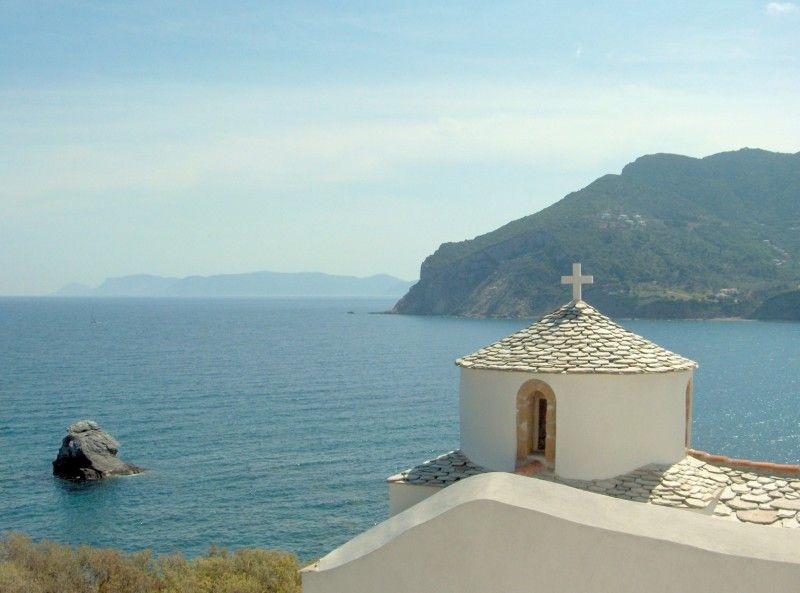
Can you visit sea caves on a Skopelos boat tour?
Skopelos boat tours reach sea caves cut into the island’s cliffs, including the Tripiti cave on the north coast.
Sea caves punctuate the cliffs of the north and northwest coast of Skopelos, carved by the sea into the soft rock over long ages. Tripiti stands among the named hollows, its title drawn from the Greek word for pierced or holed, describing the openings worn through the cliff. Boats reach these caves on the same routes that serve the remote northern beaches, since both lie along the roadless shore. Small caiques handle the caves best, nosing close to the rock or, where the opening allows, easing inside the mouth. The interiors hold clear, cool water in shades of blue and green, lit where the sun angles through the openings.
Sea caves feature on cruises that work the sheltered side of the island, adding a geological stop to the run between the northern bays.
The Tripiti cave sits on the north coast, reached by the cruises and caique trips that round the island. Its openings in the cliff let light and water pass through the rock, giving the interior the shifting colours that draw the boats. The cave lies among the remote northern stretch near beaches such as Perivoliou, so trips often pair the cave with a swim in a nearby cove. Access depends on the sea, since the swell has to fall low enough for a boat to approach the rock in safety. On calm mornings the caique eases close, and swimmers slip into the water to explore the mouth of the cave.
The clear water inside and the play of light on the rock reward the stop. Conditions decide the visit, so the crew reads the sea before committing to the approach.
Reaching the sea caves depends on the wind and the swell, since the exposed north coast turns rough when the meltemi blows. Calm mornings give the best window, when the sea falls flat enough for a boat to approach the cliffs and hold position off the rock. Crews watch the conditions and skip the caves when the swell rises, redirecting the trip to sheltered bays instead. Small boats manage the close approach that the larger day boats cannot, so the caique trips reach the hollows the big cruises pass at a distance. Swimmers entering the water near the caves wear a mask to read the clear interior and watch the rock underfoot.
The stops stay short and weather-led, treating the caves as a bonus of a calm day rather than a fixed feature of every trip along the coast.
The caves link naturally with the remote north-coast beaches, so a single cruise chains rock, cave and swim into one leg. Boats run from the sea caves near the northern tip toward the pale coves of Perivoliou and Sares, anchoring for a swim between the geological stops. The lighthouse at Cape Gourouni on the northwest headland often features on the same route, a stark landmark above the cliffs. This roadless stretch delivers the wildest scenery on the island, cut off from the traffic and buildings of the south. Travellers set on the caves choose the caique trips and the calmer months, when the north coast lies still.
Pairing the caves with a swim and the northern beaches turns the run into the standout leg of a round-the-island day. Reaching the parts of Skopelos that the road cannot touch.
How do boat tours reach the Alonnisos Marine Park from Skopelos?
Boat tours cross east from Skopelos into the Alonnisos Marine Park, the largest marine protected area in Europe. Day boats run to Alonnisos and its outlying islets, where the Mediterranean monk seal breeds, though sightings stay rare.
The National Marine Park of Alonnisos and the Northern Sporades lies east of Skopelos, protecting the waters around Alonnisos and a chain of smaller islands. It ranks as the largest marine protected area in Europe, covering the sea, the islets and the marine life within its bounds. Boat tours cross from the harbour at Skopelos Town, running east across open water to reach Alonnisos and the park’s fringe. The park shelters the Mediterranean monk seal, one of the rarest seals on Earth, along with dolphins, seabirds and Eleonora’s falcons that nest on the cliffs. Day boats work the accessible edges of the park, since the inner islands carry strict protection.
The crossing forms one of the longer excursions from Skopelos, trading a full day at sea for a look into a rare and guarded marine world just offshore.
The park protects the Mediterranean monk seal above all, the animal that shaped its creation and its rules. Only a small population survives across the Mediterranean, and the waters around the Sporades hold one of the species’ last strongholds. Boat tours enter the park in the hope of a sighting, though the seals stay elusive and encounters remain a matter of chance rather than a guarantee. Guides explain the seal’s habits and the conservation effort while the boat works the coast of Alonnisos and its islets. The park also shelters dolphins, which the boats meet more often in open water, and the cliffs host nesting seabirds.
Travellers set on wildlife find the marine park the richest trip from Skopelos, and the dedicated route to the Alonnisos Marine Park sets out the crossing in full.
The park splits into zones with different access rules, so the boats stay to the permitted waters. The core island of Piperi lies under the strictest protection, closed to visitors to guard the seal’s breeding grounds, and boats hold well offshore. The islands of Kyra Panagia, Gioura and Psathoura carry lighter limits, with landings restricted or guided depending on the zone. Boats commonly reach the coast of Alonnisos itself and the nearer islets, where a landing, a swim or a walk fits the day. Guides know the boundaries and keep the trip within them, since the rules protect the marine life the park exists to save.
This zoning shapes every marine-park excursion, so the itinerary follows the permitted edges rather than the closed core. Respecting the limits means sharing the water with the seal off Skopelos.
A marine-park day runs long, since the crossing to Alonnisos and its islets eats up open-water time. Day boats leave the harbour at Skopelos Town in the morning, cross east, and work the park through the middle of the day before the return run. The route often calls at a beach or a taverna on Alonnisos, breaking the trip with a swim and a meal ashore. Swimming stops in the clear water off the islets fill the anchor times, and the crew watches for seals and dolphins across the crossing. The trip suits travellers after wildlife and open sea rather than a beach-hopping cruise.
Calm weather matters more here than on the sheltered runs, given the exposed crossing, so the excursion favours the settled summer months. The marine park delivers the most naturalist trip on the Skopelos boat-tour list.
What are the Mamma Mia boat tours from Skopelos?
Mamma Mia boat tours trace the film’s Skopelos locations from the water, calling at Kastani beach on the southwest coast and the chapel islet of Agios Ioannis Kastri to the north.
The Mamma Mia connection shapes a distinct set of boat trips from Skopelos, tracing the film’s shooting locations by sea. The ABBA-musical used the island as its main backdrop. Two sites anchor any film-led cruise: the beach where the shore scenes were shot and the chapel that crowns the wedding view. Boats reach both from the water, giving angles that the road hides and pairing the film stops with swimming in clear bays. The cruises leave from the harbour at Skopelos Town or from Agnontas, depending on the wind and the route. Film fans get the story’s coast in a single trip, joining the beach and the chapel that most visitors otherwise reach on a long cross-island drive.
The film format overlays the standard scenery cruise with a screen-tourism layer that Skopelos carries better than any other Greek island.
Kastani forms the beach half of the Mamma Mia route, the southwest bay where the film staged its shore scenes. Boats anchor offshore in high season, and passengers swim in to the pine-backed sand or view the green slope from the water. The production built a temporary bar and taverna on the beach for filming, then removed the set, leaving a working beach that fans recognise from the screen. The cruise approach shows the pine wall rising straight from the shore, the framing the film used in its wide shots. A permanent bar and taverna now serve the bay among the trees.
Travellers combining the sea approach with a drive find the shore detail in the guide to Kastani beach, the fixed point of any film visit to Skopelos.
Agios Ioannis Kastri supplies the chapel half of the route, a tiny church perched on a rock islet off the northeast coast. The film used the chapel for its climactic wedding scene, set atop a stack of rock reached by a stairway carved up the side. Boats approach the islet from the sea, giving the full view of the church against the sky that the film made famous, though the climb to the top runs from the landward side up the steps. Cruises pair the chapel with the northern beaches and the sea caves, since all lie along the same stretch of coast.
The islet sits far from Kastani across the island, so the boat joins the two film sites more directly than the road. The dedicated approach appears in the guide to Agios Ioannis Kastri.
A Mamma Mia cruise blends the two film sites with the everyday pleasures of a Skopelos boat trip. Between Kastani and the chapel the boat runs the coast, anchoring for swims in clear bays and passing the pine slopes and cliffs that fill the film’s backdrop. The route trades the long cross-island drive for a single sea journey, joining sites that sit on opposite shores. Film fans recognise the landscapes from the screen, since the scenery itself carried the production rather than any built set. A swim in the same shallows the cast waded through completes the trip for most.
Travellers following the Mamma Mia trail by land as well find the boat trip fills the gaps the road leaves, reaching the chapel from the water and the beach from the sea in one film-led day around Skopelos.
Can you take a boat trip to Skiathos or Alonnisos from Skopelos?
Boat trips and ferries link Skopelos with the neighbouring Sporades islands of Skiathos and Alonnisos.
Skopelos sits at the centre of the Sporades chain, with Skiathos to the west and Alonnisos to the east, so day trips to both fit within a stay. Excursion boats run from the harbour at Skopelos Town to each island, joining the crossing with swimming stops and time ashore. Skiathos lies about an hour away by fast boat, a busier island with a lively town and a long list of sandy beaches. Alonnisos lies closer to the east, quieter and greener, and doubles as the gateway to the marine park. Both islands share the ferry lines that thread the Sporades, so scheduled boats supplement the excursion trips.
A day on either extends the reach of a Skopelos base, turning the island into a hub for a wider Sporades circuit across the summer months.
Skiathos draws the day trips west for its town, its nightlife and its famous beaches. The island’s south coast holds a run of sandy shores, with Koukounaries among the best known in the Sporades, backed by pine and a lagoon. Skiathos Town packs a busy waterfront of shops, tavernas and bars into its harbour, a livelier scene than quiet Skopelos. Day boats and scheduled ferries make the crossing straightforward, so a Skopelos base reaches Skiathos for a full day and returns by evening. The island also carries the region’s airport, the entry point for Sporades visitors.
Travellers wanting sand over pebbles find Skiathos the natural day trip, since its beaches run softer and wider than most on Skopelos. The short hop turns the neighbouring island into an easy change of pace from a Skopelos stay.
Alonnisos draws the day trips east for its calm, its greenery and its marine park. The island lies closer to Skopelos than Skiathos, a short crossing to the quietest of the three main Sporades. Its old capital, Chora, crowns a hilltop above the modern port at Patitiri, reached by a climbing road. Alonnisos guards the gateway to the marine park, so a trip to the island often folds into a park excursion or a wildlife cruise. Its beaches stay quiet, its pace slow, and its coast wild against the busier islands to the west. Day boats and ferries link Patitiri with Skopelos Town, making the crossing easy for a day out.
Travellers after nature and stillness find Alonnisos the calmer of the two neighbours, and the closest jumping-off point for the protected waters offshore.
The ferry network ties the three islands together, so island-hopping from Skopelos runs on scheduled boats as well as excursion trips. Conventional ferries and faster hydrofoils, the flying dolphins, connect Skiathos, Skopelos and Alonnisos through the season, with Skopelos Town and Glossa serving as the island’s two ports. The scheduled boats suit travellers wanting to set their own timing rather than join a fixed cruise, and they run more often through the peak weeks. Excursion boats add the swimming and sightseeing that the ferries skip, trading speed for a leisurely day at sea. Combining the two opens a flexible Sporades circuit from a single base.
The ferry detail and the port choice sit in the guide on how to get to Skopelos, which covers the crossings between the islands as well as the run from the mainland.
What should you expect on a Skopelos boat tour?
A Skopelos boat tour combines cruising with swimming and snorkelling stops in clear bays. Trips run half or full days, anchor off beaches the road cannot reach, and often include refreshments or a meal.
A typical Skopelos boat tour builds its day around a mix of cruising and swimming, rather than a straight transfer. The boat leaves the harbour in the morning, runs a stretch of coast, and anchors in clear bays for spells in the water. Passengers swim, snorkel or float off the boat during the stops, then re-board as the trip moves on to the next cove or landmark. The pace stays unhurried, timed to the calmest hours and the sheltered side of the island. Between stops the deck gives open views of the pine-clad shore, the cliffs and the passing islets.
The format turns the sea itself into the day out, joining bays and sights that a single beach visit could never reach. This rhythm of cruise and swim defines the standard trip along the Skopelos coast.
Swimming and snorkelling stops sit at the heart of the experience, so the day centres on the water. The crew anchors in sheltered coves, drops a ladder off the boat, and gives a fixed spell for swimming before moving on. The clear water off the north and west coasts brings the pebble seabed and its fish into sharp view, rewarding a mask and snorkel at each stop. Depths off the boat run well beyond a wader’s reach, so the stops suit confident swimmers, while the crew watches over the group. Bringing a mask, snorkel and a towel makes the most of the anchor times, since the boats rarely rent gear.
The stops vary in number with the length of the trip, from one or two on a half day to across a full day.
Food and drink feature on the longer trips, though the arrangement varies with the boat and the route. Full-day cruises often include a meal or refreshments, served aboard during a longer anchor or ashore at a taverna in a bay along the way. Shorter caique trips carry drinks and light snacks rather than a full spread, so travellers pack their own food for a half day at sea. Water matters most, since a day in the sun and salt draws it down fast, and the boats seldom sell much beyond the basics. Checking what the trip provides at booking sets the packing list, from a light lunch to a full picnic.
A meal at anchor in a quiet cove, with a swim before and after, ranks among the pleasures of a full day afloat off Skopelos.
Conditions shape every trip, so flexibility runs through the day. The crew reads the wind before departure and shifts the route to the sheltered side of the island when the meltemi rises, favouring the south when the north turns rough. Stops get added, cut or swapped as the sea allows, and exposed sites such as the caves fall away on choppy days. Sun protection, water and a light layer for the breeze at speed cover the essentials on any boat. Departure and return times hold to a rough schedule, though the sea sets the final shape of the day.
Travellers who take the conditions as part of the trip get the most from it, since the flexible route reaches the calmest, clearest water on offer. Reading the weather into the plan makes a Skopelos boat tour a reliable day out.
How do you choose and plan a Skopelos boat tour?
Planning a Skopelos boat tour starts with the trip type, the departure harbour and the weather.
Choosing a Skopelos boat tour begins with the stretch of coast and the pace in view. A caique suits a quiet half day to nearby beaches and caves. A day boat opens the outer islands and the marine park. A charter fits a group setting its own route. The marine-park crossing draws travellers after wildlife, the Mamma Mia cruise draws film fans, and the round-the-island trip suits those wanting the widest scenery in a day. Matching the trip to the interest sets the shape of the day out. The harbour follows from the route, since Skopelos Town serves the north and east while Agnontas favours the west.
Reading the options against the coast, rather than booking the first board on the quay, secures the trip that fits the day best on Skopelos.
Booking runs easiest from the waterfront, where the ticket booths, boards and moored boats gather along the quay at Skopelos Town. Travellers compare routes, durations, boat types and prices in person, reading the day’s conditions off the harbour before committing. Popular trips fill through the peak weeks of summer, so booking a day ahead secures a place on the round-the-island and marine-park cruises. Confirming the departure point at booking avoids a wasted drive, since operators shift harbours with the wind. Prices, timings and inclusions vary between boats and change through the season, so checking the detail on the day beats relying on a fixed figure.
The overview of things to do in Skopelos places the boat trips among the island’s wider draws for travellers weighing a day at sea against the land-based sights.
Weather steers the plan more than any timetable, so a flexible booking pays off. The meltemi, the north wind of the Aegean summer, stirs the exposed north coast and pushes trips to the sheltered south when it blows hard. Calm mornings open the sea caves, the marine-park crossing and the remote northern beaches, while windy days keep the boats to the lee of the island. Booking a day or two into a stay, rather than the first afternoon, leaves room to pick a settled morning. The crews read the conditions and adjust the route, so a trip still runs on a breezy day, only along a different coast.
Building a spare day into the plan covers a blow that grounds the exposed trips. Reading the forecast against the route times the best day at sea.
Packing for a Skopelos boat tour covers a full day in sun, salt and breeze. Water heads the list, since the boats sell little and a day at sea draws it down fast. Sun protection matters through the middle of the day, when the deck offers thin shade against the direct sun, so a hat, sunglasses and high-factor cream earn their place. A mask and snorkel unlock the marine life at the swimming stops, as the boats rarely rent gear. A towel, a change of clothes and a light layer for the breeze at speed round out the bag. Cash covers extras where cards fail at sea, and a dry bag guards phones and cameras from the spray.
Packing smart, rather than heavy, matches a day that already provides the boat, the route and, on the longer trips, a meal at anchor off Skopelos.
Frequently Asked Questions
How long do Skopelos boat tours last?
Skopelos boat tours run from short half-day hops to full-day cruises, depending on the route. Half-day trips on caiques or water taxis reach the nearer beaches, such as Glysteri. The closer sea caves, filling a morning or an afternoon with a couple of swimming stops. Full-day cruises take in the round-the-island route, the Mamma Mia coast or the crossing to Alonnisos and the marine park, running from mid-morning until the late afternoon. The longer trips cover far more coast and several swimming stops, since they reach the remote north-coast beaches and the outer islands that lie beyond a short run. The marine-park excursion ranks among the longest, given the open-water crossing east to Alonnisos and back.
Departure and return times hold to a rough schedule, though the sea and the wind set the final shape of the day. Checking the duration at booking matches the trip to the time on hand during a Skopelos stay.
Do Skopelos boat tours include swimming stops?
Skopelos boat tours build the day around swimming stops in clear, sheltered bays. The crew anchors off a cove, drops a ladder from the boat, and gives a fixed spell for swimming, snorkelling or floating before moving on to the next stop. The number of stops varies with the length of the trip, from one or two on a half day to across a full-day cruise. The clear water off the north and west coasts brings the pebble seabed and its fish into view, rewarding a mask and snorkel at each anchor. Depths off the boat run beyond a wader’s reach, so the stops suit confident swimmers, while the crew watches over the group.
The boats reach bays that the road cannot, so the swimming happens in quiet, uncrowded water far from the busy beaches. This water time forms the core reward of a Skopelos cruise, joining coves that a single beach visit could never reach in a day.
What should you bring on a Skopelos boat tour?
Packing for a Skopelos boat tour covers a full day in sun, salt and sea breeze. Water heads the list, since the boats sell little and a day at sea draws it down fast. Sun protection matters through the middle of the day, when the deck offers thin shade, so a hat, sunglasses and high-factor cream earn their place. A mask and snorkel unlock the marine life at the swimming stops, as the boats rarely rent gear on board. A towel, a change of clothes and a light layer for the breeze at speed round out the bag. A dry bag guards a phone and camera against the spray, and cash covers extras where cards fail at sea.
On the shorter caique trips, packing a light lunch fills the gap left by the lighter catering. Sturdy, non-slip footwear helps on a wet deck. Packing smart rather than heavy matches a day that already provides the boat and the route around Skopelos.
Are Skopelos boat tours suitable for children?
Skopelos boat tours suit children on the calmer, shorter routes, though the choice of trip matters. The larger day boats give a steadier ride, shaded seating and room to move, which suits families across a full day at sea. The swimming stops anchor in sheltered bays where the water stays clear and calm, though depths off the boat run beyond a wader’s reach. Children swim within reach of a parent and the crew. Life jackets and the crew’s watch add a layer of safety at the anchor stops. Shorter half-day trips on the caiques suit younger children better than the long marine-park crossing, which involves open water and a full day afloat.
The calm, sheltered runs to the nearer beaches keep the sea flat and the day short. Bringing sun protection, water, snacks and a change of clothes covers the essentials for a child aboard. Matching the trip length and the sea conditions to the age of the child sets up an easy day on the water.
Can you see the Mediterranean monk seal on a Skopelos boat tour?
Marine-park boat tours from Skopelos enter the waters where the Mediterranean monk seal survives, though a sighting stays a matter of chance. The National Marine Park of Alonnisos protects one of the species’ last strongholds. The trips cross east to work the coast of Alonnisos and its islets in the hope of an encounter. The seals stay elusive and rare, so no trip guarantees a sighting, and guides frame the crossing around the wider marine life as much as the seal itself. Dolphins turn up more often in the open water, and the cliffs host nesting seabirds and Eleonora’s falcons.
The strictest core of the park, the island of Piperi, stays closed to guard the seal’s breeding grounds, so the boats hold offshore and work the permitted zones. Travellers set on wildlife find the marine park the richest trip from Skopelos, trading a beach cruise for a naturalist day. Calm weather improves the crossing and the chances on the water.
When is the best time for a boat tour on Skopelos?
Boat tours run on Skopelos from late spring to early autumn, when the sea warms and the fleet operates in full. The core summer months carry the widest choice of trips, the busiest departures and the warmest swimming, though the meltemi, the north wind, can stir the exposed coast. Early summer and early autumn deliver warm water with lighter crowds, easing the pressure on the popular cruises. Calm mornings give the best conditions across the season, when the sea falls flat enough to reach the sea caves. Cross to the marine park and work the remote north coast. Windy days push the boats to the sheltered south, so a flexible plan pays off.
Booking a day or two into a stay leaves room to pick a settled morning. The early hours bring the calmest water and the coolest deck, before the afternoon breeze rises. Reading the forecast against the desired route times the best day at sea off Skopelos.
Do you need to book Skopelos boat tours in advance?
Booking a Skopelos boat tour a day ahead secures a place on the popular routes through the peak weeks of summer. The round-the-island cruise, the marine-park crossing and the Mamma Mia trip fill fastest, since demand runs high and the boats carry fixed numbers. Booking runs easiest from the waterfront at Skopelos Town, where the ticket booths, boards and moored boats gather along one quay. Letting travellers compare routes and read the day’s conditions before committing. Confirming the departure harbour at booking avoids a wasted drive, since operators shift between Skopelos Town and Agnontas with the wind. Outside the peak weeks, space opens up more freely, so a same-day booking often works in early summer or early autumn.
Weather steers the timing as much as availability, so a flexible booking leaves room to pick a calm morning. Reaching the quay early on the day secures a spot on the shared trips, which run when the boat fills across the season.