
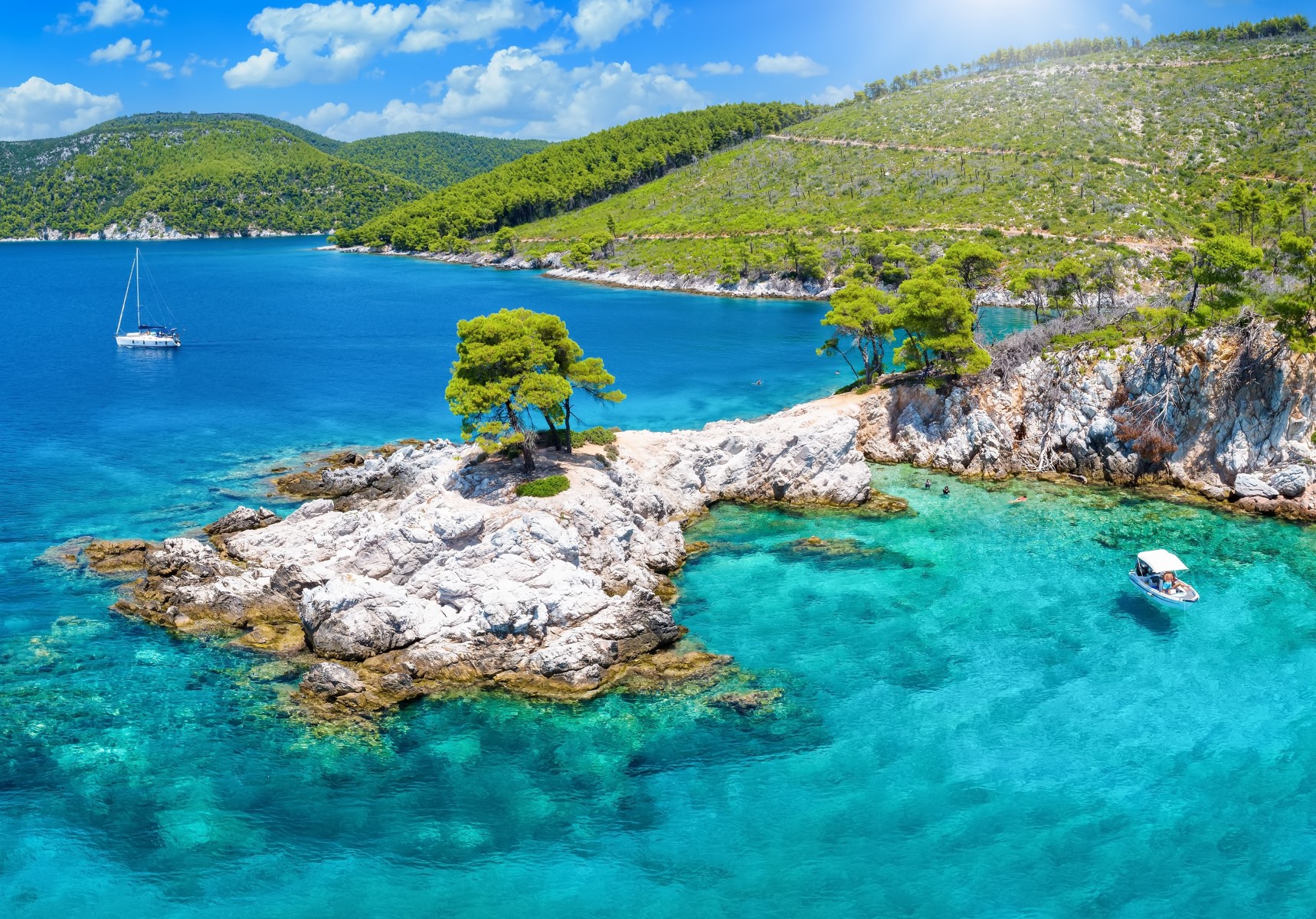
Skopelos travel guide: Insider tips on how to get there, best beaches, boat tours, where to stay, and 2–7 day itineraries to plan an authentic Aegean escape.
Skopelos Travel Guide: Best Things to Do in Skopelos, Greece
Skopelos is one of those rare Greek islands that feels both cinematic and comfortingly unchanged, with pine-clad hills, blinding white chapels, turquoise coves, and a village life that still runs at its own gentle pace. It belongs to the Northern Sporades, a group covered across our Greece Tours.
In this Skopelos travel guide, we’ll walk you through everything we wish we’d known before our first trip: how to get there, where to stay, the beaches and hidden coves you can’t miss, local dishes to taste, and the best ways to explore the island by boat, on foot, or by scooter. Whether you’re planning a romantic getaway, a family holiday, or a longer island-hopping adventure, this guide covers practical tips and insider favorites to help you make the most of Skopelos, Greece.
The Skopelos tours below visit the Mamma Mia filming sites by van, by bus or in a private group.
Quick Facts and Best Time To Visit
Skopelos at a glance
- Region: Northern Sporades, Aegean Sea
- Main towns: Skopelos Town (Chora), Glossa, Elios (Panormos area)
- Area: ~96 km²
- Population: ~5,000 (seasonal increases in summer)
- Currency: Euro
- Language: Greek (English widely spoken in tourism)
Why Skopelos stands out
Skopelos combines dramatic green slopes and dense pine forests with pebbly and sandy beaches. It’s less built-up than Cycladic islands like Milos, and that’s a big part of its appeal: quieter roads, preserved villages, and a strong local culture. The island gained international recognition after being a backdrop for the film “Mamma Mia.”, but it’s much more than a movie set, it’s a place where you can still find secluded coves and authentic tavernas.
- Late May–June: Blossoming island, warm sea, fewer crowds, our favorite shoulder-season window.
- July–August: Peak summer with reliably hot weather and full services, but expect crowds at the most famous beaches and higher prices.
- September–early October: Warm sea, mellow crowds, harvest-season local produce, another excellent time.
- Winter (Nov–Apr): Quiet and atmospheric, but many businesses close and ferry frequency drops.
Weather snapshot
Skopelos enjoys a classic Mediterranean climate: hot, dry summers and mild, wetter winters. Sea temperatures are pleasant from June through October. Bring layers for evenings outside the high season: the pine-covered hills can feel cooler after sunset.
How To Get To Skopelos and Get Around The Island
Ferries connect Skopelos to the mainland and nearby islands, while local options make exploring straightforward. Below, we break down routes, air connections, ground transport, and private-boat options so you can plan a smooth arrival and island itinerary.
Ferry Routes and Timetables
Skopelos has regular ferry links to the mainland port of Volos and to Skiathos, and seasonal connections to Thessaloniki and other Sporades islands. Two main types of ferries operate:
- Conventional car ferries: Slower, but reliable and able to carry vehicles.
- High-speed catamarans: Faster for foot passengers, but may be limited for cars and luggage.
Typical routes:
- Volos ↔ Skopelos: Daily year-round (frequency increases in summer). Travel time ~2–3 hours, depending on the vessel.
- Skiathos ↔ Skopelos: Frequent in summer: crossing usually 30–60 minutes by boat.
- Alonissos ↔ Skopelos: Short seasonal runs that make island hopping easy.
We always recommend checking schedules ahead of travel, as Greek ferry timetables change seasonally. Purchase tickets in advance during July–August: for the shoulder season, you can sometimes buy on the day.
Flights, Connections, and Transfers
Skopelos does not have its own airport. The nearest commercial airport is Skiathos (JSI), which receives regular flights from Athens and some European cities in summer. From Skiathos port, you can take a short ferry to Skopelos.
Alternative airports:
- Volos (Nea Anchialos): For mainland connections, take a ferry or drive to the port and onward to Skopelos.
- Thessaloniki: Useful for northern itineraries, with longer ferry options.
If you fly into Skiathos, plan for a fast ferry connection to Skopelos: if you land in Athens, expect a combined drive-and-ferry transfer of several hours.
Getting Around: Buses, Car Rental, Taxis, and Scooters
Public buses (KTEL) run between Skopelos Town and many beaches and villages, especially in summer. The network is simple and inexpensive, but it can be limited in frequency outside the high season.
Vehicle options:
- Car rental: Best for flexibility, the island’s roads are mostly narrow and winding, so we suggest compact cars.
- Motorbikes and scooters: Fun for solo travelers and couples, but avoid after dark on unfamiliar roads.
- Taxis: Available in town centers: book ahead for early-morning departures or late-night returns.
Driving tips: Watch for goats, sharp bends, and steep approaches to some beaches. Fuel stations are limited outside main towns, so top up when you can.
Private Boats And Water Taxis
The quickest way to reach secluded coves is by private boat or water taxi. Local skippers run daily and half-day charters from Skopelos Town, Agnondas, and other ports. Water taxis also connect beaches with limited road access.
For a romantic day out, we often hire a small private boat for a half-day to combine snorkeling, swimming, and a beachside taverna stop. If you plan boat trips in peak season, reserve in advance through local operators or My Greece Tours to get trusted, local captains.
Where To Stay: Towns, Neighborhoods, and Accommodation Picks
Skopelos accommodation ranges from simple guesthouses to romantic boutique hotels. Where you choose to stay shapes your experience, lively evenings in Chora or lazy mornings by a quiet bay.
Stay In Skopelos Town Vs. Glossa and Smaller Villages
- Skopelos Town (Chora): The island’s hub. Narrow streets, waterfront tavernas, nightlife, and easy ferry access. Ideal if you want restaurants and shops within walking distance.
- Glossa: On the island’s north-west, Glossa offers elevated views and a calmer pace. It feels more traditional and suits couples or families seeking tranquility.
- Smaller villages (Agnondas, Loutraki, Kastani area): Great for beach access and a slow rhythm, fewer services but higher serenity.
We tend to split stays if we have more than three nights: a night or two in Chora to explore and then a quieter beachside base.
Romantic Boutique Hotels and Family-Friendly Options
Romantic choices:
- Small boutique hotels in Chora or near Kastani with sea-view terraces, private gardens, and personalized service.
- Guesthouses with sunset views in Glossa for intimate evenings.
Family-friendly options:
- Self-catering apartments near sandy beaches like Stafilos or Panormos.
- Hotels with family rooms and pool access in town.
When booking, look for facilities you need: breakfast hours, kitchen access, or airport/port transfers.
How To Choose Based On Beach Access and Atmosphere
- Beach access priority: Stay near Stafilos, Kastani, or Panormos.
- Quiet and scenic: Choose Glossa or smaller bays like Agnondas.
- Nightlife and dining: Chora is the clear winner.
Book early for July–August. For shoulder season travel, many owners are flexible with check-in times and quieter rates.
Top Beaches and Hidden Coves
Skopelos’ coastline is its treasure. From popular sandy strips to small, pine-backed coves, each beach has its personality. Here are the must-visits and secret spots we recommend.
Stafilos, Kastani, and Milia: Popular Sandy Beaches
- Stafilos: A short drive from Chora, Stafilos is sheltered by pine trees and offers a mix of sand and pebbles with sunbeds and tavernas close by. The slope down to the beach is steep but worth it for the protected waters.
- Kastani: Famous for its long, pebbly shore and its role as the main beach location of “Mamma Mia.” Kastani’s clear water is excellent for swimming and snorkeling: the beach can be busy in peak season, but it has a wonderful atmosphere.
- Milia: A beautiful sandy beach further along the southern coast, framed by pines and low cliffs. Milia is less developed than Stafilos and Kastani, offering a more natural feel.
These beaches are popular for a reason: good facilities, shallow waters for families, and straightforward access.
Hidden Gems: Agnondas, Panormos, and Quiet Coves
- Agnondas: A peaceful fishing village with a pebble beach and fresh seafood tavernas right on the waterfront. It’s a favorite base for those seeking calm evenings.
- Panormos: On the island’s west coast, Panormos is a broad bay with sand and pebbles and a relaxed taverna scene. It feels local and less crowded than southern beaches.
- Quiet coves: Drive the coastal roads or take a boat to discover small coves where pine trees meet the water. Our favorite quiet finds often require a short walk down from the road or a water-taxi arrival.
Best Snorkeling, Swimming, and Sunbathing Spots
For snorkeling, head to rocky edges near Kastani and around smaller headlands where fish gather. The water clarity is usually excellent, bring reef shoes for rocky entries.
Swimming is easiest at Stafilos and Milia for families, while the quieter coves offer secluded spots for sunbathing and swimming with fewer neighbors. If you want total privacy, plan a morning or late-afternoon visit outside boat-tour peak times.
Activities, Tours, and Outdoor Adventures
Skopelos is an island. Between boat trips, hikes, and water sports, it’s ideal for active travelers and people who want slow, nature-led days.
Private Boat Tours, Sailing, and Island Hopping Excursions
Hiring a private boat is one of the best ways to discover Skopelos’ hidden coves and neighboring islands. Options include:
- Half-day private charters for snorkeling and secluded swims.
- Full-day sailing trips that include visits to Alonissos and the small Sporades islets.
- Sunset cruises with a local skipper for a romantic evening.
We recommend booking a captain who knows the little bays inaccessible by road; local knowledge makes the day far richer.
Hiking Trails: Kastani Viewpoints, Agios Konstantinos, and Church Walks
Skopelos has short, rewarding hikes rather than long alpine treks. Trails we love:
- Kastani Viewpoints: Short walks from the parking area lead to panoramic views over the bay and the Aegean.
- Agios Konstantinos: A walk that combines natural scenery with visits to small chapels perched on hillsides.
- Chora church walks: Meander between whitewashed churches and through cobbled alleys for charming discoveries.
Bring water, sun protection, and good shoes; many paths are uneven and shaded by pine trees.
Snorkeling, Diving, and Water Sports
Snorkeling gear rental is available at popular beaches: look for rocky outcrops near Kastani for the most marine life. Diving centers operate seasonally, offering introductory dives and guided excursions around underwater rock formations and reefs.
Other water sports such as SUP (stand-up paddleboarding), kayaking, and windsurfing are available at larger beaches when conditions allow.
Rock Climbing and Adventure Options
While not a climbing mecca, Skopelos does offer some coastal rock faces suitable for experienced climbers. For an adrenaline fix, local operators sometimes pair climbing with sea-abseiling or guided exploration of less-visited headlands.
Sunset Spots, Romantic Things To Do, and Photo Locations
Top sunset vantage points:
- The promenade in Skopelos Town offers harbor views and golden light over moored boats.
- Glossa viewpoints for an elevated panorama of the Aegean.
- A private boat at dusk to watch the sunset over the Sporades, very romantic and quiet.
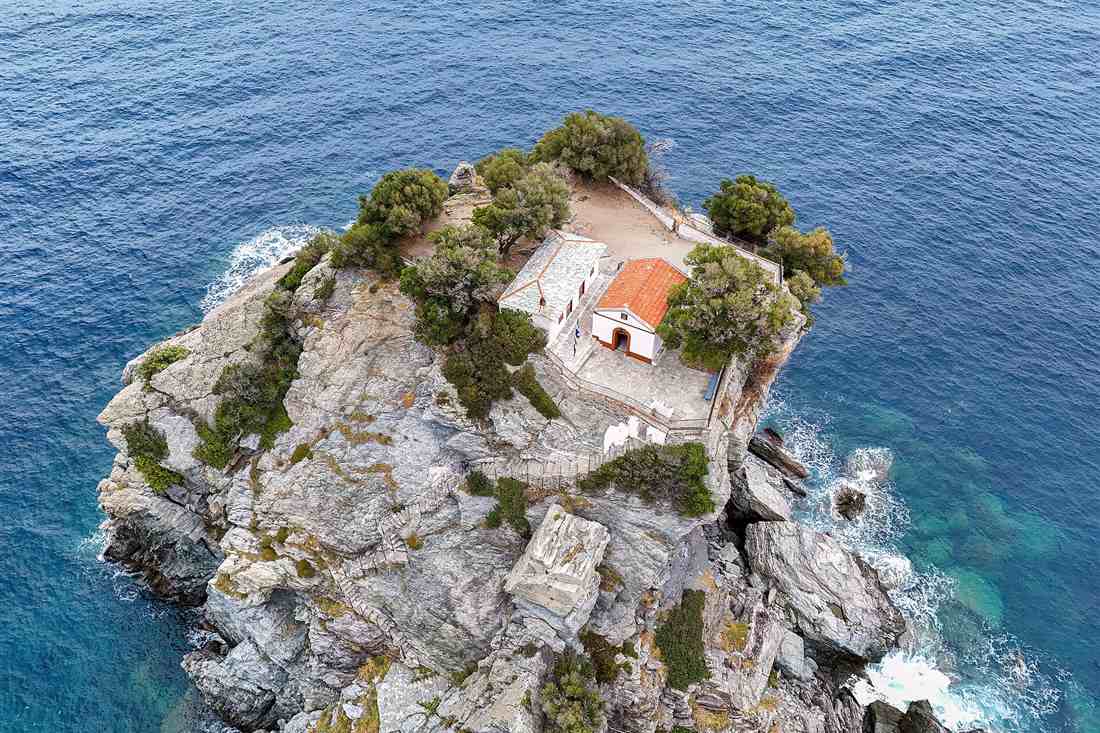
Photo locations: Kastani beach (the Mamma Mia beach), the Agios Ioannis chapel on its rock near Glossa, the whitewashed chapels scattered across the island, and pine-fringed coves all make brilliant backdrops for travel photos.
Which Skopelos tours visit the Mamma Mia filming locations?
The four Skopelos tours in the list below visit the Mamma Mia filming locations. All four stop at the Agios Ioannis chapel, and two add Kastani beach. Their running times range from 4.5 to 7 hours.
The film Mamma Mia shot its outdoor scenes on Skopelos, neighbouring Skiathos and Damouchari in mainland Pelion. Filming on Skopelos ran from late August into September. Skopelos tours now follow the Mamma Mia trail on Skopelos to the places seen on screen.
Kastani beach, the film’s main location, lies on the southwest coast of Skopelos. The producers built a beach bar and a jetty there. They removed both after filming ended. The wedding procession was filmed at the Agios Ioannis Kastri chapel near Glossa. Both stops appear in the Skopelos tours listed below.
- Skopelos: The Mamma Mia Island Tour: 6 hours, the Chapel of St John (Agios Ioannis).
- Skopelos: Mamma Mia Experience: 6 hours, St John’s chapel, island landscapes and beaches.
- Mamma Mia Tour: 7 hours by climate-controlled bus, Agios Ioannis, then a long swim at Kastani beach.
- Skopelos: Mamma Mia! Small-Group Tour for Up to 8 Guests: 4.5 hours by van, Agios Ioannis Chapel and Kastani beach.
Glossa village is the second-largest settlement on Skopelos. It sits at 200 to 300 m elevation on the northwestern tip, above Loutraki harbour. The village lies 25.4 km from Skopelos Town. Skopelos tours to the chapel head to this northwest corner.
How do private Skopelos tours differ from small-group and bus tours?
Private Skopelos tours carry one booking only, while small-group tours cap the van at 8 guests. Bus tours seat a larger shared group on one fixed route. Private trips run in a van or on a private boat.
The small-group option among Skopelos tours pairs its van with a local guide. The guide shares behind-the-scenes stories and stops for movie-inspired photos.
The Exclusive Private Mamma Mia Locations Tour runs 3.5 to 5.5 hours. Its air-conditioned van covers the Mamma Mia filming locations. For private Skopelos tours at sea, book a Skopelos yacht charter.
The private format suits couples, families and wedding parties. A couple on a Skopelos honeymoon shares the van with no other guests. Parents travelling to Skopelos with kids keep the ride to their own family. For weddings on Skopelos, the whole party rides as one group.

Which Skopelos tours start from Skiathos and the Pelion coast?
Skopelos tours start from Skiathos and from Agios Ioannis on the Pelion coast. Skiathos is the nearest inhabited island to the west of Skopelos. Beach cruises, sailing yachts and private boats make the crossing in a day.
Skiathos and Skopelos both belong to the Northern Sporades, east of the Pelion peninsula. GetYourGuide lists these Skopelos tours for a Skopelos day trip from Skiathos or Pelion:
- Skopelos Beaches Cruise Mamma Mia Themed: 7 hours, stops at Kastani beach, Panormos village and Milia beach.
- Mamma Mia Chapel, Kastani, Panormos Boat Tour: 7.5 hours, a swim at Kastani and time at Panormos beach.
- Private Cruise to Skopelos Highlights: 8 hours, snorkelling at the Dasia caves, Kastani beach, local wine and fruit.
- Skopelos & Alonissos Boat Trip with Highlights: 9 hours, stops on Skopelos and the blue caves of Alonissos.
- Private Skiathos & Skopelos Boat Cruise: 9 hours, high-speed boat from Agios Ioannis, swim at Lalaria on Skiathos.
Viator adds a Mamma Mia cruise, a chapel visit by speed boat and a Rainbow yacht sail. Skopelos tours are not the only link: a one-way fast ferry from Skiathos takes 1 hour. See how to get to Skopelos for the ferry route, and Skopelos vs Skiathos to compare the islands.


What do Skopelos tours to the Alonissos Marine Park include?
Skopelos tours to the Alonissos Marine Park include a small-group sailing cruise with swim, SUP and snorkelling stops. The family-run cruise leaves Skopelos and lasts 3.5 to 8 hours. Breakfast, lunch and drinks come with the ticket.
Skopelos tours enter the National Marine Park of Alonnisos Northern Sporades. A presidential decree founded it as the first marine park of its kind in Greece. At about 2,260 square kilometres, it is the largest marine protected area in Europe. It covers Alonissos island, six smaller islands and 22 uninhabited islets and rocks.
The park protects a prime breeding area of the Mediterranean monk seal, an endangered species. Zone A1 around Piperi island bans vessels within 3 nautical miles. Zone B is open to Skopelos tours, with swimming and walking allowed.
The park waters hold about 300 fish species, and common, striped and bottlenose dolphins appear. Skopelos tours in August meet the meltemi, a strong northerly wind that stirs up the sea. Compare Skopelos boat tours with the Alonnisos Marine Park from Skopelos trip. Read Skopelos vs Alonnisos to pick an island base.
Which guided Skopelos tours run on land beyond the Mamma Mia sites?
The Skopelos Island: Easy Guided Hike is a guided land option among Skopelos tours on GetYourGuide. It lasts 5.5 hours on a gentle walk through forests and trails. The route runs where the green hills of Skopelos meet the sea.
Skopelos is shaped like a saxophone, with its neck pointing northwest and its bell on the east. Plan Skopelos tours on foot with a Skopelos map that marks two peaks over 500 m. Delphi (681 m) rises in the centre. Palouki (546 m) in the southeast holds the monasteries of Mount Palouki.
Aleppo pine forests cover the island. Kermes oak, olive groves, fruit trees and a small holm oak forest grow there too. Pine replaced the older oak forests because shipbuilders used pine timber. Guided Skopelos tours and routes for hiking on Skopelos pass through these woods.
Ancient Skopelos was called Peparethos and was famed for its wine. A Mycenaean royal tomb was found in the Staphylos and Velanio beach area. The history of Skopelos continues on the trail network at the Sendoukia rock-cut tombs. Skopelos tours on land cross an island of more than 360 churches and chapels. Four stops carry this story:
- Skopelos Town: a protected Traditional Settlement of Outstanding Beauty, where new buildings stop at two storeys.
- Basilica of Agios Athanasios: the island’s oldest standing church, built in the Kastro area in the 11th century.
- Agios Riginos: the church of Bishop Riginos, martyred in the 4th century. His feast on 25 February is an island holiday.
- Neo Klima (Elios): a west coast settlement built to rehouse Old Klima after a major 20th-century earthquake.
Skopelos tours on land meet a 67 km coastline. Much of it is cliff with no land access. Roads or trails reach the beaches at Limnonari, Hovolo, Glysteri and Perivoliou.
Food, Drink, and Local Culture
Skopelos combines hearty, rural Greek food with fresh seafood and a strong tradition of home-made produce. Here’s how to eat and drink like locals.
Traditional Taverns, Local Dishes, and Seafood Highlights
Must-try dishes:
- Skopelos cheese pie (tiropita with local cheese): A regional specialty and a great breakfast or snack.
- Fresh grilled fish and shellfish: Local tavernas serve daily catches simply grilled with lemon and olive oil.
- Lamb or goat slow-cooked in local style: Often found on taverna menus, especially during festivals.
- Local desserts: Honey-soaked pastries and simple seasonal fruit.
Tavernas in Agnondas and Chora are known for their traditional, family-run feel. For a memorable evening, choose a seaside taverna and order whatever the locals are eating.
Markets, Olive Oil, Wine, and Local Producers To Visit
We recommend visiting small producers and shops to taste olive oil, homemade plum preserves, and local wines. Local markets in Chora or village squares occasionally feature fresh produce, cheeses, and handmade goods.
Pro tip: Buy a small bottle of local olive oil or honey as a flavorful souvenir. It’s a great way to support producers and bring home authentic tastes.
Festivals, Church Visits, and Village Life
Religious festivals (panigyria) often center around church feast days and combine food, music, and dance, a wonderful way to experience local culture. Churches and chapels are frequently perched in scenic spots: many are small and open, especially during services and festivals.
Village life: Expect a slower rhythm, shops close for siesta in summer and reopen in the evening. Strike up a conversation with a cafe owner or taverna host: locals are proud of their island and generous with tips on where to explore.
Suggested Itineraries and How Many Days To Stay
How long to stay depends on your pace. Skopelos rewards lingering, but you can still taste its highlights in a short visit.
48 Hours: Highlights for a Short Trip
Day 1:
- Morning: Arrive and settle in Chora. Walk the harbor and climb to a church for panoramic views.
- Afternoon: Head to Stafilos for a swim and a late lunch in a beachside taverna.
- Evening: Dinner in Chora and a sunset stroll along the waterfront.
Day 2:
- Morning: Drive or bus to Kastani, enjoy the beach and snorkeling.
- Afternoon: Short hike to viewpoints: late afternoon coffee in Glossa if time allows.
- Evening: Sunset at a recommended viewpoint and seafood dinner in Agnondas.
4–5 Days: A Balanced Relaxation and Activity Itinerary
Day 1–2: Split time between Chora and nearby beaches (Stafilos, Kastani).
Day 3: Private boat trip to hidden coves and maybe a cross to Alonissos for a day.
Day 4: Explore Glossa, Panormos, and inland footpaths: visit local producers.
Day 5: Leisurely morning, last swim, and departure.
This pace lets you combine beach days, a boating adventure, and a relaxed exploration of villages.
7+ Days: Deep Exploration and Island Hopping Plans
With a week or more, we recommend:
- More extensive island hopping to Alonissos and Skiathos.
- Multiple private-boat days to reach remote coves.
- Deeper immersion: attend a local festival, take a cooking class, or spend slow days sampling village life.
Seven days also give you room for bad-weather contingency and truly slow days where the itinerary is just “beach, read, eat.”
Practical Tips, Costs, and Safety Information
Plan smart and travel responsibly: here are practical notes on packing, costs, and staying safe while enjoying Skopelos.
Packing Essentials, Weather Considerations, and Accessibility
Packing checklist:
- Light layers and a windbreaker for evenings.
- Good walking shoes for cobbled alleys and trails.
- Reef shoes for rocky beach entries.
- Sunscreen, hat, and reusable water bottle.
- A small daypack for hikes and boat days.
Weather: Summer heat can be strong; shade is sometimes limited on trails. Late spring and early autumn bring comfortable temperatures.
Accessibility: Many beaches have steps or steep approaches, and some coves are only reachable by boat or on foot. If mobility is limited, choose accommodation and beaches with straightforward road access.
Typical Costs, Money, and Tipping Guide
Typical price ranges (summer, per person):
- Meal at a casual taverna: €12–€20
- Seafood dinner at a mid-range taverna: €20–€40
- Coffee/soft drink: €2–€4
- Private half-day boat hire: varies widely: expect €150–€400+ depending on season and boat size
- Car rental per day: €30–€60 (seasonal variation)
Most places accept cards in town, but smaller villages and some tavernas prefer cash. ATMs are available in Chora but are less common elsewhere.
Tipping: Not obligatory but appreciated. 5–10% in restaurants is common if the service is good.
Safety, Health, and Responsible Travel Notes
- Swimming safety: Watch for currents around coves. Lifeguards are not present at most beaches.
- Sun safety: The Aegean sun is strong: apply sunscreen regularly and hydrate.
- Respect local culture: Dress modestly when visiting churches and be mindful during religious festivals.
- Environment: Avoid leaving trash on trails and beaches. Use reef-safe sunscreen to protect marine life.
We always recommend travel insurance that covers boating activities and emergency medical care when participating in water sports or adventure tours.
Conclusion
Skopelos is an island that rewards those who slow down. In our experience, the best memories come from small, unscripted moments: a quiet cove reached by boat, a taverna owner handing over a slice of freshly baked cheese pie, a sunset seen from a hilltop chapel.
This Skopelos travel guide has covered the essentials, when to visit, how to get there, where to stay, top beaches, and the kinds of activities that make the island special. Whether you’re after romantic sunsets, family-friendly beaches, or a base for Sporades island hopping, Skopelos offers a green, genuine Aegean experience.
If you’d like help arranging private boat tours, local guides, or personalized island itineraries, our team at My Greece Tours grew up in these parts and can connect you with trusted local operators. Pack comfortable shoes, a sense of curiosity, and leave room for unplanned discoveries. Skopelos will do the rest.
Skopelos Travel FAQs
When is the best time to visit Skopelos (Skopelos travel guide)?
The best times are late May–June and September–early October for warm sea temperatures, fewer crowds, and pleasant weather. July–August delivers reliably hot weather and full services, but higher prices and busy beaches. Winter is quiet; many businesses close, and ferry frequency drops.
How do I get to Skopelos, and what are the main transport options?
Skopelos has no airport—most visitors take a ferry from Volos or a short boat from Skiathos (JSI). Options include conventional car ferries and high-speed catamarans; seasonal routes connect Alonissos and Thessaloniki. On the island, use KTEL buses, car/scooter rentals, taxis, or water taxis for secluded coves.
What are the best beaches and top things to do in Skopelos?
Must-visit beaches include Stafilos, Kastani (the Mamma Mia beach), and Milia, plus quiet coves at Agnondas and Panormos. Top activities: private boat trips to hidden bays, snorkeling near rocky headlands, short hikes to viewpoints and chapels, and sampling local tavernas and Skopelos cheese pie.
Do I need a car on Skopelos, or can I rely on public transport?
You can get by without a car if your stay is short and centered in Chora or popular beaches—buses and taxis run in summer. For full flexibility, accessing remote coves and hopping between beaches, a compact rental car or scooter is recommended, especially outside peak bus hours.
Is Skopelos suitable for travelers with limited mobility?
Accessibility is mixed: many beaches have steps, steep approaches, or rocky entries, and some coves are boat-only. Chora has flatter, walkable areas and services, but if mobility is limited, choose accommodation and beaches with direct road access and confirm facilities with your hotel in advance.
Find more experiences in My Greece Tours:
- Chios
- Corfu Tours: Private Tours in Corfu, Walking Tours, Corfu Tour Guide & Guides
- Crete Travel Guide: Experience Crete, Greece – The Island Local Guide From a Local
- Delos
- Ephesus Tours: Explore Ancient Ephesus Adventures with Ephesus Tour Packages
- Epidaurus Day Tour – Self-Guided Epidaurus Tours to Ancient Epidaurus
- Explore Delphi, Greece: Ultimate Guide to the Archaeological Site of Delphi
- Folegandros