
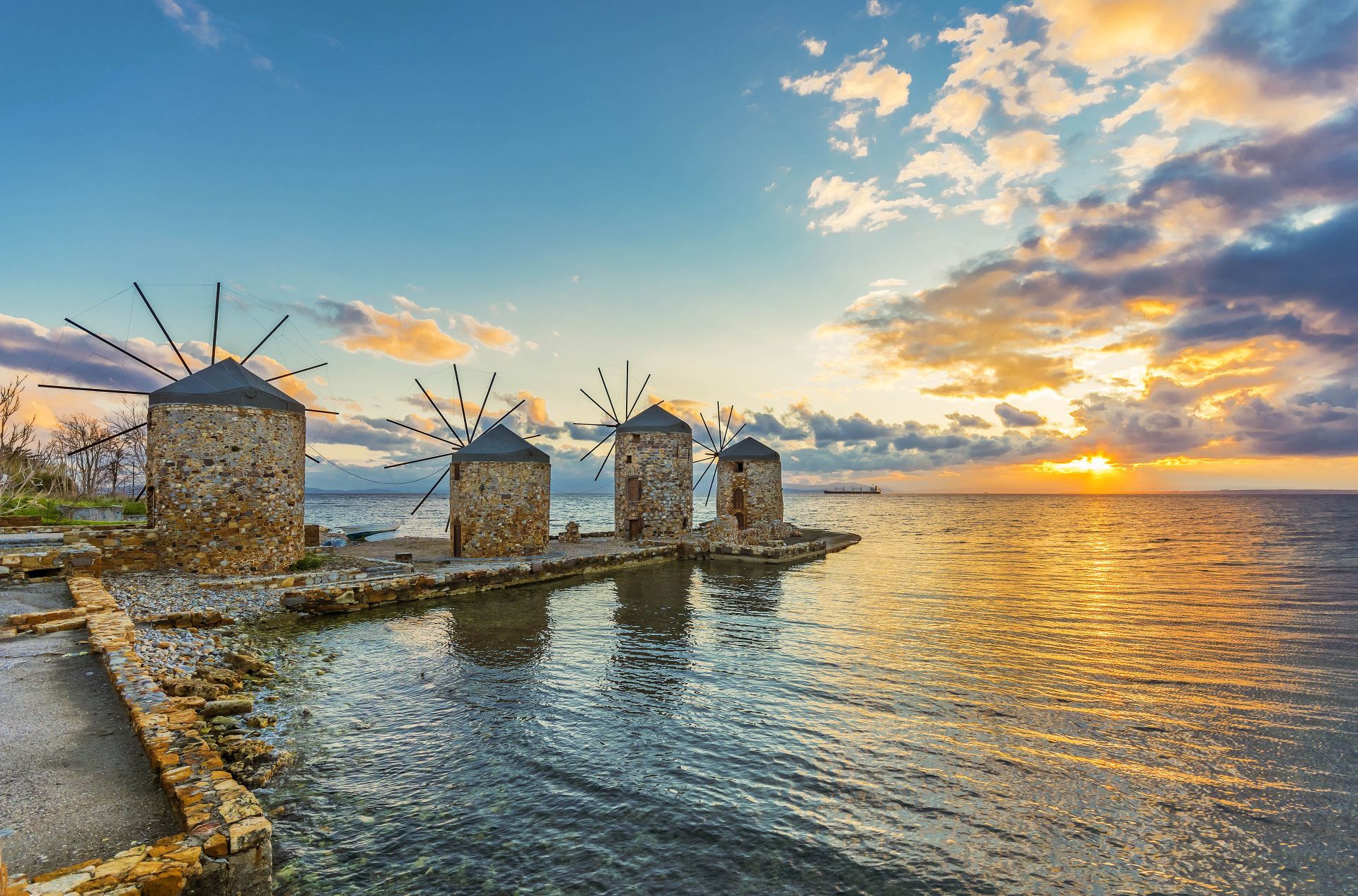
Chios Travel Guide: Discover Chios Island, Greece
Chios is a large, uncrowded island in the northeastern Aegean, famous as the only place on earth where mastic is produced. It rewards slow travel with medieval fortified villages, a UNESCO monastery, black-pebble beaches, and an authentic island culture untouched by mass tourism.
Chios feels like a secret you want to keep but can’t help sharing. Nestled in the northeastern Aegean, just off the Turkish coast, this island blends medieval history, fragrant mastic orchards, dramatic coastline, and villages that time seems to have preserved on purpose.
In this Chios travel guide, we’ll walk you through how to get here, where to stay, the best things to do in Chios, Greece, and practical tips from locals so you can craft a trip that’s part relaxation, part adventure, and wholly authentic. Whether you’re planning a quick weekend escape or a deeper exploration, our local perspective will help you make the most of your visit to this rewarding, off-the-beaten-path island.
Chios at a Glance
| Location | Northeastern Aegean, about 7 km off the Turkish coast opposite Çeşme |
| Size / rank | About 842 km²; the fifth-largest Greek island |
| Population | Around 50,000, mostly in and around Chios Town (Chora) |
| Capital / port | Chios Town, also called Chora |
| Airport | Chios Island National Airport “Omiros” (JKH), daily flights from Athens |
| Famous for | Mastic (mastiha), the medieval Mastichochoria villages, and the UNESCO-listed Nea Moni monastery |
| Best months | Late April–June and September–October |
| Ferry from Piraeus | Roughly 7–9 hours depending on the vessel |
Why Should You Visit Chios?
Visit Chios for its rare mix of the unique and the authentic: it is the world’s only source of mastic, home to extraordinary medieval fortified villages like Pyrgi and Mesta, a UNESCO monastery, black-pebble beaches, and a lived-in island culture that mass tourism has never reached.
Chios stands apart from the busier Greek islands, and its greatest distinction is mastic, the fragrant resin drawn from the lentisk trees of the island’s south. Chios is the only place in the world where mastic is cultivated commercially, a heritage so significant it is inscribed on the UNESCO list of intangible cultural heritage, and the mastic trade shaped the island’s villages, wealth and identity for centuries.
That heritage lives on in the Mastichochoria, the medieval mastic villages such as Pyrgi, Mesta and Olympi, built as fortified, maze-like settlements to guard the precious crop. With their stone alleys, defensive towers and, at Pyrgi, the striking black-and-white geometric xysta patterns on the house facades, they are among the most distinctive villages in all of Greece and unlike anything on the Cyclades.
Beyond the villages, Chios offers a UNESCO World Heritage monastery, dramatic black-pebble beaches, mountain hikes, and the citrus estates of Kampos, all on a large island that remains refreshingly uncrowded and authentic. For travellers who want history, food, nature and genuine local culture rather than nightlife and crowds, Chios is a rare and rewarding find.
What Is the History of Chios?
Chios has a long and storied history: the reputed birthplace of Homer, it grew rich under Genoese rule from 1346 to 1566 through the mastic trade, suffered a devastating Ottoman massacre in 1822, and became one of Greece’s great maritime and shipowning centres, a heritage still visible across the island today.
Chios claims a place at the very roots of Greek culture as one of the traditional birthplaces of Homer, and it was an important and prosperous island throughout antiquity, known for its wine, its trade and its sailors. Traces of this deep past survive in the island’s archaeological sites and museums, and the legend of Homer lends Chios a literary prestige few islands can match.
The island’s golden age came in the Middle Ages under the Genoese, who controlled Chios from 1346 to 1566 and organised the lucrative mastic trade, building the fortified Mastichochoria villages to protect the crop and growing wealthy on the resin prized across Europe and the Ottoman world. This era shaped the island’s distinctive architecture, from the mastic villages to the towers and mansions still seen today.
Chios also endured great tragedy, above all the Chios massacre of 1822, when Ottoman forces devastated the island during the Greek War of Independence, an event immortalised in Delacroix’s famous painting and still central to local memory, and echoed in the haunting ruins of Anavatos. In more recent times, Chios became one of Greece’s foremost maritime and shipowning islands, its captains and shipping families, celebrated in the maritime museum and on the nearby island of Oinousses, adding a proud seafaring chapter to its long history.
How Do You Get to Chios and Get Around?
You reach Chios by ferry from Piraeus, a crossing of about 7–9 hours, or by a short 45–55 minute flight from Athens to Chios airport (JKH). On the island, a hire car or scooter is the best way to explore, though buses and taxis link the main town, beaches and villages.
Ferry Routes, Schedules and Island Hopping
Ferries connect Chios with Piraeus, the port of Athens, on a journey of roughly seven to nine hours depending on the vessel, with overnight sailings a comfortable and popular option. Regular seasonal services also link Chios with the neighbouring northeastern Aegean islands of Lesvos, Samos and Ikaria, as well as the small islands of Oinousses and Psara, making the island an easy addition to an eastern Aegean hopping route. In summer the frequency increases, but it is wise to book ahead for weekends and holidays, and to reserve a vehicle space if you bring a car.
Ferry and cruise passengers who want a driver waiting at the quay book one of the Chios port transfers, with private cars from Chios Town harbour to the airport, Karfas, the mastic villages and the north.
| From | Typical journey |
| Piraeus (Athens) | ~7–9 hours by ferry, often overnight |
| Athens (flight) | ~45–55 minutes to Chios airport (JKH) |
| Lesvos | ~2–3 hours by ferry |
| Samos / Ikaria | seasonal regional ferries, a few hours |
| Çeşme (Turkey) | ~30–45 minutes by seasonal boat |
By Air: Chios Airport and Domestic Connections
Chios Island National Airport, known as Omiros and coded JKH, has daily domestic flights to and from Athens year-round, with additional seasonal charters and connections from other Greek cities in summer. The flight from Athens takes only around 45 to 55 minutes, which makes flying the quickest way to reach Chios and a real advantage if you are short on time, since the ferry from Piraeus is a long crossing. The airport sits just south of Chios Town, a short taxi ride from the centre.
Local Transport: Buses, Taxis, Cars and Scooters
On the island, public buses run between Chora, the main town, and the major beaches and some villages, reliably but with limited frequency, while taxis are available though costly for longer day trips. To explore freely, especially the scattered mastic villages, the monastery and the remote coves, a hire car or scooter is by far the best option, giving you the freedom to reach places the bus does not. The roads are generally good, though mountain lanes can be narrow and winding, so drive with care, and renting from a local agency often brings better rates and flexible pickup.
How Many Days Do You Need in Chios?
Spend at least three to four days in Chios to see beyond the port town. A weekend covers Chios Town and one or two highlights; four days add the mastic villages, beaches and Nea Moni; and a week allows hiking, boat trips, island hopping and a deeper exploration of this large island.
Because Chios is a large island with its highlights spread across the south, the centre and the north, it rewards a longer, slower visit than the small Cyclades. A short weekend of forty-eight hours is enough to enjoy Chios Town, walk its waterfront, visit the medieval Castle and make one trip out, perhaps to Pyrgi or a nearby beach, but it only scratches the surface of what the island offers.
With four relaxed days you can combine the main town with a full day in the mastic villages of Pyrgi and Mesta, a beach day at Komi or the dramatic Mavra Volia, a visit to the UNESCO monastery of Nea Moni, and time to taste mastic products, giving a rounded sense of the island. This is the length many first-time visitors find ideal for seeing the essentials without rushing.
A full week lets you go deeper, adding hikes in the mountainous north around Anavatos, a sailing or boat trip to hidden coves and offshore islets, visits to the museums of Chora and the citrus estates of Kampos, and even a day of island hopping to Lesvos, Oinousses or Psara. For a large, varied island like Chios, a week is well spent, and we recommend at least three to four days to get a real feel for the place.
When Is the Best Time to Visit Chios?
The best time to visit Chios is late spring and early autumn, roughly late April to June and September to October, when the weather is warm and pleasant, the sea is swimmable, wildflowers or warm seas abound, and crowds are thin. July and August are hot and busiest, while winter is quiet and rainy.
Chios enjoys a classic Aegean climate of hot, dry summers and mild, wetter winters, so timing shapes the trip. Spring, from April to June, is a favourite time: temperatures are mild at around 15 to 25°C, wildflowers cover the hills, the mastic trees flower, and the villages come to life without the crowds, making it ideal for sightseeing and hiking before the summer heat.
Summer, in July and August, brings hot, dry weather of 27 to 35°C, perfect for beach days and boat tours, but it is also the busiest season, especially in August when many Greeks holiday, so accommodation should be booked early. Autumn, from September into October, is another excellent window, with the sea still warm from the long summer, mellow light, quieter beaches and comfortable temperatures for both swimming and walking.
Winter, from November to March, is mild but rainy, and many tourist services scale back, so it suits travellers seeking a quiet, authentic local experience rather than beach weather. Whenever you come, look out for the island’s festivals, from the mastic-themed events of summer to the powerful local celebrations of Orthodox Easter, which are especially memorable on Chios.
What Are the Best Things to Do in Chios?
The best things to do in Chios are exploring the medieval mastic villages of Pyrgi, Mesta and Olympi, visiting the UNESCO monastery of Nea Moni and the Chios Castle, swimming at the black-pebble beach of Mavra Volia, learning about mastic, and hiking or taking a boat trip along the coast.
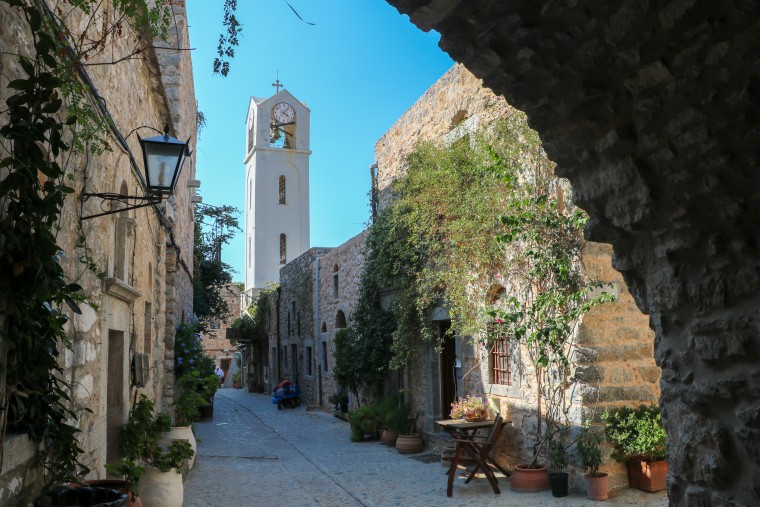
Chios blends history, architecture and nature, and its standout experiences give the island a character all its own. The single most distinctive is exploring the Mastichochoria, the medieval mastic villages of the south, above all Pyrgi with its patterned facades, Mesta with its fortified maze of alleys, and quieter Olympi, which together feel like open-air museums of a unique way of life.
Culture runs deep here: the medieval Chios Castle in the main town, the exquisite Byzantine mosaics of the UNESCO-listed Nea Moni monastery, the haunting ruined “ghost village” of Anavatos clinging to its cliff, and the maritime and archaeological museums of Chora all reward a visit. Add the citrus estates and grand mansions of the Kampos plain just south of town for a rounded picture of the island’s rich past.
For nature and the sea, the dramatic black volcanic pebbles of Mavra Volia beach, the sandy bays of Komi and Karfas, hikes in the mountainous north, and boat trips to hidden coves are the highlights. And no visit is complete without learning about mastic itself, tasting mastiha ice cream, sweets and liqueur and seeing how the resin is harvested. The sections below take each of these in turn.
What Are the Mastic Villages (Mastichochoria) of Chios?
The Mastichochoria are the medieval fortified villages of southern Chios, built to produce and protect mastic. The finest are Pyrgi, famous for the black-and-white xysta patterns on its houses, Mesta, the best-preserved castle village with a defensive maze of alleys, and quieter, traditional Olympi.
The Mastichochoria, literally the “mastic villages”, are the cluster of about twenty medieval settlements in the south of Chios that grew up around the cultivation of mastic. Built mainly under Genoese rule between the 14th and 16th centuries, they were designed as fortresses, with houses packed tightly together, outer walls, defensive towers and narrow, confusing lanes, all to guard the valuable crop from pirates and raiders. Wandering them today is like stepping into the Middle Ages.
Pyrgi is the most famous and photogenic, its houses covered in xysta, intricate black-and-white geometric patterns scratched into the plaster, so that the whole village looks like a piece of decorative art. At its heart, the central square and the church of Agioi Apostoloi draw every visitor, and the effect of the patterned facades massed together is unforgettable, making Pyrgi one of the most distinctive villages in Greece.
Mesta, about 35 kilometres southwest of Chios Town, is the best-preserved of the fortified villages, a compact medieval maze of stone alleys, archways and hidden courtyards laid out for defence, with the church of the Taxiarchis at its centre. Nearby Olympi, less visited and quietly traditional, shows the same fortified plan and rewards a slower, more peaceful wander, ideally paused at a village kafeneio for a coffee among locals.
| Village | Known for |
| Pyrgi | Black-and-white xysta patterns on the house facades |
| Mesta | Best-preserved fortified castle village, a defensive maze |
| Olympi | Quiet, traditional, less touristy fortified village |
| Kalamoti / Armolia | Further mastic villages with towers and pottery traditions |
What Is Mastic and Why Is Chios the Only Place It Grows?
Mastic, or mastiha, is a fragrant natural resin drawn from the lentisk trees of southern Chios. Thanks to the island’s unique soil and climate, it is cultivated commercially nowhere else in the world, and this UNESCO-recognised heritage flavours foods, drinks, cosmetics and medicines and shaped Chios itself.
Mastic is the aromatic resin that weeps as “tears” from the bark of the mastic tree, a variety of lentisk that grows across the Mediterranean but produces its prized resin only in the south of Chios. A rare combination of the local microclimate, the limestone soil and centuries of careful cultivation means that, remarkably, commercial mastic is produced nowhere else on earth, a natural monopoly that has defined the island for over a thousand years and is recognised on the UNESCO list of intangible cultural heritage.
Harvesting mastic is a painstaking, traditional craft. In late summer the farmers clean the ground beneath the trees and make small incisions in the bark, from which the resin slowly drips and hardens into translucent “tears” that are then gathered by hand, cleaned and sorted, a labour-intensive process little changed over the centuries and passed down through the families of the Mastichochoria. This heritage is celebrated at the excellent Chios Mastic Museum in the south of the island.
For visitors, mastic is everywhere and endlessly moreish: chew the pure resin as a natural gum, taste it in ice cream, cookies, breads and the famous “submarine” spoon sweet, sip the mastiha liqueur, and find it in toothpaste, cosmetics and traditional medicines, for it has long been valued for its digestive and antiseptic properties. Buying mastic products directly from the village workshops makes the most authentic and characteristic souvenir of a visit to Chios.
What Are the Best Beaches in Chios?
The best beaches in Chios are the dramatic black volcanic pebbles of Mavra Volia near Emporios, the long sandy bay of Komi, family-friendly Karfas near the main town, and quieter coves such as Vroulidia and Agia Fotia in the south, with clear water and uncrowded shores across the island.
For a large island, Chios has a wonderful variety of beaches, most of them uncrowded even in summer. The most striking is Mavra Volia, near the village of Emporios in the south, a beach of smooth black volcanic pebbles set against deep blue-green water and a rugged backdrop, a cinematic, otherworldly scene formed by ancient volcanic activity and quite unlike the sandy beaches of other islands.
For sand, Komi on the southeast coast is a long, sandy beach with tavernas and water sports, ideal for families and reliable sun, while Karfas, close to Chios Town, offers convenience, shallow water and lively summer beach bars, making it the easiest beach to reach from the capital. Both are well organised, with sunbeds and facilities, and popular with visitors and locals alike.
Beyond these, the island rewards exploration: quiet southern coves such as Vroulidia and Agia Fotia, the pebbly bays of the west coast, and beaches like Nagos and Giosonas in the greener north offer clear water and solitude for those willing to drive a little. A hire car opens up the finest, most secluded shores, and driving the west and northern coasts turns up hidden coves that reward the effort with privacy.
| Beach | Type | Best for |
| Mavra Volia | Black volcanic pebbles | Scenery, dramatic swims |
| Komi | Sand | Families, watersports |
| Karfas | Sand | Convenience, beach bars |
| Vroulidia / Agia Fotia | Pebble coves | Quiet, clear water |
| Nagos / Giosonas | Pebble | Green north, solitude |
What Cultural Sites Should You See in Chios?
The key cultural sites in Chios are the UNESCO-listed Nea Moni monastery with its Byzantine mosaics, the medieval Chios Castle in the main town, the abandoned cliff-top “ghost village” of Anavatos, and the maritime, archaeological and Byzantine museums of Chora, along with the mansions of Kampos.
Chios has a remarkably rich cultural heritage for an off-the-beaten-path island. Its greatest monument is Nea Moni, an 11th-century monastery in the mountainous interior, inscribed on the UNESCO World Heritage list for its exceptional Byzantine mosaics, considered among the finest of their age in Greece. Set amid pines about a twenty to thirty minute drive inland from Chora, it rewards an unhurried visit of an hour or more to take in the mosaics, the chapels and the peaceful setting.
In the main town, the medieval Chios Castle, or Kastro, is a compact and well-preserved citadel layering Byzantine and Genoese history, its ramparts, old quarter and small museums well worth exploring above the waterfront. Nearby, the maritime museum traces the island’s proud seafaring and shipbuilding past, while the archaeological and Byzantine collections deepen the picture of Chios through the ages, and the reputed birthplace of the poet Homer adds a legendary dimension.
Perhaps the most haunting site is Anavatos, a medieval village abandoned after the tragic events of 1822, its grey stone houses clinging to a steep cliff like a natural fortress, now a silent, atmospheric “ghost village” with sweeping views. Together with the grand neoclassical mansions and citrus estates of the Kampos plain just south of Chios Town, these sites give the island a cultural depth that repays days of exploring.
What Is Chios Town (Chora) Like?
Chios Town, or Chora, is the island’s lively capital and port, a working Greek town rather than a resort, with a medieval castle quarter, a busy waterfront of cafes and tavernas, museums, a Byzantine-era old market, and the grand mansions and citrus groves of Kampos on its southern edge.
Chios Town, known to locals simply as Chora, is the island’s capital, main port and commercial heart, home to a large share of its fifty thousand residents. It is an authentic, workaday Greek town more than a tourist resort, and that is part of its appeal: a bustling waterfront lined with cafes, ouzeries and tavernas, a busy market, and everyday island life going on around the visitor, giving a genuine sense of place rather than a polished facade.
At its core stands the medieval Castle, or Kastro, a walled quarter layering Byzantine and Genoese history, within which narrow lanes, old houses, small museums and a historic mosque and hammam recall the town’s long and layered past. Around it, the town holds the well-regarded maritime museum, celebrating the island’s shipping heritage, along with archaeological and Byzantine collections and the atmospheric old quarter, all easily explored on foot in a rewarding half-day.
Just south of the town spreads Kampos, a unique plain of walled estates where wealthy Genoese and Chian families built grand ochre-stone mansions among fragrant orange and lemon groves, watered by old waterwheels. Wandering or cycling its quiet lanes, past high estate walls and elegant gateways, is one of the most atmospheric things to do near the capital, and several mansions now welcome visitors as guesthouses or museums, offering a glimpse into the island’s prosperous past.
What Outdoor Activities Can You Do in Chios?
In Chios you can hike the trails of the mountainous north around Anavatos and the coast, take boat trips and sailing excursions to hidden coves, snorkel and dive in clear bays, and enjoy kayaking and watersports at the organised beaches, making the island a fine choice for active, outdoor travellers.
Chios is more than a cultural destination; its large, varied landscape makes it an excellent island for the outdoors. Walkers find a rewarding network of trails, from easy coastal paths to more demanding hikes up ridgelines with sweeping sea views, especially around the mountainous north, the ruins of Anavatos and the northern capes, where dramatic panoramas and genuine solitude await. Spring and autumn are the finest seasons for walking, and local guides can tailor routes to your fitness and interests.
The sea offers just as much. Boat tours and sailing trips are among the best ways to experience Chios, reaching hidden coves, snorkelling in clear bays and seeing the island’s rugged geology from the water, with options ranging from group day cruises to private charters and romantic sunset sails. The clear water around the rocky headlands makes snorkelling a pleasure, and a few local operators run guided dives to small reefs and wreck sites in season.
For the more adventurous, the island’s limestone outcrops and coastal cliffs offer rewarding climbing and bouldering, and the organised beaches provide kayaking, paddleboarding and other watersports. Whatever the activity, conditions can change quickly at sea, so it is always wise to check with locals or guides on current sea and weather before setting out, and to carry water and sun protection on the exposed trails.
What Food Should You Try in Chios?
In Chios you should try everything flavoured with mastic, from mastiha ice cream and sweets to the local liqueur, along with the slow-cooked mastelo lamb of the south, Chios sausage and cured meats, fresh grilled seafood, citrus from Kampos, and traditional pies made with local olive oil.
Food on Chios is a highlight in its own right, and its defining flavour is mastic, the island’s unique resin, which appears in a remarkable range of dishes and products. Look for mastiha in ice cream, cookies, syrups and above all the local mastiha liqueur, with its distinctive piney, slightly citrus taste, and in the “submarine” spoon sweet dipped in cold water, a nostalgic Greek treat. Buying mastic products directly from village workshops makes a fine, authentic souvenir.
Beyond mastic, the island’s cooking is hearty and seasonal. The signature dish of the south is mastelo, a lamb or goat slow-cooked with wine and herbs, traditionally around Easter, while Chios sausage and cured meats, spiced and often flavoured with local ingredients, are prized across Greece. Freshly caught grilled fish, octopus and calamari, traditional pies such as spanakopita and kreatopita made with the island’s olive oil, and the sweet citrus of the Kampos groves round out the table.
The best way to taste all this is at the small, family-run tavernas of Chora and the villages, where simple, seasonal cooking follows recipes passed down for generations, and at the markets of the main town, rich with cheese, olives and mastic products. For a deeper experience, a food tour or a cooking session led by a local, often with market stops and hands-on cooking, is a rewarding way to connect with the island’s culinary traditions.
Where Should You Stay in Chios?
Stay in Chios Town (Chora) for convenience, museums and ferries, in Karfas or Komi for a beach base, in the northern villages of Kardamyla and Volissos for a quieter coastal stay, or in a traditional guesthouse in the mastic villages for an immersive cultural experience.
Where you base yourself shapes the whole trip on this large island. Chios Town, or Chora, is the best choice for first-time visitors, close to the museums, the Castle, the waterfront tavernas and the ferry port, with a good range of boutique hotels and neoclassical guesthouses, and it makes a convenient central base for exploring in every direction. It also has the widest choice of restaurants and services on the island.
For a beach-focused stay, the coastal resorts of Karfas and Komi offer family-friendly hotels with pools and easy access to the sand, while the northern coastal villages of Kardamyla and Volissos provide relaxed guesthouses, local tavernas and a quieter, more traditional atmosphere well away from any crowds. These make appealing bases for travellers who want the sea and village life over town convenience.
For the most immersive experience, a small traditional guesthouse in one of the mastic villages around Pyrgi and Mesta lets you sleep within a living medieval settlement, waking to village rhythms and often a breakfast of homemade mastiha marmalade and local cheese. Book early for July and August, look for flexible cancellation in case ferry or flight plans change, and note that the medieval villages have narrow steps and uneven surfaces, so those with mobility needs are best based in Chora.
What Day Trips and Island Hopping Can You Do from Chios?
From Chios you can day-trip by boat to the small islands of Oinousses and Psara, which belong to Chios, hop by seasonal ferry to Lesvos, Samos or Ikaria in the eastern Aegean, and cross in under an hour to Çeşme in Turkey, making the island a fine base for wider exploration.
Chios sits within reach of several rewarding excursions by sea. Closest are its own small satellite islands: Oinousses, a tiny, prosperous island of shipowners to the northeast with quiet beaches and a maritime museum, and Psara to the northwest, a remote, historic island famous for its heroic role in the Greek War of Independence, both reachable by small ferry for a peaceful day trip far from the crowds.
For wider island hopping, seasonal ferries link Chios with its larger northeastern Aegean neighbours, above all Lesvos to the north, with its own rich culture, plus Samos and Ikaria to the south, so Chios slots naturally into an eastern Aegean route. Frequency increases in summer but varies by season and weather, so it is best to plan flexible itineraries and book ahead for busy weekends.
Uniquely among Greek islands, Chios also offers an easy day trip abroad: the Turkish resort town of Çeşme lies just seven kilometres across the water, reached by a seasonal boat crossing of only thirty to forty-five minutes, letting you combine a Greek island holiday with a taste of the Turkish coast. Between its own islets, its Aegean neighbours and Turkey, Chios is an unusually versatile base for day trips.
What Practical Tips Should You Know for Visiting Chios?
For Chios, hire a car to explore the spread-out island, carry cash as rural areas can be cash-only, book ferries and summer stays ahead, respect village siesta hours and dress modestly at religious sites, pack sturdy shoes for the cobbled villages, and buy mastic directly from local producers.
A few practical points make a Chios trip smoother. Because the island is large and its highlights are scattered, a hire car or scooter is close to essential for seeing the mastic villages, Nea Moni, Anavatos and the remoter beaches at your own pace, and it is worth booking one, along with your ferry or flight and your summer accommodation, well in advance for July and August. The euro is the currency, ATMs are found in Chora and larger villages, but rural areas and small tavernas can be cash-only, so carry some cash.
Respect the island’s rhythms and traditions: many businesses close for the midday siesta, so plan village visits and lunches accordingly, and dress modestly when entering the monastery of Nea Moni and other churches. The medieval villages have narrow, stepped and uneven lanes, so pack sturdy, comfortable shoes, and bring sun protection and water for hikes and beach days, along with reef shoes for the pebbly beaches such as Mavra Volia.
Connectivity is good around the main towns but patchy in remote coves and the mountains, so consider a local SIM if you need steady data, and check pharmacy and clinic hours in advance if you have specific health needs. Finally, travel responsibly: take your litter home from quiet beaches, buy mastic and local products directly from village producers to support small families and preserve traditions, and be mindful of fire risk in the dry summer months, following any local advisories.
Who Is Chios Best For?
Chios is best for history and culture lovers, foodies drawn to mastic and authentic cooking, couples and slow travellers seeking uncrowded authenticity, and active visitors who enjoy hiking and boat trips. Those wanting lively nightlife, big resorts or classic Cycladic whitewashed scenery may prefer another island.
Chios suits certain travellers especially well. History and culture lovers are richly rewarded by the medieval mastic villages, the UNESCO mosaics of Nea Moni, the castle and museums of Chora, and the layered story of Homer, the Genoese and the island’s maritime past. Foodies, too, find a genuine destination, from the unique flavours of mastic to slow-cooked mastelo lamb and the honest cooking of family tavernas, best explored on a food tour or in the village kafeneia.
Couples and slow travellers who value authenticity over crowds will love the island’s unhurried pace, its quiet coves and its lived-in villages, while photographers are drawn to Pyrgi’s patterned facades, the black pebbles of Mavra Volia and the ghost village of Anavatos. Active visitors, meanwhile, find plenty in the hikes of the mountainous north, the sailing and snorkelling along the coast, and the sense of an island still waiting to be explored.
Chios is a less obvious choice for travellers who want pulsing nightlife, large all-inclusive resorts, or the classic blue-domed, whitewashed Cycladic look of Santorini and Mykonos, since its character is greener, more medieval and more low-key. But for anyone seeking a large, authentic and uncrowded Greek island with a genuinely unique heritage, Chios is one of the most rewarding destinations in the Aegean, and it well repays the journey to reach it.
Conclusion
Chios is an island that rewards slow travel: the more time you give it, the more stories it reveals. From the patterned houses of Pyrgi and the fortified maze of Mesta to the fragrant mastic groves, the Byzantine mosaics of Nea Moni and the dramatic black pebbles of Mavra Volia, there is a quiet, authentic richness here that lingers long after you leave. Use this Chios travel guide to plan your route, but leave space for unplanned discoveries, a local festival, a tucked-away taverna, or a cliffside viewpoint that isn’t in any brochure. If you’d like tailored recommendations or help arranging local guides, boat trips, mastic-village tours or authentic experiences led by people who grew up on the island, visit us at Greece Tours. Pack light, bring curiosity, and expect to return with a suitcase full of photos and a few jars of mastiha.
Chios Travel Guide: Frequently Asked Questions
How do you get to Chios, by ferry or plane, and which is faster?
You can reach Chios by ferry from Piraeus, a crossing of about seven to nine hours often run overnight, or by a short flight from Athens to Chios Island National Airport (JKH), which takes only around forty-five to fifty-five minutes. Flying is much faster and ideal for short trips, while the ferry offers overnight sailings and the option to bring a car, and it also connects Chios with neighbouring islands such as Lesvos, Samos and Ikaria. In summer, book ferry tickets and vehicle spaces well in advance, especially for weekends and holidays, as demand is high.
What is Chios famous for?
Chios is famous above all for mastic, or mastiha, the fragrant resin produced from the lentisk trees of the island’s south, which is cultivated commercially nowhere else in the world and is recognised on the UNESCO list of intangible cultural heritage. This unique product shaped the medieval Mastichochoria villages, such as Pyrgi with its patterned facades and fortified Mesta, which are among the most distinctive in Greece. Beyond mastic, Chios is known for the UNESCO-listed Nea Moni monastery and its Byzantine mosaics, the reputed birthplace of Homer, its maritime and shipping heritage, black-pebble beaches like Mavra Volia, and an authentic, uncrowded island culture.
When is the best time to visit Chios for good weather and fewer crowds?
The best times to visit Chios are late spring, from April to June, and early autumn, in September and October. Spring brings mild temperatures of around 15 to 25°C, wildflowers, flowering mastic trees and few crowds, ideal for sightseeing and hiking, while autumn offers a sea still warm from summer, mellow light and quiet beaches, excellent for both swimming and walking. July and August are hot at 27 to 35°C and beach-perfect but the busiest and priciest, especially in August, while winter is mild but rainy with many services reduced, suiting only those seeking a quiet, authentic local experience over beach weather.
What are the must-see sights in Chios?
The must-see sights in Chios are the medieval mastic villages of the south, above all Pyrgi with its black-and-white xysta patterns, fortified Mesta and traditional Olympi, and the UNESCO-listed Nea Moni monastery with its exceptional Byzantine mosaics. In and near the main town, see the medieval Chios Castle, the maritime and archaeological museums, and the mansions and citrus estates of the Kampos plain, while the abandoned cliff-top “ghost village” of Anavatos is unforgettable. For nature, the black volcanic pebbles of Mavra Volia beach and the sandy bays of Komi and Karfas complete a rounded visit to this varied island.
Can you island-hop from Chios to nearby Greek islands?
Yes. Chios is well connected for island hopping in the northeastern Aegean. Seasonal ferries link it with the larger neighbouring islands of Lesvos to the north and Samos and Ikaria to the south, while small ferries reach its own satellite islands of Oinousses and Psara for a quiet day trip. Frequency increases in summer but varies by season and weather, so it is best to plan flexible itineraries and book ahead for weekends. Uniquely, Chios also offers a short seasonal boat crossing of only thirty to forty-five minutes to Çeşme in Turkey, just seven kilometres across the water, adding an easy trip abroad to a Greek island holiday.
Find more experiences in My Greece Tours:
- Folegandros
- Greece Tours: Explore the Best Tours in Greece
- How to Get to Olympia, Greece and What to See: Explore the Archaeological Site of Olympia
- Hydra
- Ikaria Travel Guide: Visit Ikaria Greece – Ikaria Island Adventure & Nature Guide
- Ios Greece Guide: Exploring One of The Best Cyclades Island
Chios travel guides
Explore the island in depth with our detailed Chios guides:
- Best things to do in Chios
- The best beaches in Chios
- The mastic villages of Chios
- Nea Moni monastery
- Chios food and what to eat
- How to get to Chios
- Where to stay in Chios
- Chios Town (Chora)
- Car rental in Chios
- Day trips from Chios
- The villages of Chios
- The best time to visit Chios
- A Chios itinerary: 3, 5 and 7 days
- The museums of Chios
- Hiking and walking in Chios
- Chios boat trips and sailing
- Anavatos, the ghost village
- Pyrgi, the painted village
- Mesta, the medieval village
- Kampos, the citrus estates
- Volissos and the west coast
- Chios mastiha, the tears of Chios
- Chios nightlife and evenings