
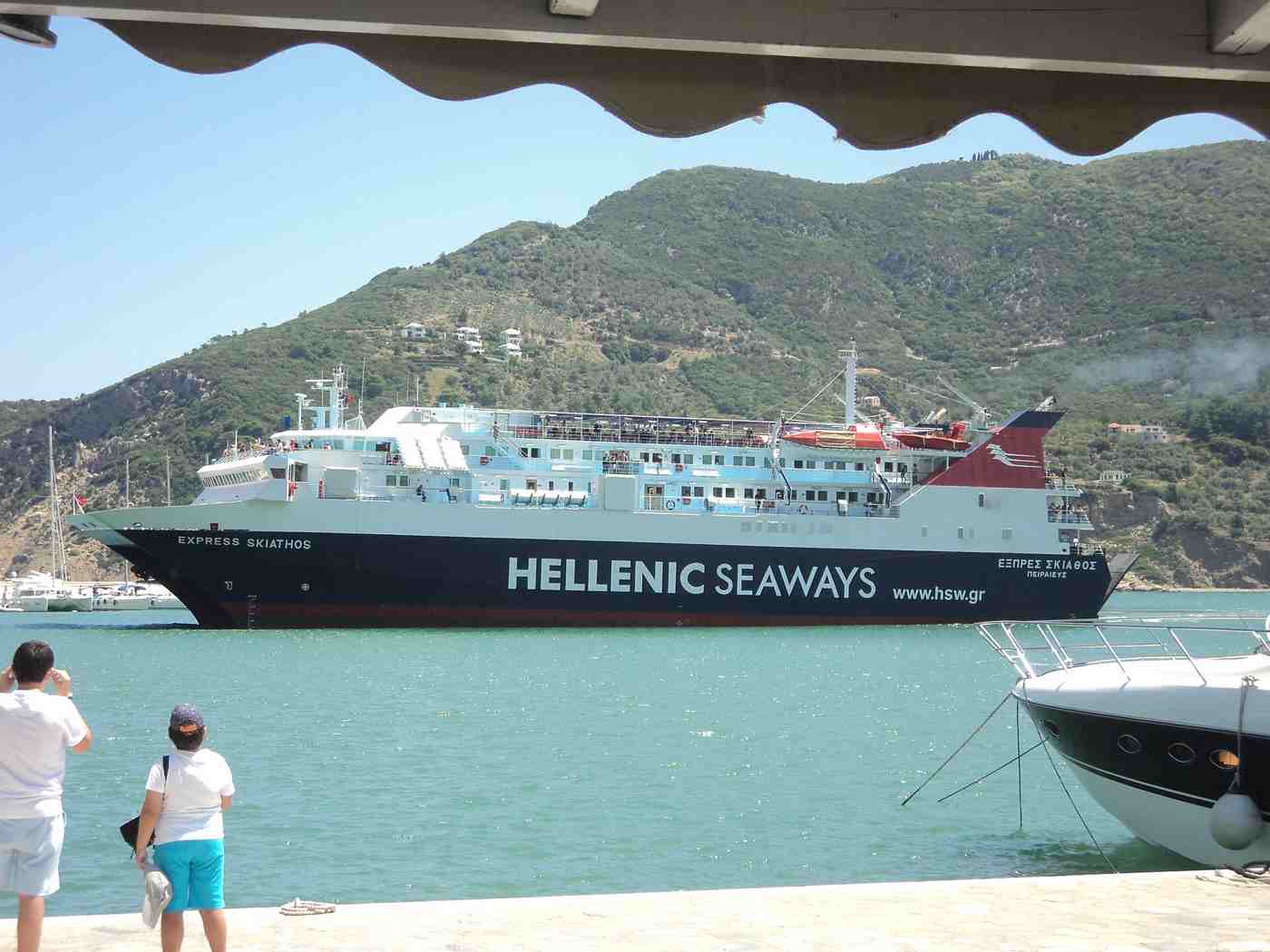
Skopelos ranks among the greenest islands in the Sporades, and its coastline holds more than a dozen swimming spots wrapped in pine forest. The southern and western coasts shelter the calmest water, where bays such as Kastani, Milia and Panormos sit below dense green slopes. This guide maps the island’s best beaches, from organised bays with sunbeds and tavernas to quiet pebble coves reached on foot or by boat taxi. Plan the whole trip with Greece Tours.
Skopelos beaches split between fine pebble and coarse sand, and between organised bays and undeveloped coves. Kastani earned fame as the Mamma Mia beach, while Milia stretches long below an offshore islet. This guide covers Stafylos and Velanio near town, plus Limnonari, Glysteri, Agnontas and Hovolo near Neo Klima. It also explains reaching each shore by car, the island bus and the boat taxis that leave the port each morning.
What are the best beaches on Skopelos?
Skopelos holds more than a dozen swimming beaches, concentrated on the sheltered south and west coasts. Kastani, Milia, Panormos, Stafylos, Velanio, Limnonari, Glysteri, Agnontas and Hovolo rank among the island’s best, mixing organised bays with quiet coves.
Skopelos forms part of the Sporades, northeast of Evia, and pine forest covers close to two thirds of the island down to the waterline. The best-known beaches line the southern and western coasts, where headlands break the summer meltemi wind and keep the water flat through July and August. The northern and eastern shores face open sea and turn rough when the wind rises. Most visitors follow the main road that runs from Skopelos Town toward Glossa and Loutraki. Along that road, signed turnings drop down to Stafylos, Agnontas, Panormos, Milia and Kastani in turn. Reaching the coves takes a drive of about ten to forty minutes from the port.
The green backdrop sets these bays apart from the barer beaches of the nearby Cyclades.
Skopelos beaches divide clearly between pebble and sand, and knowing which is which shapes what to pack. Fine pale pebbles cover Milia, Kastani, Glysteri and Velanio, so water shoes make entry into the sea easier while the seabed stays clean and clear. Sand appears at Limnonari and parts of Hovolo near Neo Klima, where the shallows warm quickly and suit young children. Stafylos and Panormos mix coarse sand with small pebble near the shoreline. The pebble beaches keep the water clear because no sand clouds the shallows, while the sandy coves feel softer underfoot. Across the island the seabed shelves gently, and the sheltered bays stay calm enough for long swims.
Snorkelling rewards the pebble beaches, where rock and posidonia meadows hold fish close to the shore.
Organised and undeveloped beaches sit side by side on Skopelos, at times within the same bay. Kastani, Milia, Panormos, Stafylos and Limnonari run sunbeds, umbrellas and at least one taverna or beach bar through the summer season, so a day there needs little planning. Glysteri and Agnontas keep a single taverna each and a handful of sunbeds, striking a middle balance. Velanio and the far end of Hovolo stay undeveloped, drawing swimmers who prefer no music and no rows of loungers. The unofficial naturist stretches lie at Velanio and part of Hovolo, both reached on foot from a neighbouring organised beach.
Choosing between the two styles depends on the day: an organised bay for lunch and shade, a quiet cove for an early swim before the boats arrive.
Beach-hopping structures most Skopelos itineraries, and the compact size of the island makes it practical. A rented car or scooter reaches the southwest cluster of Panormos, Milia and Kastani in one afternoon, while boat taxis link coves that the road never touches. The water stays warm from June into October, extending the swimming season past the peak weeks. Families, walkers and snorkellers each find a suited shore, and the pine shade means midday heat feels milder than on open Cycladic beaches. Planning a route around wind direction pays off, since a sheltered bay one day faces chop the next.
For a wider picture of the island beyond its coast, the guide to Skopelos sets out its towns, trails and history for first-time visitors. The compact geography keeps every bay within a short drive of the port.
Where is Kastani, the Mamma Mia beach, on Skopelos?
Kastani lies on the southwest coast of Skopelos, about 25 to 30 minutes by car from Skopelos Town.
Kastani sits on the southwest coast, reached by a signed turning off the main road roughly halfway between Skopelos Town and Neo Klima. The drive covers about 12 kilometres and takes 25 to 30 minutes, ending at a parking area a short walk above the sand. A pine-covered slope backs the bay and gives afternoon shade over the northern end. The beach curves for around 150 metres, with fine pale pebbles at the water’s edge and a band of coarse sand higher up. The water shelves gently and stays clear, so the bay suits swimmers of every age.
Kastani catches the sunset and shelters from the north wind, keeping the surface calm on the days when exposed northern beaches turn choppy. The full guide to Kastani beach covers its facilities in detail.
Kastani drew worldwide attention as the main beach location for the film Mamma Mia, whose crew built a temporary taverna set and jetty on the sand during production. The set was removed once filming ended, yet fans still recognise the crescent of pebbles, the pine backdrop and the rock at the southern end. A self-guided walk connects this bay with the hilltop chapel used for the wedding scene at Agios Ioannis Kastri, and both feature on the Mamma Mia trail. Visitors who arrive expecting the film’s structures find instead a working beach with a bar and loungers. The cinematic link keeps Kastani busy through midday in high summer.
An early arrival secures a sunbed and a parking space before the tour groups reach the turning off the road.
Kastani operates as an organised beach through the summer season, with two rows of sunbeds and umbrellas. A beach bar for drinks and light meals. A taverna serving Greek dishes above the sand. Showers and a small kiosk cover the practical needs of a full day by the sea. The pebble shoreline keeps the water clear for snorkelling around the rocks at either headland, where fish gather over the stony seabed. Sunbed rental and a meal remove the need to carry gear, though swimmers who want a quieter patch spread towels at the undeveloped southern tip. Kastani faces the open channel, so the afternoon breeze cools the sand without raising much swell.
The combination of shade, clear water and full facilities explains why the bay tops first visits to the island’s southwest.
Kastani fills quickly between noon and mid-afternoon during July and August, when day boats and rental cars converge on the southwest coast. Arriving before 11 in the morning or after 4 in the afternoon avoids the tightest crush, and the light on the pine slope softens toward evening. The shoulder weeks of late May, June and September bring warm water with far fewer visitors, and the parking area stays open. Anyone timing a Skopelos holiday around calmer beaches can weigh the options in the guide to the best time to visit Skopelos. Kastani rewards a return in the low light of early evening, once the crowds thin and the bar quietens.
Leaving the pebbles, the pines and the sheltered water that first drew the film crew to this stretch of coast.
Why is Milia rated among Skopelos’s best beaches?
Milia stretches about 300 metres along the west coast, the longest beach on Skopelos, backed by pine and facing the wooded islet of Dasia.
Milia occupies a broad west-coast bay reached by a signed side road between Panormos and Neo Klima, about 20 minutes by car from Skopelos Town. A pine forest presses close behind the beach and drops in a green wall almost to the pebbles, giving natural shade along the tree line. The shore runs for close to 300 metres, the longest continuous beach on the island, and curves gently around calm, deep water. Directly offshore lies the small wooded islet of Dasia, which breaks the swell and frames the view west. Fine pale pebbles cover the shoreline, and the seabed shelves quickly into clear blue depths that suit confident swimmers.
The scale of the bay spreads visitors out, so even on a full summer day Milia rarely feels as tight as the shorter coves further south along the coast.
Milia runs as an organised beach with two beach bars and long rows of sunbeds and umbrellas set back from the water. The bars serve drinks, coffee and light meals through the day, and a paved path links the parking area to the sand. Because the bay faces west and sits low against the pines, it catches full afternoon sun and a clear sunset over Dasia. The deep, clear water draws snorkellers to the rocky edges, where the seabed drops away from the pebble shelf. The size of the beach leaves room for both organised and free stretches: sunbeds cluster near the bars, while the ends stay open for towels.
Milia works as a full-day base, with shade, food and calm water within steps of each other along the tree line above the sand.
Milia earns its ranking near the top of island lists through a rare mix of length, shelter and clear deep water. The pine backdrop cools the sand, the offshore islet steadies the swell, and the west-facing aspect keeps the bay calm when the meltemi blows from the north. Photographers favour the late light, when the sun sits low behind Dasia and turns the water silver. Families use the shallow near-shore band while stronger swimmers strike out toward the islet. The gentle pebble entry and the absence of strong current make Milia one of the safer swimming beaches on Skopelos. Its steady reputation rests on substance rather than a film credit.
Repeat visitors often rate it the finest all-round beach on the island for a long, unhurried day by the sea.
Milia sits within an easy drive of the southwest cluster, so a single day can pair it with Kastani and Panormos along the same stretch of coast. The bay holds a sizeable car park, though it fills by late morning in August and rewards an early start. Boat taxis from the port also call at Milia in summer, saving the drive for visitors staying in Skopelos Town. The water stays swimmable from June into October, and the shoulder weeks bring the clearest conditions with room to spread out.
For ideas on filling the hours around a beach day, from forest walks to the monasteries above the port, the guide to things to do in Skopelos maps the options inland and along the coast. Milia repays a full day rather than a quick stop between other bays.
What can you do at Panormos Bay on Skopelos?
Panormos forms a large sheltered bay on the west coast, about 15 kilometres from Skopelos Town. Watersports, a natural harbour for yachts, tavernas and rows of sunbeds fill the pebble-and-sand shore, backed by pine slopes and a small headland.
Panormos lies on the west coast, roughly 15 kilometres and 20 minutes by car from Skopelos Town, on the main road toward Neo Klima. The bay curves deep into the land, forming a wide natural harbour that shelters the water from most wind directions. Pine slopes climb behind the beach, and a rocky headland with a small chapel closes the northern end. The shore mixes coarse sand and small pebbles, with clear shallow water that warms early in the season. A cluster of tavernas, rooms and a beach bar lines the road behind the sand, making Panormos a small resort as much as a beach.
It holds swimmable water on days when the exposed north coast turns rough and the day boats stay in port.
Panormos ranks as the main watersports beach on Skopelos, its sheltered water suiting activities that open coves cannot support. A watersports base on the sand rents kayaks and stand-up paddleboards in the summer season, and the calm bay makes an easy training ground for beginners. Snorkellers explore the rocky headland at the northern end, where the seabed holds fish over stone and weed. The deep natural harbour also draws sailing yachts, which anchor offshore overnight, and a small jetty serves visiting boats. The combination of flat water and full facilities lets a family split the day between swimming, paddling and lunch without moving the car.
Panormos suits active visitors who want more than sunbathing, yet the long shore still leaves quiet corners for those content with a towel and a book by the water.
Panormos offers a fuller range of services than most Skopelos beaches, thanks to the small settlement behind the sand. Tavernas serve lunch and dinner steps from the water, sunbeds and umbrellas cover the central stretch, and rooms above the bay let visitors stay within walking distance of the beach. A car park sits close to the shore, and the island bus stops on the main road just above. The chapel on the northern headland gives a short walk with a view back over the harbour. The bay’s shelter makes it a reliable choice in changeable weather, since the surrounding hills block the wind from most quarters.
Panormos suits a slower day built around swimming, a long lunch and a paddle, with the pine slopes and calm water framing the setting on every side of the bay.
Panormos sits at the centre of the west-coast beaches, within a short drive of Milia to the north and Kastani to the south. It anchors an easy day of beach-hopping. The bay’s early-warming shallows make it a favourite in June and September, when the deeper open coves still feel cool. Yacht crews use the harbour as a stop between the Sporades islands, adding a steady flow of small boats to the anchorage. Swimmers who prefer a quieter patch walk to the pebble edges near the headland, away from the central sunbeds. Panormos balances facilities with shelter better than almost any other beach on the island.
Its position on the main road makes it one of the simplest to reach by car. Scooter or the island bus from the port in town.
What are Stafylos and Velanio beaches near Skopelos Town?
Stafylos lies about 4 kilometres south of Skopelos Town, an organised sand-and-pebble cove named after a Minoan king whose tomb was found nearby. Velanio sits over the headland, a longer pebble beach that serves as the island’s unofficial naturist shore.
Stafylos is the closest organised beach to Skopelos Town, about 4 kilometres south and a 10-minute drive or a stop on the island bus. The small cove mixes sand and fine pebble, sheltered by green headlands that keep the water calm and clear. A taverna and a beach bar sit above the sand, with sunbeds and umbrellas filling the central stretch through summer. The beach takes its name from Staphylos. A figure of Minoan legend said to be a son of the wine god. A Bronze Age tomb uncovered on the hill above the cove points to the island’s deep past under its ancient name of Peparethos.
The short distance from town makes Stafylos the natural first swim for arrivals, and its calm shallows and quick access keep it busy from morning through the afternoon in summer.
Velanio lies just beyond Stafylos, over the low headland at the southern end of the cove, reached by a footpath of about five minutes from the Stafylos car park. The beach runs longer than its neighbour, a strip of pale pebbles below a pine slope with clear, deep water off the shore. Velanio serves as the unofficial naturist beach of Skopelos, a role established over decades, and its far end stays quiet and undeveloped. A seasonal canteen near the path supplies drinks and a short row of sunbeds, but the beach keeps a stripped-back feel compared with organised Stafylos next door.
The headland walk and the pine cover give Velanio a sense of seclusion within easy reach of town. Drawing swimmers who want clear water and calm without the sunbed rows of the busier cove beside it.
Stafylos and Velanio together give visitors staying near town two contrasting beaches within minutes of each other. Stafylos delivers facilities, food and an easy road approach, while Velanio offers a longer, quieter shore for those willing to walk the headland path. Both face south into sheltered water, so they stay calm when the north wind rises and the exposed beaches turn rough. The cove’s clear water suits snorkelling around the rocky edges, and the pine slopes give patches of natural shade through the day. Anyone based in Skopelos Town reaches both without a long drive, which makes the pair a common evening swim after a day in the harbour.
The archaeological link at Stafylos adds a layer of history to a straightforward beach outing near the capital.
Stafylos and Velanio work best early or late in the day, since the small size of Stafylos means its sunbeds fill fast in high summer. The island bus from Skopelos Town stops on the road above Stafylos. The pair can be reached without a car, and the walk down to the sand takes only minutes. Velanio’s footpath rules out easy access for anyone with mobility limits, but rewards the short climb with a longer, calmer shore. The water stays swimmable from late spring into autumn, and the sheltered aspect keeps both beaches usable on windy days.
For visitors weighing where to base themselves for quick beach access, the guide to where to stay in Skopelos sets out the town and coastal options in detail.
Where are Limnonari and Agnontas beaches on Skopelos?
Agnontas forms a small port cove on the southwest coast, about 8 kilometres from Skopelos Town, where ferries sometimes dock in strong wind.
Agnontas sits on the southwest coast, about 8 kilometres and 15 minutes by car from Skopelos Town, where a narrow inlet forms a natural harbour ringed by tavernas. The cove takes its name from Agnon, an islander said to have won an Olympic victory in antiquity, whose return gave the port its title. Small pebbles cover the short beach, and fishing boats moor along the quay beside the fish tavernas that line the water. Agnontas doubles as a backup ferry port: when the meltemi makes the main harbour of Skopelos Town too exposed, ferries divert to dock here in the sheltered inlet instead.
The result is a working cove where a swim, a plate of fresh fish and the coming and going of boats sit side by side. Steps from the main road running south from the capital.
Limnonari lies about 2 kilometres west of Agnontas, reached by a short side road or a five-minute boat taxi across from the harbour. The bay holds one of the few genuinely sandy beaches on Skopelos, a curve of pale sand enclosed by rocky arms that keep the water flat and shallow. The sheltered shape warms the shallows early, making Limnonari a favourite for families with young children. A taverna above the beach serves lunch and rents a row of sunbeds and umbrellas, while rooms behind the sand let visitors stay within a minute of the water. The enclosing headlands block most wind, so Limnonari stays swimmable on days when open beaches turn choppy.
The soft sand, calm water and single taverna give the cove a quiet, self-contained feel away from the busier west-coast bays to the north.
Agnontas and Limnonari pair naturally, since the boat taxi and the short road link them within minutes. Agnontas leans toward food and harbour life, its tavernas prized for fresh fish landed by the moored boats, while Limnonari delivers the calm sand and shallow water. Both coves face south and sit deep in shelter, so they hold flat water through the summer meltemi that roughens the north coast. Swimmers use Agnontas for a quick dip between courses, then cross to Limnonari for a longer, sandy stretch. The pair also serves yacht crews, who anchor in the protected inlet overnight. Together they show the softer, sheltered character of the southwest coast.
Where working harbours and sandy coves alternate along a shore that stays usable in almost any wind, a short drive from the island capital.
Agnontas and Limnonari both lie on or near the main road south, so the island bus reaches Agnontas and the boat taxis fill the last stretch to Limnonari. The sandy shallows of Limnonari make it one of the safest beaches on the island for small children, while Agnontas suits visitors who value a long lunch by the water over a full day on the sand. The water warms early and stays swimmable into October, and the shelter keeps both coves calm when the wind rises. Parking is limited at Limnonari, which favours an early arrival or the boat taxi across from Agnontas. The two coves round out a southwest coast that already holds Kastani, Panormos and Milia.
Giving the sheltered side of Skopelos a full run of beaches within a short drive of one another.
What is Glysteri beach near Skopelos Town?
Glysteri is a small pebble bay about 4 kilometres north of Skopelos Town, sheltered from the summer south wind.
Glysteri lies about 4 kilometres north of Skopelos Town, a 10-minute drive along a road that winds through olive groves above the coast. The small bay holds a shore of pale pebbles and clear, shallow water, enclosed by low headlands that keep it calm. Because Glysteri sits on the north side of the town’s peninsula, it faces away from the summer meltemi in a way the exposed north coast does not, staying swimmable when the wind blows from the south. A single taverna above the beach serves lunch and rents a short row of sunbeds, giving the cove a quiet, low-key feel.
The olive groves behind the sand and the absence of a resort settlement keep Glysteri closer to a local swimming spot than a tourist beach. Within easy reach of the harbour for an evening dip after town.
Glysteri doubles as the departure point for boat trips along the north coast, where a small jetty serves excursion boats bound for the sea caves and the wilder inlets beyond. These trips reach coves that no road touches, and often pause for a swim in water too deep and clear for the shore alone. The taverna and the jetty make Glysteri a natural start for a half-day on the water, combining lunch above the beach with an afternoon afloat. Snorkellers explore the rocky edges of the bay, where fish gather over the stony seabed. The cove’s sheltered aspect and gentle entry make it a calm base for the boat trips.
The short drive from town keeps it within reach for visitors without their own transport who still want to see the roadless northern shore.
Glysteri suits visitors who want a quiet swim close to Skopelos Town without the crowds of the southwest bays. The single taverna, the pebble shore and the olive groves give the cove a slower pace. The north-facing shelter makes it a reliable choice when the south wind rules out beaches on the other coast. Families use the shallow, calm water, while walkers reach the bay on foot from town in under an hour along the coast road. The lack of extensive facilities means bringing water and shade for a long stay, though the taverna covers lunch and drinks. Glysteri rewards an unhurried afternoon: a swim in clear water, a plate at the taverna.
A boat trip north to the caves. All within a short distance of the harbour and the old town above.
Glysteri holds a small car park, and the short road from town makes it one of the easiest northern coves to reach by scooter or on foot. The bay stays calm through most of the summer, since the town’s peninsula shields it from the prevailing north wind that troubles beaches further along the coast. The water warms into swimmable temperatures from late spring and holds them into autumn, and the boat trips run through the main season. Visitors basing themselves in the harbour reach Glysteri in minutes, which makes it a common choice for a late-afternoon swim before dinner in town.
Anyone weighing where to stay for quick access to both the northern coves and the southwest beaches can compare the town with the second settlement of Glossa in the north.
Where is Hovolo beach near Neo Klima on Skopelos?
Hovolo lies below Neo Klima, also called Elios, on the west coast about 20 kilometres from Skopelos Town. A sandy shore with sculpted rock formations, a footpath down from the village and a west-facing sunset mark the partly naturist beach.
Hovolo sits below the village of Neo Klima, also known as Elios, on the west coast roughly 20 kilometres and 30 minutes by car from Skopelos Town. A footpath drops from the village down to the shore, a short walk that keeps the beach quieter than the road-served bays further south. Hovolo mixes fine sand with wind-sculpted rock formations that rise from the water and frame the cove, a formation unusual on an island of pebble beaches. The west-facing aspect gives a clear sunset over the sea, drawing swimmers who stay into the evening.
The far end of the beach serves as an unofficial naturist stretch, screened by the rocks, while the near end holds a short row of sunbeds in season. The sculpted stone and the golden sand set Hovolo apart from the island’s other shores.
Neo Klima grew from the older hillside village of Palio Klima. Resettled toward the coast after earthquakes damaged the original site. The modern settlement above Hovolo holds tavernas, rooms and a small harbour. The village makes a base for the beach and for exploring the west coast, within a short drive of Milia and Panormos to the south. The footpath to Hovolo starts near the edge of Neo Klima and descends through low scrub to the sand, so sturdy shoes help on the way down. A seasonal canteen supplies drinks near the path, though the beach keeps a stripped-back character with limited facilities.
The combination of a walk-in approach, sculpted rocks and open sunset makes Hovolo a destination for visitors willing to trade sunbed comfort for a quieter. More natural setting on the western shore of the island.
Hovolo’s sand and rock give it a different character from the pebble bays that define most of Skopelos. The shallow sandy entry suits swimmers who dislike the stony shelf of Milia or Kastani, and the rock formations create sheltered pockets of calm water between them. Snorkellers explore the stone arms that reach into the sea, where fish gather in the shade of the rocks. The west-facing position means full afternoon sun and a long sunset, so the beach stays busy into the early evening while the road-served bays empty. The unofficial naturist end, set apart by the rocks, keeps its own quiet corner.
Hovolo works for visitors staying in Neo Klima or passing along the west coast, offering a sandy alternative within the largely pebble geography of the island’s beaches to the south.
Hovolo requires the short footpath down from Neo Klima, which rules out easy access for anyone with mobility limits but keeps the beach calmer than the drive-up bays. Parking sits at the top of the path near the village, and the walk down takes minutes on a rough surface. The beach stays swimmable from late spring into October, and the sheltered rock pockets hold calm water even on breezier days. Because Hovolo faces west, it rewards an afternoon and evening visit over a midday one, when the sunset lights the sculpted stone. The village above supplies tavernas and drinks for a longer stay.
Hovolo rounds out the west coast beyond Panormos and Milia, giving the northern reach of the coast a sandy. Quieter cove within reach of Neo Klima and the road toward Glossa.
How do you get around Skopelos’s beaches by car, bus and boat?
Skopelos beaches are reached by rental car or scooter, the island bus along the main road, and boat taxis from the old port. The road serves Stafylos, Agnontas, Panormos, Milia and Kastani; boats reach coves without road access.
Skopelos beaches spread along a single main road that runs from Skopelos Town southwest through Agnontas and Panormos to Neo Klima, then north to Glossa and the port of Loutraki. A rented car or scooter gives the most freedom, reaching every road-served beach and letting visitors chase the sheltered coast as the wind shifts. Rental offices cluster in Skopelos Town and at the port, and the drive to the furthest southwest beaches takes about 30 minutes. Signed turnings drop from the main road down to each cove, though the last stretch to beaches such as Milia and Kastani narrows and steepens. Parking sits above most beaches and fills by late morning in August.
Planning a route around the day’s wind direction pays off, since the map of calm water changes with the meltemi from the north.
The island bus offers a car-free route to the main beaches, running along the same road from Skopelos Town toward Glossa and Loutraki through the summer season. It stops on the road above Stafylos, Agnontas, Panormos, Milia and other beaches, leaving a short walk down to the sand at each. The service departs through the day in high season and less often in the shoulder months. Checking the posted timetable at the port before setting out avoids a long wait. The bus suits visitors without a rental who want to reach one beach for the day rather than hop between coves. It links the two towns as well.
Making it a practical way to combine a beach with a trip to Glossa in the north or the harbour of Skopelos Town in the south.
Boat taxis leave the old port of Skopelos Town through the summer, reaching beaches and coves that the road never touches along the north and west coasts. These small boats run scheduled hops to popular bays such as Milia and Limnonari. Excursion boats from Glysteri push further along the wild north coast to sea caves and hidden inlets. The boat approach turns the journey into part of the day, giving views of the pine-covered shore from the water and reaching swimming spots free of road crowds. Fares and departure times are posted at the port and the jetties.
For the full picture of reaching the island itself, by ferry from Volos, Agios Konstantinos or Thessaloniki and on to the beaches, see the guide to how to get to Skopelos.
Combining the three modes suits most Skopelos holidays: a rental car for flexible beach-hopping, the bus for a car-free day, and a boat taxi for the coves beyond the road. Distances stay short, with the furthest southwest beaches about 30 minutes from town and the nearest, Stafylos and Glysteri, under 15. The compact size means a full week can cover every major beach without long drives. Wind direction matters more than distance, since a beach exposed to the north one day sits calm the next, and the boat taxis pause when the sea turns rough.
The famous filming coves and the wedding chapel above them draw steady crowds, and the route past Agios Ioannis Kastri pairs a beach day with the island’s best-known clifftop view over the sea.
Frequently Asked Questions
Which Skopelos beach is best for families with young children?
Limnonari and Stafylos rank as the top family beaches on Skopelos because both hold calm, shallow water in sheltered coves close to facilities. Limnonari, about 2 kilometres west of Agnontas, has one of the few sandy shores on the island. Enclosed by rocky arms that keep the water flat and warm the shallows early in the day. A single taverna above the sand covers lunch and rents sunbeds. Stafylos, roughly 4 kilometres south of Skopelos Town. Mixes sand and fine pebble in a sheltered cove reached by car or the island bus, with a taverna and beach bar on hand. Both face south and stay swimmable when the north wind roughens exposed beaches.
Panormos also suits families, since its large sheltered bay warms early and holds watersports and tavernas within steps of the sand for an easy full day out. Panormos sits about 15 kilometres from Skopelos Town on the main road. The island bus reaches it. And the shallow inner shore stays calm through the summer meltemi that roughens the exposed coasts.
Are Skopelos beaches sandy or pebbly?
Most Skopelos beaches are pebble rather than sand, which keeps the water clear but makes water shoes useful for easy entry into the sea. Fine pale pebbles cover Milia, Kastani, Glysteri and Velanio, where the clean stony seabed lets swimmers see straight to the bottom. Genuine sand is rarer and appears at Limnonari, a sheltered cove near Agnontas, and along parts of Hovolo below Neo Klima, where sculpted rock formations frame the sand. Stafylos and Panormos mix coarse sand with small pebble near the shoreline, sitting between the two types. The pebble beaches stay clearer because no sand clouds the shallows when the water stirs, while the sandy coves warm faster and suit young children.
Packing water shoes covers the pebble shores, and choosing Limnonari or Hovolo answers the wish for soft sand underfoot on an island defined by its stony bays. Regardless of type, the sheltered south and west coasts keep the water clear and calm through the summer season.
Can you reach Skopelos beaches by bus?
The island bus reaches the main Skopelos beaches, running along the single main road from Skopelos Town toward Glossa and the port of Loutraki through the summer season. It stops on the road above Stafylos, Agnontas, Panormos and Milia, among others, leaving a short walk down to each cove. The service departs through the day in high season and less often in spring and autumn, so checking the posted timetable at the port avoids a long wait between departures. The bus suits visitors without a rental car who plan to settle at one beach for the day rather than move between coves.
It also links Skopelos Town with Glossa in the north, letting a single trip combine a beach with a village visit. For coves off the road, such as parts of the north coast, a boat taxi from the old port fills the gap the bus cannot cover. Buses depart from the stop near the harbour in Skopelos Town, where the route and fares are posted.
Which Skopelos beach was used in the Mamma Mia film?
Kastani, on the southwest coast, served as the main beach location for the Mamma Mia film, whose crew built a temporary taverna set and jetty on the pebbles during production. Both structures were removed once filming ended. Visitors find a working beach today rather than the film’s scenery, though the crescent of pebbles, the pine backdrop and the rock at the southern end stay recognisable. Kastani sits about 25 to 30 minutes by car from Skopelos Town and runs sunbeds, a beach bar and a taverna through summer. The hilltop chapel used for the wedding scene stands separately at Agios Ioannis Kastri, on the northeast coast, reached by climbing more than a hundred steps cut into the rock.
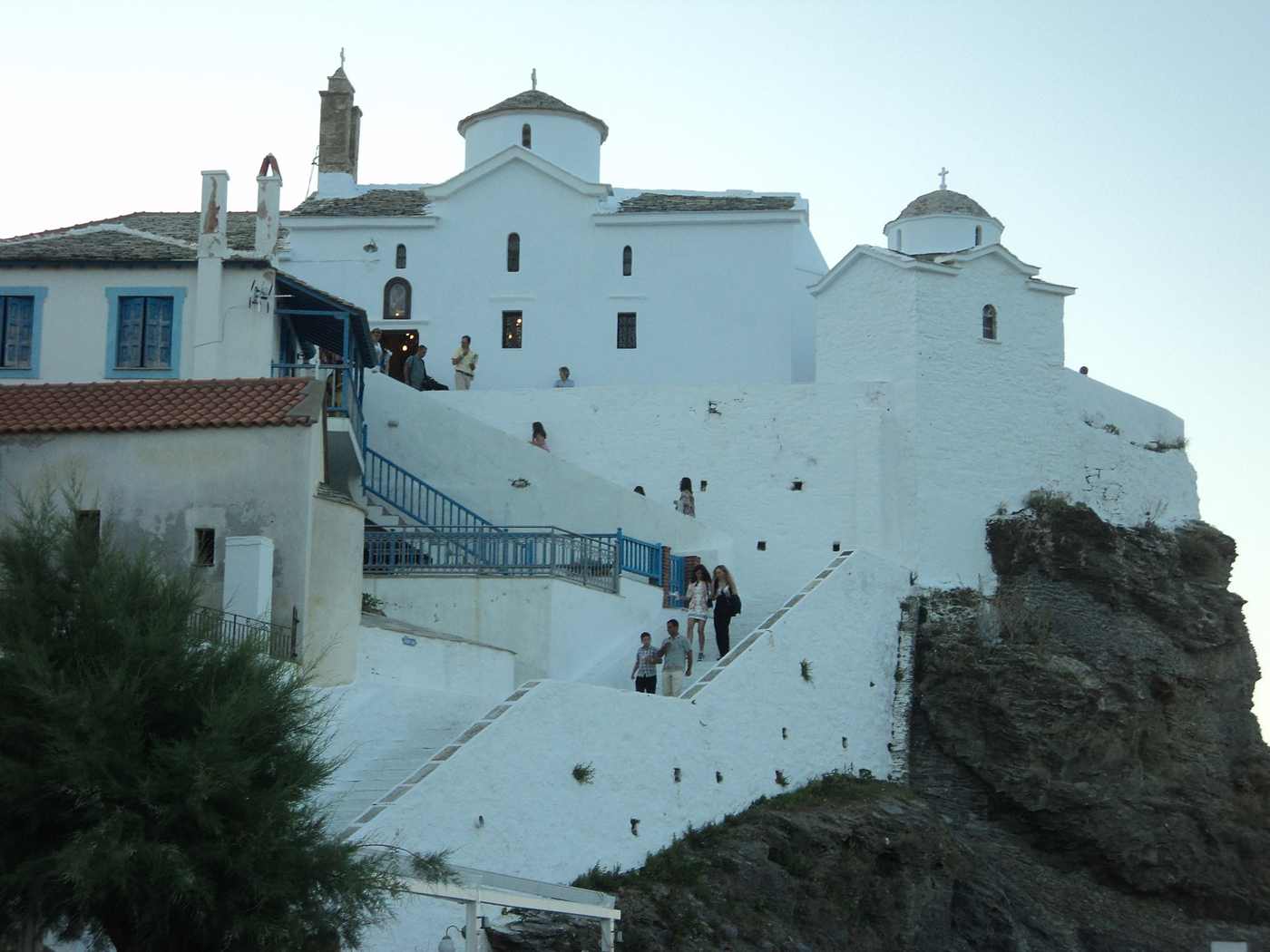
A self-guided walk links the beach and the chapel as part of the island’s Mamma Mia trail. Letting fans of the film retrace the main filming spots across Skopelos in a single day. The chapel of Agios Ioannis Kastri crowns a rock rising sharply from the sea on the northeast coast.
Are there naturist beaches on Skopelos?
Skopelos has two unofficial naturist stretches, at Velanio near Skopelos Town and at the far end of Hovolo below Neo Klima. Velanio lies over the headland just south of Stafylos. Reached by a footpath of about five minutes from the Stafylos car park. Its long pebble shore has served as the island’s main naturist beach for decades. A seasonal canteen supplies drinks near the path, but the beach keeps a stripped-back feel with limited facilities. Hovolo, on the west coast below Neo Klima, holds a quieter naturist section at its far end, screened by the sculpted rock formations that rise from the sand.
Both spots stay informal rather than designated, so visitors mix freely and the naturist use concentrates at the more secluded ends. Reaching either requires a short walk from a neighbouring beach, which keeps them calmer than the road-served bays and separates them from the busier organised shores nearby. The pine cover behind both beaches adds natural shade for those staying into the afternoon.
Which side of Skopelos has the calmest water for swimming?
The southern and western coasts of Skopelos hold the calmest water, because their headlands and bays face away from the summer meltemi that blows from the north. Kastani, Milia, Panormos, Stafylos, Velanio, Limnonari and Agnontas all sit on these sheltered coasts, staying swimmable through July and August when the exposed north and east shores turn rough. The deep bay of Panormos and the enclosed cove of Limnonari rank among the most protected, holding flat water on days when boats stay in port. Glysteri, on the north side of the town’s peninsula, faces away from the south wind and offers a calm alternative when the weather shifts.
Wind direction matters more than distance on Skopelos, since a beach exposed one day sits sheltered the next. Checking the forecast and choosing a bay on the leeward coast keeps the water calm across almost any summer day. Boat crews and swimmers alike read the wind before picking a bay, since the leeward coast shifts from south to north as the weather turns.
Can you visit Skopelos beaches by boat?
Boat taxis and excursion boats reach Skopelos beaches on the north and west coasts from the old port of Skopelos Town and from the jetty at Glysteri. Opening coves that the road never touches. Scheduled boat taxis run in summer to bays such as Milia and Limnonari, saving the drive for visitors staying in town, while excursion boats from Glysteri push along the wild north coast to sea caves and inlets accessible only from the water. The boat approach adds views of the pine-covered shore and often pauses for a swim in deep, clear water offshore. Yacht crews also use the sheltered bays of Panormos and Agnontas as overnight anchorages between the Sporades islands.
Fares and departure times are posted at the port and the jetties, and the boats pause when the sea turns rough in strong wind. Reaching the beaches by boat suits visitors who want to combine swimming with a half-day on the water. Trips run daily through July and August and taper in the shoulder months.