
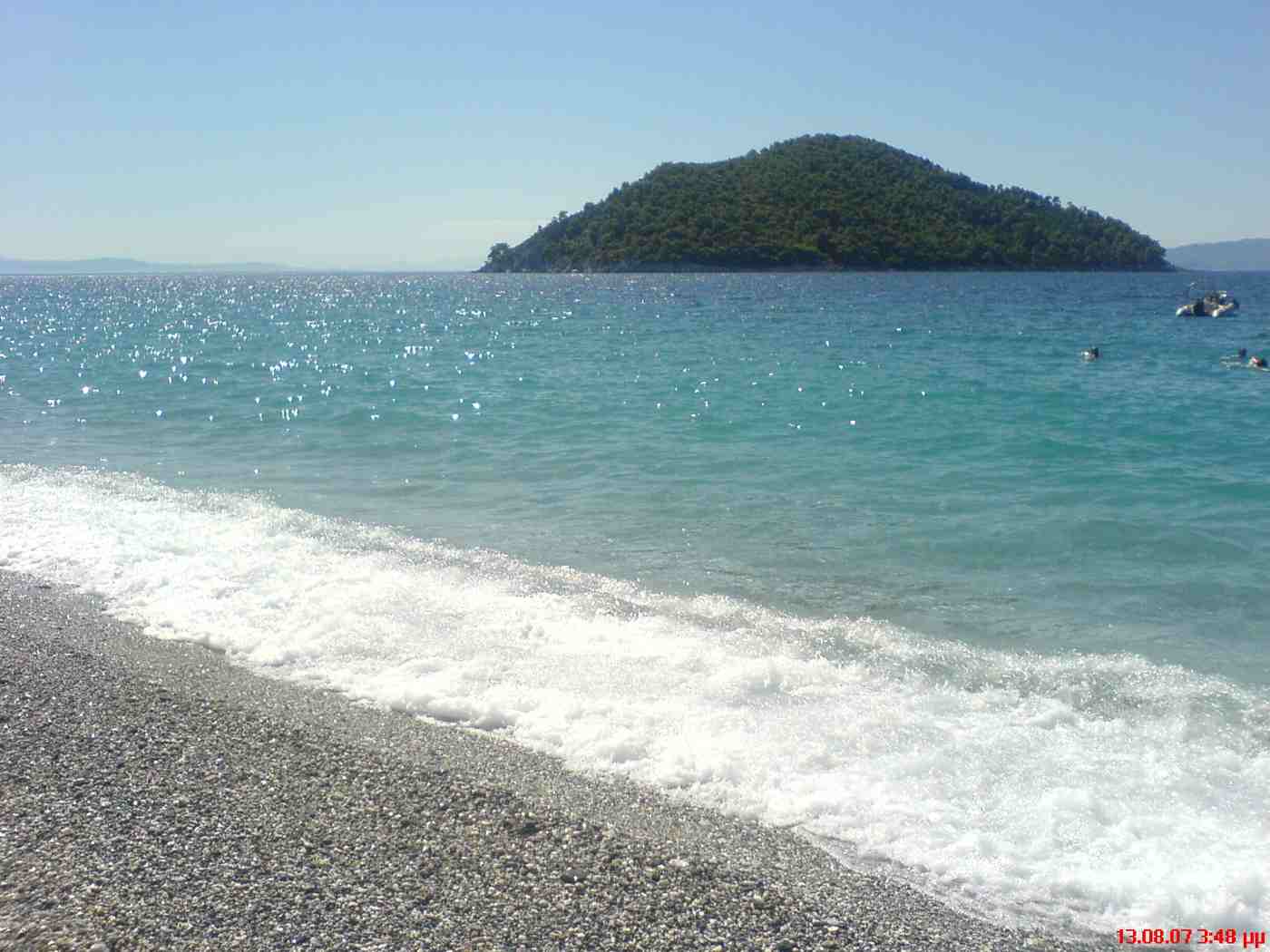
Skopelos concentrates its accommodation in distinct bases, each with a different character. Skopelos Town, the amphitheatrical capital beside the main port, draws visitors who want tavernas, boutiques and ferry links at their doorstep. Glossa and its port Loutraki anchor the quieter north, while the mid-island bays of Panormos, Neo Klima and Milia sit above pine-backed sand. Choosing the right area shapes the whole trip on Skopelos. Plan the whole trip with Greece Tours.
Most beds on the island are studios, apartments, town houses and small family-run hotels, with villas tucked into the pine and a limited number of larger resorts. Distances stay short: the main road links every town and beach, and buses run along it through the day. A base near the port keeps you close to nightlife, while the mid-island bays reward travelers who value sand and quiet over services.
Where are the main areas to stay in Skopelos?
Skopelos offers five main bases: Skopelos Town by the port, Glossa and Loutraki in the north, the mid-island beach areas of Panormos, Neo Klima and Milia, and the southern coves of Stafylos and Agnontas.
Skopelos stretches about 30 kilometers from the harbor at Chora in the northeast to Glossa and Loutraki in the northwest. A single main road runs the length of this spine, threading past the southern coves, climbing over pine ridges, and dropping to the western bays. Nearly every accommodation cluster sits on or just off this road, so transfers between areas stay direct. The capital holds the largest concentration of rooms, restaurants and shops, while the north and the mid-island bays trade that density for quiet and proximity to sand. Understanding this layout is the first step in matching a base to the kind of days you want.
Whether that means harbor tavernas at the door or a beach a short walk from the room.
Skopelos Town, also called Chora, wraps around the main port in tiers of white houses topped with grey slate roofs. This is the busiest base, with the widest choice of studios, apartments and small hotels. Plus the ferry quay, banks, a health center and the island’s densest run of tavernas and bakeries. Staying here means you can arrive by boat and walk to your room, then reach beaches and villages by bus or car. The waterfront and the lanes above it stay active into the night, which suits travelers who want dinner and a drink within reach. Read the dedicated guide to Skopelos Town for a closer look at its neighborhoods and where the quieter rooms sit.
The north of the island centers on Glossa, a hillside village of traditional houses, and its small port of Loutraki about 3 kilometers downhill. This area sits closest to Skiathos and its airport, so travelers arriving by air often base here to cut the transfer. Rooms are fewer and quieter than in Chora, running to family studios and apartments rather than hotels. Loutraki has a compact waterfront with tavernas and a beach, while Glossa keeps its balconies and lanes largely residential. Buses connect both to the capital along the main road. The ferry stop at Loutraki gives a second sea gateway to the island.
Useful for reaching the pine-backed beaches strung along the northwest coast without first driving through Chora.
Between the two towns, the west and southwest coast holds the bays of Panormos, Neo Klima, known also as Elios, and Milia, each backed by pine and fronting sandy-pebble beaches. These are the bases for travelers who put swimming first, with studios, apartments and a limited number of larger seaside hotels set above the water. Closer to Chora, the southern coves of Stafylos and Agnontas offer a small cluster of rooms within a short drive of town. Every one of these spots links back to the capital by bus, so a beach base does not cut you off from harbor dinners or the range of things to do in Skopelos, from boat trips to hillside monasteries.
What makes Skopelos Town a convenient base?
Skopelos Town combines the main port, the widest choice of rooms, and walkable tavernas, shops and services. Buses to every beach depart from its waterfront, making it the easiest base for travelers without a car.
Skopelos Town is where most ferries and hydrofoils dock, so choosing it as a base removes the need for an onward transfer after a long journey. You step off the boat, walk up into the lanes, and reach the majority of rooms within ten minutes on foot. The port area holds ticket offices, a taxi rank and the main bus stop, which places the island’s whole transport network at your doorstep. For arriving travelers weighing their options, the overview on the Skopelos hub sets out how the capital connects to the rest of the island. This concentration of services makes Chora the practical default for first-time visitors and for anyone planning to travel without a rental car.
Accommodation in Skopelos Town runs from simple rooms and studios in the old lanes to renovated town houses and small family hotels near the water. Prices climb toward the harbor and the more visited streets, and drop as you move up the slope, where the walk back involves stairs. Many buildings are traditional Sporades houses with wooden balconies, so rooms tend to be compact rather than resort-scale. The trade-off for staying in the heart of town is noise from the waterfront in high season. Balanced against the convenience of having dinner, a bakery and a pharmacy on the same street.
Booking a room higher in the town buys quiet and rooftop views in exchange for the daily climb up the stepped lanes.
The capital carries the island’s densest concentration of tavernas, cafes and bars, spread along the waterfront and through the lanes behind it. Evenings stay lively without the club scene of larger islands, so the atmosphere reads as sociable rather than loud. Bakeries sell the local spiral cheese pie in the morning, and the town’s shops cover groceries, pharmacies and the practical needs of a longer stay. A health center handles minor medical matters, and banks with cash machines cluster near the port. For travelers who want to leave the car behind and settle into one place.
This range of services within a short walk is the strongest argument for basing yourself in Skopelos Town rather than at a distant beach.
From Skopelos Town, the nearest beaches lie a short bus ride or drive to the south. With Stafylos about 4 kilometers away and Agnontas a little farther along the main road. Buses run through the day toward Panormos, Milia and Glossa, so a base in the capital still opens the whole west coast to day trips. The town itself has no wide sandy beach at its feet, which is the main reason beach-focused travelers look elsewhere. For everyone else, the balance of harbor life. Services and easy bus access makes Chora a base that works without a rental car. A comfortable landing point for planning how to reach the rest of the island over a week.
What is it like to stay in Glossa and Loutraki?
Glossa and Loutraki form the island’s quieter northern base, closest to Skiathos. Glossa sits on the hillside among traditional houses, while Loutraki, its port about 3 kilometers below, has a small beach and waterfront tavernas.
Glossa occupies a balcony of hillside in the north of Skopelos, its houses stacked above terraced slopes with long views toward Skiathos and the open sea. The village stays largely residential, so accommodation here means studios, apartments and rooms in family homes rather than hotels. Lanes are narrow and stepped, and the pace is slower than in the capital, with a handful of tavernas and a bakery serving the community and its visitors. Travelers who base in Glossa trade nightlife and choice for calm, authentic village life and cooler air at altitude. The village also anchors walking routes down to the coast and along the northern ridges.
Making it a starting point for travelers who plan to explore Skopelos on foot rather than by bus.
Loutraki, about 3 kilometers downhill from Glossa, is the island’s second port and a low-key waterfront settlement in its own right. Ferries and hydrofoils call here, which gives travelers arriving from Skiathos or the mainland a northern gateway that skips the drive to Chora. The village has a pebble-and-sand beach, a short line of tavernas and cafes, and a scatter of rooms and studios along the shore. Staying in Loutraki puts you at the water with immediate ferry access, useful for anyone island-hopping through the Sporades. The setting is compact and functional rather than developed, so evenings stay quiet.
A bus links Loutraki and Glossa to Skopelos Town along the main road for trips to the capital and the mid-island beaches.
The northern base wins on transfer time for travelers flying into Skiathos, the nearest airport to Skopelos. From Skiathos, the sea crossing to Loutraki is shorter than the run to Chora. Basing in the north can trim both the ferry leg and the road transfer at the far end. This makes Glossa and Loutraki a logical choice for short stays where arrival and departure logistics matter, or for anyone combining Skopelos with time on Skiathos. The full breakdown of routes, ports and connections appears in the guide to how to get to Skopelos. Weigh that convenience against the north’s distance from Chora, roughly 30 kilometers, if you plan to spend evenings in the capital.
Glossa and Loutraki suit travelers who prioritize quiet, views and a fast link to Skiathos over the density of the capital. The base sits within reach of the northwest beaches, including the string of pine-backed bays that run down the west coast toward Milia and Panormos. Renting a car here widens the range considerably, since bus frequency in the north is lower than around Chora. Families and couples looking for a slower rhythm, and hikers drawn to the ridge trails, tend to settle well in this part of the island. The main compromise is choice: fewer restaurants, fewer rooms and a longer haul to the port town mean the north rewards planning more than spontaneity across a stay.
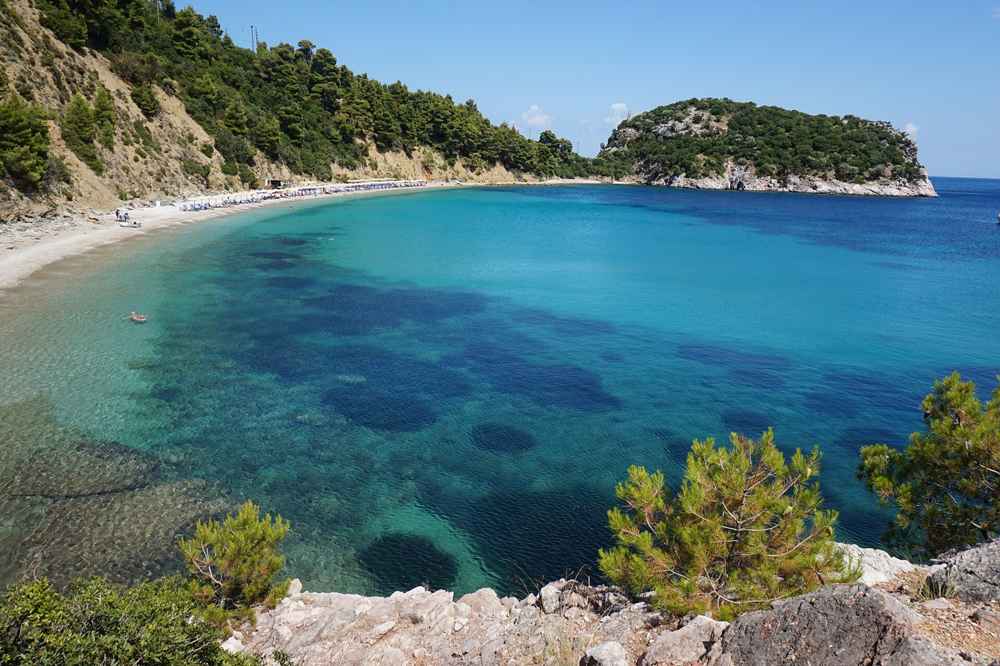
What do the beach areas of Panormos, Neo Klima and Milia offer?
Panormos, Neo Klima and Milia line the pine-backed west coast of Skopelos, each fronting a sandy-pebble bay. They hold studios, apartments and a limited number of seaside hotels, placing travelers within walking distance of swimming.
Panormos sits about 10 kilometers from Skopelos Town on the sheltered west coast, wrapped around a deep natural bay backed by pine. The setting has grown into one of the island’s main beach bases, with studios, apartments and larger seaside hotels stepping up the slope above the water. The bay’s calm, protected shape makes it a working anchorage for small boats and a steady swimming spot through the season. Tavernas line the shore, and two smaller coves nearby, Blo and Adrina, extend the choice of places to swim within a short walk or drive.
Panormos gives beach-first travelers a full base, with rooms, food and sand together, while the main road keeps Chora and Glossa within easy reach by bus or car for a change of scene.
Neo Klima, known also as Elios, lies farther along the west coast. A settlement rebuilt on the shore after earthquakes damaged the older village of Palio Klima on the hill above. The waterfront carries a run of tavernas, a small harbor and a stretch of rooms and studios, making it a quieter beach base than Panormos. Just below the village, Hovolo beach draws swimmers to its pale pebbles and clear water, reached by a short path from the road. The area works for travelers who want a functional seaside village with everyday services rather than a resort strip.
Buses along the main road connect Neo Klima to both the capital and Glossa, so the base stays linked to the rest of Skopelos without a rental car.
Milia ranks among the largest beaches on Skopelos, a long curve of pale sand and pebble backed by dense pine on the west coast. Accommodation here is limited and set back above the beach, so staying near Milia means a calm base built around swimming rather than a village. Nearby Kastani and Agios Ioannis appear in scenes from the Mamma Mia! films, and both lie within a short drive along the coast. The clifftop chapel of Agios Ioannis Kastri is one of the island’s most visited sights and an easy excursion from any west-coast base. For travelers who want beaches at the door and cinema landmarks close by, the Milia area concentrates both in one stretch of coast.
Basing on the west coast trades the services of Chora for direct access to the island’s longest run of swimming bays. With sand, pine shade and clear water steps from the room. The compromise is choice and connection: these villages carry fewer shops and restaurants than the capital, and bus frequency drops the farther you go from town. A rental car or scooter removes that constraint, opening the whole run of bays from Panormos to Milia and beyond in a single day. Prices at the seaside hotels rise in high summer, while studios in the villages stay more moderate.
For families and couples whose days revolve around the beach, the west-coast bays deliver the most direct route to the water on Skopelos.
Why do travelers choose Stafylos and Agnontas near Skopelos Town?
Stafylos and Agnontas sit south of Skopelos Town, about 4 and 8 kilometers along the main road. They pair small beaches and tavernas with a short hop to the capital, suiting travelers who want sand and town access together.
Stafylos lies about 4 kilometers south of Skopelos Town, the closest proper beach to the capital and a compact base in its own right. The cove combines sand and pebble with clear, sheltered water, and a footpath over the headland leads to the smaller Velanio beach beyond. Accommodation here runs to studios, apartments and small hotels set on the slopes above the bay, within a short drive or bus ride of Chora. The name traces back to a Bronze Age tomb found nearby, tying the beach to the island’s ancient past. Staying at Stafylos gives travelers a quiet seaside base that keeps the services and dinners of the capital only minutes away.
A balance that appeals to those without a strong preference for the far west coast.
Agnontas sits about 8 kilometers south of Skopelos Town, a small fishing harbor tucked into a sheltered inlet ringed by pine. The village serves as the island’s alternate ferry port: when the meltemi wind makes the exposed harbor at Chora unusable, boats divert here instead. That role gives Agnontas a working waterfront of tavernas beside the moored fishing boats, along with a modest choice of rooms and studios. The pebble beach is small and calm, and a short boat or path leads to the larger sands at Limnonari nearby. Agnontas suits travelers who want a genuine harbor setting over a resort one.
With fresh seafood at the water’s edge and the capital a quick drive up the main road for anything the village lacks.
The southern coves share one clear advantage: they sit on the stretch of main road nearest the capital. Buses run more often and the drive to Chora takes only minutes. This makes Stafylos and Agnontas a compromise base for travelers who want to sleep by a beach yet keep the town’s tavernas, shops and ferry quay within easy reach. Evenings can split between a quiet seaside dinner and a short trip into the harbor for the wider choice there. Both coves also line up well with day trips across the island, from beach-hopping along the west coast to walks up Mount Palouki toward the monasteries above the town.
For travelers weighing convenience against seclusion, the southern coves land squarely in the middle of the island’s options.
Stafylos and Agnontas work best for travelers who want the reassurance of the capital nearby without staying in it. Families appreciate the calm, sheltered water and the short transfer times, while couples find quiet seaside dinners a step from their door. Accommodation is limited compared with Chora, so booking ahead matters in high summer when the small clusters of rooms fill quickly. A car is helpful but not essential here, given the frequent buses on this southern stretch. The two coves also make a practical fallback when town rooms sell out, keeping you close to the port yet away from its late-night noise.
For a first visit that mixes beach time with easy access to services, this southern band of Skopelos is a dependable choice.
What types of accommodation does Skopelos have?
Skopelos accommodation centers on studios, apartments, traditional town houses and small family-run hotels, with villas set in the pine. Large resorts are limited, so most stays are mid-sized and independently run rather than package-style.
Studios and apartments make up the backbone of accommodation across Skopelos, from the lanes of Chora to the beach villages of the west coast. These self-catering units suit couples and families who value a kitchenette, flexible mealtimes and lower nightly rates than hotels. Many occupy the ground or upper floors of family homes, so hosts often live on site and manage bookings directly. Sizes range from compact single rooms with a hotplate to two-room apartments with a balcony and sea view. This format dominates because the island never developed the high-rise resort blocks of larger destinations, keeping its lodging small in scale.
Travelers who want independence, a local welcome and a base that feels residential rather than corporate tend to book studios and apartments first on Skopelos.
Traditional town houses give Skopelos some of its most distinctive places to stay, concentrated in the tiered lanes of the capital and the hillside village of Glossa. These are Sporades stone-and-timber buildings, often with wooden balconies, slate roofs and interiors restored for guests. Renting one places you inside the living fabric of the town, a short walk from tavernas and the waterfront, though the stepped lanes mean luggage and daily climbs factor into the choice. A share of them are let whole for families or groups, and the rest are divided into separate rooms. The appeal lies in staying within genuine island architecture rather than a purpose-built block, close to the rhythm of local life.
For travelers who value character and location over resort facilities, a restored town house is the signature Skopelos option.
Small family-run hotels fill the middle ground on Skopelos, offering daily service, breakfast and a pool without the scale of a full resort. These sit both in and around Chora and along the beach bays of Panormos, Neo Klima and Milia, where a sea-facing position adds value. Villas form the other end of the range, standalone houses set among the pine or above the coast. Rented by the week for families and groups who want privacy and space. Prices for villas climb in high summer and reward early booking, while the family hotels hold steadier rates. Between them, these two formats cover travelers who want more service or more seclusion than a studio provides.
Without stepping up to a large international-brand property, which the island barely offers.
Large resorts remain the exception on Skopelos rather than the rule, a direct result of the island’s protected pine landscape and small-scale planning. A limited number of bigger seaside hotels operate around Panormos and the west coast, but nothing approaches the resort density of Mykonos or Rhodes. This scale shapes the whole experience: fewer package tourists, more independent travelers, and a lodging stock that fills through direct bookings and small agencies. For visitors, the practical takeaway is to book early in high summer, when the modest number of rooms in any single village can sell out. The reward for that planning is a stay grounded in local hospitality.
In buildings sized to the island rather than to mass tourism, across every base from Chora to Glossa and the western bays.
How do you get around Skopelos from your base?
Skopelos runs a bus line along the main road linking Chora, the southern coves, the west-coast beaches and Glossa. A rental car or scooter reaches remote coves that buses skip, widening any base’s range.
The island’s public buses form the backbone of car-free travel on Skopelos, running the length of the main road between Skopelos Town and Glossa. Services call at Stafylos, Agnontas, Panormos, Neo Klima and Milia along the way, so most beach bases and both towns connect without a car. Frequency is highest in summer and around the capital, thinning toward the north and outside the peak season. Fares are modest and paid on board or at the ticket office by the port. For travelers basing in Chora, this network turns the whole west coast into a series of day trips. For those on the beaches.
It provides a reliable link back to town for dinner and supplies without the cost of a rental car.
A rental car or scooter transforms what any base can reach on Skopelos, since buses follow the main road and skip the tracks down to smaller coves. With your own transport, the string of west-coast bays, the monasteries on Mount Palouki and the quieter northern beaches all come within a short drive. Roads are paved on the main routes and narrower on the descents to individual beaches, where parking can be tight in high summer. Renting is straightforward in Chora and at the larger villages, and a scooter suits couples covering short distances in fair weather. For travelers set on a remote beach base or on covering the whole island in a week.
Wheels convert Skopelos from a bus-linked chain of villages into a fully open map.
The choice of base and the choice of transport are linked decisions on Skopelos. A traveler without a car is best served by Chora or Loutraki. Where buses are most frequent and services sit within walking distance, keeping the whole trip mobile on public transport. A traveler with a rental gains the freedom to base at a quieter west-coast bay or southern cove and still reach everything, since the drive between the farthest points takes under an hour. Matching the two avoids the common trap of booking a remote beach studio, then finding the bus runs only twice a day.
Deciding early whether you will rent shapes which of the island’s areas makes the most sense for your stay on Skopelos.
Beyond buses and rentals, Skopelos offers taxis from ranks in Chora and Glossa for point-to-point trips, useful for late returns the buses do not cover. Walking is a genuine option within the towns and on the marked footpaths that link nearby beaches, such as the headland route from Stafylos to Velanio. Small boats also run in summer to coves that the road reaches poorly, giving beach bases a sea link to swimming spots along the coast. Between the two ferry ports, Chora and Loutraki, the main road and the bus tie the northern and southern halves of the island together.
Layering these options on top of a well-chosen base means almost no corner of Skopelos stays genuinely out of reach during a week’s stay.
Which Skopelos area suits families, couples and budget travelers?
Families favor Stafylos, Panormos and Skopelos Town for calm beaches and services. Couples lean toward Glossa, Milia and quieter coves. Budget travelers find the lowest rates in village studios away from the harbor front.
Families tend to base at Stafylos, Panormos or Skopelos Town, where sheltered water, short transfers and nearby services ease travel with children. Stafylos and Panormos put a calm, shallow-entry beach at the door, while a town base keeps a pharmacy, health center and choice of restaurants within walking distance. Self-catering studios and apartments help with young children’s mealtimes and lower the cost of a longer stay. The island’s small scale works in families’ favor, since no transfer runs long and the buses cover the main beaches. Parents who want a pool as well as sand often choose one of the family-run hotels around Panormos.
Across these options, the priorities are the same: safe water, easy logistics and rooms sized for more than two on Skopelos.
Couples often look for quiet and character over convenience, which points toward Glossa, the Milia area or the smaller southern coves. Glossa offers hillside village life, long views and cooler evenings away from the summer crowds, while Milia pairs a long pine-backed beach with a calm, low-built setting. A restored town house in the upper lanes of Chora gives a different kind of romance, inside the island’s traditional architecture yet close to waterfront dinners. These bases favor slow days built around swimming, walking and long meals rather than nightlife. Renting a car widens the range for couples who want to combine a quiet base with beach-hopping across the west coast.
The common thread is a setting that trades density for atmosphere, which most of Skopelos delivers by its nature.
Budget travelers stretch their money furthest by booking village studios and rooms set back from the waterfront, where rates fall well below the harbor-front and seaside-hotel prices. Glossa, Neo Klima and the upper lanes of Chora hold the more affordable options, still within reach of a beach or the bus. Self-catering keeps food costs down, since a kitchenette and the island’s bakeries and markets replace three restaurant meals a day. Traveling in late spring or early autumn lowers both room rates and demand, without losing the warm sea. Buses spare the cost of a rental for those willing to plan around the timetable.
With these choices, Skopelos stays accessible to travelers on a tighter budget, even in a lodging market built around independent rooms rather than cut-price packages.
Matching an area to your group is the single most useful step in booking Skopelos, because the island’s bases differ more in character than in distance. A family chasing beach days and a couple after quiet evenings can stay 20 minutes apart and have entirely different holidays. The practical method is to fix your priorities first, whether that is walkable services. A beach at the door, the lowest rate or the shortest transfer from Skiathos. Let those choose the area. From there, the short distances mean no base locks you out of the rest of the island.
That flexibility is why repeat visitors often change their base between trips, sampling the harbor, the north and the west coast across different stays on Skopelos.
When is the best time to book accommodation in Skopelos?
Skopelos accommodation fills earliest for July and August, the peak of the season. Booking two to three months ahead secures the widest choice, while late spring and early autumn open more availability at lower rates.
The tourist season on Skopelos runs from late spring through early autumn, peaking across July and August when the island’s small lodging stock comes under the most pressure. During these weeks, the studios, town houses and seaside hotels in every base fill quickly, and the most requested rooms, those with sea views or beach access, go first. Booking two to three months ahead is the reliable way to secure a preferred area and property in high summer. Outside the peak, from late spring into June and again in September and October, availability widens and rates ease, while the sea stays warm enough for swimming.
Choosing when to visit therefore shapes not only the price but the range of areas realistically open to a late booker on Skopelos.
Late spring and early autumn reward travelers with lower room rates, thinner crowds and a fuller choice of accommodation across Skopelos. In these shoulder months, the same village studio or town house that sells out in August often stays available at short notice and a reduced price. The weather holds warm, the beaches quiet, and the buses still run, though at a lighter frequency than in peak summer. This window suits couples and budget travelers in particular, along with anyone who prefers walking and exploring over lying on a packed beach. The trade-off is that a share of seasonal tavernas and services scale back at the margins of the season. A base with year-round amenities.
Such as Chora or Glossa, makes the smoother choice.
Booking direct with the island’s family-run studios and hotels is common on Skopelos, since much of the lodging stock sits outside the large international platforms. Contacting hosts early not only secures a room but often opens flexibility on transfers from the port or from the ferry at Loutraki. For high summer, aligning the accommodation booking with ferry availability matters, because the sea crossings from Skiathos and the mainland also fill in peak weeks. Confirming both together avoids landing a room in the preferred area with no boat to reach it on the chosen date. Travelers who leave both to the last minute in August risk a narrowed choice of base and a longer.
Less direct route to the island. Early coordination pays off on both fronts.
The timing of a booking and the choice of base work together on Skopelos. A traveler set on Skopelos Town or a specific west-coast beach in August needs to commit early, while a flexible shoulder-season visitor can pick almost any area on shorter notice. Weighing the season against your priorities, whether beach access, quiet, budget or proximity to Skiathos, produces the clearest plan. Because the island’s areas sit close together and its lodging leans small and independent, the decision rewards a little research over guesswork. Settling on the right area for your dates, then booking the room and the ferry in step.
Turns the practical question of where to stay in Skopelos into the foundation of a smooth trip across the island.
Frequently Asked Questions
Where is the best area to stay in Skopelos for first-time visitors?
First-time visitors settle most comfortably in Skopelos Town, the island’s capital beside the main port. The town concentrates the widest choice of rooms, from studios in the old lanes to restored town houses and small hotels. It places tavernas. Bakeries, shops and services within a short walk. Because most ferries dock here, arriving travelers reach their accommodation without an onward transfer. The island’s main bus stop sits on the same waterfront, opening every beach for day trips. Chora lacks a wide sandy beach at its feet, but Stafylos lies only about 4 kilometers south by bus.
For a first stay, this balance of convenience, atmosphere and transport links makes the capital the safest base, especially for travelers without a rental car. Those who prioritize swimming above town life can instead look to Panormos or Stafylos. Both within easy reach of Chora. Still keep the capital’s services a short ride away for supplies and dinners.
Is it better to stay in Skopelos Town or by the beach?
Skopelos Town suits travelers who want services, dining and ferry links on their doorstep, while the beach areas suit those whose days center on swimming. Chora carries the island’s densest run of tavernas, shops and transport, along with the widest choice of rooms. Its harbor setting means no broad sandy beach directly below the town. The west-coast bays of Panormos, Neo Klima and Milia. The southern coves of Stafylos and Agnontas. Put sand and clear water steps from the room, at the cost of fewer restaurants and lower bus frequency. A practical compromise is Stafylos, about 4 kilometers from the capital, which pairs a beach with a short hop to town.
Travelers with a rental car can base anywhere and reach both worlds easily; those relying on buses lean toward Chora or a well-connected beach on the main road. The right answer depends on whether harbor life or beach access ranks higher for your trip to Skopelos.
Which area of Skopelos works best for families?
Families find the smoothest base at Stafylos, Panormos or Skopelos Town, where calm water, short transfers and nearby services ease travel with children. Stafylos, about 4 kilometers south of the capital, offers a sheltered, shallow-entry beach and a small cluster of studios and hotels within a quick bus ride of town. Panormos, roughly 10 kilometers out on the west coast, adds a larger bay, a choice of seaside hotels with pools, and tavernas along the shore. A base in Chora itself keeps a pharmacy, health center and restaurants within walking distance, which reassures parents traveling with young children.
Self-catering studios and apartments, the island’s most common lodging, help with children’s mealtimes and reduce the cost of a longer stay. Because Skopelos is compact, no transfer runs long and buses reach the main beaches. Families can combine a quiet beach base with easy day trips to the capital and other bays without spending hours on the road.
Does Skopelos have large resorts and hotels?
Skopelos has a limited number of larger seaside hotels, mainly around Panormos and the west coast, but no resort development on the scale of Mykonos, Rhodes or Crete. The island’s protected pine landscape and small-scale planning kept its lodging stock modest. Most accommodation takes the form of studios. Apartments, restored town houses and family-run hotels rather than international-brand resorts. This shapes the whole visit: fewer package tourists, more independent travelers, and a market that fills through direct bookings and small local agencies. Family-run hotels with a pool and breakfast fill the middle ground between self-catering studios and standalone villas, and cluster both around Chora and along the beach bays.
Travelers seeking a full-service resort with extensive facilities find the choice narrow here, and often prefer a villa or a family hotel instead. The trade-off is a stay grounded in local hospitality and buildings sized to the island, which is a central reason repeat visitors choose Skopelos over busier destinations.
How far is Skopelos accommodation from Skiathos airport?
Skopelos has no airport of its own, so travelers fly into Skiathos and cross by sea, which makes the northern base of Glossa and Loutraki the closest to the airport. From Skiathos, the ferry or hydrofoil to Loutraki, the island’s second port, is shorter than the crossing to Skopelos Town in the northeast. Basing in the north therefore trims both the sea leg and the onward road transfer, a real advantage for short stays or for anyone combining Skopelos with time on Skiathos. Travelers heading to Chora or the west-coast beaches face a longer journey. Adding the crossing to the capital plus any drive to the far bays, roughly 30 kilometers from Glossa to Chora.
Buses and taxis link Loutraki to the rest of the island once you land, so a northern base stays connected. Weigh transfer time against the north’s distance from the capital, and confirm the ferry and room together, when deciding where to stay on Skopelos.
How far ahead do you need to book accommodation in Skopelos?
Booking two to three months ahead is advisable for July and August, the peak weeks when Skopelos accommodation comes under the most pressure. The island’s lodging stock is small and independently run. The most requested rooms, those with sea views or direct beach access. Sell out first in high summer across every base from Chora to the west-coast bays. Travelers set on a specific area or property in peak season benefit from committing early and confirming the ferry crossing at the same time, since the boats from Skiathos and the mainland also fill. Outside the peak, from late spring into June and again in September and October. Availability widens and rates ease.
Shorter lead times work and shoulder-season visitors can often book at short notice. Aligning the room and the ferry avoids the trap of securing a preferred base with no boat to reach it. Which is the main risk of leaving a summer booking to the last minute on Skopelos.
Do you need a car when staying in Skopelos?
A car is not essential in Skopelos, though it widens what any base can reach. The island runs public buses along the main road between Skopelos Town and Glossa, calling at Stafylos. Agnontas, Panormos, Neo Klima and Milia. Most beach areas and both towns connect without a rental. Travelers basing in Chora or Loutraki, where buses are most frequent and services sit within walking distance, manage comfortably on public transport alone. A rental car or scooter becomes useful for reaching the smaller coves the buses skip. For exploring the monasteries on Mount Palouki, or for basing at a remote west-coast beach and still covering the whole island.
Bus frequency thins toward the north and outside peak season, so a car matters more for a quiet base than a central one. Taxis from Chora and Glossa cover late returns the timetable misses. Matching your transport plan to your chosen base is the key step in staying mobile on Skopelos.