
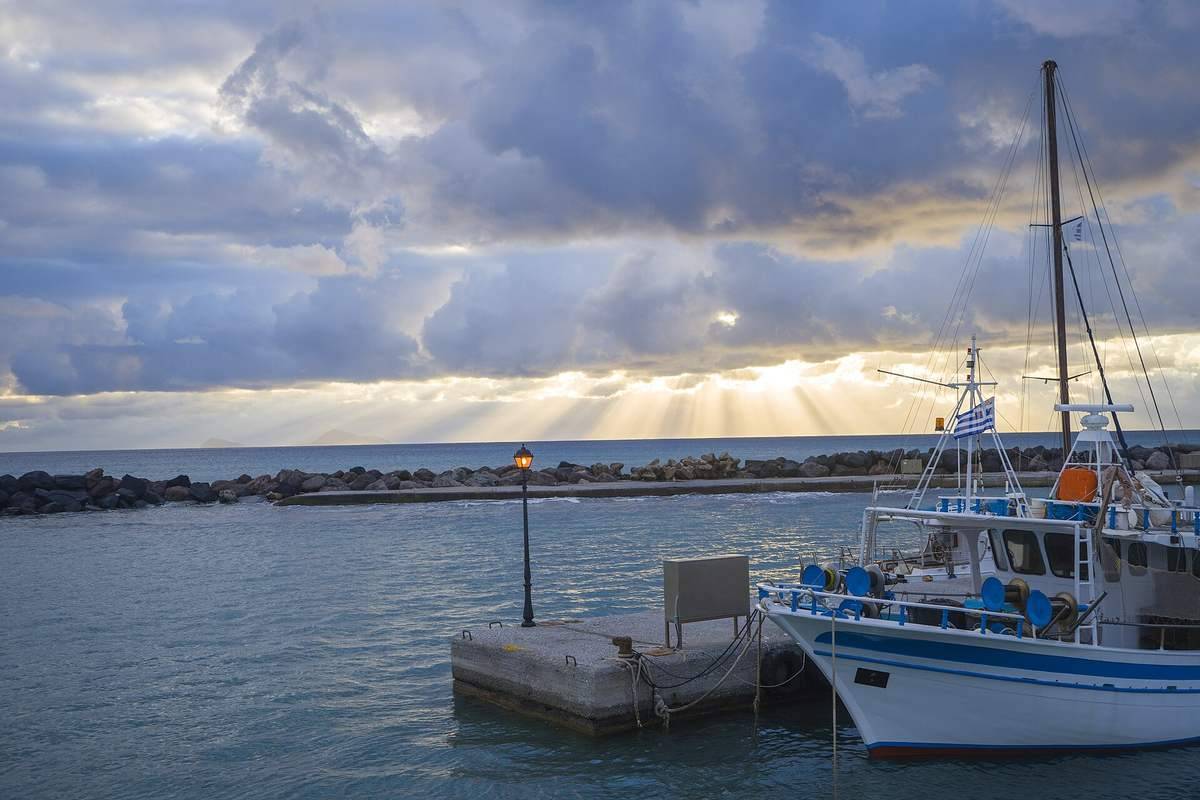
Santorini with kids is more rewarding than most expect, with black-sand beaches with shallow water, a boat trip to the volcano and hot springs, a water park, an open-air cinema and easy village walks. This guide covers the best family activities, the family beaches, where to stay and tips for visiting with children.
The island holds real appeal for families beyond the romance, a fun side of the wider Santorini travel guide. The volcanic landscape fascinates children. The sections below cover a family trip.
Is Santorini good for families?
Santorini is good for families, with calm shallow black-sand beaches, boat trips to the volcano and hot springs, a water park, an open-air cinema and walkable villages. The heat, crowds and stepped caldera streets are the trade-offs to plan around.
Santorini rewards families who look past the honeymoon image. The island pairs calm shallow beaches for children with the thrill of stepping onto an active volcano and swimming in warm hot springs. A water park, an open-air cinema and villages built for wandering fill out the days. The dark volcanic scenery genuinely holds children’s attention, since the caldera looks unlike any beach at home. The trade-offs are the strong summer heat, the busy peak-season crowds and the steep steps and cliff edges of Oia, Fira and Imerovigli. These points suit school-age children better than toddlers in pushchairs, set out alongside the guide to things to do in Santorini. Timing your visit well removes most of the friction.
When is the best time to visit Santorini with kids?
The best time to visit Santorini with children is the shoulder months of late April to June and September to mid-October. The sea stays warm enough to swim, temperatures stay comfortable and crowds thin. Peak summer brings intense heat.
Shoulder-season travel makes a family trip on Santorini far easier. Late spring through June delivers warm days, a swimmable sea and lighter crowds at the beaches and viewpoints. September into mid-October keeps the water at its warmest after a full summer of sun, with cooler afternoons for village walks. Peak July and August push daytime temperatures high and fill Oia and Fira with cruise-day visitors, which tires young children quickly. School-holiday families who travel only in summer build the day around early beach mornings and shaded afternoon breaks. The calendar shapes the crowds and the heat you meet, laid out in the guide to the best time to visit Santorini. Reaching the island is the next planning step.
How do you get to Santorini with kids?
Families reach Santorini by direct flight into the island’s airport or by ferry from Athens and nearby Cyclades. Flying is fastest and least tiring with children; the high-speed ferry from Piraeus takes about five hours across open sea.
Getting to Santorini with children comes down to a choice between air and sea. Flights land at the island’s small airport near Kamari and cut the journey to well under an hour from Athens. Ferries sail from Piraeus and Rafina near Athens, with high-speed services crossing in roughly five hours and slower boats riding more steadily. High-speed catamarans can feel bumpy for children prone to seasickness, so a conventional ferry or a flight suits sensitive travellers. Island-hopping families arrive from Ios, Naxos, Paros and Mykonos on shorter ferry legs. The route you pick sets the pace of arrival day, covered fully in the guide to how to get to Santorini. Once ashore, getting around is the next question.
How do you get around Santorini with kids?
Families get around Santorini by the cheap KTEL buses, by hire car or by taxi. Buses link the resorts through Fira but rarely carry child seats, so a hire car gives the most flexibility for beach days.
Santorini offers three practical ways to move a family around the island. The green KTEL buses run frequently between Fira and the resorts of Kamari and Perissa, plus Oia and the port, at low fares. Buses route through the Fira hub, so cross-island trips involve a change and crowd in peak hours. A hire car unlocks quiet beaches, early starts and boot space for beach gear, though parking in Oia and Fira is tight. Taxis are limited and best pre-booked for transfers. Rental scooters and quads do not suit young passengers. Your transport choice shapes each day, set out alongside the guides to the Santorini bus network and Santorini car rental. Where you base yourself matters as strongly.
Where should families stay in Santorini with kids?
Families are happiest staying near a beach, in Kamari or Perissa on the south-east coast, for flat ground, shallow water, pools and value. The clifftop villages of Oia, Fira and Imerovigli suit couples more than children.
Choosing a beach base keeps a family trip on Santorini relaxed. Kamari and Perissa sit on flat coastal ground with long organised beaches, family hotels with pools, tavernas and shops within walking distance. That setup beats the caldera villages for daily life with children. Oia, Fira and Imerovigli deliver the famous views but stack their rooms along stepped lanes and cliff edges, which turn a simple stroll into a careful climb with toddlers. Firostefani and Karterados give a quieter middle ground for older children who can handle stairs. The right base cuts the number of transfers and the daily effort, laid out in the guide to where to stay in Santorini. The beaches themselves deserve a closer look.
What are the best family beaches in Santorini?
The best family beaches are the long organised black-sand strands of the south-east coast: Kamari, Perissa, Perivolos and the calm shallow Monolithos. All have sunbeds, tavernas and gentle water, with Monolithos the most toddler-friendly of the group.
The south and east coasts hold Santorini’s family beaches. Kamari sits below the Mesa Vouno headland with a long promenade of tavernas, sunbeds and lifeguards behind shallow water. Perissa and its southern extension Perivolos run for kilometres of organised black sand with beach bars and water sports for older children. Monolithos, on the quieter east coast, keeps very calm shallow water, a gentle slope and a playground, the pick for toddlers. The dark volcanic sand heats up fiercely under summer sun, so water shoes stay essential. Each strand offers a different mix of calm and buzz, set out alongside the guide to Santorini beaches. Kamari repays a full family day on its own.
Why is Kamari Beach good for families?
Kamari Beach is good for families thanks to shallow black-sand water, lifeguards, a paved seafront promenade of tavernas, and easy bus links to Fira. Its flat terrain and organised setup make it an easy beach base with children.
Kamari earns its family reputation through convenience as well as its beach. The long strand of dark sand shelves gently into calm water below the towering Mesa Vouno rock, with lifeguards and rows of sunbeds. Behind it a car-free promenade strings together tavernas, ice-cream stops, mini-markets and an open-air cinema, so children stay entertained after the sun drops. Flat ground and frequent buses to Fira and the airport keep the logistics simple for parents. The paved seafront rolls easily for a pushchair, unlike the caldera lanes. Kamari packs the practical pieces of a family holiday into one walkable resort, set within the wider guide to Kamari Beach. Its longer neighbour to the south runs a similar formula.
Why is Perissa Beach good for families?
Perissa Beach suits families with a long stretch of organised black sand, shallow calm water, lifeguards and a lively seafront of tavernas and beach bars. Flat terrain and budget-friendly rooms make it a practical base on the island’s south coast.
Perissa spreads along the south coast beneath the same Mesa Vouno headland that shelters Kamari on its far side. The wide dark-sand beach runs for a long organised stretch, with sunbeds, lifeguards, showers and a seafront lined by tavernas and beach bars. Water shallows gently, so children paddle safely close to shore. The resort keeps a relaxed budget feel with family studios and apartments a short walk from the sand. Perissa also serves as the trailhead for the climb to Ancient Thera on the ridge above, an outing for energetic older children. The beach blends space, low prices and easy amenities, set out alongside the guide to Perissa Beach. Just south, the sand keeps going toward the quieter Perivolos.
Why is Perivolos Beach good for families?
Perivolos Beach continues Perissa’s black sand southward into a longer, more spacious stretch with organised beach clubs, shallow water and water sports. Its extra room and calmer far end give families breathing space away from the busiest resort centres.
Perivolos flows straight on from Perissa as the same continuous black-sand coast, giving families more room to spread out. Stylish beach clubs, sunbeds and tavernas line the northern section, while the sand grows quieter and more open toward its southern end. The shallow water suits paddling children, and older ones can try the water-sports centres along this coast. The extra space makes it easier to find a calmer patch on a busy day. Sunset here comes without the caldera crowds, over a wide flat horizon. Perivolos trades the honeymoon views for elbow room and organised comfort, set out alongside the guide to Perivolos Beach. For the youngest children, one east-coast beach stands above the rest.
Why is Monolithos Beach best for toddlers?
Monolithos Beach is best for toddlers with very calm shallow water, a gentle sandy slope, lifeguards and a children’s playground beside the sand. It sits on the quieter east coast near the airport, away from the busiest resort crowds.
Monolithos stands out as the island’s gentlest beach for the youngest children. The water shallows out so gradually that toddlers can wade a long way while barely leaving ankle depth, and lifeguards watch the swimming zone. A playground sits right beside the sand, with tavernas serving simple family food set just back. The east-coast setting near the airport keeps the crowd thinner than at Kamari or Perissa, so parents find space to relax. The dark sand still heats up, so water shoes stay useful. Monolithos delivers calm, safety and shade in one low-key package, set out alongside the guide to Monolithos Beach. Beyond the beaches, the island’s boat trips are the day children remember.
What are the best things to do in Santorini with kids?
The best family activities are a daytime catamaran cruise with swimming and a hot-springs stop, the water park at Perissa, the open-air cinema at Kamari, the Akrotiri ruins and an easy caldera walk. Boat trips are the favourite.
Santorini fills family days with a strong mix of sea and land. The standout is a daytime catamaran cruise across the caldera, with swimming straight off the boat and a splash in the warm volcanic hot springs, which delights children. On land, the water park at Perissa runs slides and pools for cooling off, and the open-air cinema at Kamari turns a summer evening into a novelty under the stars. School-age children take to the buried Bronze Age town of Akrotiri and to the paved opening stretch of the caldera walk. The blend keeps every age group busy, set out alongside the guide to things to do in Santorini. The volcano cruise deserves a section of its own.
Is the volcano and hot springs boat trip good for kids?
The volcano and hot springs boat trip is a family highlight. Children sail across the caldera, walk the Nea Kameni crater trail and swim in the warm hot springs. A daytime cruise suits families better than a sunset departure.
The caldera boat trip turns geology into an adventure children remember. Boats cross to the black volcanic islet of Nea Kameni, where a short walk climbs past steaming vents to the crater rim, a fascinating scramble for school-age children. The next stop drops swimmers into the warm mineral hot springs off Palea Kameni, where the water runs iron-rich and rust-coloured. A daytime departure keeps the timing gentle for younger children. Sturdy shoes handle the sharp volcanic path, and a hat guards against open-deck sun. The trip pairs a live volcano with a warm swim in one outing, set out alongside the guide to the Santorini volcano. On very hot days, the water park offers a shadier alternative.
Is the Santorini Water Park good for children?
The Santorini Water Park at Perissa is good for children, with slides, pools and a play area beside the beach. It gives families a cooling break from the heat and pairs naturally with a beach day on the south coast.
The water park at Perissa gives families a straightforward way to beat the summer heat. Set just back from the black-sand beach, it groups slides, pools and a shaded play zone into one spot where children burn off energy. Parents relax on loungers while older children ride the slides and younger ones splash in the shallow pool. The beachside location lets a family split the day between the sand and the park without a transfer. The park pairs neatly with the hotels of Perissa and Perivolos next door. It offers reliable play whatever the caldera crowds are doing, set out alongside the guide to the Santorini water park. History-minded families find their own draw at Akrotiri.
Are the Akrotiri ruins interesting for kids?
The Akrotiri ruins interest school-age children as a real buried town, preserved under volcanic ash with streets, staircases and multi-storey houses under a shaded roof. The cool covered walkways also give welcome relief from the midday sun.
Akrotiri turns ancient history into something children can walk through. The Bronze Age town lay buried under volcanic ash for millennia, and excavation has uncovered paved streets, drainage channels and houses that still stand storeys high. Raised walkways under a modern roof lead visitors past the rooms, and the shade keeps the site cool through the hottest hours. Children grasp the story quickly once they see the everyday town frozen mid-life, a Greek Pompeii. The nearby Museum of Prehistoric Thera in Fira displays the frescoes and finds that complete the picture. The ruins reward curious older children with a real archaeological site, set within the wider guide to Akrotiri. For active families, the caldera path offers a gentler outing.
Can families do the caldera walk with kids?
Families can do the caldera walk with children by tackling only the paved opening stretch from Fira through Firostefani to Imerovigli. The full Fira-to-Oia route runs long and exposed, so short viewpoint sections suit young walkers best.
The clifftop caldera walk works with children when you keep the distance short. The first section from Fira through Firostefani to Imerovigli stays paved and mostly flat, threading past blue-domed churches and open caldera views that hold children’s interest. That stretch makes an easy morning or late-afternoon stroll before the heat builds. The onward path to Oia turns rough, exposed and long, so most families turn back at Imerovigli. Early or evening timing keeps the sun off, and water and hats stay essential. Broken into viewpoint-sized pieces, the walk becomes a gentle family outing, set out alongside the guide to the Fira to Oia hike. Evenings call for family-friendly places to eat.
Where are the best family restaurants in Santorini?
The best family dining is in the beach resorts of Kamari and Perissa, where seafront tavernas serve grilled fish, pasta and Greek classics on flat car-free promenades. These relaxed spots welcome children far more easily than the formal caldera-view restaurants.
Family eating on Santorini works best down at the beach resorts. The seafront tavernas of Kamari and Perissa line flat car-free promenades where children roam safely while parents order grilled fish, souvlaki, pasta and salads. Portions run generous, and simple dishes like fried potatoes please younger palates. Village tavernas in Megalochori and Pyrgos add a quieter, local flavour. The clifftop restaurants of Oia and Fira aim at romantic sunset dining, with narrow terraces and premium prices that suit couples over toddlers. Booking early lets a family catch sunset without a long wait. Relaxed beachfront tables ease the evening for everyone, set out alongside the guide to Santorini restaurants. Simple habits keep the whole trip smooth.
How long do you need in Santorini with kids?
Families need four to five days in Santorini to relax without rushing. That span covers beach days, one caldera-boat trip, the water park, Akrotiri and a village walk, with rest afternoons built in against the heat and the travel.
A family stay of four to five days lets Santorini unfold at a child’s pace. Two beach days at Kamari or Perissa cover swimming, the water park and the open-air cinema, with slow mornings and shaded rests between. One full day handles the daytime caldera boat trip to the volcano and hot springs, which fills the hours on its own. A fourth day suits Akrotiri, the Museum of Prehistoric Thera and a short caldera walk before the heat builds. A fifth adds slack for a slow arrival or an extra beach. That rhythm avoids the packed itineraries that tire young children, set within the wider Santorini itinerary. Where the island sits shapes the journey too.
Where is Santorini, and how does that affect a family trip?
Santorini sits in the southern Aegean, the largest island of the volcanic Cyclades group, ringed around a flooded caldera. Its compact size keeps drives short, but the cliff-and-beach split means families pick between clifftop views and flat coastal resorts.
Santorini lies in the south Aegean as the biggest of a small volcanic ring, the remains of a giant eruption that sank the island’s centre. The crescent shape places the cliffs, Oia and Fira along the western caldera rim, while the flat black-sand beaches spread down the eastern and southern coasts. That geography drives the family choice: caldera villages deliver the views but stack rooms up stairs, and the east-coast resorts trade views for level ground. Drives stay short, so a beach base still reaches Oia for sunset. The layout explains why families lean toward Kamari, Perissa and Monolithos, set within the wider guide to the Santorini villages. Comparing the island with its neighbour helps families decide.
Is Santorini or Mykonos better for kids?
Santorini often edges Mykonos for families, with calmer shallow beaches, a live volcano to visit and gentler nightlife. Mykonos brings golden sandy beaches and flatter terrain but a stronger party scene, so the choice turns on beach type.
Santorini and Mykonos pull families in different directions. Santorini offers the volcano cruise, hot springs, a water park and calm black-sand beaches, with a quieter evening pace once you leave the caldera bars. Its stepped clifftop villages are the main drawback for toddlers. Mykonos counters with soft golden-sand beaches, flatter ground and easy paddling, though its loud beach-club and nightlife scene crowds the summer coast. Both islands connect by a short ferry hop for families keen to see the pair. Santorini rewards children who enjoy the volcanic drama and organised beaches, while Mykonos suits those set on classic sandy bays, set out alongside the guide to Santorini versus Mykonos. Sun safety underpins any island choice with children.
How do families stay safe in the Santorini sun and sea?
Families stay safe by treating the strong Aegean sun and hot black sand seriously: hats, high-factor sun cream, water shoes and shade at midday. Organised beaches carry lifeguards, and the calm east-coast bays keep swimming gentle for children.
Sun and heat are the real hazards of a Santorini family trip, ahead of the sea itself. The Aegean sun runs fierce through midday, so hats, high-factor cream and long shaded breaks protect young skin, and refillable water bottles guard against dehydration. The black volcanic sand absorbs heat and burns bare feet, which makes water shoes essential for children crossing to the water. Organised beaches at Kamari, Perissa and Monolithos post lifeguards over calm shallow water. Sturdy shoes and a careful eye handle the cliff edges and the volcano trail. These habits keep the trip smooth, set out alongside the guide to Santorini weather. Sound planning choices tie the trip together.
What are the best planning tips for a Santorini family holiday?
The best family planning tips are to base near a beach, travel in the shoulder months, carry water, hats and sun cream, choose daytime boat trips, and pack water shoes for the hot black sand. Build in shaded afternoon breaks.
Simple routines keep a Santorini family trip calm. Basing yourself in Kamari or Perissa cuts transfers and puts a shallow beach on the doorstep. Shoulder-season travel dodges the worst heat and crowds, while summer families front-load the day with early beach mornings and rest through the hot afternoons. Water, hats and strong sun cream travel everywhere, since shade is scarce on open decks and beaches. Water shoes protect small feet from the scorching black sand. Daytime boat trips beat late sunset departures for younger children, and pre-booked transfers spare tired arrivals. These simple choices soften the island’s rough edges, set out alongside the guide to the Santorini packing list. The final question is whether it all adds up.
Is the open-air cinema at Kamari good for kids?
The open-air cinema at Kamari is a family highlight, screening films under the stars in a garden near the beach. Evening showings suit children after a beach day, and the outdoor seating makes a gentle end to a summer night.
The open-air cinema at Kamari turns an ordinary evening into a treat children remember. Set in a leafy garden a short walk back from the black-sand beach, it screens films under the open sky once darkness falls, with deckchair-style seating and drinks on hand. The cool night air and outdoor setting feel far removed from a standard cinema, which delights younger visitors. Timing works well after a beach afternoon, giving families a calm, seated close to the day. The walkable resort setting means no long drive home in the dark. The cinema rounds out Kamari’s family appeal beyond its beach, set within the wider guide to Kamari. Older children look for a little more adventure.
What can teenagers do in Santorini?
Teenagers enjoy Santorini through water sports at Perissa and Perivolos, the volcano hike and hot-springs swim, snorkelling off the volcanic coast, the caldera walk to Oia and the Akrotiri and Ancient Thera sites. The active mix suits older children well.
Santorini keeps teenagers busy once the toddler-paced beach days give way to adventure. The organised beaches at Perissa and Perivolos run water sports for older children, from paddleboards to towed rides on the calm south coast. The volcano cruise adds a genuine hike up Nea Kameni and a swim in the hot springs, while the clear water off the volcanic coast rewards snorkelling. The full caldera walk from Fira to Oia challenges fit teenagers with cliff-edge views the whole way. History-minded teens explore Akrotiri and the ridge-top ruins of Ancient Thera. The island’s range stretches easily to the older age group, set out alongside the guide to Santorini water sports. The trip’s value rests on planning it around children.
Is Santorini worth it with kids?
Santorini is worth it with children when you base near a beach and plan around the heat. The volcano cruise, hot springs, water park, cinema and black-sand beaches give families a memorable trip that rewards a little planning.
Santorini pays off for families who set it up well. The island stacks up genuine family experiences: a live volcano to walk on, warm hot springs to swim in, a water park, an open-air cinema and calm black-sand beaches for the youngest children. Basing near Kamari or Perissa and travelling in the shoulder months removes most of the strain, leaving the highlights without the caldera stairs and peak crowds. Older children draw extra value from Akrotiri and Ancient Thera. Toddler families lean on Monolithos and the beach resorts. Planned around the heat, the trip delivers more than its honeymoon reputation suggests, set within the wider guide to visiting Santorini. The questions below cover what families ask most.
Frequently Asked Questions
Is Santorini suitable for young children?
Santorini is suitable for children, with shallow black-sand beaches, boat trips to the volcano and hot springs, a water park and an open-air cinema. The heat and the stepped cliff-edge streets of the caldera villages are the points to plan around, and beach resorts remove most of that friction for toddlers.
What is there to do in Santorini with kids?
Children can take a daytime catamaran cruise of the caldera with swimming and a hot-springs stop, walk on the Nea Kameni crater trail, visit the water park at Perissa and the open-air cinema at Kamari, explore the buried town of Akrotiri, and enjoy the family beaches of Kamari, Perissa and Monolithos.
Where should families stay in Santorini?
Families are happiest staying near a beach, in Kamari or Perissa on the south-east coast, which offer shallow water, flat terrain, pools, tavernas and good value. These resorts are far easier with children than the stepped cliff-edge villages of Oia, Fira and Imerovigli, which better suit couples.
Which beach is best for toddlers in Santorini?
Monolithos on the quieter east coast is the best beach for toddlers. Its water shallows very gradually, a playground sits beside the sand, lifeguards watch the swimming zone and the crowd stays thinner than at Kamari or Perissa. Water shoes still help against the hot black volcanic sand.
When is the best time to visit Santorini with children?
The shoulder months of late April to June and September to mid-October are the best time to visit with children. The sea stays warm enough to swim, temperatures stay comfortable and the crowds thin out. July and August bring intense heat and peak crowds, so summer families plan early mornings and shaded afternoon breaks.
How do families get around Santorini?
Families get around Santorini by the cheap KTEL buses, by hire car or by pre-booked taxi. Buses link the beach resorts through the Fira hub at low fares but rarely carry child seats, so a hire car with a booked seat gives the most flexibility for beach days and quiet-cove trips. Scooters and quads do not suit young passengers.