
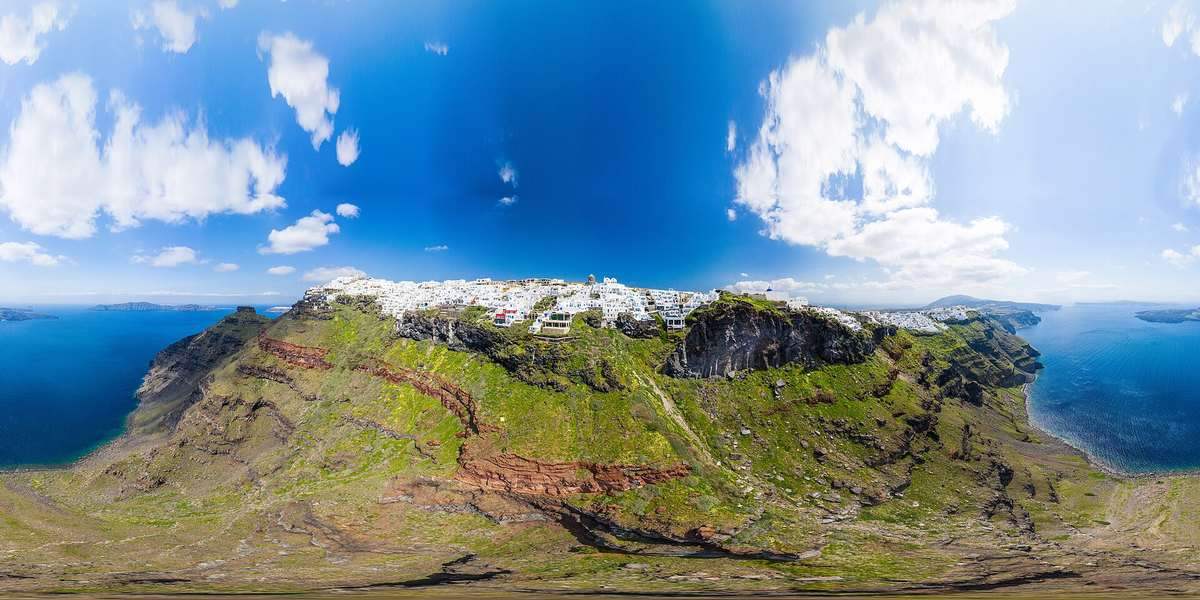
A Santorini 3 day itinerary is the perfect first visit, balancing the Fira-to-Oia hike and the famous sunset, a caldera and volcano cruise, and the ancient site of Akrotiri with wine and the southern villages. This guide sets out the three days hour by hour, with tips for making the most of them. Plan the whole trip with Greece Tours.
Three days is enough for the highlights of the wider Santorini travel guide. This plan covers the essentials. The sections below set out each day.
Is 3 days enough for Santorini?
Three days is enough for Santorini’s main highlights: the caldera villages of Fira and Oia and the sunset, a boat cruise to the volcano and hot springs, and the ruins, wineries and southern villages. It suits a first visit well.
Three days is the classic length for a first trip, and it covers the island’s signature experiences without a punishing pace. You walk the caldera rim from Fira to Oia, watch the sunset, take a cruise to the volcano and hot springs, then explore the history, wine and traditional villages of the south. A fourth or fifth day lets you slow down, add the black-sand beaches and enjoy a more relaxed rhythm, but three days captures the essence. This plan sits set within the wider Santorini itinerary and trims it to the sights first-timers rank highest. Day one belongs to the caldera.
What should you do on day one?
On day one, explore the caldera villages: start in Fira, walk the 10-kilometre Fira-to-Oia path along the cliff in the cool morning through Firostefani and Imerovigli, and finish in Oia for the afternoon and sunset.
Day one is the caldera, Santorini’s heart. Begin in the capital, wandering its clifftop lanes and viewpoints over the bay, then set out mid-morning, before the heat, on the 10-kilometre footpath that follows the rim north through Firostefani and lofty Imerovigli with their blue domes and Skaros Rock, before the trail turns wild on the way to Oia. You reach Oia in the afternoon, explore its whitewashed lanes and windmills, then claim a spot for the sunset over the caldera. Walkers who prefer to skip the trail can bus between the villages. Day one is set out alongside the guide to Fira, the island’s lively capital. Day two heads onto the water.
How do you walk the Fira-to-Oia trail on day one?
Walk the Fira-to-Oia trail early: it runs about 10 kilometres along the caldera rim, takes three to four hours at a steady pace, and passes Firostefani, Imerovigli and Skaros Rock before the wilder final stretch into Oia.
The trail starts at Fira and heads north on paved lanes through Firostefani and Imerovigli, the two quieter villages perched highest on the rim. A short detour drops you toward Skaros Rock, the ruined medieval fortress on a headland below Imerovigli. Past Imerovigli the path turns to dirt and rock, climbing and dipping over open hillside with the caldera on your left the whole way. Wear proper shoes, carry water, and start by nine in the morning to beat the midday heat. The route is set out alongside the guide to the Fira to Oia hike, which covers timings and shade. Oia and its sunset come next.
Where should you watch the Santorini sunset on day one?
Watch the day-one sunset from Oia, where the sun drops behind the caldera and the Byzantine castle ruins draw the biggest crowd. Arrive an hour early for a rail spot, or descend to Ammoudi Bay for a quieter view.
Oia owns the most famous sunset on the island, and the castle ruins at its western tip fill up early. Claim a wall or step by around six in the evening in high season, or find a terrace bar with a caldera view and settle in with a drink. Ammoudi Bay, the little port at the foot of Oia’s steps, trades the crowd for a sea-level view and fresh-fish tavernas. Imerovigli and Firostefani also face west and stay calmer than Oia’s core. The options are set out alongside the guide to the Santorini sunset, with the best-timed viewpoints. Day two turns to the sea.
What should you do on day two?
On day two, take a caldera boat cruise: sail across the bay to hike the active volcano of Nea Kameni, swim at the warm hot springs, often stop at Thirassia, and finish with the sunset from the sea off Oia.
Day two gets you onto the water for the caldera’s other perspective. A cruise sails from the Old Port or Ammoudi Bay across the flooded crater to the black volcanic islet of Nea Kameni, where a short hike climbs to the steaming craters, then anchors off Palea Kameni so you can swim in to the warm, iron-rich hot springs. Catamaran trips add lunch, drinks and a swim stop, and the popular ones round off the day with the sunset viewed from the sea off Oia. It is a relaxed day that shows the volcanic engine of the island. The cruise is set out alongside the guide to the Santorini volcano. The volcano hike itself deserves a closer look.
What is the Nea Kameni volcano hike like?
The Nea Kameni volcano hike is a short, exposed walk on black lava: about 30 to 40 minutes up a gravel path to craters that still steam and smell of sulphur, at the centre of the caldera.
Nea Kameni is the young lava island at the middle of the bay, born from eruptions long after the caldera collapsed. Boats dock at a small jetty and a guide leads the group up a wide gravel track to the summit craters, where vents still hiss and the ground is warm underfoot. There is no shade, so a hat, water and closed shoes matter. The views back across the caldera to the cliff-top villages are the reward, and the geology story ties the whole trip together. The volcano’s formation is set out alongside the guide to the Santorini volcano and its eruption history. The hot springs come right after the climb.
Are the Santorini hot springs worth the swim?
The hot springs off Palea Kameni are worth a dip for the novelty: the water is only mildly warm, tinted rust-orange by iron and sulphur, and you swim from the boat to a small sheltered cove.
The springs sit in a bay off Palea Kameni, the older lava island next to Nea Kameni. Boats anchor a short swim from the shore, and you jump in and paddle toward the warmer, discoloured water near the rocks. It is more lukewarm than hot, and cooler where it mixes with the open sea, so expect a bracing start. The iron in the water stains fabric, so wear a darker or older swimsuit. It is a fun, brief stop rather than a spa. The cruise then often crosses to Thirassia across the strait.
Should you visit Thirassia on the day-two cruise?
Thirassia is worth the stop if your cruise includes it: the small island across the caldera is Santorini without the crowds, with a quiet harbour, a clifftop village and tavernas serving a slow lunch before the sunset leg.
Thirassia broke away from Santorini in the same volcanic collapse and now sits across the water as a sleepy counterpart. Cruises that call there dock at Korfos, the little harbour where a row of tavernas lines the water. You can eat a relaxed lunch, climb the steps or the road to the village of Manolas on the cliff for caldera views, or just swim off the jetty. There are no crowds and no traffic, which is the point. Catamaran itineraries often build in an hour or two here before turning back for the sunset. Day three moves south to the island’s history.
What should you do on day three?
On day three, explore the south and the island’s history: visit the prehistoric ruins of Akrotiri, see the Red Beach nearby, taste at a winery, and wander the medieval village of Pyrgos and the Profitis Ilias monastery.
Day three turns inland and south to history, wine and traditional villages. Start at Akrotiri, the Bronze Age town buried by the great eruption and preserved under ash, a Greek Pompeii, with the striking Red Beach close by. From there, visit one of the island’s wineries, such as Santo Wines or Venetsanos with their caldera views, to taste the crisp Assyrtiko and sweet Vinsanto, before exploring the hilltop village of Pyrgos and, above it, the Profitis Ilias monastery on Santorini’s highest peak for panoramas over the whole island. It is a rewarding mix of culture, wine and calm to end the trip. The southern loop is set out alongside the guide to Pyrgos. Akrotiri itself deserves an early start.
Why start day three at the Akrotiri ruins?
Start day three at Akrotiri because it is the island’s great archaeological site: a Bronze Age town frozen by volcanic ash, with multi-storey houses, drainage and vivid frescoes, all under a modern roof that keeps it cool through the morning.
Akrotiri was a thriving Minoan-era port until the eruption of the seventeenth century BC buried it in ash. Excavation has uncovered paved streets, three-storey buildings, indoor plumbing and painted walls, giving a rare picture of Aegean life before the disaster. A raised walkway leads through the covered site, so it stays shaded even at midday, which makes it the ideal first stop before the heat builds. The frescoes now sit in the museum in Fira, but the town itself is the draw. The site is set out alongside the guide to Akrotiri and its excavation. The Red Beach lies a short walk beyond the entrance.
Is the Red Beach worth adding on day three?
The Red Beach is worth a short look from the viewpoint, a striking cove backed by rust-red volcanic cliffs beside Akrotiri. Rockfall has made the sand itself risky, so admire it from the path rather than sunbathing below.
The Red Beach sits just past the Akrotiri site, reached by a short, rough trail from the car park to a viewpoint over the cove. Its dark red and black cliffs, coloured by iron-rich lava, drop straight to the water, and the effect from above is dramatic. Rockfalls have closed the beach itself at times and made lying on the sand hazardous, so the safer plan is to photograph it from the ridge and move on. It pairs neatly with Akrotiri as a quick stop before the wineries. The cove is set out alongside the guide to the Red Beach and its access. Wine tasting follows in the afternoon.
Where should you taste wine on day three?
Taste wine at a caldera-view winery on day three: Santo Wines, Venetsanos and Argyros pour the island’s crisp dry Assyrtiko and sweet sun-dried Vinsanto, grown on volcanic soil in low basket-woven vines that resist the wind.
Santorini wine is unlike any other, grown without irrigation on volcanic pumice in kouloura vines trained into low, coiled baskets that shield the grapes from wind and sun. Santo Wines above Pyrgos has the widest caldera terrace and a flight of local varieties, while Venetsanos below it and Argyros in the centre offer quieter tastings. Order a flight that includes the mineral-sharp Assyrtiko and the amber, honeyed Vinsanto for the full range. An afternoon visit sits well between Akrotiri and Pyrgos on the day-three loop. The cellars are set out alongside the guide to Santorini wine and its grape varieties. Pyrgos crowns the day at sunset.
What makes Pyrgos and Profitis Ilias a good end to day three?
Pyrgos and Profitis Ilias close day three well: Pyrgos is a medieval hilltop village of stacked white lanes and a Venetian castle, and the monastery of Profitis Ilias crowns the island’s highest peak with panoramic views inland and to sea.
Pyrgos was the island’s capital before Fira, and its concentric lanes climb to a ruined Venetian kastro with rooftop views over the vineyards and both coasts. It stays far quieter than Oia, so late afternoon here feels calm after a busy day. Above the village, the monastery of Profitis Ilias sits on the summit at just over 550 metres, the highest point on Santorini, with a sweeping outlook that reaches to the caldera and neighbouring islands. Watching the light soften from up here is a fine, uncrowded alternative to the Oia crush. The village is set out alongside the guide to Pyrgos and its castle. Where to base yourself shapes the whole plan.
Where should you stay for this itinerary?
Stay in Fira for this itinerary if you want a central base with transport and nightlife, or in Oia for the caldera views and calm. Firostefani and Imerovigli split the difference, with rim views and a short walk to Fira.
Fira sits at the centre of the bus network and puts restaurants, the cable car and cruise links on your doorstep, which suits a three-day trip that leans on public transport. Oia is quieter and prettier but pricier and further from the hub, adding a bus ride to each day. Firostefani and Imerovigli, on the rim between the two, give caldera views with an easy walk into Fira and calmer evenings. Budget travellers often base in Karterados or the beach towns of Kamari and Perissa and commute in. The trade-offs are set out alongside the guide to where to stay in Santorini. Getting to the island comes first of all in the planning.
How do you get to Santorini?
Reach Santorini by air or sea: the airport takes direct flights from Athens and, in summer, across Europe, while high-speed ferries from Piraeus, Crete and the other Cyclades dock at Athinios, the port below the caldera cliffs.
Flying is the quickest route, with a 45-minute hop from Athens and seasonal direct services from cities across Europe landing at the small airport on the east side of the island. Ferries are the scenic alternative: fast catamarans from Piraeus take around five hours, and shorter crossings connect Crete, Naxos, Paros, Ios and Mykonos. Boats arrive at Athinios, the working port at the base of the cliffs, where a switchback road climbs to Fira. Book ferries early in peak season, as popular sailings sell out. The routes are set out alongside the guide to how to get to Santorini. Moving around once you land is the next question.
How do you get around Santorini in 3 days?
Get around Santorini by the cheap KTEL buses hubbed in Fira, by a hired car, quad or scooter for the south, and by the caldera cruise on day two. A car earns its keep on the day-three southern loop.
KTEL buses run frequently between Fira and the main villages and beaches for two or three euros a ride, all radiating from the central station in Fira, which covers days one and two with ease. The Fira-to-Oia walk handles most of day one on foot, and the boat cruise takes care of day two entirely. Day three, with Akrotiri, the wineries and Pyrgos spread across the south, is where a rented car, quad or scooter saves time and backtracking. Taxis are scarce and pricey, so pre-book for the airport or port. The options are set out alongside the guide to the Santorini bus network. Budgeting the trip helps you decide.
What budget do you need for 3 days in Santorini?
Budget for Santorini around your priorities: accommodation is the biggest cost, followed by the day-two cruise and dining. Buses and site entries are cheap, so a mid-range three-day trip runs comfortably once you fix your hotel and cruise.
Accommodation drives the total, with caldera-view rooms in Oia commanding the highest rates and inland or beach-town stays costing far less. The day-two catamaran cruise is the single biggest activity outlay, and dinners with a view add up, so booking those in advance helps you plan. Against that, KTEL buses cost only a euro or two per ride, and the Akrotiri and Ancient Thera site tickets are modest. Choosing an inland base and eating at village tavernas rather than caldera terraces trims the total sharply. A cost-conscious approach is set out alongside the guide to visiting Santorini by bus to keep transport cheap. Timing your trip matters for the budget too.
When is the best time to run this 3-day itinerary?
Run this itinerary in late spring or early autumn: the weeks of mid to late spring and again from mid-September into October bring warm, calm weather, open cruises and thinner crowds, avoiding the intense high-summer heat and peak prices.
Late spring and early autumn are the sweet spots, with comfortable temperatures for the Fira-to-Oia hike, warm-enough seas for the hot-springs swim, and boat cruises running on full schedules. High summer delivers reliable sun but fierce midday heat that makes the trail punishing, plus the densest crowds and steepest rates. Winter is quiet and cheap, though cruises pause and ferry schedules thin out. Aiming for the shoulder weeks gives the best balance of weather, availability and space to enjoy each site. The seasons are set out alongside the guide to the best time to visit Santorini. One ethical choice deserves a clear note.
Why should you avoid the donkey rides?
Avoid the donkey rides up the Fira cliff on welfare grounds: the animals carry heavy loads up hundreds of steps in extreme heat, often with poor rest and care. Take the cable car or walk the steps instead.
The donkeys and mules that shuttle passengers up the old stepped path from the Fira Old Port work long days in summer heat, hauling people and luggage up around 500 steps with limited shade, water or rest. Animal-welfare groups have documented overloading and sores, and heavier riders add to the strain. The cable car covers the same climb in a couple of minutes for a small fare, and walking down the steps is free and quick. Choosing the cable car or your own feet removes the demand that keeps the practice going. This is a simple, kind swap that costs you almost nothing. Practical packing points round out the plan.
What practical information helps on this trip?
Pack for practicalities: bring sturdy shoes for the trail and volcano, a hat and water for shadeless sites, a darker swimsuit for the springs, and cash for buses and small tavernas. Book the cruise and ferries ahead in peak season.
Sturdy shoes matter for the rocky Fira-to-Oia path and the gravel volcano climb, and a sun hat with water is essential at the exposed sites. A darker or older swimsuit spares your good one from the iron-stained hot springs. Cards are widely taken, but carry euros for bus fares, village tavernas and site kiosks. The pace is walkable but hilly, so factor in steps everywhere on the caldera. The narrow lanes get busy at sunset, so give yourself time. A rented car for day three is worth pre-booking in summer. General planning notes are set out alongside the guide to Santorini car rental for the southern loop. Travellers with longer to spare can stretch the plan.
How do you adapt this for 4 or 5 days?
Add beach and village days for four or five days: a fourth day suits the black-sand beaches of Kamari and Perissa, and a fifth adds Ancient Thera or a day trip to a neighbouring island.
A fourth day is best spent slowing down: swim and lunch at the black-sand beaches of Kamari and Perissa, hike up to the ruins of Ancient Thera on the ridge between them, or revisit Oia at a gentler pace without the sunset crush. A fifth day opens up more of the island’s traditional villages such as Megalochori, Emporio and Finikia, a cooking class, or a fast ferry to Ios or Naxos for a change of scene. Longer stays let you split the busy day-one caldera walk across two mornings. The wider plan is set out alongside the guide to the full Santorini itinerary for extra days. Oia rewards a closer look on day one.
How should you spend your afternoon in Oia?
Spend the Oia afternoon on foot: wander the marble lanes and blue-domed churches, browse the galleries, walk to the ruined castle at the tip, then descend to Ammoudi Bay for a swim or an early seafood dinner.
Oia is the postcard village at the northern end of the caldera, its whitewashed houses and cobbled paths tumbling down the cliff toward the sea. Trace the main pedestrian street from the bus stop to the old castle ruins, ducking into galleries and craft shops, and photograph the restored windmills on the point. The 300-odd steps down to Ammoudi Bay reward the descent with fishing boats and tavernas built onto the rock, where the grilled catch is fresh. Return up the steps in good time to secure your sunset spot. Oia is set out alongside the guide to Oia and its lanes. Skaros Rock adds a short detour on the day-one walk.
Is Skaros Rock worth the detour on the Fira-to-Oia walk?
Skaros Rock is worth the short detour below Imerovigli: a rocky headland that once held the island’s main medieval fortress, reached by a 15-minute downhill path with wide caldera views and a tiny chapel on the far side.
Skaros Rock juts out from the cliff below Imerovigli and was the fortified capital in the Venetian era, when raids drove the population to defend the rock. Earthquakes toppled the castle long ago, and only foundations remain, but the promontory itself is a fine viewpoint over the caldera. A signed path drops from Imerovigli and takes around 15 minutes each way, with a small whitewashed chapel of Theoskepasti tucked on the seaward side. It is an easy, rewarding add-on for walkers with energy to spare mid-morning on day one. The rock is set out alongside the guide to Skaros Rock and its castle history. The full list of highlights ties the three days together.
What are the best things to do in Santorini in 3 days?
The best things to do in three days are the Fira-to-Oia caldera walk, the Oia sunset, a volcano-and-hot-springs cruise, the Akrotiri ruins, a caldera-view wine tasting, and the medieval village of Pyrgos with the Profitis Ilias monastery above it.
These six experiences form the spine of any strong three-day plan and slot into one day each on the caldera, the water and the south. Walking from Fira to Oia and watching the sunset covers the clifftop scenery, the cruise reveals the volcanic origin of the bay, and the southern loop layers in history, wine and quiet villages. Each is well served by bus, boat or a short drive, so the whole set fits into three unhurried days. Adding a black-sand beach or a cooking class fills any spare time. The wider list is set out alongside the guide to things to do around Fira and the caldera. Quieter sunset spots suit those who skip the Oia crowd.
Where can you watch the sunset away from the Oia crowds?
Watch the sunset from Imerovigli, Firostefani or a Fira terrace to escape the Oia crush: all three face west over the caldera, and Skaros Rock or a caldera-edge bar gives the same colours with room to breathe.
Oia draws the largest sunset crowd, but the whole western rim shares the same view of the sun dropping behind the caldera. Imerovigli, the highest village, has open terraces and the Skaros headland for an uncrowded outlook. Firostefani, a short walk from Fira, lines the cliff with quieter tavernas and hotel decks. Even central Fira has caldera-edge bars where a sundowner comes with the same glowing sky. Choosing one of these on day one spares you the elbow-to-elbow scramble at the Oia castle while keeping the spectacle intact. The rim views are set out alongside the guide to the wider Santorini caldera and its villages. Day one still starts calmly in Fira.
How should you spend the morning in Fira on day one?
Spend the Fira morning easing in: take a coffee on a caldera terrace, stroll the clifftop path past the cathedral and the cable-car station, browse the shops, then set off north on the Fira-to-Oia trail before the midday heat builds.
Fira, the island’s capital, is the natural starting point, sitting mid-way along the caldera rim with the widest choice of cafes and viewpoints. Begin with breakfast on a terrace looking over the bay, then follow the pedestrian path past the Orthodox and Catholic cathedrals to the top of the cable car, watching the boats come in from the cruise anchorage below. Small shops and the archaeological museum with the Akrotiri frescoes fill an easy hour before the walk. Setting off toward Firostefani by mid-morning keeps the trail cool and the light soft. The capital is set out alongside the guide to the Fira-to-Oia hike and its start point. The questions below cover the points travellers ask most.
Frequently Asked Questions
Is 3 days enough for Santorini?
Three days is enough for Santorini’s main highlights: the caldera villages of Fira and Oia and the sunset, a boat cruise to the volcano and hot springs, and the ruins, wineries and southern villages. It suits a first visit, though a fourth or fifth day adds beaches and a slower pace.
What is the best 3 day Santorini itinerary?
The best 3 day itinerary spends day one on the caldera villages of Fira and Oia and the sunset, walking the Fira-to-Oia path; day two on a caldera cruise to the volcano and hot springs; and day three on Akrotiri, a winery and the village of Pyrgos with the Profitis Ilias monastery.
How do you get around Santorini in 3 days?
You get around by the cheap KTEL buses hubbed in Fira, by hiring a car or quad for flexibility, or by taxi. A boat cruise covers day two, and walking the Fira-to-Oia path covers most of day one, so a car is useful mainly for the southern sights on day three.
What budget do you need for 3 days in Santorini?
Accommodation is the largest cost, followed by the day-two cruise and view dinners, while buses and site tickets stay cheap. An inland or beach-town base and village tavernas cut the total sharply, so you can run a comfortable three-day trip once the hotel and cruise are booked.
When is the best time to visit Santorini for 3 days?
Late spring and early autumn, in the weeks of mid to late spring and from mid-September into October, bring warm, calm weather, full cruise schedules and thinner crowds. High summer is hot and busy, while winter is quiet and cheap but with reduced boat and ferry services.
Can you do this itinerary without renting a car?
Yes, you can run this itinerary car-free. Buses from Fira and the day-one walk and day-two cruise cover the first two days easily. Day three’s southern sights are the only stretch where a car helps, and a guided south-island tour or a quad hire can replace it.