
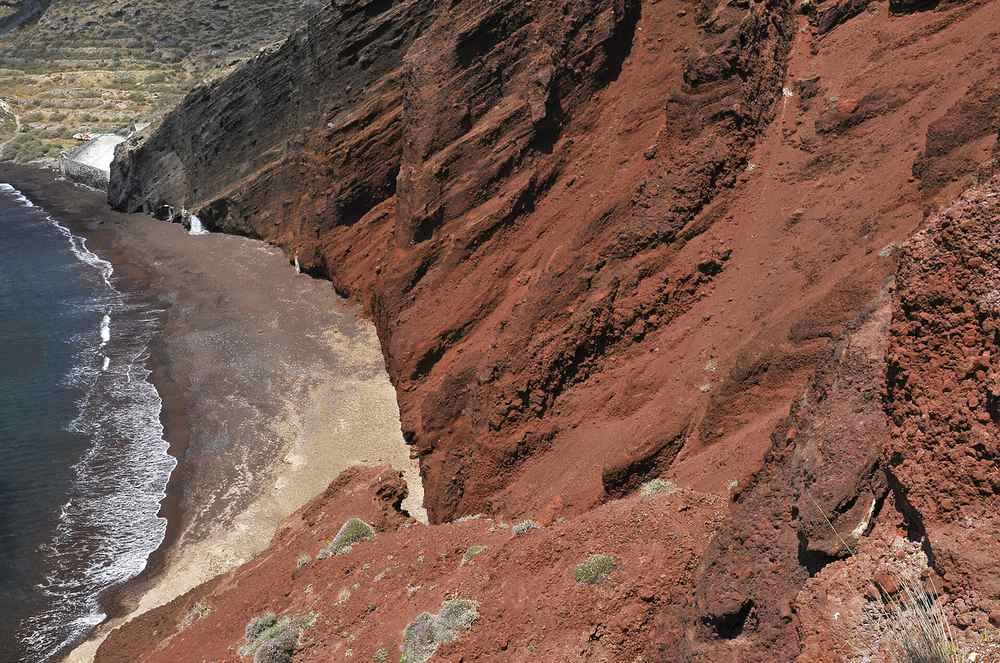
Red Beach Santorini is one of the island’s most striking sights, a cove of dark sand framed by towering rust-red volcanic cliffs near Akrotiri. Spectacular but prone to rockfall, it must be visited with care. This guide covers how to visit safely, by foot or boat, the safety concerns and what to bring. Plan the whole trip with Greece Tours.
The Red Beach is a dramatic volcanic landmark in the wider Santorini travel guide. It lies in the south-west by the Akrotiri site. The sections below cover the visit.
What is the Red Beach?
The Red Beach is a small cove on the south-west coast of Santorini near Akrotiri, named for the rust-red volcanic cliffs and dark red sand around it. The red rock, dark sand and turquoise sea make it the island’s most photographed beach.
The Red Beach is one of Santorini’s natural wonders. It is tucked beneath sheer, fiery-red lava cliffs near the ancient site of Akrotiri in the south-west of the island. The beach takes its name from the deep red and rust-coloured volcanic rock and sand that surround the cove, a colour born of the island’s violent volcanic past.
The colours are what make it unforgettable. The vivid red of the cliffs against the dark sand and the clear Aegean blue is genuinely arresting, and it is the image people picture when they imagine Santorini’s volcanic shores. Small and dramatic, it is more a spectacle to admire than a place for a lazy beach day, set within the wider Santorini beaches.
The setting explains the drama. The cliffs are made of soft, iron-rich volcanic rock that oxidised to red over the ages, the same forces that shaped the whole island. The cove is compact, hemmed in by the towering rock walls, so it feels enclosed and elemental, a pocket of raw geology rather than a broad sandy strand.
Is the Red Beach safe?
The Red Beach is officially classed as unsafe because the towering cliffs are prone to landslides and falling rocks, and authorities discourage going down onto the sand. Barricades mark the risk zones, and you must never sit directly under the red cliffs.
The beach’s beauty comes with genuine risk. The soft volcanic cliffs above the cove erode constantly and are prone to sudden landslides and rockfall. For that reason the Red Beach is officially classified as unsafe, and hotels are even asked to discourage guests from descending to it. Rockfalls have injured visitors here in the past.
In practice, care makes the difference. People still visit in numbers, but you must take the hazard seriously. Stay within any barricaded safe zones, keep well away from the base of the cliffs, and never sit or lie directly beneath the red rock face, where a falling stone would land. Treating the cliffs with respect lets you enjoy the sight while staying safe, set out alongside the guide to Akrotiri nearby.
The viewpoint is the safest vantage. A path over the headland reaches a raised lookout that takes in the whole cove from a stable distance, well clear of the unstable slopes below. Most visitors are content to admire and photograph the beach from here, avoiding the loose, rocky descent altogether, which is the sensible choice on a windy or busy day.
How do you get to the Red Beach?
You reach the Red Beach by car, ATV or bus to Akrotiri, parking by the archaeological site, then walking a short, rocky path to a viewpoint and down to the cove. The safest, most scenic option is by boat on a catamaran cruise.
There are three main ways to experience the Red Beach. Most independent visitors drive a hire car or ATV, or take the Fira-to-Akrotiri bus, following signs for ancient Akrotiri to the small car park beside the excavations. From there the walking route begins, so the descent is the same whichever way you arrive at the site.
The footpath demands good shoes. A rocky trail, narrow and slippery in places, leads over a headland to the viewpoint and then down to the cove, so grippy closed-toe shoes are essential. The final scramble onto the sand crosses loose rock beneath the cliffs, which is the riskiest stretch and the part most visitors choose to skip.
The boat approach is the finest and safest. Seeing the Red Beach from the water on a catamaran or boat cruise avoids the unstable descent entirely and frames the red cliffs beautifully from the sea. It is a popular cruise stop that often pairs with the nearby White Beach, set out alongside the guides to Santorini boat tours and getting around.
What should you bring to the Red Beach?
Bring closed-toe shoes for the uneven path, ample water and a snack, and strong sun protection, as there are no sunbeds, umbrellas, changing rooms or beach bars on the sand. The cove has no shade, so bring a hat and a towel.
The Red Beach has no facilities, so come self-sufficient. Wear closed-toe shoes with good grip for the rocky, uneven path, and pack ample water and a snack, since there are no shops or kiosks at the cove. Strong sun protection matters, as there is little natural shade and the red rock reflects the heat.
A short list of extras makes the trip smoother. A hat, sunglasses and a towel to sit on cover the lack of sunbeds and umbrellas, and water shoes help on the coarse, pebbly sand and the rocky shallows if you swim. A dry bag or waterproof case protects a phone or camera from sand and spray while you photograph the cliffs, set out alongside the guide to a Santorini beaches day.
When is the best time to visit?
The best time to visit the Red Beach is before about 10am, to beat the crowds, the heat and the harshest light. The shoulder months of May, June and September offer warm-enough swimming with easier conditions and softer light than peak summer.
Timing shapes the whole experience. Arriving before about 10am means quieter sand, an emptier car park and softer light for photos, before the tour groups and cruise excursions arrive. By the middle of a summer day the cove is hot, busy and glaring, so an early start is the single best move for a calm visit.
Season matters just as the hour does. The shoulder months of May, June and September bring warm-enough water for a swim with gentler heat and thinner crowds than July and August. These quieter periods also make the rocky path easier and the viewpoint less congested, set out alongside the guide to the best time to visit Santorini.
Weather is worth a check before you go. On very windy days the loose cliffs are more hazardous and the boat approach can be choppy, so a calm, clear morning is ideal. With sensible footwear, an early start and respect for the cliffs, the Red Beach rewards the effort with a sight found nowhere else on the island.
Can you swim at the Red Beach?
You can swim at the Red Beach when the sea is calm, and the water is clear and good for snorkelling over the rocky seabed. The bottom is pebbly, so water shoes help. Stay clear of the cliff base where rocks can fall.
Swimming here is a striking experience. The water is clear and deep-blue against the red cliffs, and the rocky seabed draws snorkellers looking for fish among the volcanic boulders. On a calm day it is a memorable place to cool off, with the red rock walls rising straight from the shallows around you.
Conditions call for a little caution. The shore is coarse pebble rather than soft sand, so water shoes make wading in comfortable, and the seabed drops away over rocks rather than a gentle slope. Keep away from the foot of the cliffs while in the water, since the same rockfall risk applies at the shoreline, set out alongside the guide to Santorini snorkelling.
What else is near the Red Beach?
Near the Red Beach are the ancient site of Akrotiri, the White Beach reached by boat, and the village of Akrotiri with its lighthouse. Visitors often combine the Red Beach viewpoint with the Bronze Age excavations and a south-coast boat trip in one outing.
Akrotiri makes a natural pairing. The Bronze Age town buried by the volcanic eruption sits right beside the Red Beach car park, so a single trip can take in both the geology and the archaeology of the island’s south-west corner. The site is roofed and shaded, a cool contrast to the exposed cove nearby.
The coast beyond rewards a boat trip. The White Beach, with its pale cliffs, lies just around the headland and is reached only by sea, and the Akrotiri lighthouse marks the island’s south-western tip with sweeping views. Linking the Red Beach viewpoint, Akrotiri and a south-coast cruise builds a full and varied day, set within the wider Santorini day trips.
Where is the Red Beach on Santorini?
The Red Beach sits on the south-west tip of Santorini, beside the ancient site of Akrotiri, about 12 kilometres from Fira. It faces the open Aegean rather than the caldera, reached by the Akrotiri road and a short walking path from the car park.
The beach lies at the island’s quieter, wilder end. Akrotiri and the Red Beach occupy the south-western headland, well away from the caldera villages of Fira and Oia to the north. This corner of Santorini feels more rugged and open, facing the wide sea rather than the sheltered volcanic bay, which shapes both the swimming and the light.
Getting there is straightforward by road. The drive from Fira takes roughly twenty to thirty minutes, following signs for Akrotiri to the car park beside the ruins. From there the marked footpath is the only way to the cove itself, so the last stretch is on foot regardless of how you arrive, set out alongside the guide to Akrotiri.
Is the Red Beach worth visiting?
The Red Beach is worth visiting for its unique volcanic scenery, even if you only view it from the safe lookout above. The red cliffs and dark sand are unlike anywhere else on Santorini, and it pairs well with Akrotiri and a boat cruise.
The beach earns its fame on looks alone. The wall of fiery red rock rising from dark sand and blue water is a genuinely singular sight, and reason enough to make the trip even without swimming. For photographers and geology lovers it is one of the island’s highlights, best caught in the softer light of early morning.
The setting rewards a combined visit. Because the Red Beach sits right beside Akrotiri, and the White Beach and lighthouse lie close by, it slots neatly into a wider south-coast outing rather than a trip on its own. Seen with respect for the cliffs and paired with the nearby sights, it delivers a memorable half-day, set within the wider Santorini beaches.
Manage your expectations and it never disappoints. The Red Beach is a short, wild cove rather than a resort strand, with no loungers and a testing path, so it rewards visitors who come for the scenery rather than a full day sunbathing. Approached that way, as a dramatic natural landmark to admire, photograph and briefly swim at, it stands among the most memorable sights on the island.
Frequently Asked Questions
Can you still visit the Red Beach in Santorini?
You can still visit the Red Beach, but it is officially classed as unsafe due to landslides and rockfall from the unstable cliffs. Most admire it from the viewpoint above or see it from a boat cruise; if you go down, stay in marked safe zones and away from the cliffs.
How do you get to the Red Beach?
You reach the Red Beach by car, ATV or bus to Akrotiri, parking by the archaeological site, then walking a short, rocky path to a viewpoint and down to the cove in grippy shoes. The safest and most scenic option is by boat on a catamaran cruise from the sea.
Are there facilities at the Red Beach?
There are no facilities at the Red Beach, no sunbeds, umbrellas, changing rooms or beach bars on the sand. Bring closed-toe shoes for the path, plenty of water and a snack, and sun protection, as there is little shade, and go early to beat the crowds and heat.
Why is the Red Beach red?
The Red Beach is red because its cliffs and sand are made of iron-rich volcanic rock that oxidised to deep red and rust over the ages. The colour comes from the same volcanic forces that formed Santorini, giving the cove its striking contrast of red rock, dark sand and blue sea.