
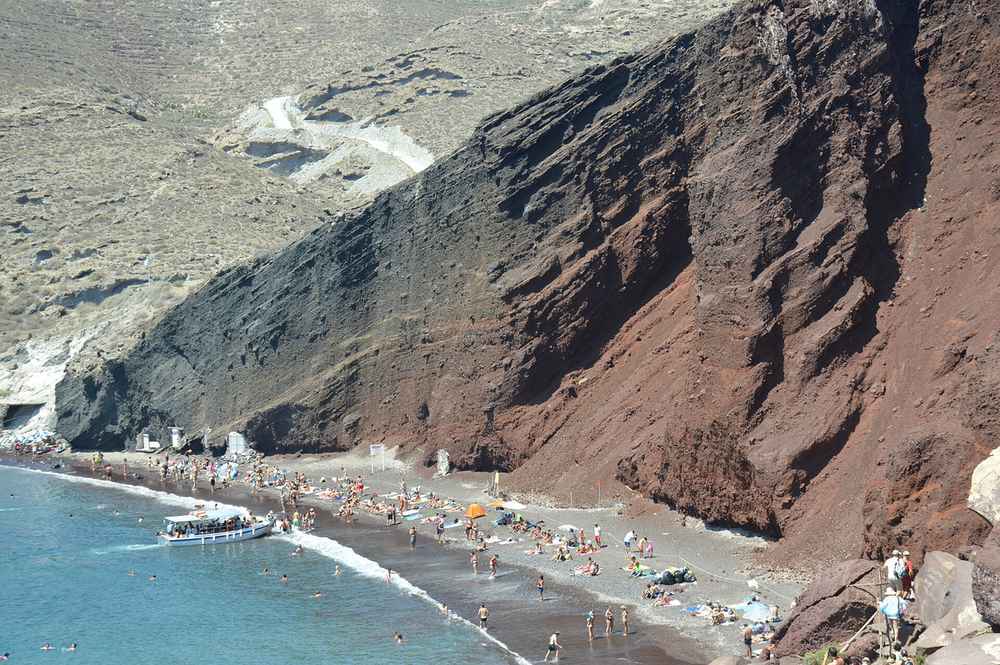
Santorini snorkeling is best at Caldera Beach, the Red and White beaches, Ammoudi Bay below Oia and the volcanic islet of Nea Kameni, with clear water, underwater caves, lava walls and plenty of fish. This guide covers the best spots, what you will see, boat trips and tips for snorkeling.
Snorkeling reveals the volcanic underwater world of the wider Santorini travel guide. The water is clear and rocky. The sections below cover snorkeling.
What is snorkeling in Santorini like?
Snorkeling in Santorini means clear, deep volcanic water over rocky seabeds rather than sandy shallows, with black lava formations, underwater caves and walls. The island rims the largest sea-filled caldera on Earth, giving striking scenery just below the surface.
Snorkeling here is shaped by the volcano. Instead of gentle sandy shallows, Santorini offers clear, often deep water over rocky, sculptural seabeds of black lava, with submerged caves, cliffs and walls created by the eruptions that formed the caldera. Visibility is excellent in calm summer conditions, and the rocky bottom draws bream, wrasse, sea urchins and the occasional octopus.
The island sits on the edge of the world’s largest sea-filled caldera, so the underwater landscape is dramatic and unlike a typical sandy Mediterranean coast. A mask and snorkel turn the beaches and coves into windows onto this volcanic world, set within the wider Santorini beaches. The best spots are easy to reach from the shore or by boat.
What are the best snorkeling spots?
The best snorkeling spots are Caldera Beach, the only beach inside the crater reachable on foot, the Red Beach and White Beach near Akrotiri, and Ammoudi Bay below Oia. Each has clear water, rocky seabeds, caves and fish.
A short list of spots stands out. Caldera Beach, a black-sand beach and the only one accessible by land inside the volcanic crater, has deep, clear water with fish and occasional sea turtles. The Red Beach near Akrotiri, framed by rust-red cliffs, holds clear water rich with bream, sea urchins and octopus among the rocks. The boat-only White Beach nearby is prized for its pale cliffs and underwater caves.
Ammoudi Bay, the small harbour below Oia, is a quieter gem where you can swim out to a low rock islet and explore caves and schools of fish in turquoise water. Each spot pairs striking scenery above and below the surface, set out alongside the guides to the Red Beach, White Beach and Ammoudi Bay. Boat trips reach the wilder, harder-to-access spots.
Which other beaches are worth snorkeling?
Mesa Pigadia, Kamari, Perissa and Vlychada widen the snorkeling map beyond the caldera. Mesa Pigadia has rocky corners near Akrotiri, while the black-sand east-coast beaches offer calmer entries and rocky edges where fish gather.
Mesa Pigadia sits on the south coast below the Akrotiri headland, reached by a short track, and its rocky flanks and clear water make it a low-key snorkeling stop away from the busier caldera beaches. Kamari and Perissa, the long black-sand beaches on the island’s southeast side, are calmer for swimming, and their rocky headlands and the base of Mesa Vouno hold sea bream, wrasse and urchins for snorkelers who work along the edges.
Vlychada, on the southern coast beneath sculpted grey cliffs, adds another quieter option with rocky sections at either end of the sand. These east and south coast beaches face away from the caldera, so the water tends to be shallower and gentler than the deep crater spots, which suits families and first-time snorkelers. The nearby Kamari beach and Perissa beach guides cover access and facilities in detail.
Can you snorkel on a boat trip?
You can snorkel on a boat trip, and caldera and sailing cruises stop at snorkel spots such as the Red and White beaches, hidden coves and the waters around Nea Kameni. Catamaran cruises usually provide masks and snorkels on board.
A boat opens up the best snorkeling. Caldera and sailing cruises build swimming and snorkeling stops into the itinerary at spots hard to reach from land, anchoring off the Red Beach, the White Beach and quiet coves where you slip into the clear water straight from the deck. The waters around Nea Kameni, the volcanic islet at the centre of the caldera, are a particular draw, with a sunken shipwreck on the seabed that has become a magnet for fish.
Catamaran cruises typically supply masks, snorkels and sometimes fins on board, along with food and drinks, which makes a half-day trip a comfortable way to snorkel without carrying gear. The volcanic hot springs off Nea Kameni and Palea Kameni add a warm-water stop that many cruises combine with the snorkeling. These trips are set out alongside the guides to Santorini boat tours and Santorini sailing tours. A short checklist of tips helps.
Do you need a boat tour to snorkel?
You do not need a boat tour to snorkel in Santorini. Caldera Beach, the Red Beach, Ammoudi Bay, Kamari and Perissa are reachable from shore. A boat tour adds the White Beach, remote coves and the Nea Kameni shipwreck.
Shore snorkeling covers a wide range of the island. Caldera Beach, the Red Beach, Ammoudi Bay, Mesa Pigadia and the black-sand east-coast beaches are all reachable by road, footpath or a short walk, so a rental mask and a pair of water shoes are enough to explore the volcanic seabed on your own schedule.
A boat tour earns its place by reaching what the shore cannot. The White Beach opens only from the water, the coves along the caldera wall have no land access, and the Nea Kameni shipwreck lies offshore in the crater. Travellers who want the full range of spots pair a day or two of shore snorkeling with one caldera cruise, which balances freedom with reach.
What tips help for snorkeling?
Bring or rent water shoes for the rocky entries and sea urchins, pack your own mask for a better fit, and snorkel in the calm morning before the afternoon wind. Be a confident swimmer, and snorkel from June to October.
A little preparation makes snorkeling safe and comfortable. Water shoes protect against the volcanic gravel and sea urchins that lurk among the stones, and your own mask ensures a leak-free fit, though gear can be rented or comes with boat trips. The sea is calmest in the morning, before the afternoon meltemi wind ruffles the surface, so an early start gives the clearest water and easiest entry.
The best caldera spots have deep water and the boat-access coves lie far from shore, so confident swimming and a float ring add a safety margin. The warm, clear season runs from June to October, when the sea settles and visibility peaks. These points sit alongside the guides to Santorini diving and the best time to visit Santorini. The questions below cover what travellers ask most.
What will you see snorkeling in Santorini?
Snorkeling in Santorini reveals black lava reefs, walls and caves rather than coral, with modest Mediterranean marine life. Sea bream, wrasse, sea urchins and the occasional octopus live among the rocks, and sea turtles turn up at some caldera spots.
The scenery is the headline. Black volcanic rock forms reefs, ledges, walls and cave mouths on the seabed, and the clear water lets you trace these formations well below the surface. The colour and texture of the lava, not tropical coral, define the underwater view, which makes Santorini distinct from sandy Aegean islands.
Marine life is modest rather than abundant. Sea bream and wrasse are the common fish, sea urchins cling to the rocks, and an octopus tucked into a crevice is a frequent find for patient snorkelers. Sea turtles appear at Caldera Beach and around the volcanic islets, and small schools of fish gather in the shaded water of the caves and shipwreck at Nea Kameni.
When is the best time to snorkel in Santorini?
The best time to snorkel in Santorini runs from June to October, when the sea is warm, calm and clear. July and August are warmest but busiest, while June and September combine settled water with thinner crowds and steadier conditions.
Water temperature drives the season. The sea warms through late spring, holds comfortable warmth from June to October, and cools again into autumn, so this window covers the reliable snorkeling months. Morning outings across this period give the calmest surface, since the meltemi wind tends to rise through the afternoon and roughen the caldera.
The shoulder months reward planning. June and September deliver warm, clear water with fewer visitors at the Red Beach, Ammoudi Bay and the boat coves, which makes snorkeling calmer and parking or boarding easier. Peak July and August bring the warmest sea and the fullest cruise schedule, at the cost of crowds at the popular spots.
Who does snorkeling in Santorini suit?
Snorkeling in Santorini suits confident swimmers who value dramatic volcanic scenery over tropical fish. Families find calm entries at the east-coast beaches, while strong swimmers reach the deep caldera spots and the coves and shipwreck by boat.
| Snorkeler type | Best spots | What to expect |
|---|---|---|
| Families and beginners | Kamari, Perissa, Vlychada | Calmer black-sand entries, shallower water, rocky edges with fish |
| Confident shore snorkelers | Caldera Beach, Red Beach, Ammoudi Bay | Deep clear water, lava walls, caves, occasional turtles |
| Boat-tour snorkelers | White Beach, caldera coves, Nea Kameni | Gear supplied, remote water, the sunken shipwreck |
Match the spot to your comfort in the water. The east-coast beaches give beginners and families a gentle introduction, the caldera beaches reward strong swimmers with the most dramatic seabed, and a catamaran cruise hands the most remote water to anyone happy to snorkel straight from a boat. This range makes the island workable for a mix of abilities on one trip.
Frequently Asked Questions
Is Santorini good for snorkeling?
Santorini is good for snorkeling, with clear, deep volcanic water over rocky seabeds, underwater caves, lava walls and fish. Sitting on the rim of the world’s largest sea-filled caldera, the island has dramatic underwater scenery at spots like Caldera Beach, the Red Beach and Ammoudi Bay. The marine life is modest Mediterranean rather than tropical.
Where are the best snorkeling spots in Santorini?
The best snorkeling spots are Caldera Beach, the only beach inside the crater reachable on foot, the Red Beach and boat-only White Beach near Akrotiri, and Ammoudi Bay below Oia. Mesa Pigadia, Kamari, Perissa and Vlychada add calmer options, and boat cruises snorkel around Nea Kameni, where a sunken shipwreck attracts fish.
What will you see snorkeling in Santorini?
You will see black lava reefs, walls and caves rather than coral, with modest Mediterranean marine life. Sea bream, wrasse and sea urchins are common, an octopus often hides in the rocks, and sea turtles turn up at Caldera Beach and around the volcanic islets. The clear water and volcanic seabed are the main attraction.
Do you need a boat tour to snorkel in Santorini?
You do not need a boat tour to snorkel in Santorini. Caldera Beach, the Red Beach, Ammoudi Bay, Kamari and Perissa are reachable from shore with a mask and water shoes. A boat tour adds the White Beach, the remote caldera coves and the Nea Kameni shipwreck, which have no land access.
What should you bring for snorkeling in Santorini?
Bring water shoes for the rocky entries and sea urchins, and ideally your own mask for a better fit, though gear can be rented or comes with boat trips. Snorkel in the calm morning before the afternoon wind, be a confident swimmer for the deep caldera spots, and go from June to October.
When is the best time to snorkel in Santorini?
The best time to snorkel in Santorini is June to October, when the sea is warm, calm and clear. June and September combine settled water with thinner crowds, while July and August are warmest and busiest. Morning outings give the calmest surface, before the afternoon meltemi wind picks up across the caldera.