
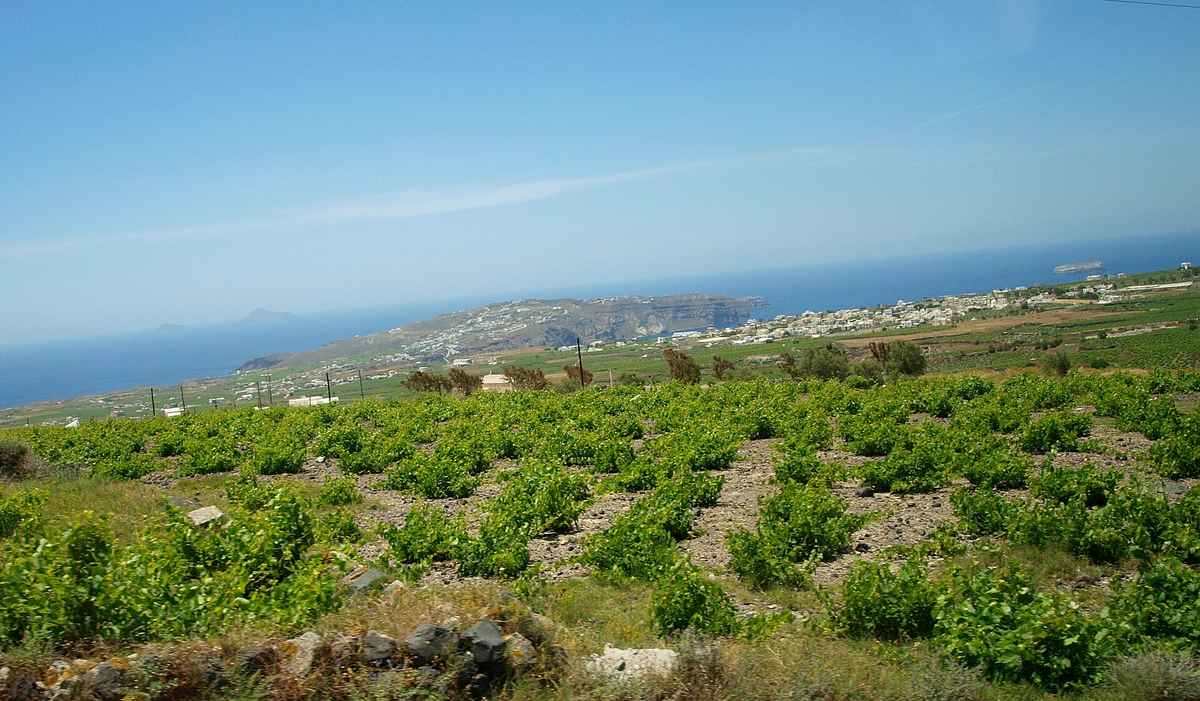
The best Santorini wineries, from clifftop Santo Wines and Venetsanos to family estates inland, pour the island’s crisp, mineral Assyrtiko and sweet Vinsanto amid volcanic vineyards and caldera views. This guide covers the top wineries, the wines, the tours, the cost and tips for visiting.
Wine tasting is a signature experience of the wider Santorini travel guide. The volcanic soil makes the wine unique. The sections below cover the wineries.
What are the best wineries to visit?
The best wineries are Santo Wines and Venetsanos for their caldera and sunset views, with estates such as Gavalas, Gaia and Estate Argyros for serious wines. Santo is the largest and busiest; Venetsanos, the island’s first industrial winery, is quieter with the same view.
Santorini packs a remarkable number of wineries into a small island of 76 square kilometres. For the famous views, two stand out. Santo Wines is the big cooperative perched above Athinios port with a vast sunset terrace, the most popular and easiest to visit. Venetsanos, built in the nineteen-forties above the same port as the island’s first industrial winery, is less commercial and shares the same caldera and sunset outlook.
Beyond these two, family estates such as Gavalas, Gaia, Estate Argyros and Domaine Sigalas focus on the wine itself, with characterful tastings in the vineyards inland. You prioritise either the view or the wine, and a winery suits each choice, set within the wider Santorini wine. The wines themselves are distinctive.
What wines do they make?
Santorini wineries make crisp, dry white wine from the Assyrtiko grape, high in acidity and minerality, plus the sweet amber Vinsanto from sun-dried grapes. Assyrtiko is the flagship, and PDO Santorini wine is at least 85 per cent of that grape.
The wines reflect the volcanic land. The star is Assyrtiko, a white grape that thrives in the island’s ash and pumice soil, producing a bone-dry, crisp wine with bracing acidity, citrus notes and a salty minerality unlike anywhere else. To carry the protected PDO Santorini name, a dry white must be at least 85 per cent Assyrtiko, and it is often made entirely from that grape.
The other treasure is Vinsanto, a rich amber dessert wine made from Assyrtiko and Aidani grapes sun-dried after harvest to concentrate the sugars, then aged for years in barrel. You will also find Nykteri, an oak-aged white, along with red wine from the Mavrotragano and Mandilaria grapes. Assyrtiko and Vinsanto still define a tasting, set out alongside the guide to Santorini food. Tours make visiting easy.
What are the wine tours like?
Wine tours visit three wineries over four to five hours with a guide and driver, including hotel pickup, tastings and food pairings. They are the safest way to taste, since drink-driving on the narrow cliff roads is illegal, and they explain the vineyard methods.
A guided tour is the ideal way to explore the wineries. The classic small-group wine tour visits three wineries over four to five hours, with a knowledgeable guide and a driver who handles the winding roads, hotel pickup and drop-off, three tastings at each stop and local food pairings of cheese, tomato fritters and capers. Santorini’s cliffside roads are narrow and busy, and drink-driving is strictly illegal, so letting someone else drive is the sensible choice.
The guides also explain the island’s basket-trained vines, coiled low into a wreath against the wind, and the volcanic terroir, deepening the experience beyond a simple tasting. This traditional vine shape, called kouloura, protects the grapes from the fierce Meltemi wind and traps morning moisture, set out alongside the guide to Santorini private tours. The cost is worth knowing.
How much does it cost and what tips help?
A guided wine tour costs 90 to 150 euros per person; a self-guided tasting at one winery is 20 to 40 euros. Book ahead in summer, go in the late afternoon for the sunset at Santo or Venetsanos, and arrange a driver off-tour.
Wine in Santorini is a worthwhile indulgence. A guided small-group wine tour costs 90 to 150 euros per person including transport, tastings and pairings, while visiting a winery yourself for a flight of five wines runs 20 to 40 euros, often refunded against bottle purchases. Booking ahead is wise in the busy summer, especially for the popular sunset slots.
For the famous view, time a visit to Santo Wines or Venetsanos for the late afternoon and golden hour, when the terrace overlooks the caldera at its finest. Off a tour, arrange a taxi or driver rather than driving after tasting, set out alongside the guides to the sunset and Santorini taxis. The growing conditions explain why the wine tastes as it does.
Why is Santorini wine so unique?
Santorini wine is unique because vines grow in volcanic ash and pumice with no clay, on ungrafted rootstock that survived the phylloxera louse. Almost no rain falls, so the vines draw moisture from sea mist trapped by the low, basket-woven kouloura training.
The soil is the foundation. Santorini’s vineyards sit on layers of volcanic ash, pumice and lava with no clay, a mineral-rich mix that drains fast and forces the roots deep. This barren ground also spared the island from phylloxera, the root louse that destroyed most of Europe’s vineyards, so many Santorini vines grow on their own ancient, ungrafted roots, some more than a century old.
Water is scarce, since the island receives little rain across the year and has no rivers. The vines survive on humidity drawn from the sea, which the basket-shaped kouloura vine catches as morning dew and funnels to the grapes. This combination of volcanic soil, old ungrafted roots and mist-fed vines gives the wine its bracing acidity and salty edge.
What food pairs with Santorini wine?
Crisp Assyrtiko pairs with grilled fish, seafood, the island’s white aubergine, tomato fritters and salty cheeses. Sweet Vinsanto pairs with desserts, dried fruit and blue cheese. Local mezze of fava, capers and cherry tomatoes matches the wine’s mineral edge on any tasting.
Assyrtiko’s high acidity and salinity make it a natural match for the sea. Grilled octopus, fresh fish, prawns and sea urchin all lift against the wine’s citrus bite, and the pairing is a staple of every caldera-side taverna. On land, the wine cuts through the island’s rich tomato fritters, fava pur\u00e9e and aged graviera cheese.
Vinsanto works at the other end of the meal. The amber dessert wine, thick with concentrated sugar and dried-fruit notes, partners baklava, walnut cake and blue cheese, its sweetness balanced by the same underlying acidity that marks the dry whites. A tasting flight paired with local mezze shows how the volcanic wines and Cycladic food grew up together.
How old is Santorini’s wine tradition?
Santorini has made wine for more than three thousand years, since the Bronze Age settlement at Akrotiri. The volcanic soil and ungrafted vines carry an unbroken winemaking line, and the island holds one of the oldest continuously worked vineyards in the Mediterranean.
Winemaking on the island reaches back to antiquity. Excavations at the Bronze Age town of Akrotiri, buried by the great volcanic eruption, uncovered wine jars and grape traces that place viticulture here thousands of years ago. The vine survived the eruption’s aftermath and returned to the reformed volcanic land.
The tradition ran through the Venetian and Ottoman centuries, when Vinsanto became a prized export shipped across the Mediterranean, its name tied by some accounts to the “wine of Santorini”. Today the island’s ungrafted, pre-phylloxera vines and its protected designation guard that long line, making a Santorini tasting a taste of living history as much as of the current harvest.
What tips help on a Santorini wine tasting?
Book sunset tours early, eat before tasting, and pace yourself across three stops. Buy bottles at the winery to offset the tasting fee, ask about the kouloura vines and PDO rules, and carry water and sun cover for the exposed caldera terraces.
Timing shapes the visit. The sunset slots at Santo Wines and Venetsanos book out first in summer, so reserve ahead, and eat a proper meal beforehand to handle three tastings across an afternoon. Spitting or sipping keeps the palate sharp through the flight.
A few habits get more from each stop. Buying a bottle or two at the winery often refunds the tasting fee and secures wine you cannot easily find at home. Ask the pourer about the kouloura vine training and the PDO Santorini rules, since the story behind the glass is half the pleasure. The caldera terraces offer little shade, so water, a hat and sun cover make the golden hour comfortable.
How do you get to the wineries, and what about cruise passengers?
Reach the wineries by guided tour, taxi or rental car, since public buses do not serve the estates. Cruise passengers on a short port call should pre-book a tour timed to the ship, as tender queues and the cable car eat into the day.
The estates sit scattered across the island, from the caldera rim above Athinios to inland villages such as Megalochori, Pyrgos and Exo Gonia. Public buses run between the main towns but not to the winery gates, so a guided tour, a taxi or a hired car is the practical way to visit. A tour removes the parking and driving problem entirely.
Cruise passengers face a tighter clock. Ships anchor in the caldera and tender guests to the old port below Fira, from where the cable car or the donkey path climbs the cliff, and both can back up at peak times. A wine tour booked in advance and timed to the port call keeps the visit smooth, set out alongside the guide to the Santorini cruise port. The questions below cover the points travellers ask most.
Which winery suits your visit?
Choose Santo Wines for the widest range and the busiest sunset terrace, Venetsanos for the same view with fewer crowds, and Estate Argyros or Domaine Sigalas for serious tasting focused on the wine. Match the winery to whether you want the view or the glass.
The view-first visitor is best served on the caldera rim. Santo Wines pairs the largest tasting menu with a huge terrace built for the sunset, though it draws tour buses and cruise groups at golden hour. Venetsanos, cut into the cliff just above Athinios, delivers the same sweep of caldera with a calmer, more atmospheric feel.
The wine-first visitor should head inland. Estate Argyros, Domaine Sigalas, Gaia and Gavalas pour deeper flights of old-vine Assyrtiko, aged Nykteri and barrel Vinsanto, often with the winemaker’s own account of the harvest. These estates trade the caldera panorama for quiet vineyards and a closer look at the wine, which suits travellers who came for the bottle rather than the backdrop. A visit can combine both: one clifftop stop for the view and one inland estate for the tasting fills an afternoon well and shows the full range of the island’s cellars.
Frequently Asked Questions
What are the best wineries in Santorini?
The best wineries are Santo Wines and Venetsanos for their caldera and sunset views, plus smaller estates such as Gavalas, Gaia, Estate Argyros and Domaine Sigalas for serious wines. Santo is the largest and busiest, while Venetsanos is quieter with the same spectacular outlook.
What wine is Santorini famous for?
Santorini is famous for crisp, dry white wine from the Assyrtiko grape, high in acidity and minerality from the volcanic soil, and for sweet, amber Vinsanto made from sun-dried grapes. PDO Santorini wine is at least 85 per cent Assyrtiko, and many wines are made entirely from it.
How much is a Santorini wine tour?
A guided Santorini wine tour costs 90 to 150 euros per person for three wineries over four to five hours, with transport, tastings and food pairings. A self-guided tasting at a single winery is 20 to 40 euros for a flight, often refunded against bottle purchases.
What is Vinsanto wine?
Vinsanto is Santorini’s sweet, amber dessert wine, made from Assyrtiko and Aidani grapes sun-dried after harvest to concentrate their sugars, then aged for years in barrel. It carries rich dried-fruit and honey notes with a balancing acidity, and pairs with desserts, walnut cake and blue cheese.
Can you visit Santorini wineries without a tour?
Yes, you can visit most wineries independently by taxi or rental car and pay for a tasting flight on arrival, usually 20 to 40 euros. Public buses do not reach the estates, and drink-driving is illegal, so arrange a driver if you plan to taste at more than one winery.