
Santorini wine is among the most distinctive in the world, grown in volcanic ash on ancient basket-trained vines and led by the crisp, mineral white Assyrtiko and the sweet, sun-dried Vinsanto. This guide covers what makes the wine special, the grapes, the best wineries and how to do a Santorini wine tour. Plan the whole trip with Greece Tours.
The island’s wine is a delicious thread of the wider Santorini travel guide. Vines have grown here for over 3,000 years. The sections below cover the wine.
What makes Santorini wine special?
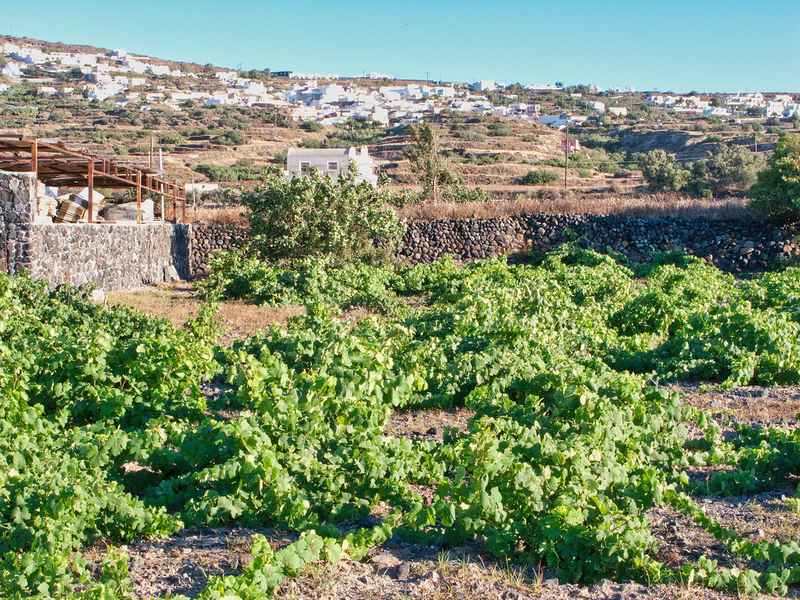
Santorini wine is special because the vines grow in volcanic soil of ash and pumice with almost no rain, drawing moisture from sea mist. To survive the wind, vines are trained into low basket shapes called kouloura, giving intensely mineral wines.
Santorini’s wine is shaped entirely by its volcanic landscape. The vines root in deep layers of volcanic ash, pumice and lava, a poor, dry soil that yields tiny, intensely flavoured grapes, and with barely any rainfall the plants survive on the humidity of the morning sea mist. To shield the fruit from the relentless meltemi wind, growers train the vines into a low, woven basket shape known as kouloura, with the grapes nestled inside. Many vines are ungrafted and centuries old, since the volcanic soil resists the phylloxera louse. The result is wine of extraordinary minerality and character, set within the wider things to do in Santorini. Assyrtiko is the island’s star grape.
What is Assyrtiko?
Assyrtiko is Santorini’s famous white grape and the dominant variety on the island, making a dry, crisp wine with high acidity, bright minerality and clean citrus flavours. It pairs perfectly with seafood and ranks among the finest white wines in Greece.
Assyrtiko is the heart of Santorini wine. This native white grape thrives in the volcanic soil, producing a bone-dry wine of striking, racy acidity, flinty minerality and crisp lemon and citrus flavours, with a salinity that seems to echo the sea around the island. It holds its freshness even in the searing heat, a rarity for a warm-climate white, and ages beautifully. Crisp and food-friendly, it is the ideal match for the island’s grilled seafood, fava and tomatokeftedes.
Increasingly celebrated by sommeliers worldwide, Assyrtiko has put Santorini firmly on the global wine map. Growers now plant it on the Greek mainland too, yet the volcanic island version keeps a salinity and depth of its own, set out alongside the guide to Santorini food. Vinsanto and other styles add variety.
What is Vinsanto and what other wines are there?
Vinsanto is Santorini’s prized sweet wine, made from Assyrtiko and other grapes sun-dried after harvest to concentrate the sugars, then aged for years into a rich amber dessert wine. Other styles include oak-aged Nykteri and dry reds from native grapes.
Beyond Assyrtiko, the island makes a range of distinctive wines. The most celebrated is Vinsanto, a luscious sweet wine with ancient roots, made by leaving the harvested grapes to dry in the sun until they shrivel, concentrating their sugars, before long ageing in oak that gives a deep amber colour and flavours of dried fruit, honey and caramel, perfect with dessert or cheese. Nykteri is a richer, oak-aged dry white traditionally made from grapes picked and pressed overnight, while smaller amounts of dry ros\u00e9 and red come from native grapes such as Mavrotragano and Mandilaria. Tasting across these styles is a revelation, set out alongside the guide to the wine villages. The wineries are a highlight to visit.
Which are the best wineries?
The best wineries cluster around the central villages of Pyrgos, Megalochori and Akrotiri, many with spectacular caldera views. Estate Argyros, Sigalas, Venetsanos, Santo Wines and Boutari are among the most renowned, offering tastings of Assyrtiko, Nykteri and Vinsanto.
Santorini’s wineries combine fine wine with stunning settings. The greatest concentration lies in the centre and south of the island, around Pyrgos, Megalochori, Exo Gonia and Akrotiri, with many perched to take in sweeping caldera or sea views. Names to seek out include Estate Argyros, ranked among the world’s top wineries, the acclaimed Sigalas and Gavalas estates, the dramatic clifftop Venetsanos with its caldera panorama, the large cooperative Santo Wines famous for its sunset terrace, and the historic Boutari near Megalochori. Each offers guided tastings of Assyrtiko, Nykteri and Vinsanto, often paired with local mezze. Booking a table ahead is wise at the busiest estates in high summer, set out alongside the guide to Santorini villages. A guided tour is the easy way to enjoy them.
How do you do a Santorini wine tour?
You do a Santorini wine tour by joining a guided half-day trip that visits two or three wineries over four to five hours with hotel pick-up, since driving the cliff roads after tasting is dangerous and illegal. A sommelier leads the tastings.
A guided wine tour is the best and safest way to explore the island’s wines. A typical small-group or private tour lasts four to five hours and visits two or three wineries, with a knowledgeable guide or sommelier explaining the volcanic terroir, the grapes and how to taste, often over a dozen wines including Assyrtiko, Nykteri and Vinsanto. Crucially, the tours include hotel pick-up and drop-off, as the wines are high in alcohol and driving Santorini’s winding cliff roads after tasting is both dangerous and strictly illegal. Eating a protein-rich lunch beforehand helps you enjoy the strong wines comfortably, set out alongside the guide to a Santorini private tour. Knowing what to eat with the wine completes the picture.
What food pairs with Santorini wine?
Santorini wine pairs beautifully with the island’s own dishes. Crisp Assyrtiko cuts through grilled fish, octopus, fava and tomatokeftedes, while sweet Vinsanto suits desserts and local cheeses. Its high acidity makes it a natural match for fresh seafood.
The island’s wine and food grew up together. Assyrtiko’s bracing acidity and mineral, almost salty edge make it a superb partner for the seafood that fills Santorini’s tavernas, from grilled fish and octopus to fried calamari, and it balances the richness of fried tomatokeftedes and creamy fava just as well. The bright wine also refreshes the palate against salty local capers and cheeses such as chloro.
At the sweet end, a glass of amber Vinsanto is the classic close to a meal, matching honeyed pastries, dried figs and walnuts or a slice of hard cheese. Chilled Assyrtiko also works well as an aperitif before dinner, sipped on a caldera terrace as the sun goes down. Many tavernas pour local wine by the carafe, so it costs little to drink the island’s own bottles with your meal. Ordering a bottle of island wine with a spread of local mezze is one of the simplest pleasures of a visit, set out alongside the guide to Santorini food. The harvest itself is unusual.
When is the Santorini wine harvest?
The Santorini wine harvest is one of the earliest in Europe, usually beginning in late July and August because the hot, dry climate ripens the grapes quickly. Pickers often work in the cooler early morning, and the small grapes yield low volumes of intense wine.
Santorini’s growing season is shaped by heat and wind. With fierce sun, very little rain and the drying meltemi wind, the grapes ripen fast, so the harvest falls earlier than almost anywhere else in Europe, often starting in the second half of summer. Yields are famously low, as the basket-trained vines produce only small bunches of thick-skinned, sugar-rich fruit, which is part of why the wines are so concentrated and why island wine can be pricier than mainland bottles.
The wines carry a protected designation of origin, meaning Santorini PDO wine must be grown and made on the island under set rules. The vineyards are among the oldest working ones in Europe, and their ungrafted vines survive on their original roots because the phylloxera louse cannot live in the sandy volcanic soil. Growers sometimes renew a tired vine by layering a cane rather than replanting, so a single root system can go on producing for generations. This heritage of low-yield, volcanic viticulture is a key reason the island’s wine stands apart, set out alongside the guide to Assyrtiko. The questions below cover the points travellers ask most.
Frequently Asked Questions
What wine is Santorini famous for?
Santorini is famous for Assyrtiko, a crisp, dry white grape with high acidity and intense minerality grown in volcanic soil, and for Vinsanto, a rich sweet wine made from sun-dried grapes. Both come from ancient basket-trained vines unique to the island.
Are Santorini wine tours worth it?
Santorini wine tours are well worth it, visiting two or three wineries with caldera views over four to five hours, tasting Assyrtiko, Nykteri and Vinsanto with a guide. They include hotel pick-up, so no one has to drive the cliff roads after tasting the strong wines.
Why are Santorini’s vines shaped like baskets?
Santorini’s vines are trained into low, woven basket shapes called kouloura to protect the grapes from the fierce meltemi wind and the strong sun, with the fruit nestled inside. The vines also draw moisture from the morning sea mist in the dry volcanic soil.
What is Vinsanto wine?
Vinsanto is Santorini’s traditional sweet wine, made mainly from Assyrtiko grapes left to dry in the sun after harvest, which concentrates their sugars. Long ageing in oak gives it a deep amber colour and flavours of dried fruit, honey and caramel, making it an ideal partner for dessert.
Which grape is Santorini best known for?
Santorini is best known for Assyrtiko, its native white grape, which makes a bone-dry wine with high acidity, flinty minerality and citrus notes. Grown in volcanic soil on ancient basket-trained vines, Assyrtiko keeps its freshness in the heat and has earned worldwide recognition among wine lovers.