
Santorini vs Mykonos is the classic Greek island dilemma: Santorini wins for dramatic scenery, the famous sunset, romance and history, while Mykonos wins for golden-sand beaches and world-class nightlife. This guide compares the two on scenery, beaches, nightlife, romance and who each island suits.
Both are Cyclades stars but very different, a useful comparison within the wider Santorini travel guide. Many visitors combine the two. The sections below weigh them up.
What is the main difference between Santorini and Mykonos?
The main difference is character. Santorini is dramatic, romantic and scenic, built around its caldera and famous sunset, while Mykonos is lively, modern and international, built around its beaches and nightlife. Santorini suits couples and sightseers; Mykonos suits beach and party lovers.
Santorini and Mykonos deliver two contrasting Greek island experiences. Santorini is defined by its caldera, a flooded volcanic crater ringed by cliffs that rise around three hundred metres above the sea. The whitewashed villages of Oia and Fira spill down those cliffs, dotted with blue-domed churches and framing the sunset that the island is famous for. This geography gives Santorini a dramatic, romantic and scenic character that photographs unlike anywhere else in the Cyclades.
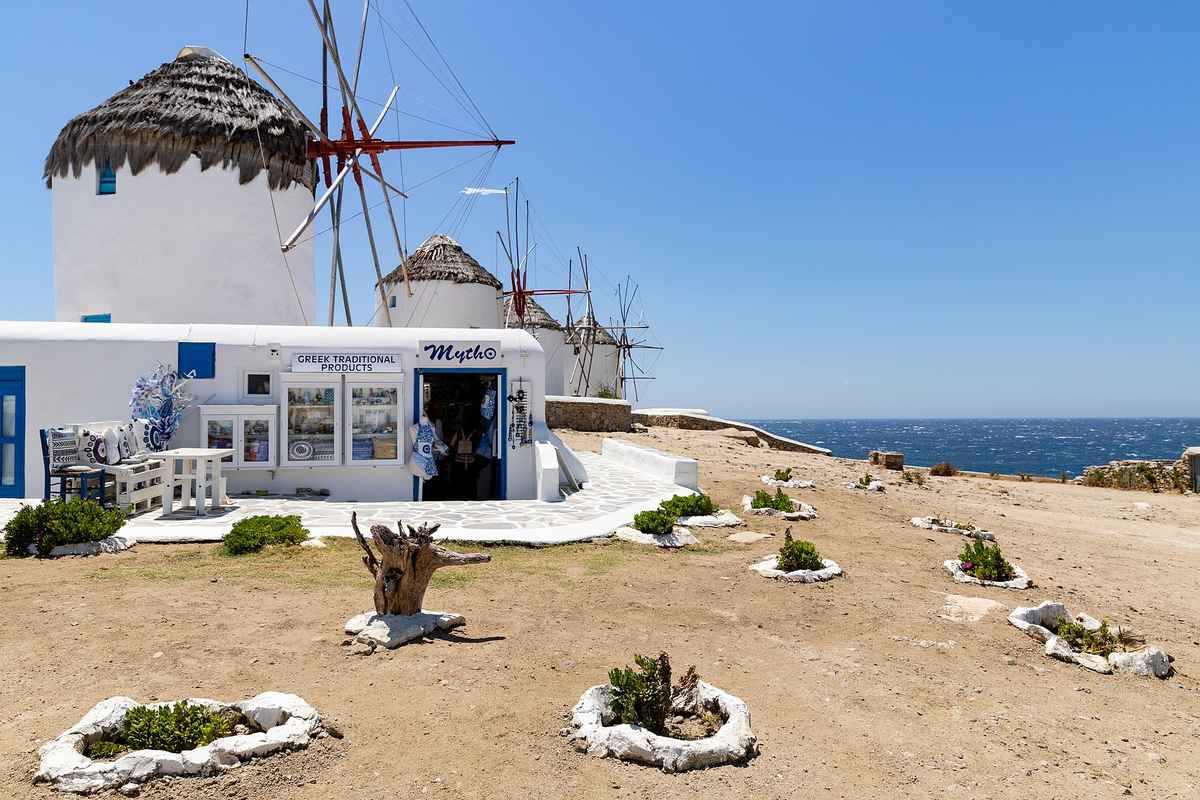
Mykonos feels modern, cosmopolitan and energetic. It draws a younger, international crowd to its golden beaches, its beach clubs and its long-established nightlife. The island trades on style, socialising and a relaxed sense of luxury rather than on sweeping natural drama. Its whitewashed town, windmills and narrow lanes are attractive, yet the pull of Mykonos is the scene and the sand, not a single headline view.
Neither island ranks above the other; they suit different travellers and different moods. This is exactly why so many visitors pair the two on one trip, using each for what it does best. That pairing sits naturally within the wider things to do in Santorini. The beaches mark the first sharp divide.
Which island has better beaches?
Mykonos has better classic beaches, with soft golden sand ideal for sunbathing and swimming plus famous beach clubs. Santorini offers dramatic volcanic black, red and white beaches that are photogenic but coarser and hotter underfoot, better suited to scenery than to a classic sandy day.
Beaches are where the two islands diverge most clearly. Mykonos is the winner for traditional beach days, with stretches of soft, golden sand at Paradise, Super Paradise, Elia and Psarou. These beaches combine easy swimming and sunbathing with the island’s celebrated beach clubs, where sunbeds, music and cocktails run through the afternoon. The gentle sand and sheltered bays make Mykonos the more comfortable choice for a full day by the water.
Santorini presents a different proposition. Its coastline carries volcanic black sand at Perissa and Kamari, the striking Red Beach beneath rust-coloured cliffs, and white-cliff coves reached by boat. These beaches are unusual and highly photogenic, yet the dark sand grows hot underfoot in high summer and the shore is coarser than the golden bays of Mykonos. There are also fewer swimmable beaches on Santorini overall.
The verdict depends on what a beach day means to you. Santorini’s shores reward curiosity and the camera, standing out for their colour and geology. For sunbathing, calm swimming and beach-club energy, Mykonos delivers the classic experience with greater ease, a contrast set out alongside the guide to Santorini beaches. Nightlife divides them just as sharply.
Which island wins for nightlife and romance?
Mykonos wins for nightlife, famous for beach clubs, guest DJs and parties until sunrise. Santorini wins for romance, with caldera sunsets, cave suites and a quieter scene of wine bars and lounges, making it the leading choice for honeymoons and couples.
Evenings sit at opposite ends on the two islands. Mykonos is one of the great party destinations of the Mediterranean, where beach clubs turn into open-air nightclubs and guest DJs play through the summer season. The energy builds from late afternoon and runs until dawn, which is ideal for travellers who want a high-octane social scene and a crowd that comes to celebrate. Groups of friends and solo travellers gravitate here for exactly that reason.
Santorini takes a quieter, more polished route. Its evenings centre on sunset cocktails, wine bars and relaxed dinners with a caldera view, with Fira holding the island’s only real cluster of late-night bars. The pace is calmer and the mood more intimate, which suits couples over party groups. Cave suites carved into the cliff, private terraces and the sunset itself make Santorini the more romantic island by a wide margin.
The choice reflects the trip you want. Book Santorini for honeymoons, anniversaries and slow, scenic evenings for two. Book Mykonos for nights out, dancing and a buzzing summer scene. Both moods are covered in detail alongside the guides to Santorini nightlife and a Santorini honeymoon. Sightseeing and ease of getting around differ too.
Which island has more to see and do?
Santorini has more sights and activities: the active volcano, the Minoan ruins of Akrotiri, the Fira-to-Oia hike, wine tours and the Red Beach. Mykonos centres on its town, its beaches and the day trip to ancient Delos, and it is flatter to cross.
For sightseeing, Santorini offers the broader menu. A boat trip crosses the caldera to the active volcano and its hot springs, while inland the buried Minoan town of Akrotiri preserves streets and buildings from the Bronze Age. The Fira-to-Oia caldera walk of about ten kilometres delivers constant sea views, and volcanic-soil wineries pour the island’s crisp Assyrtiko whites. Add the Red Beach and the cliff-top villages and the island fills several days easily.
Mykonos concentrates its appeal in fewer highlights. Its maze-like town rewards wandering, with smart restaurants, boutiques and the photogenic Little Venice waterfront. The stand-out excursion is the short boat trip to Delos, the sacred ancient island and a major archaeological site with temples, mosaics and the famous stone lions. Beyond that, the island is built around its beaches rather than a long list of attractions.
One practical edge favours Mykonos: it is relatively flat and easy to cross, so getting between town, beaches and hotels is straightforward. Santorini’s steep, stepped clifftop villages are demanding for travellers with limited mobility or young children, and moving around involves stairs, slopes and busy roads. That accessibility gap matters when you plan a day. Both sides are covered in the guides to the volcano and Akrotiri. Who each island suits comes next.
Which island suits families, couples, groups and budgets?
Santorini suits couples, honeymooners and sightseers; Mykonos suits groups, party lovers and beach fans. Families lean to Mykonos for flat terrain and sandy beaches. Both islands are expensive in high season, so neither is a true budget choice.
Couples and honeymooners are Santorini’s natural fit. The caldera views, romantic hotels and slower evenings match a trip built around two people and a view, and photographers find endless material in Oia and Fira. Sightseers who want ruins, wineries and a volcano also get more from Santorini. The island rewards travellers who prize scenery and atmosphere over sand and dancing.
Groups of friends and younger travellers tend to prefer Mykonos, where the beach clubs, nightlife and social scene give a holiday its shape. Families with children often lean to Mykonos as well, thanks to the flatter ground and the soft, swimmable beaches that suit small children better than Santorini’s steep steps and coarse dark sand. That said, either island works for a family that plans around its strengths.
On cost, both islands rank among the pricier destinations in Greece, particularly from June to early September when demand peaks. Neither is a genuine budget island in summer. Travellers watching spending can trim costs by visiting in the shoulder months of May, early June, late September or October, when accommodation and flights ease on both. Planning tips appear in the Santorini itinerary. Getting to each island is the next question.
How do you get to Santorini and Mykonos?
Both islands have airports with summer flights from Athens and European cities, plus frequent ferries from Piraeus and Rafina. Athens to either island takes about forty-five minutes by air, while ferries run roughly five to eight hours by route and vessel.
Air travel is the fastest way to reach both islands. Santorini and Mykonos each have their own airport, served by short domestic hops from Athens of roughly forty-five minutes and, through the summer, by direct flights from across Europe. Seats sell quickly for peak dates, so early booking helps on both routes. Flying suits travellers who want to save time and start their holiday sooner.
Ferries offer the scenic, often cheaper alternative. High-speed catamarans and conventional ferries sail from the Athenian ports of Piraeus and Rafina, with journey times to either island ranging from about five to eight hours by conventional ferry and less on the fast craft. The crossing itself becomes part of the trip, threading past other Cyclades islands. Booking ahead is wise in July and August, when sailings fill.
Getting from the mainland is only half the planning; linking the two islands is simple too. The full route options, timings and seasonal schedules are set out in the guide to how to get to Santorini. Combining both islands is easier than many travellers expect.
When is the best time to visit Santorini and Mykonos?
Late spring and early autumn are the best times to visit both islands, roughly May to mid-June and September to early October. The weather stays warm and sunny, the sea is swimmable and crowds thin from the July and August peak.
Both islands share the same Cyclades climate, so the timing advice largely overlaps. High summer, from July to late August, brings the hottest days, the largest crowds and the highest prices on both. It is the liveliest window for Mykonos nightlife and the busiest for Santorini’s caldera viewpoints, yet the heat and volume of visitors can wear on travellers who prefer space and calm.
The shoulder seasons hit a sweeter balance. May, early June, September and early October keep warm, sunny weather and a swimmable sea while easing the crowds and softening rates. Santorini’s sunsets look just as striking, and Mykonos’s beach clubs stay open through September. These months suit couples, families and anyone wanting the islands at a gentler pace.
One island wind is worth noting. The Cyclades catch the summer meltemi, a strong northerly wind that whips up in July and August, and Mykonos in particular can feel it on exposed north-facing beaches. Sheltered southern bays escape the worst of it. Sunset timing, seasonal detail and crowd patterns feature in the Santorini itinerary. Distance and mood set them apart overall.
How far apart are Santorini and Mykonos?
Santorini and Mykonos sit about one hundred and thirty kilometres apart in the central and southern Cyclades. High-speed ferries cover that distance in roughly two to three and a half hours, and both islands link to the same Athens ports.
The two islands lie in the same island group but not next door to each other. Mykonos sits in the central Cyclades, closer to the mainland ports, while Santorini anchors the southern edge of the archipelago. The sea distance between them is around one hundred and thirty kilometres, a gap that the fast ferry network crosses comfortably within a morning or an afternoon sailing.
Direct high-speed services run through the summer, often calling at Ios, Naxos or Paros along the way. Those stops add minutes but also open the door to a longer island-hopping route, dropping Santorini and Mykonos into a wider Cyclades loop. Travellers who want only the two islands take the direct crossing and treat the ferry as a scenic transfer rather than a chore.
Both islands connect to Piraeus and Rafina, which keeps planning flexible. A traveller flies into one, ferries to the other and flies home from the second, avoiding backtracking entirely. Full timings, ports and seasonal frequencies are laid out in the guide to how to get to Santorini. Fitting both into one trip is the final piece.
Can you combine Santorini and Mykonos in one trip?
You can easily combine Santorini and Mykonos in one trip, as high-speed ferries link them across the Cyclades in two to three and a half hours. Three to four days on each balances Santorini’s scenery with Mykonos’s beaches.
Combining the two islands is one of the most popular Greek island itineraries, and the logistics are straightforward. High-speed ferries connect Santorini and Mykonos directly through the summer, crossing the central Cyclades in roughly two to three and a half hours depending on the vessel and any intermediate stops. No return to Athens is needed, so the two islands slot neatly into a single week.
Order matters less than balance. A common plan opens on Mykonos for beaches and nightlife, then closes on Santorini for scenery and a romantic finale, though the reverse works equally well depending on flight timings and where the holiday starts and ends. Allowing three to four days on each island covers the highlights without rushing, and leaves room for a boat trip, a beach day or a long, unhurried dinner with a view on both islands.
The result is a single trip that captures the best of the Cyclades in one holiday: golden sand and late nights on Mykonos, then caldera sunsets and volcanic drama on Santorini. Detailed day-by-day suggestions for the combined route sit in the Santorini itinerary. The questions below cover the points travellers ask most.
Which island is better for first-time visitors to Greece?
Santorini is the stronger first choice for many first-time visitors, thanks to its iconic scenery, sunsets and sights that capture the postcard image of Greece. Mykonos suits first-timers who put beaches and nightlife first. Combining both is the most complete introduction.
First-time visitors often arrive with a mental picture of Greece shaped by photographs of white villages against a blue sea, and Santorini matches that image most closely. Its caldera, blue-domed churches and famous sunset deliver the scenery people expect, while the volcano, Akrotiri and the wineries add depth beyond the views. For a single-island debut built on scenery and variety, Santorini is the natural pick.
Mykonos rewards a different kind of first visit. Travellers whose idea of a Greek holiday centres on golden beaches, beach clubs and a social scene get exactly that on Mykonos, wrapped in an attractive whitewashed town and the Delos day trip. It is a confident, cosmopolitan introduction to the islands for those who prioritise sand and nightlife over dramatic geology.
The most complete first-time plan draws on both. A week that pairs Mykonos and Santorini shows the range of the Cyclades in one trip, from beaches and late nights to caldera sunsets and ancient ruins. That balanced route, with suggested days and highlights, sits within the wider things to do in Santorini. The questions below cover the points travellers ask most.
Which island has better food in the Santorini vs Mykonos choice?
In the Santorini vs Mykonos food contrast, Santorini pairs caldera-view dining with Assyrtiko wine and volcanic-soil produce such as cherry tomatoes, white aubergine and fava. Mykonos leans on seafood tavernas, local cheeses and stylish restaurants tied to its beach clubs.
Santorini grows Assyrtiko grapes in volcanic soil. Growers coil the vines into low baskets on the ground to shelter the grapes from the wind. The Santorini wineries page covers the estates.
The same dry soil grows small cherry tomatoes, white aubergine, capers and the yellow pulse used for fava. Tomato fritters and fava purée appear on taverna menus across the island. The Santorini restaurants guide lists the tables.
Mykonos has seafront tavernas in Little Venice and around the old port, serving grilled fish. Kopanisti, a soft peppery cheese, and louza, a cured pork, are island specialities. The Mykonos food page covers the dishes.
Can you do a day trip between Santorini and Mykonos?
A day trip between the islands is possible by fast ferry but rushed, since the crossing takes two to three and a half hours each way. Staying a few nights on each island leaves time for the Oia sunset and a full Mykonos beach day.
A day trip means sailing out in the morning and back in the evening. After two crossings, only a few hours remain on the ground. That window covers one town or one beach, not the island.
Summer high-speed boats run the route, and some call at Ios, Naxos or Paros on the way. Timetables change with the season and the wind. The Mykonos to Santorini page covers the crossing.
A hotel on each island takes the ferry clock out of the day. The Mykonos island hopping guide plans a longer route across the Cyclades.
Frequently Asked Questions
Is Santorini or Mykonos better?
Neither is better; they suit different travellers. Santorini is better for scenery, sunsets, romance and history, making it ideal for couples and honeymoons. Mykonos is better for golden-sand beaches and world-class nightlife, suiting beach and party lovers and groups. The right pick depends on the holiday you want rather than on one island outranking the other. Travellers who cannot choose combine both across a single week, using Mykonos for the beach and party days and Santorini for scenery and slower evenings, and end up with the best of the Cyclades in one trip.
Should you visit Santorini or Mykonos for a honeymoon?
Santorini is the stronger honeymoon choice, widely regarded as one of the world’s most romantic islands, with caldera views, cave suites and the famous sunset. Mykonos leans towards beaches and nightlife, though couples who want a livelier social scene alongside their romance still enjoy it. For a classic scenic honeymoon, Santorini leads. Many honeymooners split their stay, opening on Mykonos for beach days and evenings out before finishing on Santorini for the sunsets and slower, private dinners that suit the occasion.
Can you visit both Santorini and Mykonos in one trip?
You can easily visit both in one trip, as frequent high-speed ferries link them across the Cyclades in two to three and a half hours. Spending three to four days on each island gives a good balance of Santorini’s scenery and romance with Mykonos’s beaches and nightlife, all within a single week and without returning to Athens between them. Booking the ferry in advance for July and August is wise, as the direct summer sailings between the two islands fill quickly during the peak season.
Which island is better for families with children?
Mykonos tends to suit families better, thanks to its flatter terrain and soft, sandy beaches that work well for young children. Santorini’s steep clifftop villages, stairs and coarse volcanic sand make it harder going with a pushchair or toddlers. Both islands welcome families, yet Mykonos is the easier base for a beach-focused family holiday. Families who still want Santorini’s scenery often base themselves in the flatter beach areas of Kamari or Perissa rather than the clifftop villages, which reduces the daily climb while keeping the island’s sights within reach.
Which island is more expensive?
Both Santorini and Mykonos rank among the priciest islands in Greece, especially in the peak months of July and August. Costs are broadly comparable, with Santorini’s caldera-view hotels and Mykonos’s beach clubs both commanding premium rates. Travellers on a tighter budget cut costs on either island by visiting in the shoulder months of May, June, September or October, when accommodation and flights ease. Choosing hotels away from the headline locations, such as inland or beach-side stays rather than caldera-edge suites on Santorini, also lowers the bill without giving up the island itself.
How many days do you need for Santorini and Mykonos?
Three to four days on each island covers the main highlights without rushing. On Santorini that allows time for the caldera villages, a volcano boat trip and a wine or sunset experience, while on Mykonos it covers the town, several beaches and a Delos day trip. A combined week split between the two gives a well-rounded Cyclades holiday. Travellers with only a long weekend can still enjoy a single island in two to three days, though the pace tightens and the ferry link between the two becomes harder to fit comfortably.