
The best Santorini restaurants range from clifftop fine dining and caldera-view tavernas to fresh seafood at Ammoudi Bay and cheap, excellent gyros, spread across Oia, Fira and the villages. This guide covers where to eat in Oia, where to eat in Fira, seafood, budget options and tips for dining.
Eating out is a real pleasure of the wider Santorini travel guide. The island spans every budget. The sections below cover restaurants.
Where should you eat in Oia?
Oia delivers Santorini’s most romantic dining, from clifftop restaurants with caldera views to hidden garden tavernas serving traditional Greek recipes. Gyros and souvlaki counters keep costs low, while the priciest terraces reward advance booking with sunset over the volcano.
Oia offers the island’s most romantic, and priciest, dining. Clifftop restaurants serve refined Greek and Mediterranean cooking with views over the caldera and the sunset, the setting for an anniversary or a proposal, and these terraces command a premium and need booking days ahead. Away from the crowded main street, garden tavernas serve family recipes in a calmer, more intimate setting, and the honest local food often sits in the quieter corners rather than on the showiest terraces. Budget travellers are not shut out here, because Oia keeps well-priced gyros and souvlaki spots that deliver a filling meal for the price of a coffee elsewhere. The village rewards wandering, set within the wider Oia. Fira has the widest choice.
Where should you eat in Fira?
Fira has Santorini’s widest range of restaurants, from tasting menus and caldera-view tavernas to meze ouzeris and the island’s best cheap gyros. As the capital it suits every budget and is the easiest base for eating out.
Fira is the dining heart of Santorini. The capital packs in the greatest variety, from fine-dining restaurants with tasting menus to atmospheric tavernas perched on the caldera rim, where the food is good and the terrace lively. Traditional ouzeris serve small Greek plates and meze built for sharing, popular with families and larger groups. At the budget end, Fira is known for the best gyros and souvlaki on the island, served fast and cheap from counter joints that locals rely on for a quick lunch. Everything sits within walking distance of the central square, which makes Fira the simplest base for eating out, set out alongside the guides to Fira and Santorini food. Seafood deserves its own trip.
Where is the best seafood?
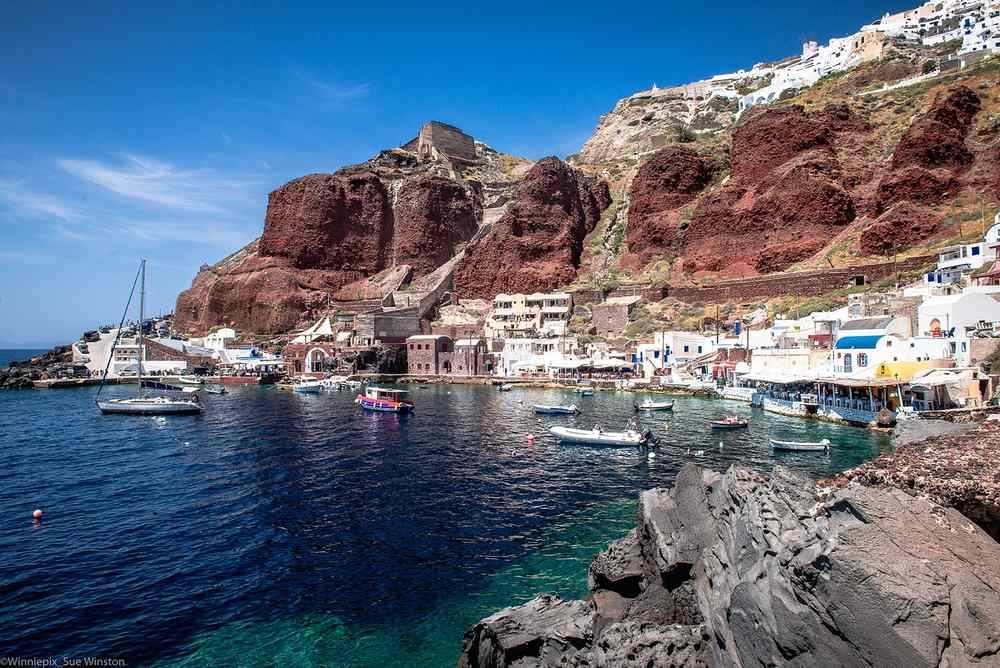
The best seafood is at Ammoudi Bay, the little harbour below Oia, where waterfront fish tavernas serve the day’s catch beside the boats. Specialities include grilled octopus, fresh fish and calamari, eaten at tables almost on the water.
Head down to the water for fish. Ammoudi Bay, the former fishing harbour at the foot of the cliff below Oia, is reached by 300 steps or a short drive, and its casual seafood tavernas line the quay with tables set beside the moored boats. You eat the freshest catch here, from sun-dried grilled octopus and whole fresh fish to charcoal-grilled calamari, with the red cliffs glowing behind at its finest towards sunset. The bay is a genuine highlight and far removed from the polished clifftop dining above. Harbourside and beachfront tavernas at Perissa and Kamari also grill honest seafood, set out alongside the guides to Ammoudi Bay and Kamari beach. Imerovigli comes next.
Where do you eat in Imerovigli?
Imerovigli suits calm, romantic dining above the caldera, with a compact cluster of quality tavernas and hotel restaurants. It sits higher and quieter than Fira, trading the crowds for sweeping volcano views and a slower evening pace.
Imerovigli sits at the highest point on the caldera rim, a short walk north of Fira along the cliff path. The village stays quieter and more residential, which makes its restaurants a favourite for couples who want the view without the crush of the capital. Menus lean Greek and Mediterranean, with grilled fish, slow-cooked meat and garden vegetables, and terraces look straight out to the Skaros rock and the volcano islets. Hotel restaurants here open to non-guests and cook to a high standard, so an evening pairs a relaxed table with a wide panorama. Reserve for sunset, because the best terraces fill early, set out alongside the guide to Imerovigli. Firostefani follows the same rim.
Where do you eat in Firostefani?
Firostefani offers relaxed caldera-view dining a five-minute walk from Fira, with tavernas calmer and often better value than the capital’s busiest terraces. The village keeps the volcano panorama while the pace and the prices settle lower.
Firostefani sits directly above Fira on the caldera path, close enough to walk in five minutes yet noticeably calmer. The village suits travellers who want the clifftop view at a gentler pace, and its restaurants pair Greek home cooking with the same volcano panorama the capital charges more for. Family-run tavernas here serve grilled fish, moussaka and mezze on terraces that catch the sunset, and the atmosphere leans local rather than showy. A short stroll separates Firostefani from Fira’s nightlife, so you can dine quietly and still reach the bars afterwards. Cafes for coffee and dessert suit an after-dinner walk along the rim. The balance of view, calm and price makes it a smart base for dinner, set out alongside the guide to Firostefani. Pyrgos moves inland.
Where do you eat in Pyrgos?
Pyrgos, the hilltop village inland, is where locals go for traditional tavernas away from the caldera crowds. It trades the sunset view for authentic cooking, a Venetian castle setting and prices well below Oia and Fira.
Pyrgos crowns a hill in the island’s centre, once the medieval capital, and its lanes climb to a Venetian castle with an inland panorama across the vineyards. The village draws Santorinians for its traditional tavernas, where the focus falls on the food rather than the view, and the cooking is generous and honest. Grilled meats, slow-baked dishes and garden vegetables dominate the menus, and one well-known taverna here has built a reputation for Cretan-influenced plates. Dining in Pyrgos costs less than the caldera terraces and feels genuinely local, so it rewards travellers with a car. The hilltop lanes and the view back to the caldera reward a wander before dinner, set out alongside the guide to Pyrgos. Akrotiri sits to the south.
Where do you eat in Akrotiri?
Akrotiri, near the archaeological site and Red Beach in the south, has a compact group of tavernas and seafront spots serving fresh fish and Greek staples. It suits lunch after the ruins, with a quieter feel than the caldera villages.
Akrotiri anchors the southwest of the island, home to the famous Bronze Age excavation and close to the Red Beach. The village and its nearby coast keep tavernas that cook fresh fish, grilled meats and Greek staples for visitors coming off the archaeological site. Seafront spots near the little harbour and lighthouse road serve calamari, octopus and salads with a relaxed, local feel, well away from the caldera crowds. The lighthouse at the island’s southwestern tip makes a quiet sunset alternative to Oia, with a taverna for dinner afterwards. This corner works best as a lunch stop, pairing the ruins and the beach with an unhurried meal by the water, set out alongside the guide to Akrotiri. Beach dining runs along the black sand.
Where are the best beach restaurants?
The best beach restaurants line the black-sand shores at Perissa, Perivolos and Kamari on the southeast coast, with tables on the sand serving grilled fish, seafood and Greek classics. They offer a barefoot alternative to the caldera terraces above.
The southeast coast is where Santorini eats by the sea. Perissa, Perivolos and Kamari string their tavernas and beach bars along the black volcanic sand, so lunch and dinner come with your feet near the water. Grilled fish, fresh seafood, souvlaki and big Greek salads fill the menus, and the mood is barefoot and unhurried. Perivolos in particular has a lively beach-bar scene where daytime sunbeds turn into evening cocktails and music. Kamari, on the far side of Mesa Vouno, adds a paved seafront promenade lined with tavernas and cafes, easier for an evening walk than the sand. These flat shores give families a good-value alternative to the clifftop formality, set out alongside the guide to Perissa beach. Caldera-edge fine dining raises the stakes.
What are the caldera-edge fine-dining restaurants?
Caldera-edge fine dining puts refined tasting menus and Greek-Mediterranean cooking on cliff terraces overlooking the volcano and sunset, mostly in Oia, Imerovigli and Fira. These are the island’s special-occasion tables, with the highest prices.
The caldera edge is where Santorini’s kitchens aim highest. Restaurants perched on the cliffs in Oia, Imerovigli and Fira serve modern Greek and Mediterranean tasting menus, pairing creative plates with an island wine list and a view straight down to the volcano and the sunset. These tables mark anniversaries, proposals and once-in-a-trip splurges, and the setting draws as strongly as the food. Prices sit at the top of the island’s range, and the prime sunset slots book out days ahead in summer, so reserve early and confirm the time. Dress is smart-casual rather than formal, and the pace is slow by design, set within the wider Santorini sunset. Value hunters have their own map.
Where are the best value and budget eats?
The best value eats are the gyros and souvlaki counters, traditional ouzeris and inland village tavernas, especially in Fira and Pyrgos. Skipping the caldera-view terraces for local kitchens cuts the bill sharply while the food tastes generous.
Eating well on Santorini rarely drains the budget. The gyros and souvlaki counters in Fira turn out filling wraps for the price of a drink on a cliff terrace, and locals queue at the best of them at lunchtime. Traditional ouzeris serve meze that a group can share cheaply, while inland villages like Pyrgos, Emporio and Megalochori keep tavernas priced for residents rather than the view. Lunch costs less than dinner, so a big midday meal and a light evening trims the total. Sharing meze rather than a main each is the local way to eat and keeps the bill down. House wine and tap water keep drinks affordable too, set out alongside the guide to Santorini on a budget. The island has its own dishes to seek out.
What are the typical dishes of Santorini?
Santorini’s specialities include fava, the yellow split-pea puree, tomatokeftedes tomato fritters, white aubergine, caper leaves, chlorotyri cheese and fresh seafood. The volcanic soil concentrates flavour, so local tomatoes, capers and fava taste distinct and appear on almost every traditional menu.
Santorini grows a cuisine of its own from volcanic soil and near-constant sun. Fava, a smooth puree of yellow split peas dressed with olive oil, onion and lemon, is the island’s signature starter and carries a protected-origin name. Tomatokeftedes, fritters of the sweet, intense Santorini cherry tomato, come crisp and herb-flecked, while the pale, mild white aubergine turns up grilled or stuffed. Caper leaves, chlorotyri goat’s cheese and locally cured meats round out the meze table, and the seafood is landed daily. Pairing these plates with a bottle of the island’s dry Assyrtiko is the classic Santorini meal, set out alongside the guides to Santorini food and Assyrtiko. Breakfast starts the day differently.
Where do you go for breakfast and brunch?
Breakfast and brunch cluster in Fira, Oia and Imerovigli, where cafes with caldera views serve Greek yoghurt, honey, eggs and pastries alongside strong coffee. Hotels open their terraces to a full spread, so the morning meal keeps the volcano panorama.
Mornings on Santorini reward an early, unhurried table. Cafes in Fira and Oia serve Greek yoghurt with honey and walnuts, fresh eggs, bougatsa pastry and thick Greek coffee or a freddo espresso, and the caldera-view terraces are far calmer at breakfast than at dinner. Imerovigli and Firostefani add quieter brunch spots along the cliff path, ideal before a day of walking or a boat trip. Hotel breakfasts here are generous, and certain hotels open the terrace to non-guests for eggs, cheeses, cured meats and pastries. Starting the day on the rim, before the cruise crowds arrive, is one of the island’s simple pleasures, set out alongside the guide to Fira. Wine bars take over as the sun drops.
Where are the best wine bars and sunset drinks?
The best wine bars sit in Oia, Fira and out at the wineries, pouring the island’s crisp Assyrtiko and sweet Vinsanto by the glass. Caldera-edge bars turn the sunset into an event; the wineries add a quieter vineyard view.
Santorini is a serious wine island, and its bars make the most of it. Oia and Fira keep wine bars along the caldera where you can drink the dry, mineral Assyrtiko and the honeyed Vinsanto by the glass as the sun sinks behind the volcano. The sunset bars charge for the moment more than the drink, so arrive early for a rail-side seat. For a calmer tasting, the wineries inland around Pyrgos, Megalochori and Akrotiri pour flights on terraces overlooking the vines and the sea, with the caldera in the distance. Ending the day with an island wine and a cheese plate is the natural Santorini nightcap, set out alongside the guides to Santorini wine and Vinsanto. Locals keep their own tables.
Where do the locals eat?
Locals eat inland and away from the caldera, in the tavernas of Pyrgos, Emporio, Megalochori, Karterados and Mesaria, and at the gyros counters of Fira. These kitchens put food over view, so prices stay reasonable and the cooking tastes local.
The tables Santorinians choose sit mostly out of sight of the sunset. Inland villages like Pyrgos, Emporio, Megalochori, Karterados and Mesaria keep tavernas that cook for residents first, with grilled meats, fava, slow-baked dishes and the day’s vegetables at prices the caldera never matches. Family kitchens here fill on weekends with Greek families rather than tour groups, and the welcome is warmer for it. In Fira, the same locals crowd a couple of famous gyros counters at lunch. Eating where the islanders eat means a car and a short drive, but the reward is honest, generous food, set out alongside the guide to Megalochori. Timing and booking shape every meal.
What are the seasonal notes and booking tips?
Book caldera-view and fine-dining tables days ahead in summer, especially for sunset, and expect winter closures from November to March. Peak season runs June to September, so reserve early; spring and autumn bring calmer terraces and easier tables.
Timing shapes the Santorini dining experience as firmly as the choice of village. Peak season runs from June through September, when the caldera-view and fine-dining restaurants fill their sunset slots days ahead, so book early and confirm the reservation. Most restaurants close for winter, roughly November to March, and the island’s dining thins to the year-round tavernas in Fira and the villages. Spring and autumn strike the balance, with warm weather, open kitchens and terraces that take walk-ins more easily. Lunch reservations are simpler than dinner everywhere, and a midday caldera table often costs less for the same view, set out alongside the guide to the best time to visit Santorini. Saving money comes down to three or four habits.
How do you save money eating out in Santorini?
Save money by eating the caldera view at lunch instead of dinner, choosing gyros and ouzeris over clifftop terraces, dining inland in Pyrgos and Emporio, and drinking house wine. One splurge plus simpler local meals keeps the week’s bill sensible.
A little planning stretches the food budget without cutting the pleasure. Booking the famous caldera view for lunch rather than dinner buys the same panorama for noticeably less, and tables come easier. Swapping one clifftop dinner for gyros, souvlaki or an ouzeri meze spread cuts a night’s bill sharply, and driving inland to Pyrgos or Emporio for a village taverna costs less again. House wine and tap water trim the drinks total, and a large midday meal lets you eat lightly and cheaply at night. Balancing a single splurge with honest local kitchens keeps the week affordable, set out alongside the guide to Santorini on a budget. The questions below cover what travellers ask most.
Which are the most romantic restaurants?
The most romantic restaurants are the caldera-edge tables in Oia and Imerovigli, where a clifftop terrace frames the sunset over the volcano. Ammoudi Bay adds waterside candlelight, so couples choose between a high panorama and dinner by the sea.
Santorini earns its reputation as a honeymoon island at the dinner table. The most romantic settings are the caldera-edge terraces in Oia and Imerovigli, where a two-person table looks straight across the flooded crater to the volcano islets as the sun drops and the sky turns copper. Couples marking an engagement or an anniversary book these tables for sunset weeks ahead, then linger over an island wine as the caldera villages light up below. For a different mood, the fish tavernas at Ammoudi Bay set candlelit tables beside the water, quieter and more intimate than the cliffs above. The choice comes down to a high panorama or dinner by the sea, set out alongside the guide to a Santorini honeymoon. Hotel terraces run them close.
Which hotel restaurants have the best views?
The hotel restaurants with the best views sit in Imerovigli, Oia and Firostefani, where caldera-edge properties open their terraces to non-guests. These kitchens pair refined Greek cooking with wide volcano panoramas, and booking secures a prime sunset spot.
Santorini’s cliffside hotels run the island’s finest dining, and the terraces double as the best-placed viewpoints on the rim. Properties in Imerovigli and Oia perch their restaurants directly on the caldera edge, so a reserved table buys a front-row seat for the sunset without staying the night. Chefs here cook modern Greek and Mediterranean menus with island produce and a strong local wine list, and the service pitches to the setting. Non-guests can book, though the prime evening slots go first in summer, so reserve as early as you can. A hotel terrace pairs a calm, unhurried meal with the view the crowds strain to glimpse from the path, set within the wider Santorini caldera. Street food serves the other extreme.
Where do you find the best quick eats and street food?
The best quick eats are the gyros and souvlaki counters in Fira and Oia, serving pork or chicken wraps with tzatziki, plus bougatsa and loukoumades from bakeries. These fast, cheap plates fuel a day of sightseeing.
Street food keeps a Santorini day cheap and moving. The gyros and souvlaki counters in Fira and Oia wrap grilled pork or chicken with tomato, onion, tzatziki and chips in warm pita, turning out a filling lunch in minutes for the price of a coffee on a cliff terrace. Bakeries add bougatsa, the creamy semolina pastry dusted with cinnamon, and loukoumades, honey-soaked dough balls, for a sweet stop between sights. Grabbing a wrap to eat on a caldera bench or a bakery pastry on the walk to the bus keeps the budget in check and the sightseeing rolling. These counters are where locals eat on a working day too, set out alongside the guide to Santorini food. Plant-based eating is well covered.
Are there good vegetarian and vegan options?
Vegetarian and vegan eating is easy on Santorini, built around fava, tomatokeftedes, grilled vegetables, salads, dolmades and the island’s produce. Most tavernas list plant-based meze, and dedicated vegetarian spots in Fira and Oia expand the choice for stricter diets.
Greek cooking suits plant-based travellers, and Santorini’s volcanic produce makes it easier still. The island’s signature fava puree, tomatokeftedes fritters, grilled white aubergine, stuffed vine leaves, briam vegetable bake and Greek salad with local capers are all naturally vegetarian, and most appear as meze on standard taverna menus. Vegan diners can build a full table from these plates by asking for dishes without feta or yoghurt, and staff are used to the request. Fira and Oia also keep dedicated vegetarian and health-focused cafes for stricter diets and gluten-free needs. Eating plant-based here means enjoying the island’s best produce rather than settling for a side dish, set out alongside the guides to Santorini food and Megalochori. A viewpoint table needs its own plan.
How do you choose a restaurant with a view?
Choose a view restaurant by picking the caldera side, in Oia, Imerovigli, Firostefani or Fira, and booking a west-facing terrace for sunset. Confirm the reservation covers a rail-side table, and consider lunch for the same panorama with lighter crowds.
The view is half the meal on the caldera, so it pays to choose deliberately. Restaurants on the western, caldera side of the island, in Oia, Imerovigli, Firostefani and Fira, look out over the crater and the sunset, while the eastern beach tavernas face the open sea instead. Booking a west-facing terrace for the sunset window is the classic choice, but confirm your reservation actually includes a front-row, rail-side table rather than an inner seat. Lunch delivers the identical panorama with thinner crowds and easier tables, a smart move in peak season. Matching the village, the aspect and the time of day gets the view you came for, set out alongside the guide to Oia versus Fira. Cooking classes turn the produce into a meal.
Can you take a cooking class or food tour?
Cooking classes and food tours run across Santorini, teaching the island’s dishes with local produce and pairing them with Assyrtiko and Vinsanto. Wine tours visit the caldera vineyards, and guided walks in Fira sample tavernas, bakeries and wine bars.
Eating on Santorini can become an activity in itself. Cooking classes on farms and in village kitchens teach the island staples, from fava and tomatokeftedes to grilled fish, using produce grown in the volcanic soil. Food tours in Fira and Oia lead small groups between tavernas, bakeries and wine bars, sampling meze, gyros, cheese and dessert with a guide. Wine tours visit the caldera vineyards around Pyrgos and Megalochori to taste the dry Assyrtiko and sweet Vinsanto at the source. A half-day class or an evening food walk suits travellers who want to understand the cuisine, and both book up in peak season. These experiences deepen a trip, set out alongside the guides to a Santorini cooking class and Santorini wine. Practical tips finish the guide.
When do restaurants open and how late do they serve?
Santorini restaurants keep Greek hours, with dinner from early evening until late and the busiest tables around the sunset. Tavernas serve lunch through the afternoon, gyros counters run all day, and kitchens stay open later in high summer.
Dining runs on Greek time here, so plan the evening accordingly. Most caldera restaurants open for dinner in the early evening and serve until late, with the rush landing around the sunset when the view tables fill and the kitchens work hardest. Tavernas away from the cliffs often serve lunch straight through the afternoon, and the gyros and souvlaki counters in Fira stay open from midday until the small hours for a late bite after the bars. Booking the slot just before sunset gets you seated for the light, while a table an hour later trades the crowd for a calmer meal. Kitchens keep longer hours in July and August than in spring or autumn, set out alongside the guide to Santorini nightlife. Practical booking tips round things off.
What tips help for dining?
The tips are to book caldera-view and fine-dining tables well ahead, especially for sunset, to eat the same views at lunch for less, and to seek out local tavernas and gyros joints away from the busiest spots.
A little strategy improves both the food and the bill. The famous caldera-view and fine-dining restaurants book out, particularly the prized sunset slots, so reserve days ahead in summer, and consider going for lunch instead, when you get the same views for less and tables are far easier to secure. For the best value and most authentic cooking, step away from the view-driven terraces towards the local tavernas, ouzeris and gyros counters where Santorinians actually eat. Prices in the tourist hotspots run high, so mixing one or two splurge meals with simpler local eating keeps costs sensible across a trip, set out alongside the guide to a Santorini cooking class. The questions below cover the points travellers ask most.
Frequently Asked Questions
Where are the best restaurants in Santorini?
The best restaurants spread across Oia, with romantic clifftop fine dining and hidden garden tavernas, and Fira, which holds the widest choice from tasting menus to cheap gyros. For seafood, the waterfront fish tavernas at Ammoudi Bay below Oia rank among the island’s most memorable, and Pyrgos draws locals inland for value.
Where is the best seafood in Santorini?
The best seafood is at Ammoudi Bay, the small harbour below Oia, where waterfront tavernas serve the day’s catch beside the boats, including grilled octopus, fresh fish and calamari. The beachfront tavernas at Perissa, Perivolos and Kamari on the black-sand southeast coast also grill good, honest seafood at a gentler price.
Are restaurants in Santorini expensive?
Restaurants in Santorini can be expensive, especially the caldera-view and fine-dining spots in Oia and Fira. You can eat the same views at lunch for less, and local tavernas, ouzeris and gyros joints away from the busiest lanes offer honest food at far better value. Inland villages like Pyrgos and Emporio cost less again.
What food is Santorini known for?
Santorini is known for volcanic-soil produce and its own specialities: fava split-pea puree, tomatokeftedes tomato fritters, sweet cherry tomatoes, pale white aubergine, capers and caper leaves, chlorotyri cheese and daily-landed seafood. These plates pair naturally with the island’s dry Assyrtiko white and sweet Vinsanto dessert wine.
Do you need to book restaurants in Santorini?
You need to book the caldera-view and fine-dining restaurants days ahead in summer, above all for the sunset slots, which sell out fastest. Casual tavernas, gyros counters and beach spots take walk-ins more easily. Lunch reservations are simpler than dinner, and spring and autumn tables come without the peak-season scramble.
Where do locals eat in Santorini?
Locals eat inland and away from the caldera crowds, in the tavernas of Pyrgos, Emporio, Megalochori, Karterados and Mesaria, and at a couple of famous gyros counters in Fira. These kitchens put food ahead of the view, so prices stay reasonable and the cooking tastes distinctly of the island.
What time do people eat dinner in Santorini?
People eat dinner late in Santorini, in the Greek style, with the caldera tables busiest around and after the sunset from early evening onward. Booking the slot just before sunset secures the light, while a table an hour later brings a calmer meal. Gyros counters serve into the small hours for a late bite.