
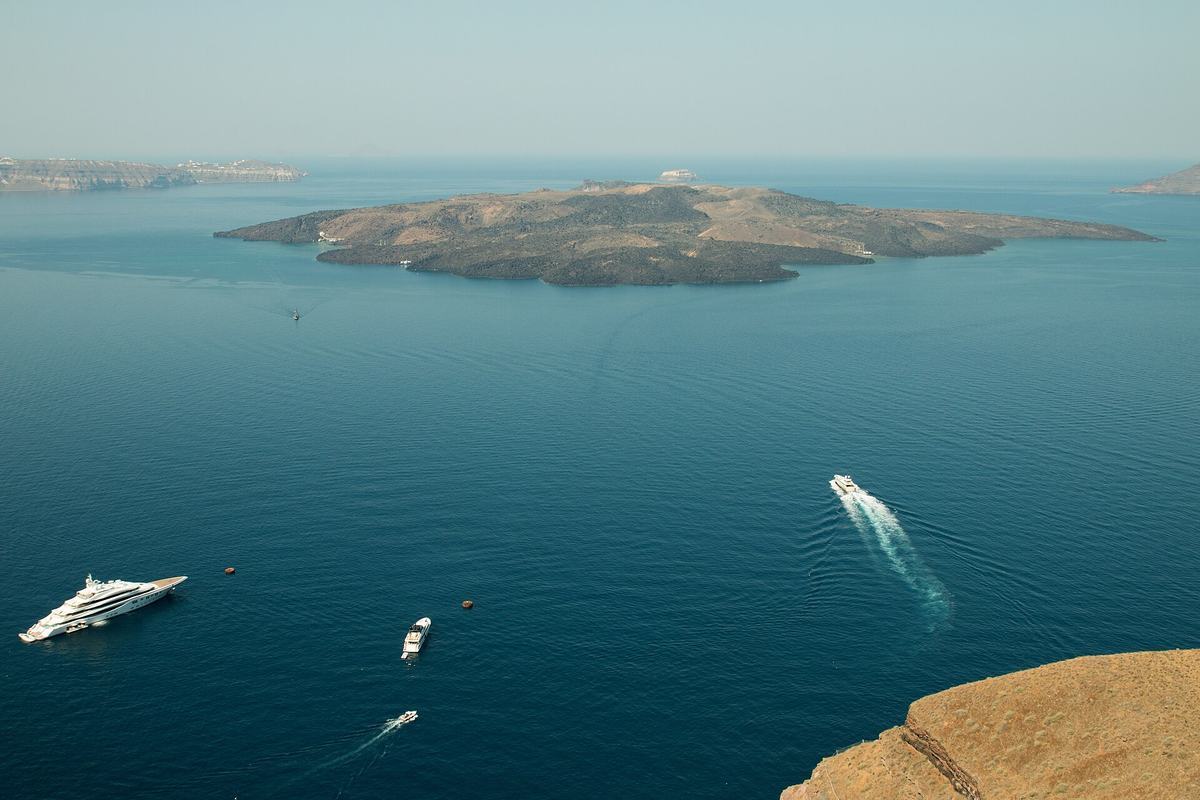
Santorini on a budget is entirely possible: stay in cheaper areas like Fira, Perissa or Karterados, use the cheap buses, eat at local bakeries and tavernas, and enjoy the many free things to do, from the sunset to the Fira-to-Oia hike. This guide covers when to visit, where to stay, getting around, eating and free activities to save money.
You do not need a fortune to enjoy the island, a practical angle on the wider Santorini travel guide. Smart choices keep costs down. The sections below cover budget travel.
When should you visit to save money?
To save money, visit in the shoulder seasons of spring, from March to May, or autumn, September to November, when accommodation and flights are cheaper and crowds thinner. Winter is the cheapest of all, though some places close and the sea is cold.
Timing is the biggest lever on cost. Santorini is at its most expensive in peak July and August. Travelling in the shoulder seasons, spring from March to May or autumn from September to November, brings cheaper accommodation and flights, smaller crowds and still-pleasant weather. The sea stays swimmable from late May into October.
The cheapest time of all is winter, from December to February, when prices fall furthest and the island is almost empty. The trade-off is real, since hotels, restaurants and attractions close and the sea is too cold to swim. Ferry and flight schedules also thin out, so a winter visit needs more planning.
For the best balance of cost and experience, late spring and early autumn are ideal. May and October in particular pair mild, sunny weather with sharply lower room rates and open tavernas, without the July crush. Booking flights and rooms weeks ahead in these months locks in the lowest prices, set within the wider best time to visit Santorini. Where you stay matters most.
Where should you stay on a budget?
On a budget, stay in cheaper areas like Fira, Karterados or the beach resorts of Perissa and Kamari, rather than pricey Oia. Fira is central and far more affordable than the caldera-view villages, while Perissa and Kamari offer good-value beach accommodation.
Accommodation is where Santorini’s costs spiral, so choosing wisely saves the most. Oia’s caldera-view cave suites command the island’s highest prices, so a budget trip bases itself elsewhere. Fira, the capital, offers much cheaper rooms while remaining central, well connected by bus and full of restaurants and life. It is the best all-round budget base.
Nearby Karterados is cheaper still and a short walk or bus from Fira, which keeps its handy central connections without the higher central price. For a beach holiday, the black-sand resorts of Perissa and Kamari have good-value guesthouses and apartments well below the clifftop prices, plus flat, easily walkable seafronts right beside the sand.
Hostels and shared dorms in Fira and Perissa cut the cost further for solo travellers and backpackers, and a private room with a small kitchenette saves on breakfasts, snacks and evening drinks across the stay. A budget traveller can still enjoy the caldera views for free by visiting Oia on a day trip by bus, so skipping an Oia room loses none of the scenery, set out alongside the guide to where to stay in Santorini. Getting around is cheap.
How do you get around cheaply?
You get around cheaply on Santorini’s KTEL buses, with one-way tickets of just 1 to 5 euros linking Fira with Oia, the beaches and the airport. Walking is free, so a car or quad is an optional extra rather than a necessity.
Transport on Santorini can be very cheap. The KTEL public bus network is efficient and inexpensive, with one-way fares of just one to five euros. Buses connect Fira, the hub of the system, with Oia, Perissa, Kamari, Akrotiri and the airport. This makes the bus the best way to get around on a budget without hiring a car.
Walking is free and often a pleasure, from exploring the villages on foot to the spectacular Fira-to-Oia caldera path. Hiring a car or quad adds flexibility but stays an optional extra rather than a must. A budget traveller can rely on the buses and their feet for the whole trip.
Two habits keep transport costs down. Checking the bus timetable in advance avoids paid taxis when a service is due soon, and basing yourself in Fira puts every route within one short ride. Buses can be busy and standing room common at peak times, so allowing a little extra time around the sunset rush and the airport runs is wise, set out alongside the guide to getting around Santorini. Eating well need not cost much.
How do you eat cheaply?
You eat cheaply by choosing local bakeries, traditional tavernas and gyros joints over caldera-view restaurants, with pastries and coffee for a couple of euros and a filling gyros far cheaper than a hotel meal. Supermarkets are pricey, so local eateries win on value.
Food is an easy place to save. The clifftop restaurants with caldera views in Oia and Fira charge a premium for the setting. For everyday eating, head instead to local bakeries, traditional countryside tavernas and gyros and souvlaki joints. A fresh pastry and Greek coffee cost only a couple of euros, and a generous gyros wrap makes a filling, cheap meal.
Self-catering saves less than expected, since island supermarkets are quite expensive, so local eateries often win on value. Eating where the locals eat, away from the famous viewpoints, keeps food costs modest while the meals stay tasty and authentic.
A picnic of bakery bread, cheese and fruit on the beach is another cheap option, and a bakery breakfast beats a hotel one on price. Ordering a spread of shared small plates at a taverna feeds a group for less than separate mains, and tap water plus a refillable bottle saves on drinks across a hot day, set out alongside the guide to Santorini food. The best things are free.
What are the best free things to do?
The best free things to do are watching the famous sunset, walking the Fira-to-Oia caldera path, wandering Oia, Fira and Pyrgos, and spending time on the beaches. Exploring the lanes and viewpoints costs nothing and is the heart of Santorini.
Happily, the island’s greatest pleasures cost nothing. Watching the world-famous sunset from Oia, Imerovigli or Fira is completely free and unforgettable. So is the spectacular 10-kilometre Fira-to-Oia caldera hike, consistently rated the top thing to do on the island. Wandering the whitewashed lanes, blue domes and viewpoints of Oia, Fira, Pyrgos and Megalochori costs nothing.
The beaches cost nothing to enjoy, with only the sunbeds charged, so a towel on the sand keeps a beach day free. A swim, a clifftop stroll and the caldera views, the essence of Santorini, are all free. The black-sand beaches of Perissa and Kamari and the striking Red Beach near Akrotiri all cost nothing to visit.
Other free sights round out an itinerary. The windmills of Oia, the castle ruins at sunset, the churches and blue domes across the villages, and the panorama from hilltop Pyrgos all cost nothing. A stroll through the medieval Kasteli quarter of Emporio and along the caldera path at Imerovigli adds more free highlights to a day. A budget trip loses little of the magic, set out alongside the guides to the sunset and the Fira to Oia hike. The questions below cover the points travellers ask most.
How much does a budget trip to Santorini cost?
A budget trip to Santorini rests on three big costs: flights or ferries, accommodation and food. Choosing the shoulder season, a room in Fira or Perissa, the bus over a rental, and local tavernas over caldera restaurants keeps the daily spend low.
The largest savings come from the big-ticket items rather than daily extras. Reaching the island by ferry from Athens can undercut a peak-season flight, and booking early locks in the lowest fares either way. A guesthouse in Fira or a beach apartment in Perissa costs a fraction of an Oia cave suite, which alone can transform the trip’s total. Cutting the accommodation and travel bill matters far more than trimming a euro off a coffee.
Day-to-day costs stay modest with a little planning. The bus replaces a rental, bakery and taverna meals replace clifftop dining, and the free sunset, hikes and beaches fill the itinerary. Sunbeds, boat trips and wine tastings are the main optional add-ons, so a traveller can dial spending up or down to match the budget.
The one splurge worth budgeting for is a single boat trip or sunset cruise, which reaches sights no free activity can. Setting a daily cap for food and extras, then keeping the accommodation and travel dates flexible, gives the most control over the total. Tracking spending against that cap for the first day or two makes it easy to adjust before the trip runs on, tied to the guide to a Santorini itinerary. A handful of habits stretch the budget further.
What tips help you save the most in Santorini?
The biggest savings come from booking early, travelling in the shoulder season, using the bus, eating at local tavernas and filling the days with free sights. Sharing a room, carrying a refillable water bottle and skipping paid sunbeds trim the daily spend.
Planning ahead does most of the work. Booking flights, ferries and rooms weeks in advance secures the lowest prices, and travelling either side of the July and August peak cuts accommodation costs sharply. A refillable water bottle, a picnic lunch and a room with a kitchenette shave money off every day. Setting a rough daily budget before arrival keeps the small extras in check across a week.
Small daily choices add up over a week. Riding the bus instead of taxis, laying a towel on the free sand rather than renting a sunbed, and eating one main meal at a village taverna keep costs down. Free walking routes, viewpoints and the sunset fill the rest of the day.
Timing helps too. Visiting Oia early or after sunset dodges the busiest, priciest hours, and travelling midweek can trim ferry and flight fares. Carrying cash for the bus and small tavernas avoids card surcharges, and a group sharing an apartment splits the largest cost of all, so the island stays rewarding on a tight budget, set out alongside the guide to things to do in Santorini. The questions below cover the points travellers ask most.
Are boat trips and day tours worth it on a budget?
Boat trips to the volcano and hot springs and a caldera sunset cruise are the day tours most budget travellers splurge on, since they reach sights the bus cannot. Booking a shared group tour rather than a private one keeps these highlights affordable.
Some experiences justify a paid ticket even on a tight budget. A boat trip to the volcanic islet of Nea Kameni and the warm springs, or a sunset catamaran cruise, reaches parts of the caldera no bus or walk can. These rank among the island’s memorable days out, so travellers often set aside part of the budget for one.
Keeping the cost sensible comes down to how you book. A shared group tour costs far less than a private charter, and comparing two or three operators reveals the best value for the same route. Booking directly and travelling in the shoulder season trims the price further.
Prioritising one excursion keeps the total in check. The volcano-and-springs boat trip and the sunset cruise are the two most popular options, so choosing between them rather than doing both suits a tight budget. A short wine tasting at an inland winery is a cheaper paid extra than a full boat cruise, and the free Fira-to-Oia hike delivers caldera views at no cost for travellers who skip a boat trip entirely, set out alongside the guide to the Santorini volcano. The common questions follow.
Frequently Asked Questions
Can you visit Santorini on a budget?
You can visit Santorini on a budget by staying in cheaper areas like Fira, Karterados or Perissa rather than pricey Oia, using the cheap KTEL buses, eating at local bakeries and tavernas, and enjoying the free things to do, from the sunset to the Fira-to-Oia hike.
Where is the cheapest place to stay in Santorini?
The cheapest places to stay are Fira, the central and well-connected capital, nearby Karterados, and the black-sand beach resorts of Perissa and Kamari, all far more affordable than the caldera-view cave suites of Oia. You can still visit Oia for free for the views.
What free things are there to do in Santorini?
Free things to do include watching the famous sunset, walking the Fira-to-Oia caldera path, wandering the villages of Oia, Fira and Pyrgos and their viewpoints, and spending time on the beaches, which are free to enjoy with only sunbeds charged.
Is Santorini expensive to visit?
Santorini has a reputation as an expensive island, driven mainly by Oia’s luxury caldera hotels and clifftop restaurants. Costs drop sharply with a Fira or Perissa base, the bus, local tavernas and the free sights, so the island suits a range of budgets rather than only luxury travellers.
How do you get from the airport or port cheaply?
The cheapest way from Santorini’s airport or the ferry port is the KTEL public bus to Fira for a low flat fare. From Fira, connecting buses reach Oia, Perissa and Kamari. Sharing a taxi with other travellers is the next option when the bus timetable does not suit an arrival time.
Can you see the Oia sunset for free?
The Oia sunset is free to watch from the public viewpoints, the castle ruins and the lanes, with no ticket required. Arriving early secures a good spot before the crowds. Watching from Imerovigli or Fira offers the same caldera sunset with fewer people and no cost at all.
How many days do you need in Santorini on a budget?
Three days suit a budget trip to Santorini, enough for the sunset, the Fira-to-Oia hike, a beach day and time in the villages, all low-cost or free. A fourth day adds one paid highlight, such as a volcano boat trip, without pushing the overall spend far higher.
Is it cheaper to reach Santorini by ferry or by plane?
Ferries from Athens are often cheaper than peak-season flights to Santorini, though they take longer, so the slow ferry is the most budget-friendly option. Fast ferries and flights cost more but save time. Booking either well ahead secures the lowest fares, especially in the busy summer months.
How can families visit Santorini on a budget?
Families visit Santorini on a budget by staying in a Perissa or Kamari apartment with a kitchenette, using the bus, and filling days with free beaches and village walks. Self-catering breakfasts, a shared main meal at a taverna and one paid boat trip keep a family holiday affordable.
Do you need to tip in Santorini?
Tipping in Santorini is modest and not obligatory, so a budget traveller can round up the bill or leave small change at a taverna rather than a fixed percentage. Service is often included on the check. Keeping tips small and paying cash for buses and bakeries helps a tight budget stretch further.