
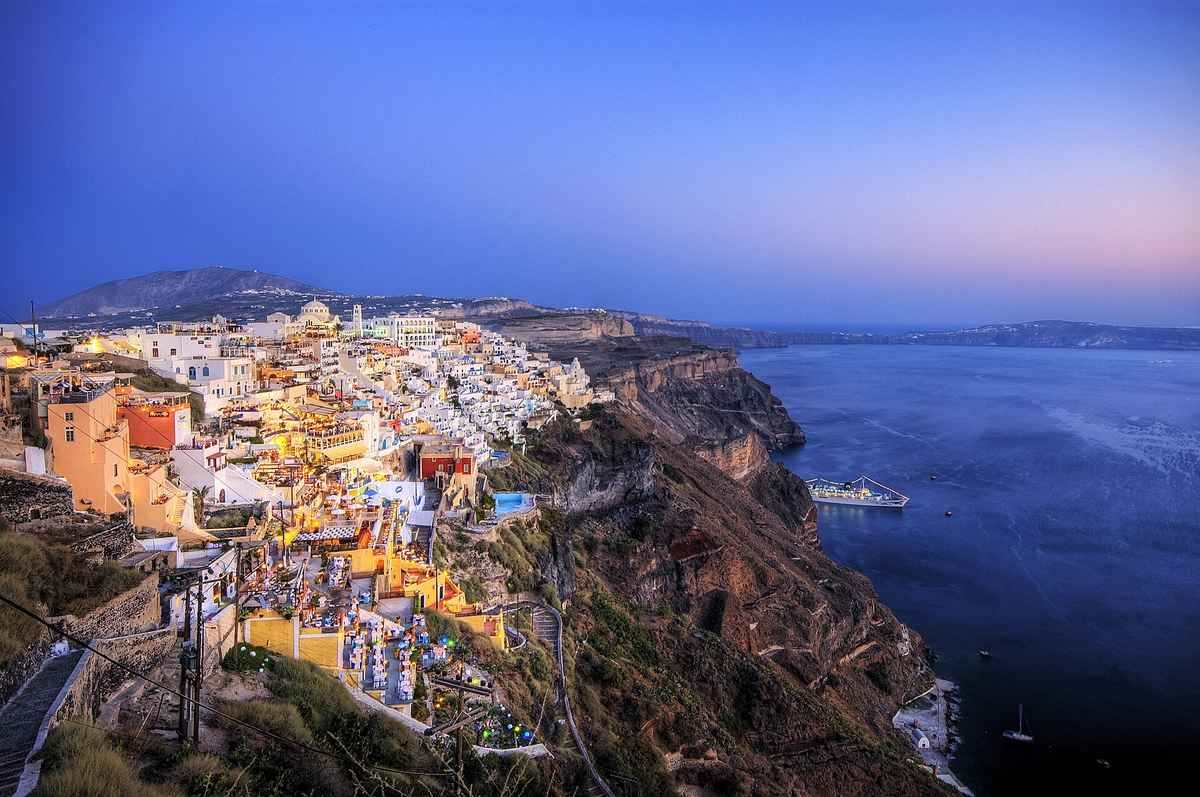
Oia vs Fira is the key decision when choosing where to stay in Santorini. Fira is the central, lively, cheaper capital, best for first-timers, buses and nightlife; Oia is the quieter, most romantic and photogenic village, famous for the sunset and luxury cave suites. This guide compares them on convenience, looks, cost and atmosphere.
Choosing between them shapes your stay in the wider Santorini travel guide. Both sit on the caldera rim. The sections below compare the two.
Oia vs Fira: what is the difference?
Fira is the busy, central capital with the main bus station, the most restaurants, shops and nightlife and cheaper hotels. Oia is the smaller, quieter, upmarket village famous for its blue domes, cave suites and sunset. Fira is practical; Oia is romantic.
Oia and Fira both perch on the caldera cliffs but have very different characters. Fira, the island’s capital, is the practical hub. It holds the central bus station, the cable car to the Old Port, the widest range of restaurants, bars, shops, banks and pharmacies, and the liveliest late-night atmosphere, all at generally lower prices.
Oia sits at the northern tip about 11 kilometres away. It is smaller, calmer and more exclusive, the picture-postcard Santorini of whitewashed lanes, blue-domed churches, windmills, boutique shopping and luxury cave hotels, crowned by the world-famous sunset.
The two villages share the same caldera and the same westward views, so both deliver the classic Santorini scenery. The gap lies in scale and pace: Fira is a working town with everything on hand, while Oia is a smaller, polished village built around romance and the sunset. Choosing between them comes down to what you want from the trip, set within the wider where to stay in Santorini. Fira wins on convenience.
Which is better for convenience?
Fira is far better for convenience. As the capital it has the main bus station with island-wide routes, the cable car, the closest access to the airport and ferry port, and the widest choice of shops. It is the easiest first-timer base.
For practicality, Fira is the clear winner. Every public bus route starts and ends at its central station, so from Fira you reach Oia, the beaches, the airport and the Athinios ferry port quickly and cheaply. This makes it the simplest base for anyone not hiring a car.
Fira is also closest to the airport and port, has the cable car down to the Old Port for cruise arrivals, and offers the densest concentration of restaurants, bars, shops, supermarkets, banks and pharmacies on the island. Arriving and leaving is simpler from a Fira base, whatever the time of the flight or ferry.
Oia, by contrast, is more remote, with fewer services and a longer trip to the port, beaches and airport. Reaching it means a bus or taxi through Fira, and the transfer at either end of the trip takes longer and costs more. For travellers relying on public transport, Fira’s central position saves time every day, set out alongside the guides to the Santorini bus and getting around. Oia wins on beauty and romance.
Which is more beautiful and romantic?
Oia is the more beautiful and romantic village, with the famous blue domes, windmills, whitewashed lanes and luxury cave suites, and the island’s best-known sunset. Quieter at night than Fira, it is the top choice for honeymooners, couples and photographers.
For sheer beauty, Oia is unmatched. It is the most photographed village in Greece, with cascading whitewashed houses, the iconic trio of blue domes, old windmills, elegant cave hotels and boutique galleries, all tumbling down towards Ammoudi Bay and facing the celebrated sunset.
The atmosphere is refined and romantic, and it is noticeably quieter than Fira late at night, which makes it the favourite of honeymooners, couples celebrating anniversaries and photographers. The trade-off is that Oia is far from quiet during the day, especially as the sunset crowds pour in, and it costs more.
Fira is handsome too, with its own lively clifftop views over the caldera and the volcano, so a Fira room is far from a compromise on scenery. The difference is one of degree: Oia concentrates the island’s most photographed corners, the blue domes and the windmills, into a compact, polished village. For a stay built around the classic postcard image, Oia is the dream-image village, set out alongside the guides to Oia and the sunset. Cost is a deciding factor.
Which is cheaper and who should choose what?
Fira is cheaper, with more budget and mid-range hotels, while Oia commands a premium that can add hundreds of euros to a few nights’ stay. First-timers wanting value choose Fira; honeymooners and luxury travellers choose Oia.
Money often settles the choice. Fira offers a wider range of budget and mid-range accommodation, while Oia is consistently the most expensive village. A caldera-view cave suite in Oia can add hundreds to over a thousand euros to a four-night stay compared with the same trip from Fira.
The right pick depends on the trip. For a first visit built around convenience, value and easy access to the whole island, Fira is the sensible base. For a honeymoon, anniversary, proposal or special escape, Oia delivers the romance and the views.
Length of stay shapes the decision too. With four or more nights, splitting the stay between the two suits well, pairing Fira’s convenience with a romantic finish in Oia. With one to three nights, moving hotels wastes time, so pick one base and day-trip to the other by bus. Booking either village early secures the best rooms and rates in the busy season, set out alongside the guides to a Santorini honeymoon and Santorini on a budget. The questions below cover the points travellers ask most.
Oia vs Fira for restaurants and nightlife?
Fira wins for restaurants and nightlife, with the island’s densest cluster of tavernas, cafés, bars and clubs. Oia has excellent but pricier fine dining and a quiet, romantic evening scene. Night owls choose Fira; couples after a calm dinner choose Oia.
The evening character sets the two apart. Fira buzzes after dark, with a strip of cocktail bars and clubs near the caldera edge that stay open into the early hours, plus casual tavernas, cafés and gyros joints for every budget. It is the island’s nightlife capital, so travellers who want music, drinks and a lively crowd base themselves here rather than in the quiet north of the island around Oia.
Oia takes a gentler approach. Its restaurants lean upmarket, with celebrated caldera-view tables and the seafood tavernas of Ammoudi Bay below, and dinner is the main event rather than a night out. The village grows peaceful once the sunset crowds leave, which suits a romantic meal but disappoints anyone chasing late bars.
The price gap shows at the table as much as the pillow. A caldera-view dinner in Oia commands a premium for the setting, while Fira offers the same island dishes across a wider range of budgets, from cheap gyros to smart restaurants. Travellers watching costs eat better value in Fira and save the Oia splurge for one special evening, tied to the guide to Santorini restaurants. Hotels are the next comparison.
Oia vs Fira for hotels and views?
Oia leads for luxury cave suites, plunge pools and the most dramatic caldera and sunset views, at the island’s highest prices. Fira offers more choice across budgets, from hostels to smart hotels. Splurge stays favour Oia; budgets favour Fira.
Oia is the home of the postcard Santorini hotel. Cave suites carved into the soft volcanic cliff, infinity pools spilling over the caldera and private terraces angled directly at the sunset define its accommodation, and the whole village faces west for the classic golden-hour view. That setting carries the steepest rates on the island, so an Oia room is a splurge rather than a saving.
Fira spreads across every price band. Hostels, guesthouses, mid-range hotels and a handful of luxury properties all cluster along its caldera rim, which faces the same volcano and catches its own sunset. The views are excellent even if the village lacks Oia’s exclusivity, so budget and mid-range travellers find far more choice here.
A short walk north along the caldera path from Fira reaches Firostefani and Imerovigli, two villages that blend Oia-style caldera views with Fira’s easy access to the bus and the town. These two neighbouring cliff villages often price below Oia while keeping the same quiet and the same caldera panorama, so they make a smart middle ground for travellers who feel torn between the two villages, set out alongside the guide to where to stay in Santorini. Beaches favour neither village directly.
Oia vs Fira for beaches and day trips?
Neither Oia nor Fira sits on a swimming beach, since both perch on the caldera cliffs. Fira connects faster by bus to the black-sand beaches of Kamari and Perissa. Oia has the swimming spot and tavernas of Ammoudi Bay below its steps.
The caldera setting means no sandy beach at either village. Swimmers rely on day trips to the south-east coast, where Kamari, Perissa and Perivolos offer long black-sand beaches with sunbeds and watersports. Fira reaches these quickly by its central bus routes, which gives it the edge for a beach-focused stay. The Red Beach and White Beach near Akrotiri in the south add more options, again easiest to reach from Fira’s central hub.
Oia has one watery asset of its own. Ammoudi Bay, down a long flight of steps below the village, is a small port with rocky swimming spots, cliff jumping and famous fish tavernas by the water. It is a scenic spot rather than a beach, so a proper beach day still means a trip south.
For a beach-led holiday, neither clifftop village is ideal, and a base in Kamari or Perissa itself beats both. Travellers set on the caldera scenery accept the day trip to swim, and Fira’s faster bus links make that trip shorter from the capital than from Oia, set out alongside the guide to Santorini beaches. Traveller type often decides the choice.
Oia vs Fira by traveller type?
First-timers, budget travellers, families and night owls suit Fira for its value, transport and buzz. Honeymooners, couples, photographers and luxury travellers suit Oia for its romance, views and calm. Longer stays split between the two to capture both sides of Santorini.
Matching the village to the traveller makes the decision clear. Fira fits a first visit built on easy transport and a mix of prices, a family wanting space and services, or a group after nightlife. Its central position means less time in transit and more time seeing the island, which suits shorter, busier trips where every hour counts.
Oia rewards a slower, more romantic style of travel. Couples on a honeymoon or anniversary, photographers chasing the light, and travellers happy to pay for a caldera suite find their match here. The quiet evenings and the sunset on the doorstep matter more to this traveller than bus links or nightlife.
A week or more on the island invites a split stay, a few nights in each, so a longer trip need not choose at all. Starting in Fira to explore and ending in Oia for the romance is a popular pattern, and it spreads the cost by pairing cheaper nights with a short splurge, set out alongside the guide to a Santorini itinerary. The questions below cover the points travellers ask most.
Frequently Asked Questions
Should you stay in Oia or Fira?
You should stay in Fira if it is your first trip and you want convenience, value, buses and nightlife, and choose Oia if you want the most romantic, beautiful village with the famous sunset and luxury cave suites. With four or more nights, splitting the stay between the two works well.
Is Oia or Fira more expensive?
Oia is more expensive than Fira, with caldera-view cave suites among the priciest rooms in Greece, often adding several hundred euros to a few nights’ stay. Fira has a much wider range of budget and mid-range hotels, making it the better-value base for most visitors.
Is Oia or Fira better for the sunset?
Oia is the most famous spot for the Santorini sunset, drawing big crowds to its castle and clifftop each evening. Fira and nearby Imerovigli also have superb sunset views with fewer people. Oia is the iconic choice, but staying there means sharing the moment with the crowds.
Should you split your stay between Oia and Fira?
Splitting your stay between Oia and Fira works well on a trip of four or more nights, giving Fira’s convenience and nightlife plus Oia’s romance and sunset. On a shorter trip of one to three nights, pick one base and day-trip to the other by bus to avoid moving hotels too often.
How far apart are Oia and Fira?
Oia and Fira lie about 11 kilometres apart along the caldera rim of Santorini. The KTEL bus links them in around twenty-five minutes for a low fare, and taxis run the route too. The scenic Fira-to-Oia caldera hike also connects the two villages on foot in a few hours.
Is Oia or Fira better for first-time visitors?
Fira is better for first-time visitors, since its central bus station, wide choice of hotels and restaurants, and easy access to the whole island make a first trip simple and good value. Oia suits a return visit or a romantic stay, and first-timers can still day-trip there for the sunset.
Is Oia or Fira quieter?
Oia is quieter than Fira at night, with a calm, romantic evening once the sunset crowds leave and no late bars or clubs. Fira stays lively into the early hours. By day, though, Oia fills with sunset visitors, so Fira’s neighbouring villages of Firostefani and Imerovigli are quieter around the clock.
Can you day-trip from Fira to Oia?
You can easily day-trip from Fira to Oia by the frequent KTEL bus, a ride of about twenty-five minutes for a low fare, or by taxi. Many visitors staying in Fira travel to Oia for the afternoon and the sunset, then return by bus, which captures Oia’s highlights without paying to stay there.