
The Santorini to Milos ferry takes about 2 to 5 hours depending on the boat, with daily summer sailings from around 16 euros, linking volcanic Santorini with the colourful, beach-rich island of Milos. This guide covers the journey time, the prices, the operators, the schedule and tips for the crossing.
Milos is a rewarding western-Cyclades hop from the wider Santorini travel guide. It lies to the north-west. The sections below cover the ferry.
How long is the Santorini to Milos ferry?
The Santorini to Milos ferry takes from about 1 hour 55 minutes on the fastest SeaJets boat to around 4 hours 50 minutes on a conventional car ferry. Milos lies north-west of Santorini, and both islands are volcanic.
The crossing time depends heavily on the vessel. The quickest service, a SeaJets high-speed catamaran, reaches Milos in just under two hours. The larger Fast Ferries conventional ships take about 4 hours 50 minutes, but cost far less and carry vehicles.
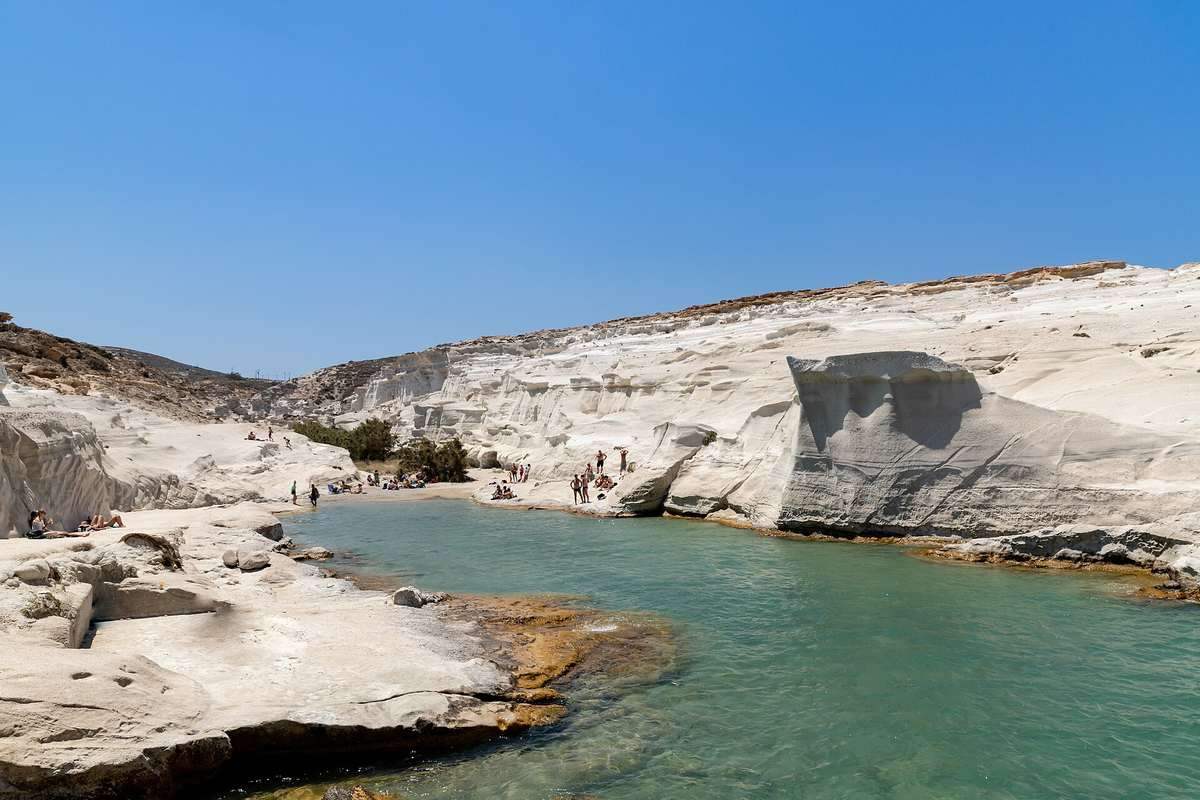
Milos sits to the north-west of Santorini, and like its neighbour it is a volcanic island. It is famous for its coloured rock formations, the lunar landscape of Sarakiniko and dozens of beaches. The route is a favourite for travellers combining Santorini’s caldera with the wilder, less crowded coastline of Milos, set within the wider how to get to Santorini. The fares vary widely.
How much does the ferry cost?
The Santorini to Milos ferry costs from around 16 euros for a foot passenger on a slower boat up to about 120 euros for premium seats on the fast catamaran, averaging 40 to 70 euros. Prices are higher in peak summer.
Fares range broadly with the type of boat. A one-way foot-passenger ticket starts from around 16 euros on a conventional sailing, with the cheaper car ferries often in the 35 to 40 euro range. The fast SeaJets high-speed seats cost more, up to about 120 euros for premium and business class, so most travellers pay between 40 and 70 euros.
Taking a vehicle is possible on all the ferries on this route, with cars averaging around 50 euros. Prices climb in the peak July and August period and as boats fill, so booking ahead secures both a place and a better fare, set out alongside the guide to a Santorini itinerary. The schedule is seasonal.
What is the schedule and operators?
The route is served by SeaJets high-speed boats and Fast Ferries conventional vessels, with around eight weekly sailings and two to three crossings a day in peak June to August. The first ferry leaves Santorini around 9am and the last about 7.30pm.
The route runs through the tourist season rather than year-round. Two operators serve it: SeaJets with fast catamarans reaching Milos in under two hours, and Fast Ferries with large conventional ships taking closer to five hours but carrying vehicles cheaply.
There are around eight sailings a week, rising to two or three crossings a day in the busy months of June, July and August. The first ferry leaves Santorini’s Athinios port around 9am and the last about 7.30pm. The service runs daily from about April through October but thins out sharply outside that, so shoulder-season travellers should check the timetable, set out alongside the guide to the best time to visit Santorini. A short list of tips helps.
What tips help for the crossing?
Book ahead for peak summer, arrive at Athinios port an hour before departure, and choose the fast SeaJets boat to save time or the conventional ferry to save money. Allow flexibility for the meltemi wind, which can delay high-speed boats in midsummer.
A little planning makes the hop easy. Book your tickets in advance for the busy summer sailings, which sell out, and decide between speed and price. The SeaJets fast boat halves the journey time, while the conventional Fast Ferries vessel costs far less and is gentler in rough seas.
On the day, arrive at the busy Athinios port an hour before departure to allow for the queues and port traffic, and build in flexibility. The strong meltemi wind in July and August can delay or disrupt the high-speed services. Milos, with its coloured cliffs, Sarakiniko and scores of beaches, deserves more than a day trip, so plan a stay, set out alongside the guides to Santorini day trips and the ports. The questions below cover the points travellers ask most.
How do you book tickets and find your ferry at Athinios?
Book Santorini to Milos ferry tickets online through the operators or an agent, well ahead in peak summer. Ferries leave from Athinios, Santorini’s main port below Fira. Arrive early and match the vessel name on your ticket to the boat at the quay.
Booking is simple online. The operators and the ferry-comparison agents list every sailing, letting you compare crossing time, seat class and fare on one screen before you buy. An e-ticket or a printed boarding pass then covers the trip. Reserving two to four weeks ahead in July and August secures a place and a better price.
Athinios port takes a little navigation. Ferries to Milos leave from Athinios, the main port 8 kilometres below Fira, reached by bus, taxi or transfer. The quay is busy at departure times, with several boats loading at once, so arrive an hour early, watch the destination boards and check the vessel name on your ticket against the ship, set out alongside the guide to the Santorini ports.
What are the on-board services and seat types?
The fast SeaJets boats offer airline-style economy, business and premium seats with a snack bar, but no open deck. The conventional Fast Ferries ships add sun decks, a cafeteria, more space and vehicle decks. Seat class sets the price.
The two vessel types feel different on board. The high-speed SeaJets catamaran seats passengers in enclosed cabins, with assigned economy, business and premium classes and a small snack bar, and there is no outside deck to stand on during the crossing. The ride is quick but can feel bouncy in wind.
The conventional Fast Ferries ship is larger and steadier. It carries open sun decks, a cafeteria, indoor lounges and room to move around, along with the vehicle deck for cars and bikes. Choosing the seat class shapes the fare, from a basic economy ticket on the slow boat to a reserved premium seat on the fast one, set out alongside the guide to the Santorini to Ios ferry.
Can you take a car, pet or luggage on the ferry?
All ferries on the Santorini to Milos route carry cars and motorbikes, with car fares around 50 euros. Pets travel in designated areas or pet cabins on most boats. Luggage travels free with no strict weight limit, stowed in racks near the seats.
Vehicles are welcome on the route. Both the SeaJets fast boats and the Fast Ferries ships have vehicle decks, so you can bring a rental car or motorbike, with a car adding around 50 euros to the fare. Booking the vehicle space ahead matters in peak season, as deck room fills.
Pets and luggage are straightforward. Most boats accept pets in carriers, in designated deck areas or in dedicated pet cabins on the larger ships, so check the operator’s pet policy when booking. Luggage rides free with no strict weight limit, stowed in racks by the seats or on the vehicle deck, which makes the ferry easier than a flight for heavy bags, set out alongside the guide to the Santorini to Naxos ferry.
Can you visit Milos as a day trip from Santorini?
A day trip from Santorini to Milos is possible on the fast SeaJets boat but tight, leaving only a few hours on the island before the return. Milos, with Sarakiniko, Kleftiko and dozens of beaches, rewards an overnight stay far more.
The timing barely works for a day trip. The fast boat reaches Milos in under two hours, so an early departure and a late return can, in peak season, leave a short window on the island. The slower ferry makes a same-day trip impractical, and any delay from wind eats into the day.
Milos deserves longer. The island’s coloured cliffs, the moonscape of Sarakiniko, the boat-only cove of Kleftiko and its scores of beaches take days to explore properly. Basing yourself on Milos for two or three nights turns the crossing into the start of a proper second-island stay rather than a rushed excursion, set out alongside the guide to Santorini day trips.
Why is Milos worth the crossing from Santorini?
Milos is worth the crossing for its coloured volcanic coast, the white moonscape of Sarakiniko, the boat-only sea caves of Kleftiko, and dozens of quiet beaches. It offers a wilder, less crowded contrast to Santorini’s caldera.
Milos matches Santorini’s drama with a different character. Both islands are volcanic, but Milos wears its geology on the coast, in cliffs and rocks streaked white, red and ochre. The famous Sarakiniko looks like a lunar landscape of smooth white rock above blue water, and Kleftiko’s sea caves and arches are reached only by boat.
The pace is calmer than Santorini. Milos spreads its visitors across scores of beaches and small fishing villages rather than concentrating them on a caldera rim, so it feels less crowded even in summer. Pairing the polished caldera views of Santorini with the raw coast of Milos makes a strong two-island itinerary, and the short ferry hop ties them together, set out alongside the guide to comparing the islands.
Frequently Asked Questions
How long does the Santorini to Milos ferry take?
The Santorini to Milos ferry takes from about 1 hour 55 minutes on the fastest SeaJets high-speed boat to around 4 hours 50 minutes on a slower conventional car ferry. Milos lies north-west of Santorini, and the route runs daily through the summer season.
How much is the Santorini to Milos ferry?
The ferry costs from around 16 euros for a foot passenger on a slower boat up to about 120 euros for premium seats on the fast catamaran, averaging roughly 40 to 70 euros. The slower car ferries are cheapest, sometimes 35 to 40 euros, with prices higher in peak summer.
How often does the Santorini to Milos ferry run?
The Santorini to Milos ferry runs around eight times a week, rising to two or three crossings a day in peak June to August, operated by SeaJets and Fast Ferries. The service is daily from about April to October but thins out sharply outside the tourist season.
Can you take a car on the Santorini to Milos ferry?
Yes, all ferries on the Santorini to Milos route carry cars and motorbikes on their vehicle decks, with a car adding around 50 euros to the fare. Book the vehicle space in advance for peak summer, as deck room fills quickly on the busiest sailings.
Can you do a day trip to Milos from Santorini?
A same-day trip is possible on the fast SeaJets boat but tight, leaving only a few hours on Milos before the return. With Sarakiniko, Kleftiko and dozens of beaches, Milos rewards an overnight stay of two or three nights far more than a rushed day trip.
Which is faster, SeaJets or Fast Ferries to Milos?
SeaJets high-speed catamarans are faster, reaching Milos in under two hours, while the conventional Fast Ferries ships take around 4 hours 50 minutes. The fast boat costs more and can be delayed by the meltemi wind; the slower ferry is cheaper, steadier and carries vehicles.
Do you need to book the Santorini to Milos ferry in advance?
Yes, book two to four weeks ahead for July and August, when the sailings and the better fares sell out on this popular island-hopping route. In the shoulder months of May, June, September and October there is more availability, so shorter notice is usually fine.