
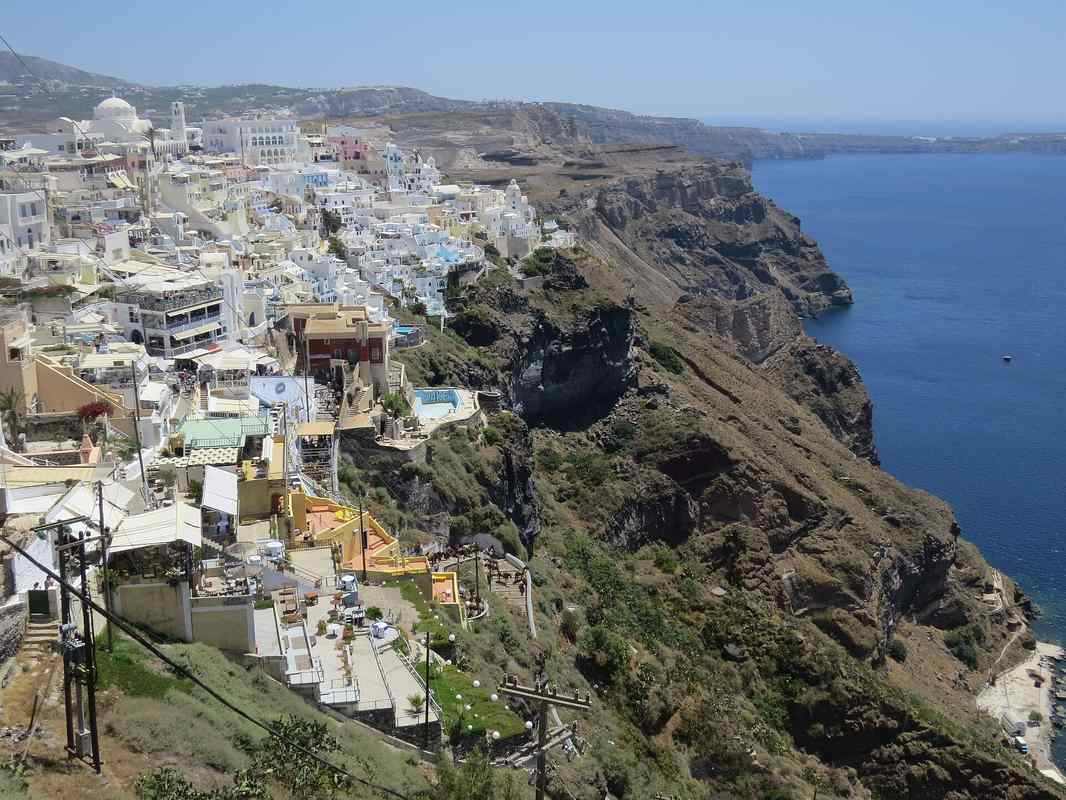
A Santorini packing list centres on light, breathable clothes, comfortable flat shoes for the cobbled, sloped lanes, swimwear, a light layer for breezy evenings and good sun protection. This guide covers what clothes to pack, the right footwear, swimwear and beach gear, and the essentials to bring.
Packing well makes the most of the wider Santorini travel guide. The climate and terrain shape what to bring. The sections below cover packing.
What clothes should you pack for Santorini?
Pack light, breathable clothes in cotton and linen for the warm climate: flowy dresses, shorts, blouses and linen shirts by day, and one or two dressier outfits for evening meals and sunset bars. Add a light jacket for cooler, breezy nights.
Santorini’s warm Mediterranean climate, particularly from late spring through to early autumn, calls for light, airy clothing. Breathable fabrics like cotton and linen keep you cool. Flowy dresses, loose shorts, blouses, linen shirts and lightweight trousers suit daytime sightseeing and the beach.
The island’s restaurants and sunset bars have a chic but relaxed vibe, so bring one or two smarter outfits, a dress, skirt or linen trousers, for dinners and drinks. Nights can turn cool and breezy, particularly in spring and autumn, so a light jacket, cardigan or hoodie earns its place for evenings, especially when dining outdoors within the wider Santorini weather. Footwear matters more than most travellers expect.
What shoes should you bring?
Bring comfortable flat shoes, as Santorini’s streets are cobbled, sloped and stepped, especially in Oia and Fira. Pack supportive flat sandals, sturdy walking shoes or trainers, and skip heels and flimsy footwear on the caldera lanes.
Footwear is the most important practical choice for Santorini. The villages sit on cliffs, with cobblestoned, uneven and steeply sloping lanes and endless steps, particularly in Oia and Fira, so supportive shoes are a must. Pack flat sandals with good grip, sturdy walking shoes, espadrilles with solid soles or trainers, and leave heels and unstable footwear at home. Both are impractical and unsafe on the terrain.
The spectacular 10-kilometre Fira-to-Oia caldera path rewards proper walking shoes, and water shoes handle the rocky, pebbly volcanic beaches and entries. These pair with the guides to the Fira to Oia hike and the beaches. Beach and swim gear is the next priority.
What swimwear and beach gear do you need?
You need at least two swimsuits, since days rotate between the beach, hotel pools and a private hot tub, plus a cover-up for indoor dining. Add a quick-drying towel, a packable beach bag, water shoes and sun protection.
Swimwear is at the heart of a Santorini trip. Bring at least two swimsuits, as the island’s beaches, the hotel pools with caldera views and your own plunge pool or hot tub keep you in swimwear for much of the day, and rotating two lets one dry. A cover-up is a must, since most restaurants, bars and hotels decline swimwear alone, and it doubles as light sun protection.
Pack a quick-drying towel and a packable beach bag for beach days, water shoes for the rocky volcanic shores, and steady sun protection, including a wide-brimmed hat and sunglasses against the strong Aegean sun. These fit alongside the guide to Perissa beach. The core essentials come next.
What essentials should you not forget?
Do not forget high-factor sun cream, a hat and sunglasses, a refillable water bottle, a portable charger for long days of sightseeing, and, from outside Europe, a European plug adapter. Bring personal medication and cash, as small tavernas and buses prefer it.
A short list of essentials rounds out the perfect Santorini packing list. Sun protection leads it: high-factor sun cream, a wide-brimmed hat and good sunglasses guard against the intense, reflective sun, and a refillable water bottle keeps you hydrated on hot days exploring.
Long days of walking, sightseeing and photographing the caldera drain a phone fast, so a portable power bank keeps your camera alive, and travellers from outside Europe pack a European two-pin plug adapter. Bring personal medication, a small daypack, and cash in euros, since smaller tavernas, the KTEL buses and taxis often prefer it over cards. These sit alongside the guides to the bus and Santorini on a budget.
What is the dress code in Santorini?
Santorini has a smart-casual dress code with no formal requirement. Daytime dress is relaxed: shorts, dresses and sandals. Upscale restaurants and caldera cocktail bars lean smart-casual in the evening, so a dress, collared shirt or linen trousers fit the setting.
The island reads as relaxed but style-conscious. Daytime calls for comfortable, breathable pieces for walking the villages and sitting on the beach. Evening venues, especially the caldera-view restaurants in Oia, Fira, Firostefani and Imerovigli, expect a tidier look, though ties and jackets stay at home.
Churches ask for covered shoulders and knees, so a light scarf or shawl doubles as a cover-up for a visit to a chapel and warmth for a breezy evening. Beach clubs sit between the two, with swimwear for the sunbeds and a cover-up for the bar and restaurant areas. Colours and fabrics shape how comfortable the day feels.
What colours and fabrics work best in Santorini?
White, blue, terracotta and warm neutrals photograph well against the whitewashed walls and blue domes, and reflect heat better than dark tones. Choose natural fabrics, linen, cotton and lightweight blends, over synthetics, which trap heat under the strong sun.
Light colours dominate Santorini for a reason. White, cream, pale blue and soft neutrals bounce the sun and match the caldera backdrop, which is why sunset photographs favour them. Warm earth tones like terracotta and ochre stand out against the whitewashed lanes without absorbing heat the way black does.
Fabric weight matters as much as colour. Linen and cotton breathe and dry quickly, while heavy synthetics cling in the afternoon heat. Flowing cuts suit the meltemi wind that funnels through the villages, so long dresses and wide trousers stay comfortable where tight, stiff clothing does not. Packing by season sharpens these choices further.
How should you pack for each season in Santorini?
Spring and autumn need layers, a light jacket and closed shoes for cooler evenings and occasional rain. Summer needs the lightest clothing, extra swimwear and maximum sun protection. Winter needs a warm jacket, waterproof layer and sturdy shoes for wind and rain.
Spring, from March to May, brings mild days and cooler nights, so pack breathable daywear with a jacket and a cardigan for evenings. Wildflowers and quieter villages reward comfortable walking shoes, and a compact umbrella covers the odd shower.
Summer, from June to September, is hot and dry with strong sun, so the lightest linen and cotton, extra swimsuits, a hat and high-factor sun cream carry the trip. Autumn, from October, cools gradually and adds a chance of rain, so a light waterproof layer joins the summer basics. Winter, from November to February, stays green and windy with rain, so a warm jacket, waterproof shell and sturdy shoes keep you comfortable. A short list of items rarely belongs in the case.
What should you leave out of your Santorini suitcase?
Leave out high heels, non-supportive shoes and large rolling suitcases, which struggle on cobbled steps. Skip heavy winter coats in summer, a hairdryer, since hotels supply one, and bulky formalwear. Pack a soft duffel or backpack over hard rolling cases for the stepped lanes.
The terrain rules out several items. High heels and flat, unsupportive shoes turn the sloped, cobbled lanes into a hazard, and large hard-shell suitcases resist the steps between the port, the road and cliffside hotels. A soft, packable duffel or a wheeled bag with sturdy handles travels the island far more easily.
Most hotels supply a hairdryer, towels and toiletries, so those add needless weight. Formal suits and cocktail gowns rarely fit the relaxed evening scene, and heavy coats belong in the case only for a winter visit. A lighter bag frees you for the stepped streets, ferry transfers and day trips detailed in the Santorini day trips guide. Tech and accessories deserve their own short list.
What tech and accessories should you pack for Santorini?
Pack a portable power bank, a European two-pin adapter, and a waterproof phone pouch for boat trips and beaches. Add packing cubes, a compact daypack and a refillable water bottle to stay organised and hydrated on long sightseeing days.
A phone doubles as a camera, map and translator across Santorini, so battery life shapes the day. A pocket power bank keeps it running through sunset shoots and long hikes, and a two-pin European adapter covers travellers from outside the continent. A waterproof pouch protects the phone on catamaran cruises, hot-spring swims and rocky beach entries.
Organisation saves time on a multi-village trip. Packing cubes separate outfits for Fira, Oia and beach days, and a light foldable daypack carries water, sun cream and a camera on the caldera path. A filtered or refillable water bottle cuts plastic waste and cost, since tap water suits washing but bottled or filtered water suits drinking on the island.
What are the essential items on a Santorini packing list?
The essentials group into five sets: light breathable clothing, supportive flat shoes, two or more swimsuits with a cover-up, sun protection with a hat and cream, and tech with a power bank and adapter. Cash and a light jacket complete the core kit.
A complete Santorini list works best as clear categories rather than a long, loose inventory. Clothing covers cotton and linen day pieces, one or two smart-casual evening outfits, and a light jacket for breezy nights. Footwear covers flat sandals with grip, sturdy walking shoes for the caldera path, and water shoes for the volcanic beaches.
Beach and sun gear covers the swimsuits, cover-up, quick-dry towel, wide-brimmed hat, sunglasses and high-factor cream. Practical extras cover a power bank, a two-pin adapter, a refillable water bottle, a packable daypack and euros in cash for tavernas and buses. Grouping the list this way keeps the bag light and the packing quick, which suits the ferry hops and village transfers laid out in the Santorini villages guide. A short pre-departure check against these five sets catches gaps before the airport, and it leaves room for a few souvenirs on the way home without overfilling the case.
What toiletries and health items belong on the list?
Bring high-factor sun cream, after-sun lotion, lip balm with SPF, personal medication and a small first-aid kit with plasters for blisters. Add motion-sickness tablets for ferry and boat trips, insect repellent for summer evenings, and any prescriptions in their original packaging.
Sun and sea drive the health list. High-factor sun cream and after-sun lotion counter the strong, reflective light, and an SPF lip balm protects against wind and glare on the water. A compact first-aid kit with plasters, antiseptic and pain relief covers blisters from the cobbled steps and the long Fira-to-Oia walk.
Boat and ferry travel adds two items worth carrying. Motion-sickness tablets or patches ease the crossing to the volcano, Thirassia or a neighbouring island, and light insect repellent handles mosquitoes on warm summer evenings. Prescription medication travels best in its original packaging with a copy of the prescription, and a small refill of any daily essentials avoids a pharmacy hunt on arrival.
Frequently Asked Questions
What should you pack for Santorini?
Pack light, breathable cotton and linen clothes, comfortable flat shoes for the cobbled, sloped lanes, at least two swimsuits with a cover-up, a light jacket for breezy evenings, and sun protection including a hat and sunglasses. Add a portable charger, a water bottle and a plug adapter.
What shoes are best for Santorini?
Comfortable flats are the best choice, as the streets are cobbled, sloped and stepped, especially in Oia and Fira. Pack supportive flat sandals, sturdy walking shoes or trainers, and skip heels and flimsy footwear. Water shoes help on the rocky volcanic beaches.
What should you wear in Santorini in the evening?
In the evening, wear smart-casual outfits, as restaurants and sunset bars have a chic but relaxed vibe: a dress, skirt or linen trousers work well. Bring a light jacket or cardigan, as nights turn cool and breezy, especially in spring and autumn and when dining outdoors.
Can you wear heels in Santorini?
Heels are impractical in Santorini, as the cobbled, sloped and stepped lanes in Oia and Fira make them unstable and unsafe. Wedges with solid soles work better for an evening out, and flat sandals or dressy flats suit dinner in the caldera-view restaurants.
Do you need different outfits for Oia, Fira and the beach?
Oia and Fira share the same smart-casual daytime and evening style, so one wardrobe covers both villages. The beach calls for swimwear and a cover-up, and beach clubs expect a tidier look at the bar. Comfortable flat shoes carry every setting across the island.
How much luggage should you bring to Santorini?
One soft-sided suitcase or duffel plus a daypack suits a Santorini trip, since the stepped, cobbled lanes and cliffside hotels make large hard-shell cases awkward. Packing cubes keep outfits sorted across villages, and a lighter bag moves easily between the port, the bus and ferry transfers to other islands.
What should you wear to a black-sand beach in Santorini?
At Perissa, Perivolos and Kamari, wear swimwear with a cover-up and pack water shoes, since the dark volcanic sand grows very hot underfoot in summer. A hat, sunglasses and high-factor sun cream guard against the strong glare, and a beach towel and packable bag round out the kit.
What plug adapter do you need in Santorini?
Santorini uses the round two-pin European plug on 230-volt mains, the same as mainland Greece. Travellers from the United Kingdom, the United States, Canada, Australia and other regions pack a European travel adapter, and a compact multi-port charger keeps a phone, camera and power bank topped up from one socket.
What should you wear in Santorini in summer?
In summer, wear the lightest cotton and linen, flowy dresses, shorts and loose shirts, with a swimsuit under a cover-up for beach days. A wide-brimmed hat, sunglasses and high-factor cream handle the strong midday sun, and a light shawl covers the shoulders for a cooler evening by the caldera.
How many swimsuits should you pack for Santorini?
Pack two or three swimsuits for Santorini, since days move between the beach, hotel pools and a private plunge pool, and one dries while another is in use. A quick-dry cover-up and a spare beach towel keep the rotation easy across a week on the island.
Is a jacket necessary in Santorini?
A light jacket or cardigan is worth packing year-round, since evenings turn breezy even in summer, and the meltemi wind cools the caldera terraces after sunset. Spring, autumn and winter need a warmer layer, and winter adds a waterproof shell for wind and rain across the exposed villages.