
Exo Gonia is a quiet, authentic hillside village near Pyrgos in central-eastern Santorini, with old houses and churches, the ancient Panagia Episkopi church nearby, surrounding vineyards and the celebrated Metaxi Mas taverna. This guide covers the village, the church, the food and how to visit. Plan the whole trip with Greece Tours.
Exo Gonia is an off-the-beaten-track gem in the wider Santorini travel guide. It sits inland near Pyrgos. The sections below cover the village.
What is Exo Gonia like?
Exo Gonia is a quiet, traditional village 8 kilometres south-east of Fira, near Pyrgos, built on a hillside with old whitewashed houses, churches and vineyards. Far from the crowds, it offers authentic island life, wide views and an acclaimed restaurant.
Exo Gonia is one of Santorini’s most genuine and peaceful villages. It sits about 8 kilometres south-east of Fira on a hillside close to the medieval village of Pyrgos and the Episkopi Gonia area. The village is a traditional settlement of old whitewashed houses, narrow lanes and handsome churches, wrapped in the vineyards that produce some of the island’s best wines.
Almost untouched by mass tourism, it gives a real sense of everyday Santorini, with wide views over the countryside towards the sea. Despite its quiet, it draws food lovers from across the island and rewards anyone seeking an authentic, unhurried stop, set within the wider Santorini villages. Its great landmark is an ancient church.
What is the Panagia Episkopi church?
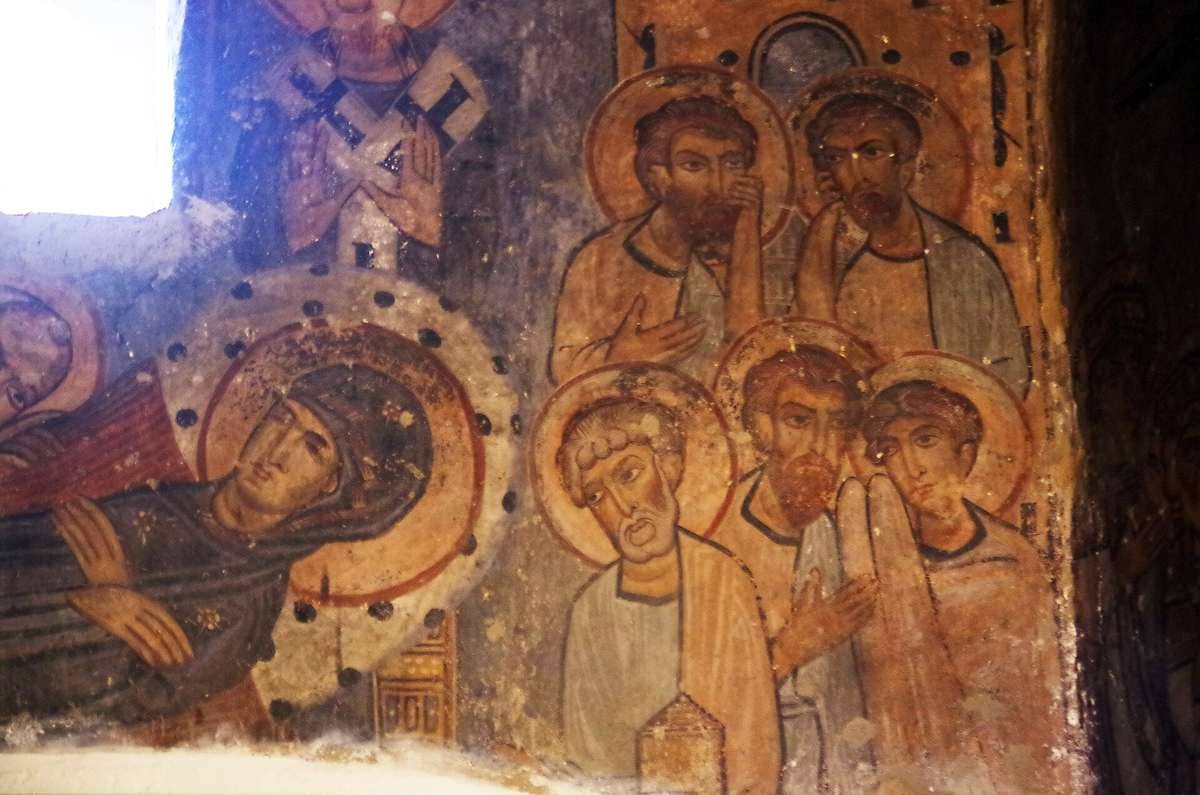
The Panagia Episkopi is the oldest church on Santorini, built in the eleventh century and dedicated to the Virgin Mary, reached by a quiet lane near Exo Gonia. Having survived earthquakes, fires and raids, this Byzantine church is a major historic and spiritual landmark.
The area’s standout sight is the Panagia Episkopi, the island’s oldest surviving church. Built in the eleventh century and dedicated to the Virgin Mary, it stands a short distance from Exo Gonia, in the Episkopi Gonia district, reached by a quiet lane south of the village.
Over its long history it has survived repeated earthquakes, fires and raids, yet endures as a fine example of Byzantine architecture and a place of deep local devotion. Its age and atmosphere set it apart from the island’s famous blue-domed churches. Nearby, the monastery of Agios Charalambos adds to the area’s religious heritage, making this a rewarding corner for history, set out alongside the guides to Santorini churches and history. The food here is famous.
Why is Exo Gonia known for food and wine?
Exo Gonia is known for Metaxi Mas, rated among the best restaurants on Santorini, serving Cretan and Santorinian cuisine with fine views and a strong wine list. The village is also surrounded by vineyards producing some of the island’s best Assyrtiko wines.
For its size, Exo Gonia punches far above its weight on food and wine. The village is home to Metaxi Mas, widely rated among the very best restaurants on the island. This taverna serves a blend of Cretan and Santorinian cooking with fine views and a large, well-chosen selection of local wines, so booking ahead is essential.
Beyond the table, Exo Gonia is wrapped in vineyards that yield some of Santorini’s finest Assyrtiko. This makes it a natural stop for wine lovers exploring the island’s volcanic terroir. The combination of strong food, good wine and authentic village calm is its great draw, set out alongside the guides to restaurants and Santorini wine. Getting there is easy.
How do you get to Exo Gonia?
Reach Exo Gonia in about 15 minutes by car or taxi from Fira, 8 kilometres south-east near Pyrgos. KTEL buses on the Kamari and Pyrgos routes stop nearby, a short walk from the village. Car or quad hire adds the most flexibility.
Exo Gonia is straightforward to reach despite its quiet setting. Lying about 8 kilometres south-east of Fira near Pyrgos, it is roughly a 15-minute drive or taxi ride from the capital. By public transport, KTEL buses running between Fira, Pyrgos and Kamari stop close by, leaving a short five-minute walk into the village once you follow the signs.
Hiring a car or quad is the most flexible option. It lets you combine Exo Gonia with the medieval village of Pyrgos, the Profitis Ilias monastery and the wineries and beaches of the island’s south in a single trip. Its central-eastern position makes it a handy and rewarding detour, set out alongside the guides to Pyrgos and the bus. The questions below cover the points travellers ask most.
How does Exo Gonia fit into the south of Santorini?
Exo Gonia sits at the centre of the island’s southern half, near Pyrgos, Megalochori, the Prophet Elias monastery and the wineries. It works as one stop on a route linking the medieval villages, the highest point and the beaches of Kamari and Perissa.
The village anchors a rich inland corner. Just west lies Pyrgos, the medieval castle village crowned by a Venetian kastro, and beyond it Megalochori with its bell towers and cave houses. The Prophet Elias monastery, the highest point on Santorini, rises to the south, giving views across the whole island.
The vineyards tie the area together. The slopes around Exo Gonia grow the Assyrtiko grape, and several of the island’s respected wineries sit within a short drive, so a day here can combine the villages, the monastery and a tasting. Down on the coast, Kamari and Perissa add black-sand beaches, making the south a full day out from Fira, set out alongside the guide to Megalochori.
Who does Exo Gonia suit as a visit?
Exo Gonia suits travellers after authentic village life, food lovers heading for Metaxi Mas, and anyone touring Pyrgos and the wineries by car. It is less suited to visitors set on beaches or caldera views, since it sits inland from the cliffs.
The village rewards a particular kind of traveller. Those who prize quiet lanes, local churches and everyday island life over crowds and postcard views will find Exo Gonia genuine and restful. Food lovers add it to the map for Metaxi Mas alone, and wine enthusiasts use it as a base among the vineyards.
It is a poor fit for a beach-and-caldera itinerary. Exo Gonia sits inland, so it offers no swimming and none of the famous cliff-top sunset scenes of Oia or Fira. Visitors with a car who value substance over spectacle get the most from it, treating the village as a calm, tasty counterpoint to the busy coast, set out alongside the guide to Santorini villages.
What is there to do in Exo Gonia?
In Exo Gonia you can walk the old lanes and churches, take in the hillside views, visit the ancient Panagia Episkopi, dine at Metaxi Mas and taste local wine. The village suits a slow half-day paired with nearby Pyrgos.
Exo Gonia rewards slow wandering. The narrow lanes wind between whitewashed houses, small churches and quiet courtyards, with the hillside opening to views over the vineyards and the sea beyond. The pace is unhurried, and the village asks to be strolled rather than ticked off a list.
A visit combines a few simple pleasures. You can step into the old churches, walk out to the Panagia Episkopi, book a table at Metaxi Mas, and taste the Assyrtiko grown on the slopes around the village. Paired with the medieval castle village of Pyrgos next door, Exo Gonia fills a relaxed half-day away from the caldera crowds.
Where can you eat and stay near Exo Gonia?
Metaxi Mas is the standout restaurant, with more tavernas and cafes in neighbouring Pyrgos and Mesa Gonia. For lodging, Exo Gonia and Pyrgos offer a few guesthouses and villas, giving a quiet, central base among the vineyards away from the busy caldera towns.
Dining centres on the celebrated taverna. Metaxi Mas draws diners from across Santorini for its Cretan and Santorinian plates, and reservations are needed in the season. The neighbouring villages of Pyrgos and Mesa Gonia add more tavernas, bakeries and cafes for a simpler meal or a coffee among the lanes.
Accommodation here is low-key and quiet. Exo Gonia and Pyrgos hold a handful of guesthouses, restored houses and small villas set among the vineyards, well away from the crowds and prices of Fira and Oia. A stay here suits travellers with a car who want a peaceful, central base for exploring the island, set out alongside the guide to where to stay in Santorini.
What makes the Panagia Episkopi worth visiting?
The Panagia Episkopi is worth visiting for its Byzantine architecture, old frescoes and marble screen, and its role as the island’s oldest church. Its feast on the fifteenth of August draws a lively local celebration, one of the most important religious days on Santorini.
The building itself rewards a look. The church keeps its Byzantine cross-in-square form, with a central dome, thick stone walls and fragments of old wall paintings and a carved marble screen inside. Set among fields and vines, it feels far removed from the polished blue-domed chapels of the caldera.
The church comes alive on its feast day. The fifteenth of August, the Dormition of the Virgin, brings one of the island’s biggest religious celebrations here, with a service, a procession and a village gathering. A visit on an ordinary day is quiet and contemplative, while the feast shows the church at the heart of local life, set out alongside the guide to the Prophet Elias monastery.
What is the wine around Exo Gonia like?
The vineyards around Exo Gonia grow Assyrtiko on volcanic soil, producing the crisp, mineral white wine Santorini is known for. Old ungrafted vines, trained low in the basket-shaped kouloura, ring the village, and several respected wineries lie within a short drive for tastings.
The land here is prime wine country. Exo Gonia sits among slopes of volcanic ash and pumice, the exact soil that gives Santorini Assyrtiko its bracing acidity and salty edge. The vines grow low to the ground in the traditional woven kouloura shape, coiled against the wind that sweeps the hillside.
Tastings are close at hand. The estates of the island’s south, near Pyrgos and Megalochori, pour Assyrtiko, oak-aged Nykteri and sweet Vinsanto within a short drive of the village, so a stop in Exo Gonia pairs naturally with a winery visit. The vineyards also frame the walk through the village itself, set out alongside the guide to Santorini wineries.
Frequently Asked Questions
What is Exo Gonia in Santorini?
Exo Gonia is a quiet, traditional hillside village about 8 kilometres south-east of Fira, near Pyrgos, with old whitewashed houses, beautiful churches and surrounding vineyards. Far from the crowds, it offers authentic island life, the ancient Panagia Episkopi church nearby and acclaimed food.
What is the Panagia Episkopi church?
The Panagia Episkopi is the oldest church on Santorini, built in the 11th century and dedicated to the Virgin Mary, near Exo Gonia. A Byzantine church that has endured earthquakes, fires and raids over the centuries, it is a major historic and spiritual landmark.
Why is Exo Gonia famous for food?
Exo Gonia is famous for Metaxi Mas, rated among the best restaurants on Santorini, serving Cretan and Santorinian cuisine with fine views and a strong wine list. The village is also surrounded by vineyards producing some of the island’s best Assyrtiko wines.
Is Exo Gonia the same as Mesa Gonia?
No, Exo Gonia and Mesa Gonia are two separate villages in the same hillside area near Pyrgos, their names meaning outer and inner Gonia. Both are quiet, traditional settlements among vineyards, and the Panagia Episkopi church sits in the Episkopi Gonia district between them.
How do you get from Fira to Exo Gonia?
From Fira, Exo Gonia is about 8 kilometres south-east, a 15-minute drive or taxi ride. KTEL buses on the Pyrgos and Kamari routes stop nearby, leaving a short walk into the village. A car or quad is the most flexible way and pairs well with a visit to Pyrgos.