
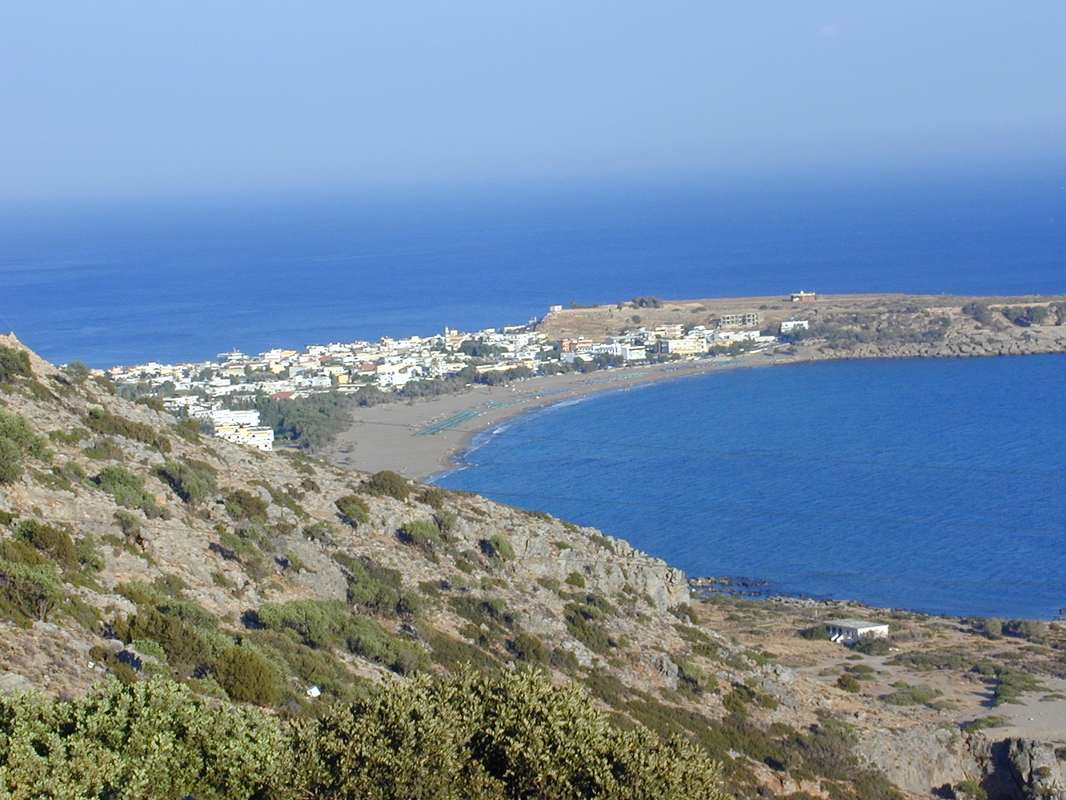
Paleochora sits on a small peninsula jutting into the Libyan Sea on the far south-west coast of Crete, earning its nickname as the bride of the Libyan Sea. This relaxed resort town in the Chania region offers two distinct beaches flanking the peninsula: a long sandy stretch on one side and a pebbly shore on the other. The ruined Venetian fortress Kastel Selino crowns the headland between them. The town maintains an easy-going atmosphere that appeals to independent travellers, with traditional tavernas lining a lively evening street and regular boat connections to coastal villages. Explore this sunny, sheltered corner of the island with My Greece Tours.
The town serves as an excellent base for exploring the remote south-west coastline, with ferry services running east to Sougia, Loutro and Agia Roumeli, and west toward Elafonisi. The European E4 long-distance coastal path passes directly through Paleochora, attracting hikers and walkers. The sunny, sheltered setting remains quieter and more authentic than the busy north-coast resorts. The sections below cover the beaches, historical sites, local atmosphere, boat connections, and practical visitor information. For broader island context, consult our comprehensive Crete travel guide.
What are the beaches like in Paleochora, Crete?
Paleochora offers two distinct beaches on either side of its peninsula. Pachia Ammos, the sandy beach, stretches along the western side with gentle waters. Chalikia, the pebbly beach on the eastern shore, faces the open Libyan Sea with typically stronger waves.
The sandy beach known as Pachia Ammos extends for over a kilometre along the western flank of the peninsula, offering calm, shallow waters ideal for families and swimmers. Tamarisk trees provide natural shade in places, and the beach remains well-organised with sunbeds and umbrellas available for hire during the summer months. The sheltered position protects bathers from strong winds, making it the preferred choice for relaxed swimming. Tavernas and cafes line the beachfront promenade, serving fresh fish and local specialities throughout the day. The sunset views across the Libyan Sea draw evening strollers to the waterfront, creating a pleasant social atmosphere.
This beach represents one of the most accessible and enjoyable things to do in Crete for visitors seeking a laid-back coastal experience.
The eastern pebbly beach, Chalikia, offers a different character with its mix of smooth stones and coarser sand. The more exposed position means the sea can be rougher, attracting windsurfers and those who prefer livelier waters. The beach stretches northward from the castle ruins, providing dramatic views of the headland and the open sea beyond. Fewer facilities exist on this side, giving it a wilder, more natural feel that appeals to visitors seeking solitude. Early morning swims here offer crystal-clear visibility and fewer crowds. The contrast between the two beaches allows visitors to choose their preferred environment depending on weather conditions and personal preference, with both options just minutes apart on foot across the compact peninsula.
East of town, the village and gorge of Anydri drop to a quiet pebble cove.
What is the history of Kastel Selino in Paleochora?
The Venetian fortress Kastel Selino crowns the rocky headland between Paleochora’s two beaches. Built in the thirteenth century to protect the south coast, the castle now stands in atmospheric ruins, offering panoramic views across the Libyan Sea and surrounding coastline.
The Venetians constructed Kastel Selino during their occupation of Crete to defend against pirate raids and Ottoman incursions from the south. The strategic position on the elevated headland allowed defenders to monitor approaching vessels and control access to the small natural harbour. The fortress served as the administrative centre for the Selino province, giving the region its historical name. Ottoman forces eventually captured and destroyed much of the structure, leaving the evocative ruins visible today. Visitors can climb freely among the remaining walls and towers, exploring the layout of the medieval fortification.
The site requires no entrance fee and remains accessible throughout the day, making it a popular spot for photography and sunset watching from the elevated vantage point above the town. Inland, the shaded mountain village of Azogires hides springs, watermills and legend.
The castle ruins connect directly to the town centre via a short uphill path, taking just ten minutes to reach from the main street. Wildflowers and hardy shrubs now grow among the ancient stones, adding colour to the weathered masonry. Information panels at the site explain the historical context and architectural features in both Greek and English. The views from the ramparts extend east along the coast toward Sougia and west toward the distant mountains. The castle provides an atmospheric backdrop to both beaches, visible from most points around the peninsula.
Evening visits offer particularly magical light as the sun sets over the Libyan Sea, casting long shadows across the fortification walls and illuminating the town below in golden hues.
What is the atmosphere and character of Paleochora in Crete?
Paleochora maintains an easy-going, independent-traveller atmosphere distinct from larger north-coast resorts. The pedestrianised evening street comes alive with tavernas, bars and local life. The town attracts hikers, long-stay visitors and those seeking authentic Cretan coastal culture without mass tourism.
The main street transforms each evening into a vibrant pedestrian zone where locals and visitors mingle at outdoor tavernas and cafes. Traditional Greek music often drifts from open doorways, and the relaxed pace encourages lingering over meals and conversation. The town has resisted large-scale hotel development, instead offering smaller family-run guesthouses and apartments that foster a more intimate community feel. Bakeries sell fresh bread and pastries each morning, while the weekly market brings farmers and producers from surrounding villages to sell vegetables, cheese and honey. The harbour area bustles with fishing boats returning with daily catches, which appear on restaurant menus the same evening.
This authentic rhythm of coastal life continues year-round, with Chania lying roughly two hours north by road for those seeking urban amenities.
The European E4 long-distance footpath passes directly through Paleochora, bringing hikers who use the town as a rest stop or base for coastal walks. The sunny, sheltered microclimate provides reliable weather even when northern Crete experiences clouds or rain. English and German are widely spoken due to the established community of repeat visitors and long-term residents. Internet cafes, small supermarkets and practical services cater to extended stays rather than quick package tours. The absence of large cruise-ship crowds or airport proximity preserves the unhurried character. Visitors discover Paleochora through deliberate choice rather than accident, creating a self-selecting community of travellers who appreciate its understated charms and position among the hidden gems in Crete.
What boat connections operate from Paleochora?
Regular ferry services connect Paleochora to coastal villages inaccessible by road. Boats run east to Sougia, Loutro and Agia Roumeli, and west toward Elafonisi. These connections allow exploration of remote beaches and the Samaria Gorge exit point during summer months.
The ferry service operates daily during the tourist season, typically from late spring through early autumn, with reduced schedules outside peak months. The eastbound route stops at Sougia, a quiet beach village, before continuing to Loutro, a picturesque settlement with no road access, and finally Agia Roumeli at the mouth of the Samaria Gorge. Hikers completing the famous gorge walk often take the boat from Agia Roumeli to Paleochora or other coastal points. The westbound service heads toward the stunning pink sands near Elafonisi, though road access also exists to that destination. Journey times vary from thirty minutes to nearby villages up to two hours for the full eastbound route.
Tickets can be purchased at the harbour office or sometimes directly on board, with prices remaining reasonable for the scenic coastal journey. The main road north climbs to Kandanos, the rebuilt capital of inland Selino.
The boat trips themselves offer spectacular views of the rugged, mountainous coastline that plunges dramatically into the Libyan Sea toward the remote island of Gavdos. Dolphins occasionally accompany the vessels, and the clear waters reveal rocky seabeds and underwater caves along the route. The ferries provide both practical transport and leisure excursions, allowing visitors to explore multiple south-coast settlements without backtracking by road through the mountains. The service connects to the broader network of coastal boats operating along southern Crete, enabling multi-day coastal journeys for adventurous travellers. Schedules depend on weather conditions, and services may be cancelled during rough seas or strong winds.
Visitors planning to rely on boat connections should confirm current timetables locally and maintain flexible plans, particularly when considering where to stay in Crete during island exploration.
How do you reach Paleochora and what facilities exist?
Paleochora lies roughly seventy-five kilometres south of Chania, reached by a winding mountain road taking approximately ninety minutes. Regular bus services connect to Chania. The town offers accommodation, tavernas, supermarkets, medical services and vehicle rental for independent exploration of the south-west coast.
The drive from Chania descends through mountain villages and olive groves, offering dramatic views as the road winds down to the coast. Public buses operate daily from Chania bus station, with increased frequency during summer months and reduced services in winter. The journey by bus takes slightly longer than by car due to stops in intermediate villages. No airport exists nearby; visitors typically fly to Chania and continue overland. The town itself remains compact and entirely walkable, with the furthest points separated by just fifteen minutes on foot. Parking areas exist at both ends of the peninsula for those arriving by rental car or motorcycle.
The harbour serves as the focal point, with the main commercial street running parallel to the waterfront and connecting both beaches. The pedestrianised evening zone occupies the central section, creating a pleasant car-free environment for dining and socialising.
Accommodation ranges from simple rooms and studios to small hotels and apartments, most family-owned and operated. Advance booking is advisable during July and August, while shoulder seasons offer more spontaneous availability. Tavernas serve traditional Cretan cuisine with fresh fish, grilled meats and local vegetables featuring prominently on menus. Supermarkets stock essentials for self-catering, and bakeries provide breakfast options. A medical centre handles minor health issues, with the main hospital in Chania for serious cases. Vehicle rental agencies allow exploration of nearby attractions including Elafonisi beach and mountain villages. ATMs and currency exchange services exist, though carrying some cash remains advisable.
The town provides reliable internet connectivity in most accommodations and cafes, supporting remote workers and digital nomads who appreciate the relaxed coastal setting.
Frequently Asked Questions
When is the best time to visit Paleochora?
Late spring from April through early June and early autumn from September through October offer ideal conditions for visiting Paleochora. Temperatures remain warm and pleasant for swimming without the intense heat of midsummer, and the town enjoys a quieter atmosphere with fewer visitors. The sea temperature stays comfortable for swimming well into October due to the sheltered south-coast position. Wildflowers bloom across the surrounding hills in spring, creating beautiful hiking conditions along the E4 coastal path. July and August bring peak crowds and higher accommodation prices, though the guaranteed sunshine and full ferry schedules appeal to those with fixed holiday dates.
Winter months see reduced services and cooler weather, but the town maintains a small community of long-stay visitors who appreciate the mild climate and peaceful ambience. Restaurants and shops reduce their hours outside the main season, yet sufficient facilities remain open year-round for independent travellers seeking an authentic off-season experience.
Is Paleochora suitable for families with children?
Paleochora works well for families seeking a relaxed beach holiday away from crowded resorts. The sandy Pachia Ammos beach offers shallow, calm waters ideal for young children, with gentle entry and minimal waves due to the sheltered western position. The compact size of the town means families can walk everywhere safely without relying on transport, and the pedestrianised evening street provides a car-free zone for children to move freely. Tavernas welcome families and offer simple grilled dishes that appeal to less adventurous young eaters alongside traditional Greek specialities. The castle ruins provide an accessible historical site that children can explore without formal tours or entrance fees.
Playgrounds exist near the beaches, and the overall safe, friendly atmosphere allows children considerable freedom. The boat trips to nearby villages offer exciting excursions that break up beach days with adventure. Families should note that entertainment options remain low-key compared to purpose-built resorts, with no water parks or organised kids’ clubs, making Paleochora best suited to families who value natural play, swimming and simple pleasures over structured activities.
What hiking opportunities exist around Paleochora?
The European E4 long-distance coastal path passes directly through Paleochora, offering exceptional hiking in both directions along the south-west coast. Eastward, the trail leads to Sougia through dramatic coastal scenery, taking approximately five to six hours for fit walkers. Westward sections explore the Selino region with routes to mountain villages and ancient sites. The Anidri Gorge lies within easy reach, providing a shorter half-day walk through a scenic ravine. Coastal paths connect to isolated beaches and coves accessible only on foot, rewarding hikers with private swimming spots. Spring and autumn provide optimal hiking conditions with moderate temperatures and blooming vegetation, while summer heat makes early morning starts essential.
Trail markings vary in quality, and carrying water, sun protection and appropriate footwear remains crucial. Local guidebooks and maps available in town provide detailed route descriptions. Guided hiking tours can be arranged through local operators for those preferring expert navigation. The combination of coastal and mountain terrain offers diverse landscapes within a compact area, making Paleochora an excellent base for walkers exploring southern Crete’s natural beauty.