
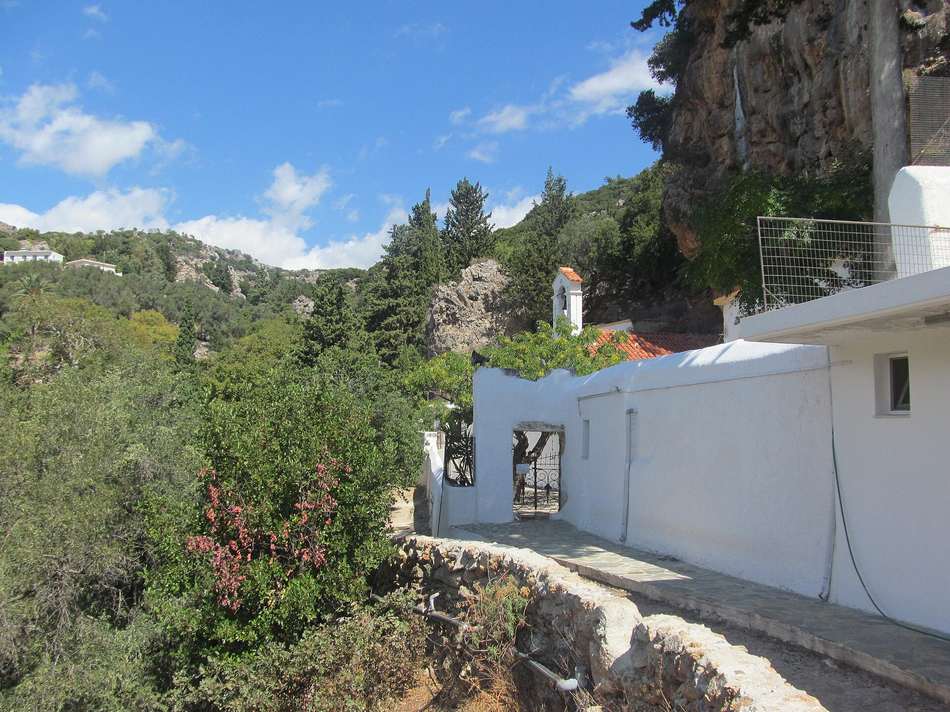
Azogires is a tiny green mountain village tucked into the hills of the Selino district in south-west Crete, just inland from the coastal town of Paleochora. Plane trees, springs and running streams shade the village, creating a rare pocket of lush greenery on the otherwise dry south coast. The village is best known for the monastery and cave linked to the legend of the Ninety-Nine Holy Fathers, hermit monks who lived and worshipped in these hills. Footpaths wind through oak and plane woods, old watermills stand along the water, and a small folklore museum preserves local heritage. Discover this peaceful corner of the Chania region with My Greece Tours.
Azogires offers cool shade, legend and quiet to travellers seeking a slow afternoon away from the beaches. The village sits a short drive inland from Paleochora, making it an easy escape into the mountains of Selino. The sections below cover the monastery and cave of the Holy Fathers, the natural setting, the folklore museum, walking routes and practical tips for visiting. For broader context on the island, consult our Crete travel guide to plan your journey through this storied region.
What is the legend of the Ninety-Nine Holy Fathers in Azogires, Crete?
The legend tells of ninety-nine hermit monks who lived and worshipped in the cave and hills around Azogires. A small monastery and the church of the Holy Fathers commemorate their devotion, and a short walk leads to the cave chapel.
The legend of the Ninety-Nine Holy Fathers forms the spiritual heart of Azogires and draws pilgrims and curious travellers alike to this quiet mountain village. According to tradition, ninety-nine hermit monks chose these wooded hills as their retreat, living in the cave and surrounding slopes in prayer and solitude. The monastery dedicated to the Holy Fathers stands near the village centre, and the church of the Holy Fathers preserves icons and frescoes that honour their memory. The cave itself lies a short walk uphill, where a small chapel marks the site. Visitors climb a footpath through oak and plane woods to reach the cave entrance, a cool, shadowed space that invites contemplation.
The legend has shaped the identity of Azogires for centuries, and the annual feast day in July brings villagers and visitors together in celebration. The story adds a layer of myth and devotion to the natural beauty of the setting.
The cave and monastery are among the most distinctive things to do in Crete for travellers interested in religious heritage and local legend. The walk to the cave takes roughly twenty minutes from the village square, following a well-trodden path that winds uphill through dappled shade. The chapel at the cave entrance is simple and whitewashed, with a small courtyard where candles flicker in the breeze. Inside the cave, the rock walls are blackened by centuries of incense and candlelight, and the air is cool and still. The monastery in the village itself is modest, with a courtyard shaded by plane trees and a small bell tower.
The legend of the ninety-nine monks has inspired countless retellings, and local guides are often happy to share variations of the story. The combination of natural setting and spiritual history makes Azogires a memorable stop in the Selino hills.
Why is Azogires unusually green for the south coast of Crete?
Azogires benefits from natural springs and running streams that flow year-round, creating a microclimate of shade and greenery. Plane trees and oaks thrive here, and old watermills line the water, making the village a cool refuge on the dry south coast.
The south coast of Crete is typically arid, with sparse vegetation and intense summer sun, but Azogires stands as a green exception. Natural springs emerge from the hillsides, feeding streams that run through the village even in the hottest months. Plane trees spread their broad canopies over the water, and oak woods climb the slopes, creating a landscape more typical of the north than the south. The constant flow of water has supported agriculture and settlement here for centuries, and old stone watermills still stand along the streams, their mechanisms silent but intact. The sound of running water and the rustle of leaves give Azogires a tranquil, almost alpine character.
The microclimate is a relief for visitors who have spent days on the beaches near Paleochora, offering cool shade and a different palette of greens and grays.
The watermills are a testament to the village’s agricultural past, when grain was ground using the power of the streams. The mills are built of local stone, with arched openings and wooden wheels that once turned in the current. The village has preserved these structures, and footpaths connect them along the watercourse. The greenery and water make Azogires one of the hidden gems in Crete, a place where the landscape defies the usual expectations of the south coast. The springs also supply the village with fresh drinking water, and small fountains bubble in the square. The combination of shade, water and birdsong creates a peaceful atmosphere that invites visitors to linger.
The contrast with the sun-baked coast below is striking, and the village feels like a secret garden tucked into the hills.
What can visitors see at the folklore and natural-history museum in Azogires?
The small museum in Azogires displays traditional tools, textiles, household items and natural-history specimens from the Selino region. It offers a glimpse into mountain life and local crafts, preserving the heritage of the village and surrounding hills.
The folklore and natural-history museum in Azogires occupies a modest building near the village square, curated by local enthusiasts who have gathered artefacts and specimens over the years. The collection includes traditional farming tools, looms, spinning wheels, pottery and woven textiles that illustrate the daily life of mountain villagers in past generations. Household items such as oil lamps, copper pots and wooden furniture fill the display cases, each piece telling a story of self-sufficiency and craftsmanship. The natural-history section features taxidermy birds, pressed plants, minerals and fossils from the surrounding hills, highlighting the biodiversity of the Selino district. The museum is small and informal, but it provides valuable context for understanding the village and its environment.
Labels are often in Greek, though staff or volunteers are usually on hand to explain the exhibits. The museum is typically open in the mornings and late afternoons, and entry is either free or by small donation.
Visiting the museum is a worthwhile addition to a day of hiking in Crete, offering a cultural counterpoint to the natural beauty of the area. The displays reflect the ingenuity and resilience of mountain communities, where resources were scarce and every tool had to be made or repaired locally. The textiles are particularly striking, with intricate patterns woven in wool and cotton, and the natural dyes still vibrant. The natural-history specimens include birds of prey, owls and songbirds that inhabit the oak and plane woods around Azogires. The museum also documents the history of the watermills and the agricultural cycles that shaped village life.
The collection is a labour of love, and the museum serves as a gathering place for locals and a point of pride for the community. It is a quiet, unassuming space that rewards visitors with a deeper appreciation of the village and its heritage.
What walking routes and footpaths are available around Azogires?
Footpaths wind through oak and plane woods around Azogires, leading to the cave of the Holy Fathers, old watermills and viewpoints over the south coast. The trails suit casual walkers and offer shade, birdsong and glimpses of mountain Selino.
The footpaths around Azogires are well-suited to travellers seeking a gentle walk rather than a strenuous hike. The most popular route leads from the village square to the cave and chapel of the Holy Fathers, a twenty-minute climb through shaded woodland. The path is rocky in places but clearly marked, and the canopy of plane and oak trees provides relief from the sun. Another trail follows the stream past the old watermills, where the sound of water and the cool air make for a pleasant stroll. The paths are not signposted with modern waymarkers, but locals are happy to point the way, and the routes are well-trodden.
Birdsong fills the woods, and wildflowers bloom in spring and early summer. The trails offer a taste of the quieter, greener side of the island, far from the crowded coastal paths. The walking is easy enough for families, and the shade makes it comfortable even in summer.
The viewpoints along the trails offer glimpses of the south coast and the hills of Selino, with the sea shimmering in the distance. The paths also connect to longer routes that lead to neighbouring villages such as Sougia, though these require more time and preparation. The woods around Azogires are home to Cretan wildlife, including birds, butterflies and the occasional fox or badger. The trails are quiet, and visitors often have the paths to themselves, especially outside the peak summer months. The combination of legend, nature and solitude makes walking around Azogires a memorable experience.
The village itself is a good base for exploring the Selino district on foot, with tavernas offering refreshment and shade after a morning in the hills. The footpaths are one of the main reasons to visit, offering a gentle introduction to the mountain landscapes of south-west Crete.
How do you reach Azogires from Paleochora and what should you know before visiting?
Azogires sits a short drive inland from Paleochora, roughly ten minutes by winding mountain road. The village has a taverna but limited parking and no shops, so bring water. Visit in the morning or late afternoon for cooler air.
Azogires is easily reached from Paleochora, the main coastal town in the Selino district, by a narrow paved road that climbs into the hills. The drive takes roughly ten minutes, though the road is winding and requires careful attention. There is no public bus service to the village, so visitors need a car, scooter or taxi. Parking is limited to a small area near the village square, and the streets are too narrow for large vehicles. The village has one traditional taverna that serves simple meals and drinks, often featuring Cretan food such as dakos, grilled lamb and local cheese. There are no shops, so bring water, sunscreen and any supplies you might need.
The taverna is usually open for lunch and early evening, but hours can be irregular, especially outside the summer season. The village is quiet, and the pace is slow, so plan to spend a couple of hours exploring the museum, walking to the cave and enjoying the shade.
The best times to visit are in the morning, when the light filters through the plane trees and the air is cool, or in the late afternoon, when the heat of the day has passed. Summer midday can be warm even in the shade, so early or late visits are more comfortable. The village is at its liveliest during the feast day of the Holy Fathers in July, when locals gather for a celebration with music, food and dancing. Outside this period, Azogires is very quiet, and visitors may have the village almost to themselves. The combination of legend, greenery and tranquillity makes Azogires a worthwhile detour for travellers exploring the south-west coast.
The village suits those seeking a slow afternoon, a walk in the woods and a taste of mountain life away from the beaches. The proximity to Paleochora makes it an easy addition to a day’s itinerary, offering a different perspective on the landscape and culture of Selino.
Frequently Asked Questions
Is Azogires worth visiting if you only have a short time in south-west Crete?
Azogires is worth a visit even for travellers with limited time, especially if you are staying in or near Paleochora. The drive takes only ten minutes, and a visit of two to three hours is enough to see the village, walk to the cave of the Holy Fathers, visit the folklore museum and enjoy a drink or meal at the taverna. The greenery and shade offer a refreshing contrast to the beaches, and the legend of the ninety-nine monks adds a layer of cultural interest. The village is not a major tourist destination, so it provides a glimpse of quieter, more traditional mountain life. The footpaths and watermills are charming, and the setting is peaceful.
Azogires suits travellers who appreciate small villages, local heritage and natural beauty, and it pairs well with a day exploring the south coast. The combination of accessibility and atmosphere makes it a worthwhile detour, and the experience is memorable without requiring a full day.
What is the best season to visit Azogires?
Spring and autumn are the best seasons to visit Azogires, when the weather is mild, the woods are lush and the streams are full. Spring brings wildflowers, birdsong and fresh greenery, while autumn offers cooler temperatures and golden light. Summer is also pleasant, as the shade and running water keep the village cooler than the coast, though midday can be warm. Winter is quieter, with fewer visitors and occasional rain, but the village retains its charm and the taverna is often open. The feast day of the Holy Fathers in July is a special time to visit, with music, dancing and communal celebration, though the village will be busier than usual.
The greenery and water make Azogires attractive year-round, and the village is less affected by seasonal tourism than coastal destinations. Whenever you visit, the combination of legend, nature and tranquillity remains constant, and the village offers a peaceful retreat from the busier parts of the island.
Can you combine a visit to Azogires with other attractions in the Selino district?
Azogires combines well with other attractions in the Selino district, creating a full day of exploration. Paleochora is the natural starting point, with its beaches, tavernas and relaxed atmosphere. From Paleochora, you can drive to Azogires in the morning, spend a couple of hours walking and visiting the museum, then return to the coast for lunch. Other nearby destinations include the village of Anidri, with its Byzantine church and frescoes, and the coastal settlement of Sougia, which offers a pebble beach and a quieter alternative to Paleochora. The gorge of Agia Irini is also within reach, offering a longer hike through dramatic scenery.
The Selino district is rich in small villages, ancient sites and natural beauty, and Azogires fits well into an itinerary that balances beach time, walking and cultural visits. The village is a good addition to a tour of the south-west coast, and its proximity to Paleochora makes it an easy and rewarding stop.