
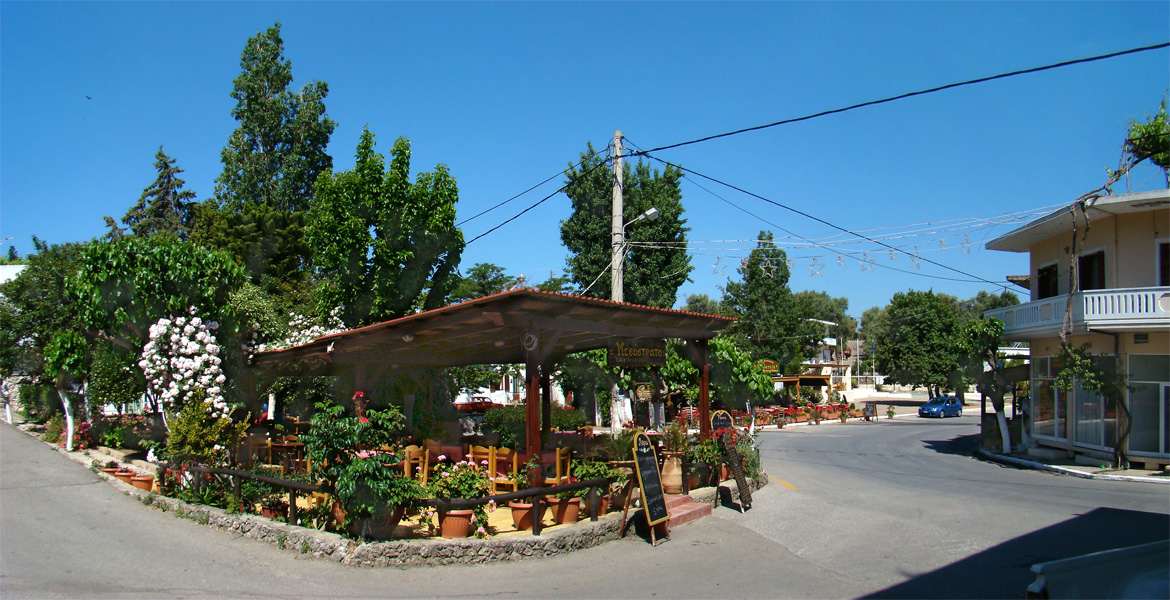
Kandanos stands as the main town of the Selino district in south-west Crete, a mountain village surrounded by olive groves and frescoed Byzantine churches along the road from Chania to Paleochora. The village carries a powerful history: German forces destroyed it completely during the Battle of Crete in reprisal for fierce local resistance, leaving a sign declaring it would never be rebuilt. The villagers defied that order and reconstructed their home after the war. Today a memorial in the square records both the destruction and the German notice, while plane trees shade the centre and tavernas serve the surrounding farms. Explore this resilient village with My Greece Tours.
Kandanos offers travellers a rare combination of wartime history, working village life, and a green mountain stop on the route to the south coast. The sections below cover the village’s location in Selino, its destruction and rebuilding, the medieval churches that survived, what to see in the village centre, and practical visitor information. This Crete travel guide section helps you understand why Kandanos remains an important stop for anyone travelling through inland Chania region to Paleochora.
Where is Kandanos in Crete and what is Selino?
Kandanos sits in the mountains of south-west Crete, serving as the main town of the Selino district within the Chania region. The village lies on the main road connecting Chania to Paleochora on the south coast.
The Selino district occupies the south-western corner of Crete, a mountainous region of olive groves, scattered villages, and Byzantine heritage stretching from the White Mountains down to the Libyan Sea. Kandanos functions as the administrative and commercial centre for this rural area, providing shops, services, and a focal point for the surrounding farms and hamlets. The village sits at a comfortable elevation where plane trees and a stream create a green oasis among the olive terraces. Travellers heading south from Chania pass through Kandanos on their way to the coastal resort of Paleochora, making it a natural stopping point for refreshment and exploration.
The location places the village within easy reach of both the north coast cities and the quieter beaches of the south.
Selino takes its character from its isolation and traditional agriculture. Olive oil production dominates the local economy, and the landscape shows centuries of terracing and cultivation. The district remained relatively untouched by mass tourism, preserving a working village atmosphere that contrasts with the busier coastal zones. Kandanos serves this hinterland as a market town, where farmers gather and where the rhythms of rural life continue much as they have for generations. The position on the main cross-island route gives the village strategic importance, both historically and for modern travellers seeking authentic experiences. The surrounding countryside holds small chapels, old mills, and paths that connect the scattered settlements of inland Selino.
What happened to Kandanos during the Battle of Crete?
German forces destroyed Kandanos completely during the Battle of Crete in reprisal for fierce local resistance during the invasion. They left a sign declaring the village would never be rebuilt, but villagers reconstructed it after the war.
The Battle of Crete in late spring of the twentieth century brought airborne invasion and intense fighting across the island. Kandanos villagers joined the resistance, attacking German paratroopers and supply lines with determination that surprised the invaders. The German command responded with collective punishment, ordering the complete destruction of the village. Soldiers burned every building, demolished walls, and erected a sign in German and Greek announcing that Kandanos had been razed for its resistance and would remain destroyed forever. The notice warned that any attempt to rebuild would meet the same fate.
This act of reprisal aimed to terrorize other communities into submission, making Kandanos an example of the price of resistance during one of the most significant things to do in Crete for those interested in wartime history.
The villagers returned after liberation and immediately began rebuilding, defying the German decree. They reconstructed homes, shops, and churches using whatever materials they could salvage and gather. The act of rebuilding became a statement of survival and resistance, proving that the community could not be erased by force. Today a memorial in the village square displays the original German notice alongside a Greek inscription recording the destruction and the villagers’ determination to restore their home. The memorial stands as a focal point for remembrance, visited by travellers interested in the wartime history of Crete. Kandanos wears its scars with pride, the rebuilt village serving as testimony to resilience and the refusal to be defeated.
What Byzantine churches survive near Kandanos?
Small frescoed medieval churches survive in and around Kandanos, having escaped the wartime destruction. These Byzantine chapels feature wall paintings and architectural details that predate the modern village by centuries, offering glimpses of Selino’s religious heritage.
The countryside around Kandanos holds chapels built during the Byzantine and Venetian periods, modest stone structures decorated with frescoes that depict saints, biblical scenes, and religious narratives. These churches served scattered farming communities, each hamlet maintaining its own place of worship. The paintings vary in quality and preservation, but together they represent the continuous Christian tradition of rural Crete across many centuries. Visitors can explore these chapels by following country roads and paths that wind through the olive groves. The churches escaped destruction during the war because they stood outside the main village, their remote locations protecting them from the systematic razing.
These medieval churches rank among the hidden gems in Crete for travellers interested in Byzantine art and architecture.
The frescoes show the distinctive style of Cretan church painting, with elongated figures, rich colours where they survive, and iconographic conventions that connect local artists to broader Byzantine traditions. The chapels themselves demonstrate vernacular building techniques, using local stone and following simple architectural plans suited to small congregations. Visiting these churches requires some exploration and often the assistance of local knowledge, as they sit along unmarked tracks and in quiet valleys. The experience rewards those willing to venture beyond the main road, offering peaceful settings and direct encounters with medieval heritage. The churches remain in occasional use for feast days and family celebrations, maintaining their role in community life despite their age.
What can visitors see in Kandanos village centre?
The village centre features a memorial to the destruction, plane trees shading a stream, shops serving local needs, and tavernas offering meals. The rebuilt square provides a green stop with facilities for travellers passing through Selino.
The memorial dominates the main square, its inscriptions telling the story of destruction and rebuilding in stark language. Plane trees grow tall around the square, their branches creating shade over the benches and cafés where locals gather. A stream runs through the centre, adding the sound of water to the village atmosphere and providing natural cooling during summer months. The shops stock everyday goods for the surrounding farms, and tavernas serve traditional meals using local ingredients. The village retains a working character rather than a tourist focus, giving visitors a glimpse of authentic rural life in inland Crete.
The atmosphere proves particularly appealing during Crete in winter, when the greenery and flowing water create a lush contrast to the drier coastal zones.
Kandanos functions as a service centre for Selino, so the village offers practical amenities alongside its historical interest. Bakeries produce bread for the district, and small workshops repair agricultural equipment. The tavernas prepare Cretan food without tourist menus, serving the dishes that locals eat daily. Visitors can stop for coffee, a meal, or simply to stretch their legs on the journey between north and south coasts. The rebuilt architecture shows post-war construction styles rather than picturesque traditional forms, a reminder that this village prioritized function and survival over aesthetics. The combination of memorial, natural setting, and working village creates a distinctive stop that offers substance and reflection rather than conventional beauty.
How do travellers visit Kandanos from other parts of Crete?
Kandanos sits on the main road from Chania to Paleochora, making it accessible by car or bus. The village lies within a short drive of the south coast, positioned as a natural stopping point for cross-island journeys.
The road from Chania descends through the mountains, passing through Kandanos before continuing south to the coast. Drivers cover the distance in under an hour under normal conditions, following a well-maintained route that serves as the primary access to Paleochora and the south-western beaches. Buses run between Chania and the south coast, stopping in Kandanos to pick up and drop off passengers. The village location makes it convenient for travellers planning day trips or longer explorations of Selino. Parking presents no difficulty in the village centre, and the compact layout allows easy exploration on foot.
The proximity to Paleochora means visitors can combine a beach stay with inland excursions, experiencing both coastal and mountain environments within a short distance.
Travellers using Kandanos as a base can explore the surrounding countryside, visiting the Byzantine churches and walking through olive groves on established paths. The village offers accommodation in small guesthouses and rooms, though most visitors pass through rather than staying overnight. The journey from Kandanos to other parts of western Crete requires returning to the main coastal highway or following mountain roads that connect to adjacent valleys. The village serves best as a stopping point and a gateway to understanding Selino rather than as a destination requiring multiple days. The combination of accessibility and authentic character makes it valuable for travellers seeking to move beyond coastal resorts and engage with inland Crete’s history and rural life.
Frequently Asked Questions
Is Kandanos worth visiting on the way to Paleochora?
Kandanos deserves a stop for travellers interested in wartime history and authentic village life. The memorial in the square tells a powerful story of destruction and resilience that adds depth to any understanding of Crete during the mid-twentieth century. The village offers practical amenities including tavernas and cafés where you can take a break from driving, and the plane trees and stream create a pleasant setting for a rest. The Byzantine churches in the surrounding countryside reward those with time for exploration, providing glimpses of medieval art and architecture. Kandanos functions as a working village rather than a tourist attraction, so expectations should focus on historical significance and authentic atmosphere rather than conventional sightseeing.
The stop typically requires thirty minutes to an hour, enough time to visit the memorial, have a coffee, and appreciate the setting before continuing to the coast.
What is the best time of year to visit Kandanos?
Spring and autumn offer the most comfortable conditions for visiting Kandanos, with mild temperatures and green landscapes. The village sits at a mountain elevation where summers prove cooler than the coast but still warm, while winters bring rain and occasional cold that keeps the vegetation lush. Spring sees wildflowers in the olive groves and the stream running full, creating the most attractive natural setting. Autumn brings the olive harvest, adding agricultural activity to the village atmosphere. Winter visits reveal a quieter side of rural Crete, with fewer travellers and a focus on local life, though some tavernas may keep reduced hours.
Summer remains perfectly viable, particularly for those escaping coastal heat, as the elevation and shade trees moderate temperatures. The village functions year-round as a service centre for Selino, so basic facilities remain available in all seasons, unlike purely tourist-oriented destinations that close outside peak months.
Can you visit the Byzantine churches around Kandanos independently?
Visiting the Byzantine churches around Kandanos independently requires some preparation and flexibility. The chapels sit along country roads and tracks that may lack clear signage, so a detailed map or GPS coordinates prove helpful. The churches often remain locked to protect the frescoes, but locals in Kandanos can sometimes provide contact information for keyholders who live nearby. Approaching this as an exploration rather than a guaranteed itinerary works best, as access depends on finding the right person at the right time. The churches reward persistent visitors with intimate encounters with medieval art in peaceful rural settings.
Hiring a local guide in Kandanos or arranging a specialized tour focused on Byzantine heritage increases the likelihood of gaining access and understanding the historical context. The chapels represent living heritage rather than formal museums, so respectful behaviour and patience prove essential. The experience offers authentic cultural immersion for those willing to invest the time and effort required.