
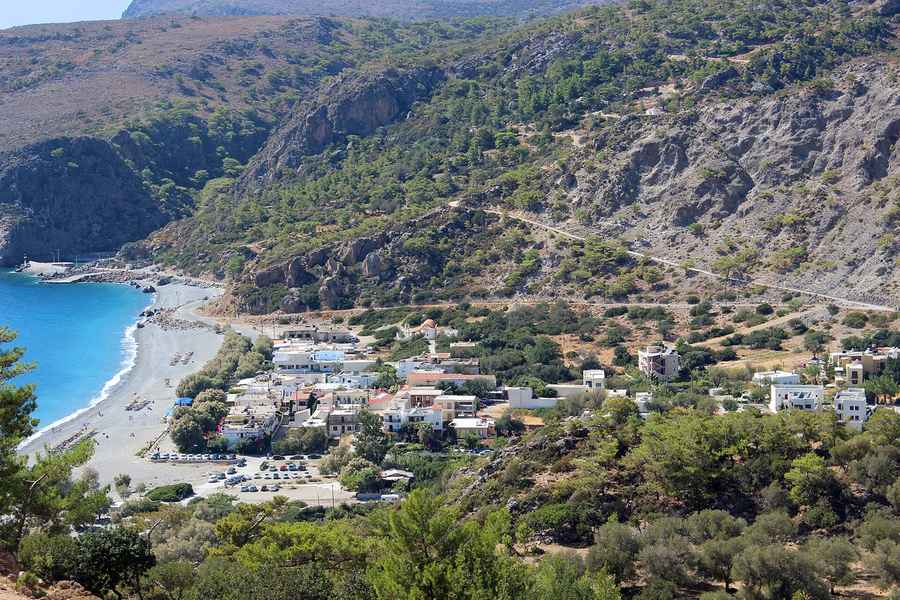
Sougia rests on the remote south-west coast of Crete, a village that has resisted the pull of mass tourism and held tight to its unhurried rhythm. The long grey-pebble beach stretches beside clear, deep water, and the surrounding mountains drop steeply to the sea. Walkers finishing the Agia Irini Gorge emerge here, dusty and satisfied, while boats shuttle along the coast linking isolated settlements. Tavernas line the waterfront, rooms stay simple, and the atmosphere remains refreshingly low-key even during the height of summer. Discover this corner of Crete’s southern shore with My Greece Tours.
The village draws a particular kind of traveler: hikers, campers, and those seeking quiet over convenience. Sougia serves as a coastal hub for boat trips west to ancient Lissos or east toward other remote villages. The Agia Irini Gorge descends from the White Mountains and delivers walkers directly to the shore. Facilities remain deliberately modest, and the pace of life slows to match the lapping waves. The sections below cover the beach, gorge walks, boat connections, and practical details. For broader context, consult our Crete travel guide.
What makes Sougia beach different from other beaches in Crete?
Sougia beach stretches for over a kilometer with grey pebbles rather than sand, shelving steeply into clear, deep water. The lack of umbrellas and sunbeds preserves a natural, uncommercialized feel that attracts independent travelers.
The beach at Sougia runs the length of the village, a broad expanse of smooth grey pebbles washed by the Libyan Sea. The water deepens quickly just offshore, making it ideal for strong swimmers but less suitable for toddlers. Tamarisk trees fringe the back of the beach, offering patches of natural shade where campers pitch tents and walkers rest after the descent from the gorge. The absence of organized sunbed rows and beach bars gives the shore an undeveloped character that feels increasingly rare on Crete. Locals and visitors spread towels directly on the stones, wade into the crystalline water, and enjoy the mountain backdrop without distraction.
The western end of the beach tends to be quieter, while the central stretch near the tavernas sees more activity during the day.
Swimming here rewards confident swimmers; the seabed drops away within a few meters, and the water stays refreshingly cool even in August. Snorkeling along the rocky edges reveals fish darting between submerged boulders, and the clarity of the water makes every pebble on the bottom visible. The beach remains exposed to southerly winds, which can whip up waves and make the sea choppy on blustery days. Sougia’s shoreline ranks among the hidden gems in Crete for travelers who value natural beauty over manicured resort amenities. The village makes no effort to compete with the organized beaches of the north coast, and that restraint defines its appeal.
How do you hike the Agia Irini Gorge to reach Sougia?
The Agia Irini Gorge trail descends seven kilometers from the mountain village of Agia Irini to Sougia, taking three to four hours. The path follows a river bed through pine forest and narrows between rock walls before emerging at the coast.
The Agia Irini Gorge offers a less crowded alternative to the famous Samaria Gorge, with a shorter distance and gentler gradient. The trailhead sits in the mountain village of Agia Irini, accessible by bus from Chania. Hikers descend through shaded pine forest, crossing and recrossing a seasonal stream that flows strongly in spring but dries to a trickle by midsummer. The gorge walls rise on either side, creating cool pockets of shade even on hot days. Wildflowers bloom along the path in April and May, and the scent of pine resin hangs in the air.
The route remains well-marked with red paint blazes and stone cairns, and the footing stays mostly secure on compacted earth and smooth rock.
The final section of the trail opens out as the gorge widens, and the sea comes into view ahead. Walkers emerge at the edge of Sougia, dusty and ready for a swim, with tavernas and cold drinks just steps away. The hike ranks among the rewarding things to do in Crete for active travelers who want mountain scenery without the crowds. Sturdy footwear, sun protection, and at least a liter of water per person are essential. The gorge can be walked in either direction, but most hikers prefer the downhill route ending at the beach.
Which boat trips connect Sougia to other villages on Crete’s south coast?
Daily boats link Sougia to Agia Roumeli, Loutro, and Paleochora during the summer season, allowing travelers to explore the isolated south coast without backtracking by road. Services run less frequently outside peak months.
The boat service operates as a lifeline for the scattered villages along Crete’s southern shore, where road access remains limited or nonexistent. Sougia sits roughly midway along the route, making it a convenient base for day trips in either direction. Eastbound boats head to Agia Roumeli, the coastal exit of the Samaria Gorge, where hikers finish their descent and wait for the ferry. Westbound departures call at Loutro, a car-free village tucked into a sheltered bay, before continuing to Paleochora, the largest settlement on this stretch of coast. The boats themselves are small passenger ferries, open to the sun and spray, with wooden benches and a captain who knows every rock and inlet.
Schedules vary by season, with the most frequent service running from late May through September. Tickets can be purchased at the small kiosk near the beach or directly from the boat crew. The journey to Loutro takes roughly thirty minutes, while the full trip to Paleochora requires about an hour and a half. Travelers planning to hike one-way and return by boat should confirm the last departure time, as missing the final ferry means an overnight stay or a long taxi ride over mountain roads. The boat ride itself offers stunning views of the coastline, with cliffs plunging into the sea and isolated coves accessible only by water.
What is the ancient site of Lissos and how do you visit it from Sougia?
Lissos was a Greco-Roman settlement west of Sougia, known for its healing sanctuary dedicated to Asclepius. A coastal footpath leads there in about ninety minutes, passing small beaches and revealing temple foundations, mosaic floors, and rock-cut tombs.
The path to Lissos begins at the western end of Sougia beach and follows the shoreline, climbing over low headlands and dipping to cross small ravines. The trail stays close to the sea, offering constant views of the water and occasional opportunities to scramble down to secluded coves for a swim. Walkers need sturdy shoes, as the path crosses loose rock and exposed roots in places. The route takes roughly ninety minutes each way at a steady pace, and the lack of shade means an early start or late afternoon departure works best in summer.
The site itself occupies a small coastal valley, where the remains of a temple to Asclepius, the god of healing, stand among olive trees and wild herbs.
Visitors can explore mosaic floors depicting geometric patterns, the foundations of baths and public buildings, and rock-cut tombs carved into the hillside above the ruins. Lissos thrived in antiquity as a healing center, drawing pilgrims who sought cures from the sacred spring. The spring still flows, though the water is no longer considered therapeutic. The site receives few visitors compared to major archaeological parks, and the sense of discovery remains strong. The walk to Lissos and back makes a full morning or afternoon excursion, and combining it with a swim at one of the intermediate coves turns the outing into a highlight of any stay in Sougia.
Where should you stay and eat in Sougia, Crete?
Accommodation in Sougia consists mainly of small family-run guesthouses and simple rooms, with a campsite under the tamarisks at the beach. Tavernas along the waterfront serve fresh fish, grilled meat, and Cretan staples in a relaxed, unpretentious atmosphere.
The village offers no luxury hotels or all-inclusive resorts; instead, visitors find modest pensions and studios scattered along the main street and the lanes behind the beach. Rooms come with basic furnishings, ceiling fans or air conditioning, and small balconies overlooking the sea or the mountains. Booking ahead in July and August is advisable, though outside peak season you can often arrive and find a room the same day. The campsite spreads beneath the tamarisk trees at the eastern end of the beach, popular with backpackers, hikers, and budget travelers who appreciate the proximity to the water and the communal atmosphere. Facilities include showers, toilets, and a small shop selling essentials.
Deciding where to stay in Crete depends on your priorities, and Sougia suits those who value tranquility and simplicity over amenities and nightlife.
Tavernas line the beachfront, their tables set under vine-covered pergolas just meters from the water. Menus emphasize fresh fish grilled over charcoal, lamb slow-cooked with herbs, and vegetable dishes prepared in the Cretan tradition. Portions tend to be generous, prices remain reasonable, and the service is friendly without being hurried. The village has a minimarket, a bakery producing fresh bread each morning, and a couple of cafés serving Greek coffee and homemade sweets. Nightlife is minimal, limited to quiet drinks at a beachside bar or conversation over a late dinner. The overall vibe is restorative rather than stimulating, and visitors seeking clubs or organized entertainment will be disappointed.
Sougia rewards those who come to unwind, walk, swim, and disconnect from the pressures of modern life.
Frequently Asked Questions
How do you get to Sougia from Chania?
Reaching Sougia from Chania requires a bus journey of approximately two hours, with one or two departures daily depending on the season. The bus follows the main road south through the White Mountains, passing through villages and olive groves before descending the final stretch to the coast. The route is scenic but winding, and travelers prone to motion sickness should sit near the front and take precautions. Tickets can be purchased at the Chania bus station or sometimes directly from the driver. The schedule changes between summer and winter, so checking current times in advance is essential. Alternatively, renting a car offers flexibility and allows stops at viewpoints and villages along the way.
The drive takes roughly ninety minutes, and the road is paved and well-maintained throughout. Parking in Sougia is informal, with spaces along the main street and near the beach. Taxis from Chania are expensive but can be arranged for groups sharing the cost. The journey itself provides a transition from the bustle of the north coast to the quieter rhythm of the south.
Is Sougia suitable for families with young children?
Sougia can work for families with older children who enjoy hiking, swimming, and simple pleasures, but it presents challenges for those with toddlers or infants. The beach is pebbly rather than sandy, and the water deepens quickly, making it less ideal for very young swimmers. The village has no playgrounds, organized kids’ clubs, or child-focused entertainment. Facilities remain basic, and the nearest medical center is in Paleochora, requiring a boat trip or a drive over mountain roads. Families who value a quiet, natural environment and are comfortable with minimal infrastructure will appreciate the relaxed pace and the opportunity to explore the gorge and coastline together.
Older children often enjoy the boat trips, the walk to Lissos, and the freedom to roam a small, safe village. The tavernas welcome families, and the atmosphere is informal and tolerant. Parents seeking convenience, sandy beaches, and structured activities will find better options elsewhere on the island. Sougia rewards adaptable families who prioritize connection with nature over resort comforts and who can entertain themselves without relying on external amenities.
What is the best time of year to visit Sougia?
Late spring and early autumn offer the most pleasant conditions for visiting Sougia, with warm but not scorching temperatures, calm seas, and fewer crowds. May and June bring wildflowers to the gorge, and the water is swimmable though still refreshingly cool. September and early October extend the swimming season, and the village empties as package tourists depart the island. July and August see the highest visitor numbers, though Sougia never feels truly crowded compared to northern resorts. The heat can be intense, and the lack of shade on the beach and hiking trails makes midday excursions uncomfortable. Winter months are quiet, with most tavernas and guesthouses closed and boat services suspended.
The village takes on a sleepy, almost deserted character, appealing to solitary walkers and those seeking complete isolation. Rain can fall between November and March, and the sea is too cold for most swimmers. Hikers tackling the Agia Irini Gorge should avoid the hottest months and carry extra water. The shoulder seasons balance comfortable weather, operational services, and a peaceful atmosphere, making them ideal for exploring this corner of Crete’s south coast.