
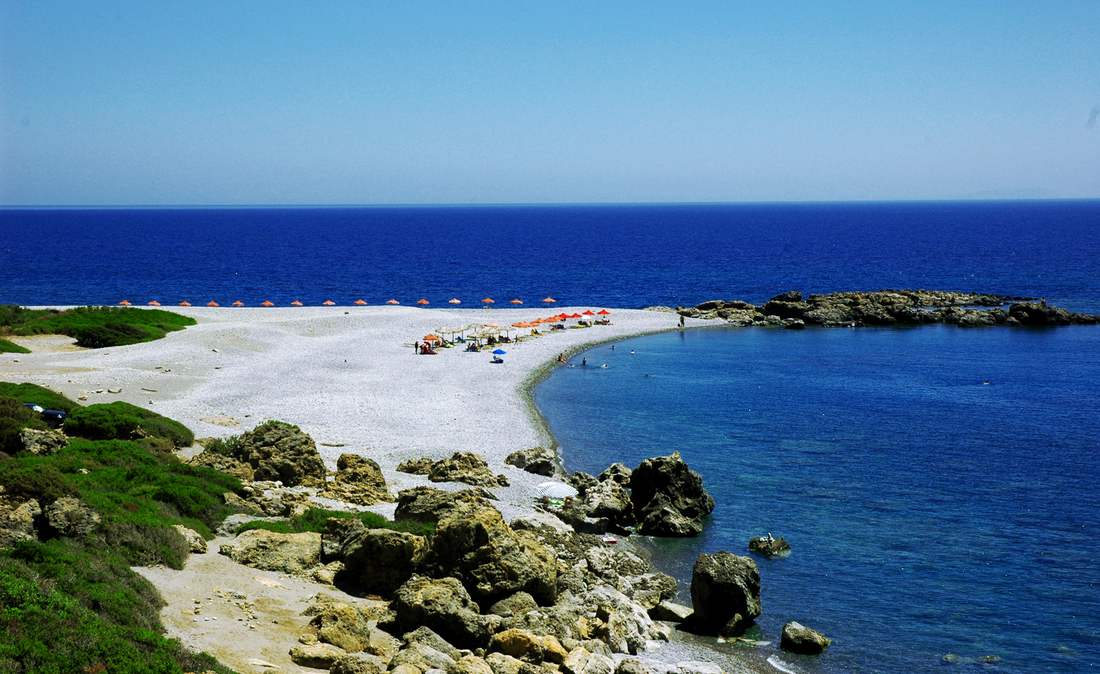
Anydri spreads across a green hillside in the Selino district of south-west Crete, a short distance east of Paleochora on the Libyan Sea coast. Stone houses nestle among olive and citrus groves, and the frescoed church of Saint George anchors village life with its fourteenth-century walls. The Anydri gorge cuts down from the village to Gialiskari beach, a two-hour walk through rock and oleander that ends at quiet pebbles. Travellers find a local taverna, calm lanes, and a base for walking the far corner of the island with My Greece Tours.
The village sits within easy reach of Paleochora’s long sandy shore and the coastal path west toward Sougia, offering a peaceful alternative to busier resorts. Anydri remains green through summer, its groves watered by springs and its setting untouched by large-scale tourism. The sections below cover the gorge walk, village character, beach access, and practical details for visitors. Travellers seeking quiet corners and traditional rhythms will find Anydri a rewarding stop on any Crete travel guide itinerary focused on the south-west coast.
What makes the Anydri gorge walk in Crete distinctive?
The Anydri gorge descends from the village to Gialiskari beach in about two hours, passing through rock walls, oleander thickets, and narrow passages before reaching the Libyan Sea’s quiet pebble shore.
The gorge begins just below Anydri’s lowest houses and drops steadily through limestone walls draped with wild herbs and flowering oleander. Walkers follow a clear path over smooth rock slabs and between boulders, with shade appearing in the deeper sections where the walls close in. The route requires no technical skill but rewards attention to footing, especially after rain when stones become slick. Birdcalls echo off the cliffs, and the scent of thyme rises from sun-warmed rock. The descent takes roughly two hours at a steady pace, though photographers and plant enthusiasts often linger longer. The gorge opens suddenly onto Gialiskari beach, a crescent of grey pebbles lapped by turquoise water.
Swimmers find the sea clean and calm, and the beach remains uncrowded even in high summer. The walk back up to Anydri takes closer to two and a half hours, with the climb rewarding effort with widening views over the coast.
Walkers should carry water, sun protection, and sturdy footwear with good grip. The gorge offers little shade in its upper reaches, and midday heat can be intense from late spring through early autumn. Early morning starts provide cooler temperatures and softer light for photography. The route forms part of the broader network of things to do in Crete for active travellers, linking village life with coastal beauty. No entrance fee applies, and the path remains open year-round, though winter rains can swell the streambed and make passage difficult. Locals in Anydri’s taverna offer current conditions and advice.
The gorge walk pairs well with exploration of nearby Paleochora, creating a two-day itinerary that balances exertion with relaxation on sandy beaches and waterfront promenades.
How does Anydri village preserve traditional Crete character?
Stone houses with wooden shutters line narrow lanes, olive and citrus groves fill terraces, and the fourteenth-century church of Saint George displays frescoes that anchor village identity in the Selino district’s agricultural past.
Anydri’s architecture reflects centuries of adaptation to the hillside terrain and Mediterranean climate. Houses built from local limestone feature thick walls that keep interiors cool, small windows that limit heat gain, and courtyards shaded by grapevines and lemon trees. Roofs carry terracotta tiles, and many doorways preserve carved lintels from earlier generations. The village layout follows contour lines, with stepped paths connecting upper and lower neighbourhoods. Residents maintain kitchen gardens where tomatoes, courgettes, and herbs grow in pockets of soil enriched by composted olive pomace. The church of Saint George stands at the village heart, its frescoes depicting saints and biblical scenes in pigments that have faded to soft ochres and blues.
Services continue on feast days, drawing families from surrounding hamlets. The taverna serves dishes prepared from local ingredients, including lamb slow-cooked with wild greens and bread baked in a wood-fired oven.
Daily rhythms follow agricultural cycles, with olive harvest in late autumn and citrus picking through winter. Residents tend groves inherited across generations, and the scent of orange blossom fills spring air. Anydri’s population remains small, with younger families balancing traditional practices and modern connectivity. The village counts among the hidden gems in Crete for travellers who value authenticity over amenities. No shops or ATMs operate within the village, encouraging reliance on nearby Paleochora for supplies. The setting stays green longer than coastal areas, fed by springs that emerge from the hillside. Visitors walking the lanes encounter cats dozing on doorsteps, chickens scratching in yards, and elders greeting strangers with nods.
The absence of large hotels and tour buses preserves a quietness increasingly rare on the island’s more developed coasts.
What beach access does Anydri offer on the Libyan Sea?
The Anydri gorge walk leads directly to Gialiskari beach, a quiet pebble cove on the Libyan Sea. Paleochora’s long sandy beach lies a short drive west, and coastal paths connect to other secluded shores.
Gialiskari beach sits at the gorge mouth, a small bay enclosed by low cliffs and scattered rocks. The shore consists of smooth grey pebbles that slope gently into clear water, ideal for snorkelling over rocky patches where fish dart between stones. No facilities exist at the beach, so visitors carry food, water, and shade. The bay faces south, catching sun throughout the day and offering shelter from north winds. Swimmers find the sea refreshingly cool even in August, fed by currents from deeper waters offshore. The beach remains accessible only on foot via the gorge or by boat from Paleochora, ensuring low visitor numbers.
Driftwood and seaweed mark the high-tide line, and tamarisk bushes provide limited shade at the eastern end. The walk back to Anydri begins from the same trailhead, climbing steadily through the gorge’s lower sections.
Paleochora, a short drive west, offers a contrasting beach experience with a long sandy crescent, tavernas, and sunbed rentals. The town serves as a practical base for exploring Anydri and surrounding villages, with supermarkets, fuel stations, and accommodation ranging from studios to small hotels. Coastal paths extend west from Paleochora toward Sougia, passing isolated coves and ancient ruins. The route forms part of the E4 European long-distance trail, attracting walkers who tackle multi-day sections. Anydri’s position inland from these paths makes it a quieter overnight option for those combining hiking in Crete with village immersion.
The variety of Crete beaches within reach allows travellers to alternate between pebble coves and sandy expanses, matching beach choice to mood and energy levels each day.
Where does Anydri sit within Crete’s Selino district?
Anydri occupies a hillside in the Selino district of south-west Crete, in the Chania region just east of Paleochora. The village overlooks the Libyan Sea and sits within reach of mountain villages and coastal trails.
The Selino district stretches across the south-western corner of Crete, bounded by mountains to the north and the Libyan Sea to the south. Anydri lies on the eastern flank of this region, positioned between the higher elevations where shepherds graze flocks and the coastal strip where fishing boats work from small harbours. The village enjoys a microclimate slightly cooler and greener than the shore, with springs sustaining orchards and vegetable plots. Roads connect Anydri to Paleochora in under fifteen minutes by car, while mountain routes lead north toward Kandanos and the main Chania-to-Paleochora highway. The district’s topography creates pockets of isolation, with hamlets tucked into folds of terrain and linked by narrow asphalt lanes.
Selino’s history includes resistance during wartime occupations, and memorials in village squares honour local fighters. The landscape bears traces of older settlements, with Byzantine chapels and Venetian ruins scattered across hillsides.
Travellers using Anydri as a base can explore the district’s mix of natural and cultural sites. Mountain villages to the north preserve stone architecture and host small museums documenting rural life. Gorges other than Anydri’s cut through the terrain, offering additional walking routes for energetic visitors. The coast west toward Paleochora features a succession of beaches, each with distinct character, while the coast east holds quieter coves reached by dirt track or footpath. Selino’s relative remoteness from Crete’s main tourist centres in Heraklion and Rethymno means fewer crowds and lower prices. The district appeals to travellers who prioritize landscape and tradition over nightlife and shopping.
Anydri exemplifies this appeal, offering a village experience rooted in agriculture and walking rather than beach clubs and water sports. The setting rewards slow travel, with days structured around meals, walks, and conversations rather than packed itineraries.
What practical details help visitors plan an Anydri stay?
Anydri has one taverna serving local food but no shops or lodging. Visitors stay in Paleochora and drive or taxi to the village. The gorge walk requires water, sun protection, and sturdy shoes. Spring and autumn offer ideal temperatures.
Accommodation options concentrate in Paleochora, where studios, apartments, and small hotels provide bases within a short drive of Anydri. Rental cars offer the most flexibility for exploring the village and surrounding areas, with parking available at the village edge near the gorge trailhead. Taxis from Paleochora can drop walkers at Anydri for a gorge descent, with pickup arranged at Gialiskari beach by boat or a return climb on foot. The taverna in Anydri opens most days during the warmer months, serving grilled meats, salads, and local wine on a terrace shaded by vines. Reservations help during peak periods, though the village sees far fewer visitors than coastal resorts.
No ATMs or fuel stations operate in Anydri, so travellers stock supplies in Paleochora before heading up. Mobile phone coverage reaches the village but can be patchy in the gorge’s deeper sections. Drinking water from village taps is safe, though walkers should carry sufficient bottles for the descent and return.
Spring months from April through early June bring wildflowers to the gorge and comfortable temperatures for walking, with daytime highs in the low twenties Celsius. Autumn, particularly October and early November, offers similar conditions after the summer heat fades. Midsummer heat can make the gorge walk strenuous, with temperatures exceeding thirty-five degrees and limited shade. Winter rains green the landscape but can render the gorge impassable when the streambed fills. Visitors planning multi-day exploration of the Selino district should allow time for both active pursuits and rest, balancing gorge walks with beach afternoons and village meals. Local knowledge from taverna owners and Paleochora guesthouses helps refine plans based on current weather and trail conditions.
The combination of village character, natural beauty, and proximity to larger facilities makes Anydri a practical addition to south-west Crete itineraries for walkers and culture seekers alike.
Frequently Asked Questions
How long does the Anydri gorge walk take and what difficulty level should I expect?
The descent from Anydri village to Gialiskari beach takes approximately two hours at a steady pace, while the return climb requires closer to two and a half hours. The route involves no technical climbing or scrambling, but walkers navigate uneven rock surfaces, loose stones, and occasional steep sections where careful footing prevents slips. The path remains clear throughout, marked by cairns and the natural flow of the gorge itself. Shade appears only in the deeper, narrower sections where walls rise on both sides, so sun exposure is significant, especially in the upper reaches near the village. Walkers should possess reasonable fitness and confidence on rough terrain.
The route suits active families with older children, experienced hikers looking for a moderate outing, and anyone comfortable with sustained uphill effort on the return. Proper footwear with ankle support and grippy soles makes a substantial difference, particularly after rain when rocks become slippery. Carrying at least one litre of water per person is essential, along with snacks, sun cream, and a hat. The gorge offers a rewarding introduction to Cretan landscape for those who want natural beauty without the crowds found in more famous gorges elsewhere on the island.
Can I visit Anydri as a day trip from other parts of Crete?
Anydri works well as a day trip from Paleochora, which sits only a short drive away and offers the nearest accommodation, restaurants, and services. Travellers based in Chania, roughly ninety minutes north by car, can also visit Anydri in a day, though the journey involves winding mountain roads that require careful driving and add time. The route from Chania descends through Kandanos and crosses the southern slopes before reaching Paleochora and the turn-off for Anydri. Visitors should allow a full day for the round trip from Chania, including time for the gorge walk and a meal in the village or on Gialiskari beach.
Those staying in Sougia to the east can reach Anydri via coastal paths or by driving west through Paleochora, making it feasible for active walkers combining multiple villages and trails. The lack of public transport directly to Anydri means rental cars or taxis provide the most practical access. Day-trippers should plan arrival in the morning to complete the gorge walk before midday heat peaks, then return to Paleochora for an afternoon on the sandy beach or exploration of the town’s waterfront. The combination of village atmosphere, gorge scenery, and beach access delivers a satisfying day that captures the character of south-west Crete’s quieter corners.
What should I know about eating and drinking in Anydri village?
Anydri has one taverna that serves traditional Cretan dishes prepared from local ingredients, including lamb, goat, seasonal vegetables, and olive oil from surrounding groves. The menu changes based on availability, with grilled meats, slow-cooked stews, fresh salads, and homemade bread forming the core offerings. Portions are generous, prices remain modest, and the setting on a vine-shaded terrace offers views over the valley toward the sea. The taverna operates most days during spring, summer, and autumn, though hours can be irregular and reservations help ensure a table, especially at weekends when locals gather for long lunches. Wine comes from regional producers, and the house wine is typically a straightforward red or white served in carafes.
No other restaurants, cafes, or shops exist in the village, so visitors planning a full day should either eat at the taverna or carry picnic supplies from Paleochora. Drinking water is available from taps in the village, and the taverna serves soft drinks, beer, and coffee. The experience emphasizes simplicity and hospitality over choice or speed, with meals unfolding at a relaxed pace that matches the village rhythm. Travellers seeking authentic village dining away from tourist menus will appreciate the straightforward cooking and genuine welcome.