
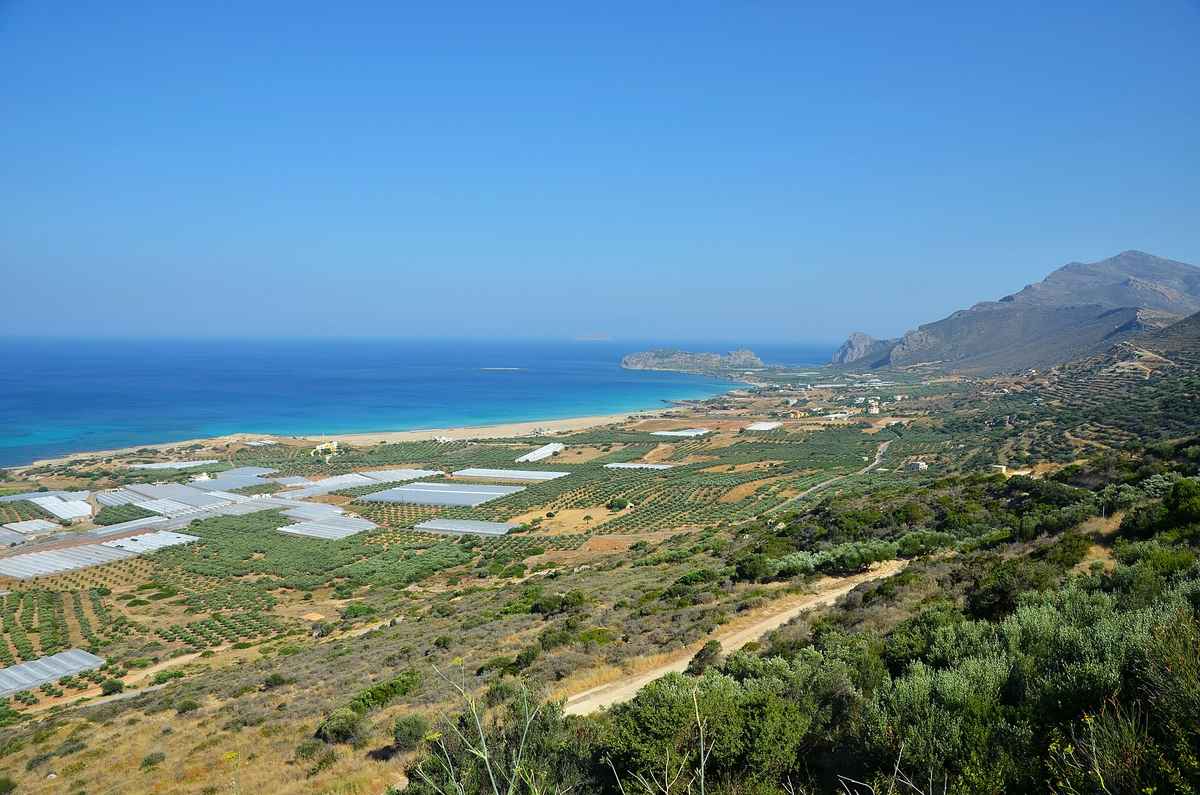
Crete holds hundreds of beaches spread across four distinct coastal regions, and each one has its own character, colour, and mood. The west shelters pink-tinged sand and turquoise lagoons, the south hides palm-lined river mouths and cliff caves, the east guards a rare palm grove, and the north lines up long organised resort sands near the cities. This overview sorts the island’s best shores by region so you can match a beach to your day. Reaching the finest lagoons takes a boat or a rough drive, so plan ahead when you book with My Greece Tours.
Choosing a beach on Crete depends on where you stay, how far you want to travel, and how much shade or facilities you need. Our wider Crete travel guide maps out how the four coasts differ and where each cluster of shores sits on the island. The sections below cover the western lagoons, the southern coves and river beaches, the eastern palm coast, the family-friendly north, and the practical planning that keeps a beach day smooth from an early start to a relaxed finish.
Which Crete beaches sit on the west coast?
The west coast holds Crete’s most famous lagoons: Elafonisi with its pink-tinged sand and shallow water, Balos on the Gramvousa peninsula, and Falassarna, a long sandy beach known for its sunsets.
The western shores draw the biggest crowds because their colours look almost tropical. Elafonisi beach sits at the island’s southwest tip. A shallow lagoon separates the mainland from a small islet here, and the sand carries a faint pink tint from crushed shell fragments. The water stays warm and calm across the lagoon. This makes it a gentle spot for children who want to wade rather than swim into depth. Falassarna, further up the same coast near Kissamos, stretches long and open across sandy bays. It faces west toward the finest sunsets on the whole island. These two shores anchor the region and sit within a manageable drive of Chania.
Each one rewards an unhurried half-day rather than a rushed stop between other sights along the coast road.
The Balos lagoon completes the western trio and often tops lists of the island’s most striking shores. It lies on the Gramvousa peninsula, where turquoise shallows pool between rock and pale sand in a way that photographs almost too well. Reaching it takes real effort. A boat trip sails from the port of Kissamos, often calling at Gramvousa islet on the route. A rough unpaved drive gives the alternative, followed by a downhill walk from the car park to the water. That access keeps the crowds thinner than a paved road would, and it rewards an early arrival before the midday buses reach the coast.
A day spent between these western lagoons ranks near the top of the things to do in Crete for scenery and swimming.
What are the best beaches on Crete’s south coast?
The south coast pairs dramatic settings with shelter from the summer wind. Preveli sits at a palm-lined river mouth, Matala hides caves in its cliffs, and quiet Libyan Sea coves stay calm behind the headlands.
The southern shores feel wilder and quieter than the north, and the Libyan Sea often lies calm behind the coast’s tall headlands, from Preveli east to the remote villages of Lentas and Keratokambos. Preveli beach stands out for its setting. A freshwater river winds down a palm-lined gorge to meet the sea, so you can swim in the salt water and then cool off upstream among the palms. A steep path leads down from the car park on the cliff above. That descent keeps the beach harder to reach and less busy than a roadside stretch. Boats from Plakias and Agia Galini also drop visitors at the sand, which suits travellers who would rather skip the climb.
The palm-fringed river mouth gives this beach a look unlike anywhere else along Crete’s southern edge, and it stays green even in the driest weeks of high summer.
Matala, a short drive west along the same coast, is famous for the caves carved into its soft sandstone cliffs, once ancient tombs and later a gathering point for travellers. The sand here is easy to reach on foot from the village. The tavernas and rooms behind the beach make it a comfortable base for a longer stay. Quiet Libyan Sea coves dot the coast on either side. Headlands and gorges shelter these pockets from the meltemi wind that stirs the north through high summer. That shelter makes the south a smart choice on the days when the northern resorts turn choppy and exposed.
Beaches like Preveli, Matala, and the coves around Plakias reward a full day rather than a brief detour from the mountains inland.
Where is the palm beach on Crete’s east coast?
Vai lies at Crete’s far eastern edge and holds Europe’s largest natural palm grove. Thousands of Cretan date palms back a bright sandy bay, giving the shore a look that feels closer to the tropics than the Mediterranean.
The eastern tip of the island offers fewer big-name beaches than the west, yet it holds one that stands apart from the rest. Vai beach backs onto Europe’s largest natural palm grove, a dense stand of Cretan date palms that has grown at this spot for a very long time. The palms crowd right up to the pale sand, so the bay looks unlike anywhere else in Greece. The contrast between the green fronds and the bright shore is what draws visitors out to this remote northeast corner beyond Sitia. The bright water and the fine sand suit a long swim.
A short trail behind the beach climbs to a viewpoint that reveals how far the grove spreads inland across the valley toward the hills.
The grove is protected, so the beach itself stays contained rather than sprawling. The headland viewpoint gives the clearest sense of the palms fanning across the valley floor. The drive out here runs long from the main resort towns of the north. Travellers fold Vai into a wider tour of the east that takes in the old port of Sitia, the quiet coves nearby, and the small villages inland. Arriving early helps a great deal. The small bay fills through the middle of the day, and the roadside parking runs out once the first tour buses arrive on the coast.
Sunbeds and a taverna serve the sand, which makes Vai an organised stop despite its distance from the northern cities. The bay stays sheltered enough for an easy swim, and the palm shade behind the beach offers a cool break from the eastern sun.
Are Crete’s north coast beaches good for families?
Yes. The north coast lines up long organised beaches near the cities, with sunbeds, tavernas, and easy access that suit families. They sit more exposed to the summer meltemi, so afternoons can turn breezy and choppy.
Most visitors first meet the sea on Crete’s north coast, since the two airports, the ferry port, and the largest towns all sit along this shore, among them sheltered coves such as Agia Pelagia near Heraklion. The beaches near Chania, Rethymno, and Heraklion run long and organised, with rows of sunbeds, showers, water sports, and tavernas within a short walk of the sand. That easy access and the wide range of facilities make the north the natural base for a family holiday. Children can paddle safely on the gentler mornings while parents stay close to shade and refreshments.
Blue-flag stretches like Georgioupoli and the Rethymno town beach add lifeguards and clean, monitored water, which reassures parents of young swimmers. Buses and short drives link these towns, so switching from one family beach to the next takes little planning at all.
The trade-off along the north is exposure to wind. This coast faces the meltemi, the strong summer wind that funnels down the Aegean. An afternoon that started still can turn breezy, and the water can build small waves by mid-afternoon. Travellers respond by crossing to the sheltered south or slipping into a cove tucked behind a headland until the wind drops. Planning the week around the forecast, rather than fighting the gusts, keeps a north-coast base flexible and comfortable. The short drives between Chania, Rethymno, and Heraklion mean a calmer stretch of sand, such as the sheltered coves at Bali, is rarely far away.
The organised beaches near each town still deliver an easy, well-served day when the air stays calm from morning through early evening. A morning swim before the wind picks up often works best on this coast, and the tavernas stay open for a long lunch in the shade.
How should you plan a beach day on Crete?
Plan a full day for the remote lagoons, arrive early to beat the crowds and heat, and pack for shade. Blue-flag beaches offer facilities, while wild coves have little cover, so bring water and sun protection.
The most photographed shores rarely sit beside a convenient car park, so a good beach day on Crete starts with a realistic plan. Balos and Elafonisi both reward an early departure, whether you take a boat from Kissamos or tackle the rough approach road and the walk that follows to the sand. Setting off in the morning beats both the midday heat and the tour buses. You reach the water while the light and the quieter shore still favour you. Fuel in the tank, snacks, and a full water bottle matter on these trips, since shops and tavernas thin out fast once you leave the main coastal towns.
A hire car gives the freedom to reach the western lagoons and the southern coves on your own schedule rather than a fixed bus timetable.
Facilities shift sharply from one shore to the next across the island. Blue-flag beaches carry lifeguards, sunbeds, showers, and refreshment stands, which makes them a safe bet with young children and swimmers who value services close at hand. The wild coves of the south and the approach to Balos offer little more than sand, rock, and open sea. Those remote spots hold almost no natural shade through the long summer. An umbrella, a wide hat, and strong sun protection turn a hard midday into a comfortable one on the exposed shores.
Matching the beach to the group, the day’s wind forecast, and the effort you feel like making is the surest way to enjoy the coast, from the northern resorts to the palm-backed river mouths of the far south.
Frequently Asked Questions
What is the most beautiful beach in Crete?
Opinions differ, but the western lagoons top most lists of the island’s finest shores. Balos, on the Gramvousa peninsula, spreads turquoise shallows between rock and pale sand in a setting that few beaches anywhere can match. Elafonisi, at the island’s southwest tip, draws just as much admiration for its pink-tinged sand and its shallow, warm lagoon that suits younger swimmers. Both shores sit on the same western coast, and visitors often try to see the pair across two days on a trip to the west. Beauty here comes with real effort. Neither lagoon lies beside an easy road, and the boat rides or rough drives that reach them keep the crowd numbers lower.
Travellers who prefer a quieter kind of beauty find it at the palm-lined river mouth of Preveli in the south. The palm grove behind Vai in the far east offers another scene set apart from the northern resort sands.
How do you get to Balos and Elafonisi beach?
Both western lagoons take planning to reach, which is part of why they stay so striking. Balos can be reached two ways. A boat trip sails from the port of Kissamos, often calling at Gramvousa islet on the route. A drive along a rough unpaved track gives the alternative, ending at a hilltop car park with a downhill walk to the sand. The boat suits travellers who would rather avoid the track, while the drive gives you control over your own timing. Elafonisi sits at the far southwest corner and is reached by a long paved road that winds through the mountains from Chania or Kissamos.
A hire car or an organised day trip works well for the journey. A trip to either shore fills most of a day once you count the travel. An early start pays off and leaves time to swim before the afternoon crowds and heat build along the coast.
When is the best time to visit Crete beaches?
The swimming season on Crete runs long, and the shoulder months either side of high summer often bring the finest beach days. Late spring warms the sea enough for comfortable swimming while the crowds stay thin and the wild coves feel almost private. Early autumn keeps the water warm after a full summer of sun, and the fierce midday heat starts to ease across the coast. High summer delivers the most reliable sunshine. It also brings the meltemi wind that can stir the exposed north on breezy afternoons. On windy days the sheltered south, with its Libyan Sea coves behind the headlands, tends to stay calmer for swimming.
Whatever the month, an early arrival helps at the famous lagoons of Balos and Elafonisi. They draw steady numbers through the middle of the day and offer little shade once the sun climbs high overhead. An early start rewards you with cooler sand and calmer water before the coastal breeze builds through the afternoon hours.