
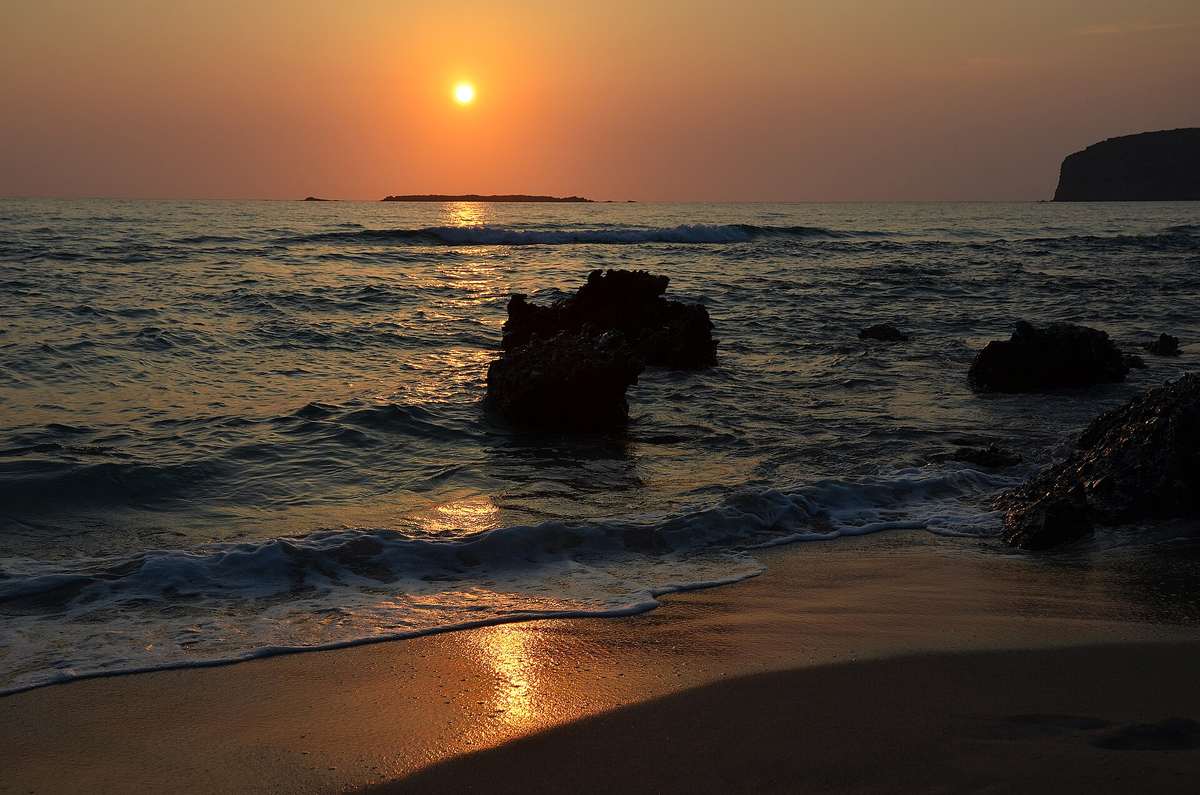
Falassarna beach sits on the far west coast of Crete, a long ribbon of pale sand in the Chania region near Kissamos. It faces the open sea, so the water runs turquoise in the shallows and the horizon stays clear for evening light. Sunbathers spread out across the wide strand, swimmers wade into calm shallows, and bodyboarders wait for the swell that the exposed coast delivers. Sunbeds, canteens and a car park serve the main stretch, while the ruins of ancient Falassarna wait just to the north. This west-coast shore is one of the beaches we love to share on tours with My Greece Tours.
Planning a west-coast day starts with knowing what the beach offers and how the sea behaves through the afternoon. Our Crete travel guide places Falassarna alongside the coves, harbours and viewpoints that make the western tip worth a slow visit. The sections below cover the beach itself, the sunsets it is known for, the wind and waves that shape a swim, the ancient city beside the sand, and how to reach it from Chania. Read on to understand what makes this open, west-facing shore distinct from the sheltered bays elsewhere on the island, and how to time your arrival.
What makes Falassarna beach on Crete special?
Falassarna is a long, wide sandy beach on the far west coast of Crete, prized for pale sand, turquoise shallows and a west-facing horizon that delivers open sunsets over the sea.
The beach stretches in a broad band of soft, pale sand backed by low dunes and scrub on the far western edge of the island. Its width gives sunbathers room to spread out even on busy summer days, and the gentle gradient into the shallows suits families who want to wade before the water deepens. The pale grains reflect light, so the sea reads in bands of turquoise and deeper blue as the seabed drops away. That colour, combined with the open exposure, is what draws visitors across the island for a single afternoon on this shore.
Among the many Crete beaches, this west-coast strand stands out for scale and for the way its sand seems to glow under the midday sun.
Facilities on the main stretch keep a day here practical without changing its open character. Sunbeds line part of the sand, canteens sell drinks and light food, and a car park sits close to the entrance so the walk to the water stays short. The wider strand keeps crowds from feeling packed, and quieter pockets appear as you walk away from the central access point. Because the coast faces west across open water, the whole beach shares one long uninterrupted view of the sea. When we plan things to do in Crete, a stop at Falassarna often anchors a full day exploring the western corner of the island.
Why is Falassarna known for its sunsets?
The beach faces due west over open sea with no landmass blocking the horizon, so the sun sets straight into the water, painting the pale sand and shallows in warm evening colour.
Most Crete beaches sit in bays or coves that frame the sea between headlands, but Falassarna opens onto an unbroken western horizon. That geography matters at dusk. With nothing between the shore and the setting sun, the light drops cleanly into the water and spreads across the whole strand at once. The pale sand catches the warm tones and holds them, so the beach itself seems to glow as the sky shifts through gold and rose. Visitors linger well past swimming hours to watch the colour build, and the wide strand gives everyone a clear line of sight.
This is a shore where the last hour of daylight becomes the main event rather than a footnote to the day.
Timing a sunset visit rewards a little patience with the afternoon wind, which often eases as the heat drops. The best light usually arrives in the final half hour before the sun meets the water, when the sky and sea trade colour and the horizon glows. Photographers set up along the sand, and swimmers stay in the shallows to watch from the water itself. The open exposure that makes the sunsets so clean is the same feature that brings breeze and swell earlier in the day, so an evening visit often feels calmer.
For quieter corners away from the main access, our list of hidden gems in Crete points toward pockets of the western coast worth finding at dusk.
Is Falassarna beach in Crete good for swimming despite the wind?
Swimming is enjoyable in the shallows, though the open western exposure brings afternoon wind and waves that can churn the sea, which suits bodyboarding more than a still, flat swim.
The shallows near shore stay wadeable and warm, and mornings often bring the calmest water of the day before the breeze picks up. Families settle here to let children paddle while adults swim short stretches parallel to the sand. The gentle slope means the depth builds slowly, so there is plenty of room to stand and rest. As the afternoon arrives, the wind that the open coast attracts starts to lift the surface into rolling waves. That change is predictable rather than sudden, and it rewards visitors who plan their swim around the earlier hours.
Reading the sea before you enter is the sensible habit on any exposed west-coast shore, and Falassarna is no exception to that simple rule.
The same swell that unsettles a flat swim turns the beach into a draw for bodyboarders and anyone who enjoys riding waves. When the afternoon wind builds, the breaking sets roll in with enough energy to make the water lively rather than still. Strong swimmers relish the movement, while those wanting calm shift their swim to the morning or to sheltered pockets along the strand. The open exposure is a defining trait of this coast, so treat the wind as part of the experience rather than a flaw. For sheltered alternatives on the same peninsula, the calm turquoise water of Balos lagoon offers a striking contrast to the wide, wave-touched sand at Falassarna.
What is the ancient city of Falassarna beside the beach?
Just north of the sand lie the ruins of ancient Falassarna, a Hellenistic harbour town whose remains include a famous carved stone throne set among the old maritime settlement.
The ancient city gives the beach a depth that pure coastline cannot match. Ancient Falassarna was a Hellenistic harbour town, and its ruins spread across the low ground north of the modern sand. Among the remains, a carved stone throne stands out as the signature relic, a solid seat cut from stone that visitors seek out on a short walk from the beach. The harbour itself, once busy with maritime trade, now sits back from the current shoreline, a reminder of how the coast has shifted over long spans of time.
Walking the site connects the leisure of the beach to the working history of the western coast, and the two experiences pair naturally in a single half-day visit here.
Reaching the ruins takes little effort from the main strand, and the site rewards a slow wander among scattered stone and old harbour works. The setting is open and exposed, much like the beach, so a hat and water help during the midday heat. History and sand sit side by side here, which makes Falassarna a strong choice for travellers who want more than sunbathing from a day out. The far west of the island holds several such layered spots, where a shore and a story share the same address. Reading a good Crete beaches overview alongside the archaeology helps you build a day that balances the water with the ancient harbour just to the north.
How do you get to Falassarna beach from Chania?
Falassarna sits about an hour west of Chania by road, out near the Kissamos area and close to the turn-off for Balos, making the two western highlights easy to pair.
The drive from Chania runs west along the coast past Kolymbari and then out toward the Kissamos corner of the island, taking roughly an hour to the beach car park. The route passes through open country and coastal views as it approaches the far western tip. A car gives the most freedom here, since the beach lies away from the main towns and the surrounding roads reward unhurried exploration. The car park near the main entrance keeps the final walk to the sand short. Setting out from Chania in the morning leaves the whole day for the beach, the ruins and the sunset, which is how many visitors choose to structure a western outing.
Falassarna sits near the turn-off for Balos, so the two most famous western sights fit into one loop with a little planning. Many visitors pair a morning at one with an afternoon at the other, using the shared road network across the peninsula. Because both lie beyond the main resort towns, an early start helps you enjoy the shore before the midday crowds and the afternoon wind arrive together. The distance from Chania keeps day-trippers moving, yet the reward is a stretch of coast that feels open and unspoiled. Fuel, water and shade are worth sorting before you set out, since the far west offers fewer services than the busier central beaches around the island.
Frequently Asked Questions
When is the best time to visit Falassarna beach?
Mornings and late afternoons suit Falassarna best, and the reasons trace directly to the open western exposure. Early in the day the sea tends to sit calmer, the wind stays light, and the shallows stay easy for swimming and paddling before the crowds build. As the afternoon arrives, the breeze that the exposed coast attracts lifts the surface into waves that favour bodyboarding over a flat swim. The final hour holds the reward this shore is famous for, when the sun drops straight into the sea and the pale sand glows with warm colour. A visitor with a full day can enjoy a calm morning swim, a break during the windier middle hours, and a sunset finish.
Bringing shade and water helps, since the far west of the island offers fewer services than the busier central beaches, and the sun on the open strand feels strong through the middle of the day.
Can you combine Falassarna with Balos in one trip?
Pairing Falassarna with Balos works well, since both lie on the far western tip of the island and Falassarna sits near the turn-off for Balos along shared roads across the peninsula. A common plan starts early from Chania, roughly an hour away, and treats one site as the morning stop and the other as the afternoon. The two shores offer a deliberate contrast worth planning around. Falassarna gives a long, wide, west-facing strand with waves, wind and open sunsets, while Balos delivers sheltered turquoise water in a lagoon setting. Doing both in one day rewards an early departure, because the afternoon wind and the midday crowds tend to arrive together on this exposed coast.
Sorting fuel, water and shade before you leave the main towns helps, as the western corner runs quieter and offers fewer services than the central beaches. Together the two sights make a full, memorable day on the western edge of the island.
Are there facilities and sunbeds at Falassarna beach?
The main stretch of Falassarna carries the practical basics that make a full day comfortable without changing the beach’s open character. Sunbeds line part of the sand for visitors who want a fixed base, and canteens along the shore sell drinks and light food through the day. A car park sits close to the main entrance, so the walk from the vehicle to the water stays short even when the strand is busy. The beach is wide enough that quieter pockets appear as you walk away from the central access point, giving space to those who prefer a simpler patch of sand.
Facilities thin out toward the northern end near the ancient city, so plan to carry water and shade if you wander that way. The far western setting means fewer services overall than the busier central beaches, which is part of what keeps this shore feeling open, unhurried and tied to its landscape rather than to a resort strip.