
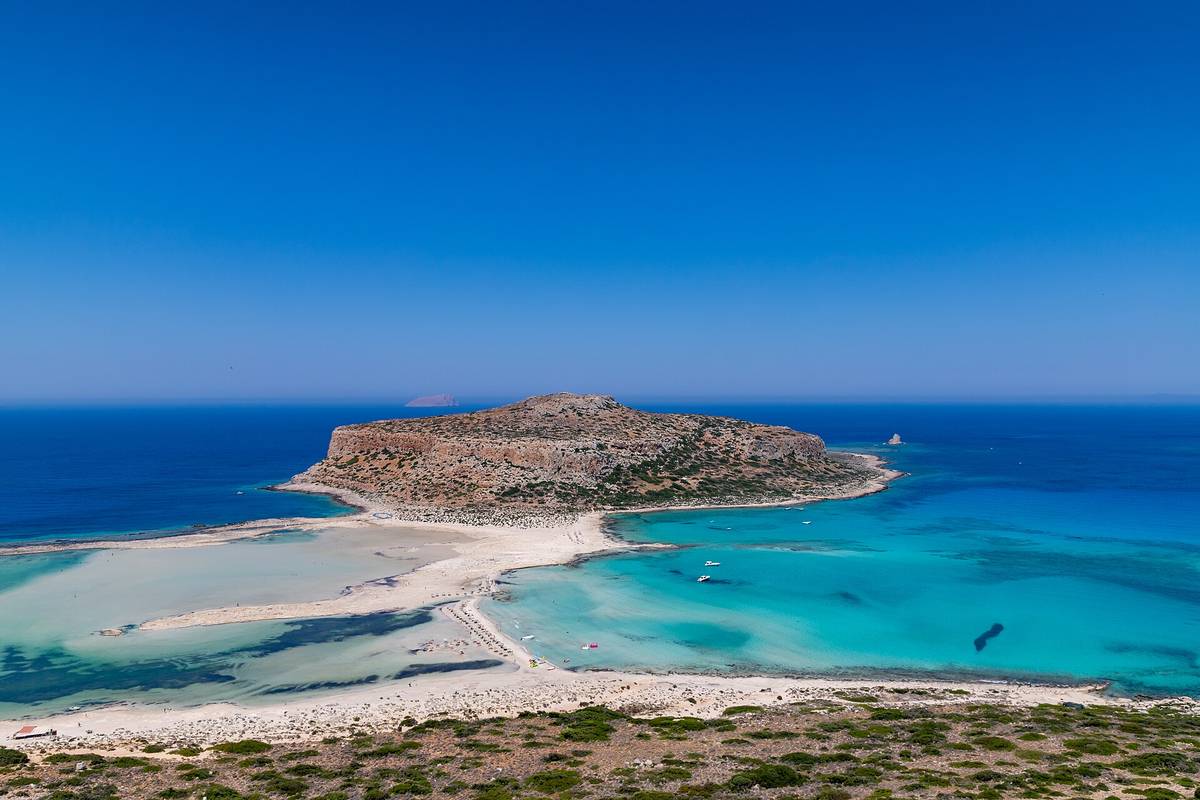
Balos Lagoon is one of the most photographed places in the whole of Crete, and the reality lives up to the pictures. This shallow turquoise pool spreads across the Gramvousa peninsula in the far north-west of the island, north of the port town of Kissamos. White-to-pink sand rings warm, waist-deep water, and the rocky islet of Gramvousa rises just offshore. The colour comes from the pale seabed and the bright shallows, which glow under the strong summer sun. This guide walks through how to reach the lagoon, what the two access routes involve, and how to plan a comfortable visit with My Greece Tours.
Balos rewards visitors who arrive prepared, because the site is remote, exposed, and protected, so facilities stay minimal on purpose. You can pair a stop here with other highlights in our wider Crete travel guide, which frames the west of the island as a distinct region worth extra days. The sections below cover the location and setting, the boat cruise from Kissamos, the drive-and-walk route down to the sand, the best timing for light and calm water, and the practical items every traveller should carry to the lagoon on a hot Cretan afternoon.
Where is Balos Lagoon in Crete?
Balos Lagoon lies on the Gramvousa peninsula in the far north-west of Crete, north of the port town of Kissamos. It is a shallow turquoise lagoon set against the offshore islet of Gramvousa and its Venetian fortress.
The lagoon fills a broad, sheltered bay where the Gramvousa peninsula curves out from the north-west coast of Crete. Kissamos, the nearest town and port, sits south of the site, and the tip of the peninsula points toward the islet of Gramvousa. This corner of the island lies far from the busier north-coast resorts, which is part of why the setting feels wild and open. The water here is warm and shallow across a wide area, so you can wade well out from the shore while the depth stays low. The pale seabed reflects the light and gives the lagoon its signature turquoise glow on clear days.
Sandbars shift with the tide and the breeze, so the exact shape of the shallows changes across the season and even from one morning to the next.
The wider region ranks among the top things to do in Crete, and Balos anchors the north-western corner of that list. The islet of Gramvousa carries a ruined Venetian fortress on its summit, and a well-known shipwreck rusts in the shallows nearby, both visible on the boat approach. The peninsula is a protected area, which keeps building and development away from the shoreline. That protection preserves the raw look of the place but also explains why services on the ground stay sparse.
Travellers based in the port town of Chania region can reach Kissamos in well under an hour by road, which makes the lagoon an easy day trip from the west of the island for anyone touring the region on a longer summer holiday there.
How do you reach Balos Lagoon by boat?
A boat cruise departs from Kissamos port and usually combines Balos with a stop at Gramvousa island. The vessel crosses the bay, passes the shipwreck, and drops visitors near the lagoon for swimming time ashore on the sand.
The boat cruise is the easier of the two routes, and it starts from the harbour at Kissamos. Vessels sail out across the bay, and most itineraries pair the lagoon with a landing on Gramvousa island, home to the Venetian fortress on its rocky crown. The crossing passes close to the rusting shipwreck that sits in the shallows off the islet, a highlight for photographers on the deck. The boat then anchors offshore near Balos and shuttles or drops passengers to spend time on the sand and in the warm water before the return leg back to port.
This route trades flexibility for comfort, and it lets you take in the coastline from the water as you go, with the fortress and the wreck framing the approach to the lagoon as the boat draws near the shore.
This option suits travellers who prefer to avoid the rough access road and the steep walk down to the lagoon. It also gives you the sea-level view of the fortress and the wreck that the land route cannot match. Book ahead in high season, because demand runs strong through the summer months and popular sailings fill quickly. The boat route works well for families and for anyone staying near the coast; consult our guide on where to stay in Crete to base yourself within easy reach of Kissamos.
Bring water and sun cover regardless of the route you choose, because the deck and the beach both sit fully in the sun with almost no shelter through the middle of the day. A morning departure tends to catch the calmest water on the crossing.
Can you drive to Balos Lagoon?
You can drive most of the way, then walk. A rough unpaved track of about 8 kilometres leads to a car park, followed by a stony path down to the sand that takes roughly 20 to 30 minutes on foot.
The land route begins on a narrow, unpaved track that runs about 8 kilometres to a car park set above the lagoon. This road is rough, dusty, and slow, and drivers should take it carefully in an ordinary hire car. Check your rental terms in advance, because the surface can be hard on a vehicle and on the tyres. From the car park, a stony footpath descends toward the shore, and the walk down takes roughly 20 to 30 minutes at a steady pace. The path is uneven and offers almost no shade, so sturdy footwear and water make the descent far more comfortable in the heat.
Take the track slowly, watch for oncoming vehicles on the tight sections, and allow extra time for the drive out and back to the main road.
The reward at the bottom is arriving on foot, with the turquoise lagoon opening up below you as you drop toward the sand. The return climb back up to the car park is hot and demands more effort than the way down, so pace yourself and keep water on hand. This route gives you freedom over timing and lets you linger as long as you like, unlike the fixed schedule of a boat cruise. Travellers who enjoy the drive-and-walk approach to remote beaches will find Balos sits alongside the island’s true hidden gems in Crete, reached by effort rather than by convenience.
Start early to beat the midday heat on the climb back up to the vehicle, and keep an eye on the fuel gauge before you commit to the long unpaved track.
When is the best time to visit Balos in Crete?
Early morning is the calmest and least crowded window at Balos in Crete. The lagoon fills up and turns windy by midday, and the light is strongest for that turquoise colour under clear morning skies over the bay.
Balos changes character through the day, so timing shapes the whole experience of the visit. Early in the morning the water sits calm and glassy, the crowds stay thin, and the light brings out the full turquoise of the shallows. The hours after that draw day-trippers and boat groups, and the wind tends to pick up across the exposed bay by the middle of the day. That afternoon breeze can stir the surface and kick sand across the beach. Arriving early, whether by the first boat or an early drive, gives you the quietest and most photogenic version of the lagoon.
The soft morning light also flatters the pale sand and the shipwreck offshore for anyone carrying a camera down to the shore at dawn.
Season matters as much as the hour of the day. The summer months bring the warmest water and the busiest crowds, while the shoulder periods offer a calmer, more spacious visit. The exposed setting means there is almost no natural shelter from sun or wind at any time of year. Plan your day around the light and the heat, and treat midday as the peak for both crowds and gusts. A stop at Balos pairs naturally with a visit to nearby Elafonisi beach further down the west coast, another pink-tinged shallow lagoon that draws travellers to this corner of the island.
Combining the two makes a full day on the wild west shore, so leave enough time to reach both before the afternoon light fades.
What should you bring to Balos Lagoon?
Bring water, a hat, sunscreen, and sun cover, because shade is almost absent across the whole site. Only a small canteen operates near the lagoon, so carry snacks, water shoes for the stony path, and cash for the drive-in route.
Balos is a protected area with deliberately minimal facilities, so self-sufficiency is the key to a good visit. Shade is almost absent anywhere on the sand, which makes a wide hat, strong sunscreen, and light sun cover essential from the moment you arrive. A single small canteen operates near the lagoon, and it cannot be relied on for a full day’s food and drink. Carry more water than you think you need, especially on the land route, where the descent and the hot climb back up both drain your reserves quickly under the summer sun.
A light umbrella or beach tent gives you the only reliable shade you will find on the open shore during the hottest hours of the afternoon, so it earns its place in the bag.
Practical extras make the day smoother and more comfortable. Water shoes help on the stony path and on the seabed, and a light beach mat gives you somewhere clean to sit on the sand. Carry cash for the drive-in access and for the canteen, because card options may be limited at such a remote spot. Take all litter away with you to respect the protected status of the peninsula and keep the lagoon pristine. With water, sun protection, and sensible footwear packed, both the boat cruise and the drive-and-walk route reward the effort with one of the finest stretches of coast in the whole of Crete.
Pack light so the walk stays easy in the heat, and keep the essentials in a bag you can carry down the path comfortably.
Frequently Asked Questions
Is Balos Lagoon worth visiting?
Balos Lagoon ranks among the standout natural sights on the whole island, and the effort to reach it is part of what keeps the setting so striking. The shallow turquoise water, the white-to-pink sand, and the offshore islet of Gramvousa with its Venetian fortress combine into a scene that few beaches in the Mediterranean can match. The site is remote and exposed, so it rewards travellers who plan ahead and arrive prepared. Those who value convenience over drama may prefer easier, more serviced beaches, yet visitors who come for scenery rate Balos highly. Arrive early to enjoy the calm water and the thin crowds before the midday wind and day-trippers arrive.
Pack water, sun cover, and sturdy footwear, and treat the visit as a short adventure rather than a casual stop. For most travellers touring the west of the island, the lagoon justifies the journey and stays long in the memory.
Is Balos Lagoon suitable for families with children?
Balos suits families in real respects, and the shallow, warm, waist-deep water makes it a gentle place for children to paddle and play well away from deep sea. The wide sandy shore gives room to spread out, and the calm early-morning conditions are ideal for young swimmers. The access, though, calls for thought. The boat cruise from Kissamos is the friendlier route for families, because it avoids the rough 8-kilometre track and the stony 20-to-30-minute walk down to the sand that the land route demands. The footpath is uneven and hot, and the climb back up tires small legs quickly.
Whichever route you choose, bring water, a hat, and sunscreen for every child, because shade is almost absent across the whole site. Pack snacks and spare drinks too, since the single small canteen cannot cover a full family’s needs. Time the outing for the calm early hours. With the right preparation, the lagoon makes a memorable outing for children.
How long should you spend at Balos Lagoon?
Plan on a half-day at Balos, and let your access route set the exact length. The boat cruise from Kissamos fixes your time ashore, and most itineraries give a stretch of hours at the lagoon plus a stop at Gramvousa island, which fills a comfortable half-day trip. The drive-and-walk route offers more freedom, because you control when you arrive and leave, though the rough track and the walk down and back both eat into your day. A stay of two to three hours in the water and on the sand suits most visitors, enough to swim, take in the islet and the fortress view, and relax before the heat peaks.
Arrive early to enjoy the calm water and thin crowds, then head off before the midday wind rises across the exposed bay. Keep the return climb in mind on the land route, and leave energy and water for the hot walk back up to the car park.