
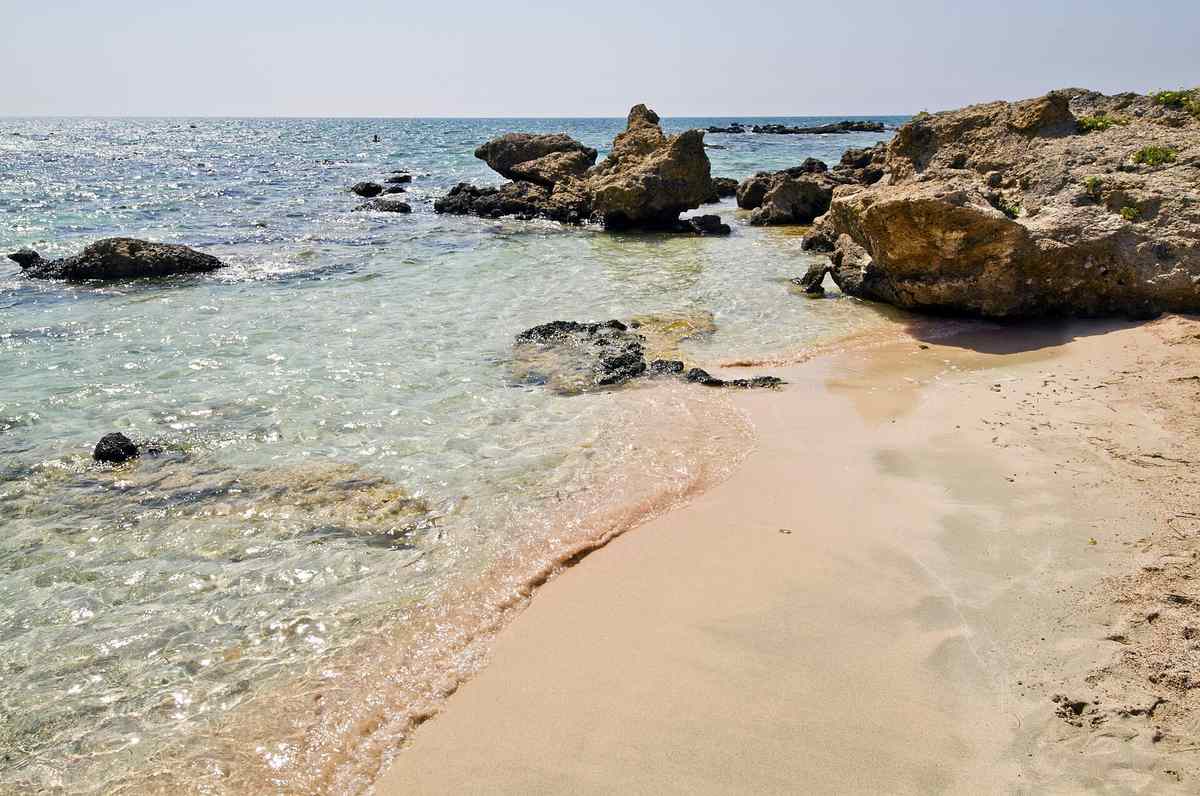
Elafonisi Beach sits at the far south-west tip of Crete, where a shallow turquoise lagoon separates a low sandy islet from the mainland. Crushed shells and foraminifera tint stretches of the sand a soft pink, and a sandbar lets you wade knee-deep across the warm water to the islet. The bay is a protected nature reserve, ringed by dunes, sea daffodils, and loggerhead turtle nesting grounds. The calm, waist-high shallows make it a favourite with families and young children. This guide covers how to reach it, when to arrive, and what the site holds, so you can plan a rewarding day at Elafonisi with My Greece Tours.
Elafonisi rewards early arrivals and careful planning, since the drive is long and the midday crowds and wind build fast in high summer. The lagoon, the pink sand, and the roped-off dunes each shape how you should spend your hours here, and treating the reserve gently keeps it intact for turtles and future visitors. For the wider region, our Crete travel guide places this beach within your route across the island. The sections below cover access from Chania, the pink-sand and lagoon science, the reserve’s protection rules, timing for crowds and wind, and how a visit fits a broader Crete itinerary.
How do you get to Elafonisi Beach in Crete?
Most visitors drive south-west from Chania, a winding mountain route of roughly 1.5 to 2 hours that ends at a car park behind the dunes. Seasonal boat trips run from the south coast as a longer alternative.
The road route climbs and descends through gorges and hill villages before dropping to the coast past the cliff-top Chrysoskalitissa Monastery, so the final stretch is slow and narrow rather than fast highway. Drivers set out from Chania and follow the signed south-west road, where the last kilometres tighten into single-lane bends above the sea. A car park sits behind the dunes, and a short walk on marked paths brings you to the sand without crossing protected vegetation. The drive itself is scenic, passing the historic Chrisoskalitissa monastery on its rock a short distance before the beach, so many travellers pair the two stops in one outing and treat the journey as part of the day.
Boat services offer a car-free alternative for travellers based on the south coast, running seasonally and taking longer than the road but sparing you the mountain bends. Public buses also reach Elafonisi from Chania in the summer months, which suits visitors without a rental car, though the timetable limits how long you can linger. Whichever way you arrive, the site has no resort, so bring water, sun protection, and cash for the canteens and sunbed hire. Fuelling up and buying supplies before you leave town is wise, since the final villages are small and shops thin out. Planning the return trip early avoids the late-afternoon queue back over the hills toward Chania.
Just east of the lagoon, the wild cedar beach of Kedrodasos offers natural shade and calm water.
Why is the sand at Elafonisi pink?
Fragments of crushed pink and red shells mix with tiny foraminifera, single-celled organisms whose reddish shells wash ashore. Blended with pale quartz sand, they tint parts of the beach a soft rose, strongest in sheltered pockets.
The colour is patchy rather than uniform, so the deepest pink gathers where waves concentrate the lighter shell fragments against the shore and around the islet’s edges. Foraminifera live in the surrounding shallows and reef, and their reddish remains build up over long spans of time, layering onto the beach alongside broken coral and mollusc shells. Wet sand at the waterline usually reads pinker than the dry, sun-bleached upper beach, and calm morning light makes the tint easier to see and photograph. The effect is natural and fragile, so scooping sand into bottles as a souvenir is discouraged and, within the reserve, prohibited.
The pink is best appreciated in place, framed against the turquoise lagoon rather than carried away.
Elafonisi shares this shell-based pink phenomenon with a small set of beaches worldwide, which is part of why it draws such steady summer crowds. The colour shifts with the season, the recent weather, and the angle of the sun, so two visits can look different, and cloud cover mutes the rose toward plain cream. The clear, shallow water above pale sand also produces the vivid turquoise that makes the pink stand out by contrast. For travellers cataloguing standout coastlines, this beach ranks among the hidden gems in Crete despite its fame, since the far south-west corner keeps it well off the island’s busier north-coast strip and its resort towns.
Can you walk across the Elafonisi lagoon to the islet?
Yes. A shallow sandbar links the mainland beach to the small islet, so you can wade across the warm, waist-high or shallower water on foot. Depth varies with wind, tide, and the season’s shifting sand.
The crossing is short and gentle in calm conditions, with water often no higher than the knees or waist, which is why parents let young children paddle here with confidence. The islet beyond the sandbar holds quieter coves, low dunes, and a small chapel, rewarding the wade with more space than the crowded main beach. Footing is soft sand rather than rock, though the odd shell or seagrass patch means water shoes help sensitive feet. Currents can strengthen when the afternoon wind picks up and pushes water through the channel, so families often cross earlier in the day.
Reading the water before you set out, and keeping children within reach, keeps the crossing the easy pleasure it is meant to be.
The warm, shallow lagoon is the single feature that most defines a day at Elafonisi, offering safe swimming that suits toddlers and nervous swimmers alike. Water clarity is high over the pale sand, so snorkellers see small fish and shifting light patterns even in a metre of water. On the islet side, marked paths steer you around nesting zones and fragile dune plants, and staying on them protects both the habitat and your footing. The far tip of the islet faces open sea and grows rougher, a contrast to the sheltered lagoon that shows how exposed this corner of Crete can be.
Returning to the mainland before the wind peaks makes the wade back as smooth as the crossing out.
Why is Elafonisi a protected nature reserve?
Elafonisi belongs to the Natura network of protected European sites. Its dunes, rare sea daffodils, and loggerhead turtle nesting grounds are ecologically important, so roped-off zones, marked paths, and off-dune rules shield the fragile habitat from trampling.
Loggerhead turtles come ashore to lay eggs on quiet stretches of the beach and islet, and the buried nests need undisturbed, compacted-free sand to incubate through the summer. Sea daffodils, low grasses, and other dune plants anchor the sand and shelter small wildlife, so a single trampled patch can set back years of slow growth. Rangers and signage mark the roped areas, and visitors keep to the boardwalks and paths that thread between the protected zones. Lighting, loud disturbance, and digging near nests are all discouraged, since turtle hatchlings orient by natural cues and are easily confused.
Respecting the ropes is not a formality here; it is the reason the beach still looks the way early visitors first found it.
The reserve status also shapes what the site offers, since large-scale building is barred and no resort has risen behind the sand. That protection keeps Elafonisi wild in feel, with only a car park, sunbeds, and a couple of canteens serving the crowds. Leaving no litter matters more than usual, because waste on a nesting beach threatens turtles directly and pollutes the clear lagoon. The same rules that limit development are what preserve the pink sand, the dunes, and the birdlife that draw people in the first place. Travellers who value wild coastline can compare it with inland protected landscapes such as the Samaria Gorge, another guarded corner of western Crete.
When is the best time to visit Elafonisi in Crete?
Arrive early, before the mid-morning coaches and the midday heat. High-season afternoons bring dense crowds and a strong onshore wind, so a start soon after opening buys calm water, easier parking, and softer light for the pink sand.
The beach fills fast from late morning in July and August, when day trippers pour in from across the island and the car park behind the dunes reaches capacity. Wind is the other reason to come early, since the exposed south-west corner catches an afternoon breeze that whips up sand and chops the open-sea side of the islet. Mornings tend to be calmer, letting the lagoon stay glassy and the wade across the sandbar feel effortless. Late spring and early autumn thin the crowds while keeping the sea warm, so travellers with flexible dates often skip peak summer entirely.
A dawn or early-morning start also frees your afternoon for the scenic drive back over the hills toward the north coast.
Packing for a full self-sufficient day pays off, because the site has no resort and supplies run to a couple of canteens rather than shops. Bring water, shade, and sun protection, and consider water shoes for the sandbar and reef edges. A trip here rewards an unhurried plan, so many visitors treat Elafonisi as the single anchor of the day rather than one stop among several. When you weave it into a wider route, our list of things to do in Crete helps balance a demanding drive against the island’s other coasts and towns. Checking the wind forecast the night before is the simplest way to time your visit well.
Frequently Asked Questions
Is Elafonisi Beach suitable for young children?
Elafonisi is one of the most family-friendly beaches in Crete, largely because of its warm, shallow lagoon. The water over the sandbar between the mainland and the islet often stays knee- to waist-deep, so toddlers and hesitant swimmers can paddle safely under a parent’s eye. The soft sandy bottom, free of sharp rock across the main crossing, adds to the reassurance, though water shoes guard against the odd shell or seagrass patch. Sunbeds and umbrellas can be hired near the entrance, and a couple of canteens sell drinks and snacks, which helps during a long day out.
Two cautions matter: the afternoon wind can push stronger currents through the channel, so families tend to cross the sandbar in the calmer morning, and shade and sun protection are essential because the open dunes offer little natural cover. Keeping children within reach and returning before the wind peaks keeps the day easy.
How far is Elafonisi from Chania and Rethymno?
Elafonisi lies at the far south-west tip of Crete, reached from Chania by a winding mountain drive of roughly 1.5 to 2 hours rather than a quick coastal run. The final stretch narrows into single-lane bends above the sea, so the journey feels longer than the map distance suggests and rewards an early start. From Rethymno, further east along the north coast, the trip takes longer still, since you first travel west toward Chania before turning south into the hills. There is no fast motorway for the last leg, and the small final villages have few shops, so filling the fuel tank and buying water and snacks before you leave town is sensible.
Seasonal boats and summer public buses give car-free alternatives, both slower than driving but useful without a rental. Planning the return before late afternoon helps you avoid the queue of departing cars climbing back over the mountains toward the north coast at day’s end.
What should you not do at Elafonisi’s protected reserve?
Elafonisi is part of the Natura network of protected sites, so a handful of rules keep its fragile habitat intact. Stay off the dunes and out of the roped or fenced zones, since these shelter sea daffodils, low dune plants, and loggerhead turtle nests that trampling can destroy in seconds. Keep to the marked paths and boardwalks that thread between protected areas, both on the mainland and across on the islet. Do not dig near turtle nests, disturb wildlife, or leave litter, because waste on a nesting beach harms turtles directly and pollutes the clear lagoon.
Removing pink sand as a souvenir is discouraged and prohibited within the reserve, since the colour comes from slowly accumulated shell fragments that do not replenish quickly. Avoid loud disturbance and bright lights near nesting grounds, as hatchlings orient by natural cues. Following these rules is exactly what has kept this corner of Crete wild, unbuilt, and worth the long journey to reach.