
Crete boat trips open a coastline that roads never reach, carrying travellers to offshore islands, hidden coves and sea caves that stay empty of crowds. From the harbour at Kissamos in the west, cruises sail out to a turquoise lagoon and a pirate island crowned by a Venetian fort. Southern boats cross to palm beaches and a roadless shore of white-walled hamlets, while eastern routes reach a cedar-forested islet and a fortress guarding a narrow gulf. Sunset sailings, fishing trips and private charters run from the busy resorts through the warm months. Plan your route, pick your harbour and book the crossing with My Greece Tours.
Choosing a boat trip starts with the coast you want to explore, since the west, south and east each guard their own islands and beaches. The sections below cover the Kissamos cruises to the lagoon, the southern crossings along the Sfakia shore, the eastern runs to Chrissi and Spinalonga, and the sunset and charter options that leave from the main harbours. Our Crete travel guide sets these routes in the wider picture of where to stay and how to move between regions across the island, so each crossing fits a well-planned trip.
What Crete boat trips leave from Kissamos in the west?
Day cruises from Kissamos harbour reach the Balos lagoon and the pirate island of Gramvousa, crowned by a Venetian fortress. Boats anchor for swimming in shallow turquoise water, then dock below the fort for a short climb ashore.
Kissamos harbour, on the north-west corner of the island, is the launch point for the most photographed sail on Crete. Boats leave in the morning and turn north up the wild Gramvousa peninsula, a bare strip of scrub and limestone cliff with no coast road along its length. The first stop is the pirate island of Gramvousa, where a Venetian fortress caps the summit above a rusting shipwreck grounded in the bay below. Passengers climb a rocky path for twenty minutes to reach the ramparts, take in the view over the peninsula, then swim in the clear bay before the boat sails on.
Deck space fills quickly on morning departures, so travellers who want a shaded rail seat board early and claim their spot before the gangway crowds.
The lagoon at the tip of the peninsula is the reason the route sells out through the hot months of the year. Boats drop anchor off Balos lagoon, a curving sweep of white sand and water so shallow that children wade far from shore across the warm flats. A tender ferries passengers to the beach, where three hours pass in knee-deep turquoise shallows and a low pink-sand headland gives a wide view across the whole basin. The full-day sailing pairs the lagoon and the fortress island in one ticket, and it ranks among the headline things to do in Crete for a west-coast base.
High-summer demand strips the popular departures bare within days, so booking ahead secures a confirmed place on the busiest crossings of the season.
Which south-coast Crete boat trips reach Preveli and Sfakia?
Southern boats sail to the palm beach of Preveli and along the roadless Sfakia shore between Chora Sfakion, Loutro and Agia Roumeli. Longer crossings continue south to Gavdos, the remote island beyond the coast of Crete.
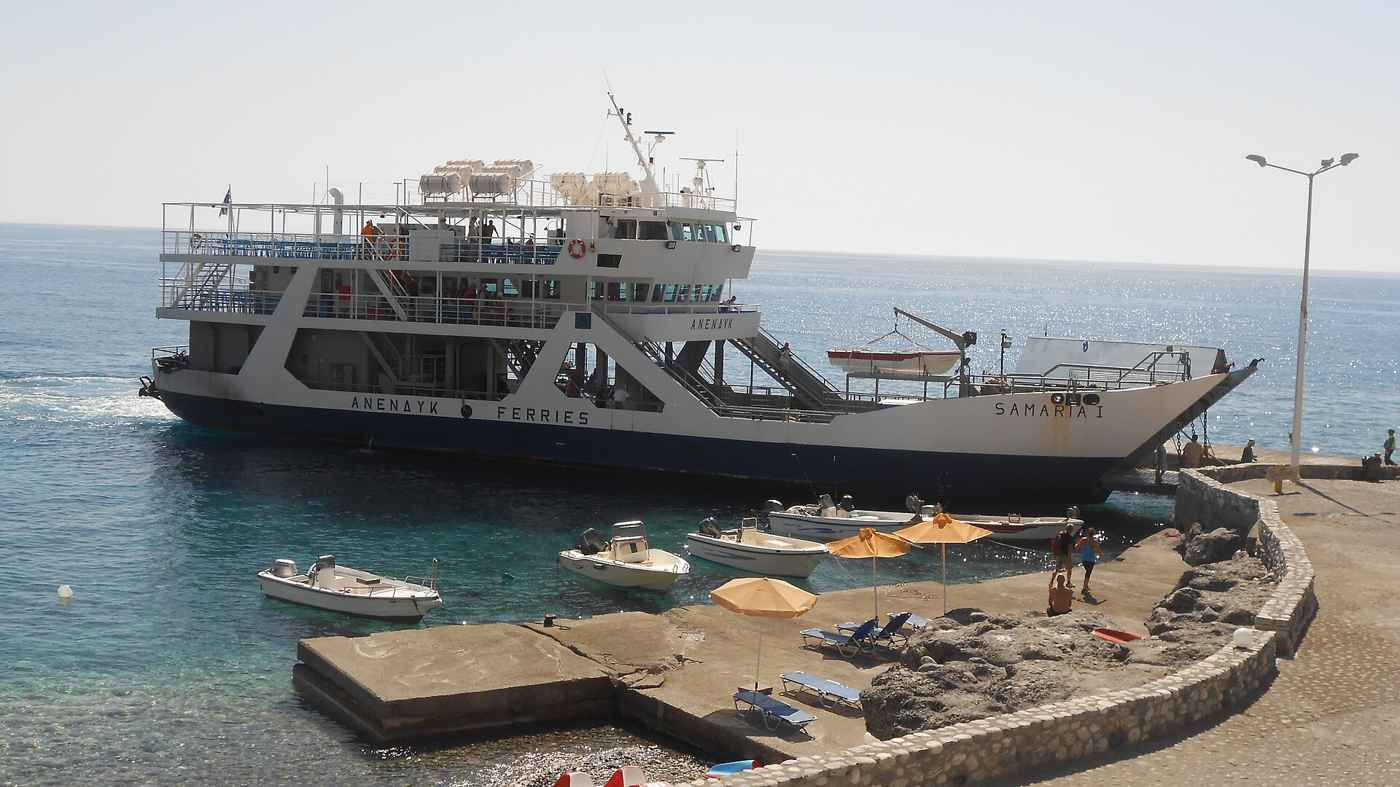
The south coast hides beaches that only a boat or a footpath can reach, and the ferries here double as transport for hikers walking off the Samaria Gorge. Small craft run to the palm-lined river mouth of Preveli beach, where a freshwater stream meets the sea below a shaded grove of native Cretan date palms. West of there, the roadless shore of Sfakia links Chora Sfakion, the tiny car-free hamlet of Loutro and the gorge exit at Agia Roumeli. A regular boat threads this coast all day, dropping walkers and swimmers at coves the grey mountains wall off from every road and vehicle.
Timetables tighten sharply outside the peak summer weeks, so travellers check the last return sailing before setting out on the coastal path.
Longer sailings push south to Gavdos, the most remote inhabited island in the country and the southernmost point of Europe. The crossing from Chora Sfakion or Paleochora takes over an hour across open water, and the island rewards the effort with empty sand, cool cedar shade and a single quiet track winding between its scattered hamlets. Southern weather turns the schedule without warning, and a strong afternoon wind can cancel the return, so overnight kit is a wise precaution for the Gavdos run. The Sfakia coast boats and the Gavdos ferry both sail from late spring to early autumn, matching the calm-sea window when the swell stays low.
Choosing between a half-day coastal hop and a full island crossing depends on how far from the nearest road a traveller wants to wake up.
What eastern Crete boat trips visit Chrissi and Spinalonga?
Boats from Ierapetra cross to the cedar-forest island of Chrissi, while trips from Elounda and Agios Nikolaos visit the fortress islet of Spinalonga. Both routes run as half-day or full-day sailings through the warm eastern season.
The east of the island points its boats at two very different islets that share almost nothing beyond the sea between them. From the south-coast town of Ierapetra, a daily boat crosses to Chrissi island, an uninhabited strip of cedar forest, shell-sand beaches and shallow lagoons lying an hour offshore. Visitors follow marked paths under the twisted ancient junipers, swim off pale coral sand and carry their own water, since the island holds no shop and no shade beyond the trees themselves. The boat gives four hours ashore before the return, enough time for a walk across the full width of the island and a long unhurried swim.
Rangers ask walkers to keep strictly to the marked paths, because the ancient cedars grow slowly and the fragile dunes shift underfoot.
North of the mountains, the sheltered Gulf of Mirabello frames the second eastern run across calmer water. Boats from Elounda and Agios Nikolaos cross to Spinalonga, a fortress islet whose thick Venetian ramparts later served as a quarantine colony until the middle of the last century. Guides walk visitors through the sea gate, along the ring street of roofless stone houses and out to the bastions facing the open gulf beyond. The Elounda hop takes a quarter of an hour each way, while the Agios Nikolaos boat makes a wider and much slower loop across the gulf.
Combined tickets pair the fortress island with a swim stop in a quiet sheltered cove, turning the history visit into a full and relaxed half-day on the water.
When is the boat-trip season on Crete, and how far ahead to book?
The season runs from late spring to early autumn, when calm seas keep the routes open. Booking ahead in high summer secures a place on the busiest crossings, especially the Kissamos lagoon and Chrissi island sailings.
Boat operators open the schedule as the sea flattens in late spring and close it again once the sharp autumn winds return. The calmest water and the fullest timetable fall across the hot mid-year weeks, when every harbour on the coast runs its complete roster of daily crossings. Morning departures leave before the day heats and the afternoon breeze builds, so early boats give the smoothest ride and the clearest water for swimming off the anchored deck. The shoulder weeks at each end of the season bring quieter decks and lower fares, though a sudden run of wind can trim the timetable back.
Checking the forecast the evening before a sailing saves a wasted trip to the harbour, since captains cancel exposed open-water routes the moment the swell begins to climb.
Demand outruns deck space on the headline routes right through the peak weeks, and the popular sailings sell out days ahead of departure. The Kissamos lagoon cruise and the Chrissi crossing fill first, followed closely by the Gavdos ferry and the evening sunset boats leaving the big resorts. Booking ahead in high summer secures a confirmed place, a shaded rail seat and the departure time a traveller actually wants rather than the last berth left on the boat. Private charters need the longest lead of all, since a single skipper and boat serve just one group across the whole day.
Travellers who plan a fixed date reserve early, while those with a flexible week can watch the forecast and pick a settled calm morning closer to the sailing itself.
What sunset cruises, fishing trips and private charters run on Crete?
Sunset cruises, fishing trips and private charters run from the main resorts across the island. Sunset boats sail the evening coast, fishing trips head for the reefs offshore, and charters set a private route for one group.
The resort harbours run shorter boats alongside the long island crossings, aimed at travellers who want a relaxed evening or a private half-day rather than a full-island sail. Sunset cruises leave in the late afternoon and follow the coast as the light drops, pausing for a swim in a gold-lit cove before the quiet run home under a darkening sky. Fishing trips head out to the reefs and rocky drop-offs beyond the resort bays, where a skipper who knows the ground puts guests directly over bream and bass. Both trips suit families and first-time sailors well, since the water stays close to shore and the crossings run short and sheltered.
Evening boats book out fastest on calm weekends through the peak weeks, so travellers reserve a firm place a day or two ahead of the date.
Private charters hand the whole boat to one group and the route to the passengers, turning a fixed timetable into a full day shaped entirely around the guests. A skippered yacht or launch can string together a swim cove, a low sea cave and a quiet taverna jetty that the scheduled boats skip past entirely. Charters leave from the larger harbours across the island, and the price covers the boat, the fuel and the crew for the whole day rather than a single numbered seat. Groups celebrating an occasion or travelling with small children often choose a charter for the deck space and the freedom to set their own timing.
Booking well ahead matters most of all here, because one boat serves one group a day and the settled calm-weather dates fill first through the summer.
Frequently Asked Questions
Which Crete boat trip is best for a lagoon and swimming?
The Kissamos cruise to the Balos lagoon delivers the finest swimming water on the whole island. Boats leave the west-coast harbour in the morning and sail up the Gramvousa peninsula, stopping first at the pirate island and its Venetian fort, then anchoring off the shallow lagoon itself. The water at Balos runs so shallow and warm that swimmers wade far from shore across a smooth floor of white sand, and a low pink headland gives a wide view over the whole turquoise basin. The full-day ticket combines the fortress island and the lagoon in one sailing, giving roughly three hours of beach and unhurried swim time.
Morning departures offer the calmest water and the smoothest ride before the strong afternoon wind rises off the sea. The route sells out fast through the hot months of the year, so booking ahead secures a shaded rail seat and the departure time you actually want.
Do boats run to Gavdos and the remote southern islands?
Boats reach Gavdos, the southernmost inhabited island in Europe, from the south-coast ports of Chora Sfakion and Paleochora during the settled months. The open-water crossing takes over an hour and runs from late spring to early autumn, matching the calm-sea window that keeps the exposed route safe. Gavdos rewards the long journey with empty beaches, cool cedar shade and a single quiet track linking its scattered hamlets, and travellers often stay overnight rather than rush the return sailing. Southern weather governs the timetable closely, and a strong afternoon wind can cancel a crossing outright, so packing overnight kit guards against a stranded return to the mainland coast.
The same south-coast boats also serve the roadless Sfakia shore between Chora Sfakion, Loutro and Agia Roumeli, and connect walkers leaving the Samaria Gorge at Agia Roumeli. Checking the marine forecast the evening before any southern crossing saves a wasted early trip down to the harbour.
Can I charter a private boat on Crete for a family day?
Private charters run from the larger harbours across the island and hand the whole boat and the day’s route to one group for the day. A skippered yacht or launch can string together a swim cove, a low sea cave and a quiet taverna jetty that the scheduled crossings skip past, shaping the day around the passengers rather than a fixed public timetable. Families with small children often choose a charter for the open deck space, the flexible timing and the freedom to turn back early if needed. The price covers the boat, the fuel and the crew for the whole day rather than a single numbered seat on a shared boat.
One boat serves one group a day, so charters need the longest booking lead of any trip on the water, and the settled calm-weather dates fill first through summer. Reserving well ahead in high summer secures both the boat and the settled morning you want on the water.