
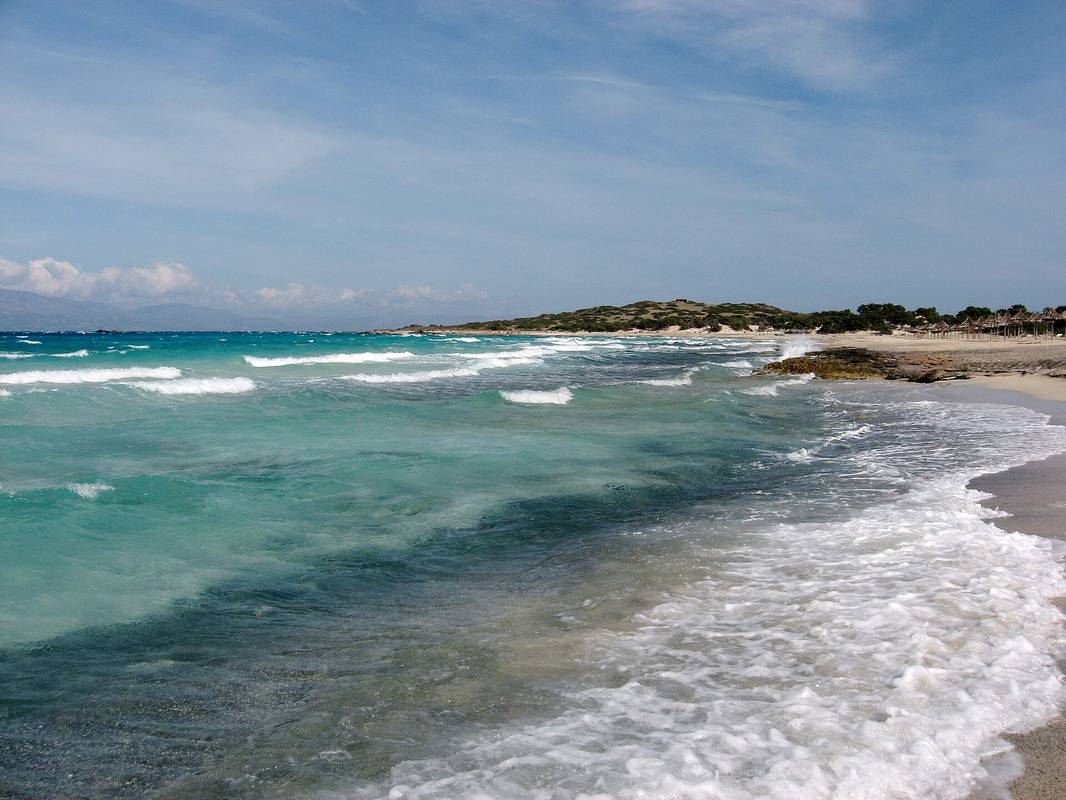
Chrissi Island, also known as Gaidouronisi, floats in the Libyan Sea just south of Ierapetra as one of Crete’s most pristine natural sanctuaries. This small uninhabited island captivates visitors with its rare Lebanon cedar forest, golden sand beaches, and shallow turquoise waters that glow under the Mediterranean sun. Protected as a nature reserve, Chrissi offers a glimpse of untouched coastal wilderness where low dunes meet ancient junipers and crushed-shell shores stretch beneath cloudless skies. Day-trip boats depart regularly during the warmer months, carrying travelers to this fragile ecosystem where strict conservation rules preserve its unique character. Explore this remarkable island paradise with My Greece Tours.
Reaching Chrissi requires a boat journey from Ierapetra, Crete’s southernmost town, with excursions operating as day trips only. Overnight stays are forbidden to protect the delicate environment. Visitors should prepare for limited facilities—just a seasonal canteen operates on the island—so bringing water, sun protection, and shade is essential. The southern sun beats down intensely with minimal natural shelter available. The sections below cover everything from the island’s natural wonders to practical visiting tips, helping you plan your escape to this protected shore. For broader context on exploring the region, consult our comprehensive Crete travel guide before your journey.
What makes Chrissi Island unique among Crete beaches?
Chrissi stands apart as a protected nature reserve hosting a rare natural forest of Lebanon cedars and junipers, ecosystems uncommon on Mediterranean islands. Its golden and crushed-shell beaches meet impossibly turquoise shallow waters in complete wilderness.
The island’s defining feature is its ancient cedar forest, a botanical rarity that has survived centuries in this isolated location. These Lebanon cedars, alongside twisted junipers, create a microclimate within the low dunes that shelter unique plant and insect species found nowhere else in the region. The forest remains one of the last natural stands of this tree species in Europe, making Chrissi a critical conservation priority. Visitors walk marked paths through this fragile woodland, observing how the trees have adapted to salt spray and intense sun exposure. The contrast between dense green canopy and open beach creates an otherworldly landscape. Environmental protection measures ensure that foot traffic does not damage root systems or disturb nesting birds.
This living museum of Mediterranean ecology offers naturalists and casual visitors alike a window into coastal forests that once covered much of the region before human settlement altered the landscape permanently.
Beyond the forest, Chrissi’s beaches present a spectrum of colors and textures rarely seen together. Belegrina, known as the Golden Beach, stretches along the northern shore with fine sand that glows amber in afternoon light. Other sections feature crushed shells that create pink and white mosaics underfoot, while the water remains so shallow that wading extends dozens of meters offshore. The Libyan Sea here takes on shades of turquoise and aquamarine that seem artificially enhanced, yet result purely from the sandy bottom and crystal clarity. This combination of ecological diversity and visual splendor distinguishes Chrissi from typical Crete beaches, offering an experience closer to a remote atoll than a Mediterranean island.
The protected status ensures that development will never compromise these natural qualities, preserving the island’s character for future generations.
How do you reach Chrissi Island from Crete?
Day-trip boats depart from Ierapetra, Crete’s southernmost coastal town, during the tourist season. The journey across the Libyan Sea takes approximately forty-five minutes. Operators run scheduled excursions with fixed departure and return times, allowing five to six hours on the island.
Ierapetra serves as the sole departure point for Chrissi excursions, with boats leaving from the town’s harbor throughout the warmer months. The sailing covers roughly fifteen kilometers of open water, conditions permitting, with crossings generally smooth in summer but occasionally canceled during strong southern winds. Ticket prices typically include round-trip transport, with operators providing basic information about conservation rules before departure. Boats anchor offshore at Chrissi, requiring passengers to wade through shallow water to reach the beach—waterproof bags for belongings prove essential. Most excursions allow between five and six hours on the island, departing mid-morning and returning mid-afternoon.
This schedule gives adequate time for swimming, exploring the cedar paths, and relaxing on the sand while ensuring everyone returns before evening. Advance booking during peak summer weeks is advisable, though walk-up tickets often remain available in shoulder seasons when visitor numbers drop.
The journey itself offers perspectives on Crete’s southern coastline and the vastness of the Libyan Sea stretching toward Africa. Passengers often spot seabirds and occasionally dolphins during the crossing. Upon approach, Chrissi appears as a low green line on the horizon, gradually revealing its beaches and forest as the boat draws closer. The return journey provides time to reflect on the island experience while the cedar-covered shore recedes into the distance. Travelers basing themselves in Ierapetra can easily incorporate Chrissi into their itinerary, while those staying elsewhere in eastern Crete should plan for the drive to the harbor plus the boat schedule.
The excursion represents a full-day commitment but delivers an island experience unlike any other accessible from Crete, justifying the time investment for those seeking pristine natural environments and exceptional swimming conditions.
What facilities and services exist on Chrissi Island?
Facilities remain deliberately minimal to protect the nature reserve. A seasonal canteen operates during summer, offering basic refreshments and simple food. No permanent structures, shops, or accommodations exist. Visitors must bring water, sun protection, and shade, then carry all litter back to boats.
The canteen represents the only commercial operation permitted on Chrissi, functioning solely during the peak visitor months when day-trip boats run regularly. This basic facility provides cold drinks, snacks, and simple prepared foods at prices reflecting the remote location and transport costs. Supplies arrive by boat, limiting variety and availability. The canteen offers welcome relief for those who underestimate the intensity of the southern sun or forget to pack adequate provisions. Beyond this single service point, the island remains entirely undeveloped—no toilets, no changing facilities, no rental equipment, and certainly no hotels or overnight accommodations. This absence of infrastructure is intentional, designed to minimize human impact on the fragile ecosystem.
Visitors quickly realize that Chrissi demands self-sufficiency and preparation. Bringing at least two liters of water per person is essential, as dehydration occurs rapidly under the relentless sun with minimal shade beyond the protected cedar forest areas where prolonged sitting is discouraged to prevent soil compaction.
Sun protection becomes critical on Chrissi, where the southern latitude and lack of natural shelter create intense exposure. Portable umbrellas, lightweight shelters, or beach tents provide necessary shade, though visitors must secure them against occasional breezes and remove them completely when departing. Sunscreen, hats, and protective clothing prevent burns that can ruin the remainder of a Crete vacation. The environmental ethos extends to waste management—no bins exist on the island, requiring everyone to pack out everything they bring in, including organic waste like fruit peels that might attract invasive species or disrupt nutrient cycles. This leave-no-trace approach maintains Chrissi’s pristine condition and aligns with its status as a protected reserve.
The minimalist facilities might challenge visitors accustomed to developed beach resorts, yet this simplicity forms part of the island’s appeal, offering a rare opportunity to experience coastal nature without the mediation of tourism infrastructure that characterizes most accessible things to do in Crete.
What are the main beaches and natural features of Chrissi?
Belegrina, the Golden Beach, is the most famous shore, featuring fine golden sand and incredibly shallow turquoise water. Other areas display crushed-shell beaches in pink and white hues. The Lebanon cedar and juniper forest covers interior sections, accessible via marked paths.
Belegrina dominates the northern coastline, stretching for hundreds of meters with sand that shifts from pale gold to deeper amber depending on light and moisture. The beach slopes so gradually into the sea that wading far from shore still leaves the water at knee depth, creating an enormous shallow lagoon perfect for families and nervous swimmers. The bottom remains sandy and free of rocks or sea urchins, allowing barefoot exploration. Water temperature in summer reaches bath-like warmth, while the clarity permits observation of small fish darting between patches of seagrass. This beach receives the majority of day-trippers, yet its length prevents crowding except at the immediate boat landing area.
Walking east or west along the shore quickly leads to quieter sections where solitude becomes possible even during peak season. The golden sand contains fine quartz particles mixed with shell fragments, creating a texture that squeaks underfoot when dry and packs firmly when wet, ideal for walking or playing.
The cedar forest occupies the island’s interior, rising just meters above sea level yet creating a distinct ecosystem. Marked paths wind between the gnarled trunks, their bark weathered silver-grey by salt and sun. Junipers twist into sculptural forms, their roots gripping sandy soil that shifts with wind and rain. Informational signs explain the forest’s ecological importance and the species it supports, from endemic beetles to migratory birds that rest here during Mediterranean crossings. Visitors must remain on designated trails to prevent erosion and root damage—stepping into unmarked areas risks permanent harm to vegetation that requires decades to recover.
The forest provides the only substantial shade on Chrissi, though sitting beneath the trees for extended periods is discouraged to protect the fragile ground layer. This natural wonder elevates Chrissi beyond a simple beach destination, ranking it among the most ecologically significant hidden gems in Crete and justifying its strict protection status.
When is the best time to visit Chrissi Island and what should visitors know?
Boats operate from late spring through early autumn, with July and August seeing peak service and crowds. Shoulder months offer quieter visits with pleasant conditions. Visitors must respect conservation rules: stay on marked paths, remove all litter, and avoid disturbing wildlife or vegetation.
The operational season for Chrissi excursions typically runs from May through October, weather and demand permitting. July and August bring the highest visitor numbers, warmest water temperatures, and most reliable boat schedules, but also the most intense heat and the greatest pressure on the island’s limited space. June and September offer excellent alternatives, with warm conditions, fewer crowds, and often lower excursion prices. The sea remains swimmable well into October for those tolerant of cooler water, while May can still feel brisk despite air temperatures climbing. Wind patterns affect boat operations—strong southerlies occasionally cancel departures, particularly during spring and autumn when weather proves less predictable. Checking conditions and confirming boat schedules the day before prevents disappointment.
The intense southern sun makes early-season visits more comfortable for those sensitive to heat, while late-season trips appeal to travelers seeking solitude and willing to accept slightly reduced services as operators wind down for winter.
Conservation awareness forms an essential part of visiting Chrissi responsibly. The marked paths exist not to restrict freedom but to channel foot traffic away from the most vulnerable plant communities and nesting sites. Stepping off trails compacts soil, damages roots, and creates erosion channels that expand with each subsequent rain. Collecting shells, rocks, or plant material is prohibited and removes elements essential to the ecosystem’s function. The litter-free policy extends beyond obvious trash to include cigarette butts, which leach toxins and take years to decompose in the dry environment. Feeding wildlife, including the occasional seabirds, disrupts natural behaviors and creates dependence on human food sources.
These rules might seem strict, yet they ensure that Chrissi remains pristine for future visitors while protecting species found nowhere else. Understanding the best time to visit Crete helps coordinate Chrissi trips with optimal weather, while choosing where to stay in Crete determines travel time to Ierapetra and the island’s accessibility.
Frequently Asked Questions
Can you stay overnight on Chrissi Island?
Overnight stays on Chrissi Island are strictly prohibited to protect its status as a nature reserve. The island remains uninhabited, with no accommodations, camping facilities, or infrastructure to support overnight visitors. All excursions operate as day trips only, with boats departing Ierapetra in the morning and returning in the afternoon after five to six hours on the island. This restriction serves critical conservation purposes—limiting human presence to daylight hours reduces disturbance to nocturnal wildlife, prevents unauthorized fires or waste accumulation, and ensures that the fragile ecosystem experiences regular recovery periods without human impact. The absence of lighting, fresh water sources, and shelter makes overnight stays impractical regardless of regulations.
Visitors seeking extended time in the region should base themselves in Ierapetra or other eastern Crete towns, where comfortable accommodations provide a civilized retreat after a day exploring Chrissi’s wild shores. The day-trip format, while limiting total time on the island, actually enhances the experience by creating a focused, intentional visit that respects ecological boundaries while still delivering the essential Chrissi experience of pristine beaches and ancient cedar forests.
What should you bring for a day trip to Chrissi Island?
Preparation is essential for a comfortable Chrissi visit given the minimal facilities. Bring at least two liters of water per person, as dehydration occurs rapidly under the intense southern sun with limited shade. Pack a substantial lunch and snacks, since the seasonal canteen offers only basic options at premium prices. Sun protection is critical—high-SPF sunscreen, a wide-brimmed hat, sunglasses, and UV-protective clothing prevent burns that can ruin your trip. A portable umbrella or lightweight beach shelter provides crucial shade, as the cedar forest areas do not permit extended sitting. Waterproof bags protect belongings during the wade from boat to shore, while water shoes help navigate rocky patches near the landing area.
Bring a reusable bag for collecting all your litter, as no bins exist on the island and everything must return to the boat. A towel, swimwear, and perhaps snorkeling gear round out the essentials. Avoid bringing valuables, as secure storage does not exist. Camera equipment captures the stunning scenery, but protect electronics from sand and salt spray. This self-sufficient approach aligns with the island’s conservation ethos and ensures a comfortable, enjoyable day in one of the Mediterranean’s most pristine natural settings.
Is Chrissi Island suitable for families with children?
Chrissi can be excellent for families, though parents should consider specific factors before booking. The incredibly shallow water at Belegrina beach creates a safe swimming environment where children can wade far from shore while remaining at manageable depths. The sandy bottom lacks rocks and sea urchins, reducing injury risks. The calm conditions typical of summer months make the boat crossing comfortable for most children, though those prone to seasickness might struggle during rougher conditions. The cedar forest paths offer educational opportunities for nature-curious kids, with unique trees and occasional wildlife sightings maintaining interest. The challenges involve the intense sun exposure, which affects children more severely than adults, requiring diligent shade and hydration management.
The minimal facilities mean no toilets or changing areas, which can prove difficult with younger children. The boat schedule imposes a fixed timeframe that does not accommodate tired or cranky kids—once on the island, families remain until the scheduled departure regardless of meltdowns or exhaustion. The conservation rules require children to stay on marked paths and avoid disturbing nature, demanding supervision and behavioral management. Families with older, nature-appreciative children who handle sun and basic conditions well will find Chrissi rewarding, while those with very young children might prefer more developed beach destinations until kids mature enough to appreciate this special environment.