
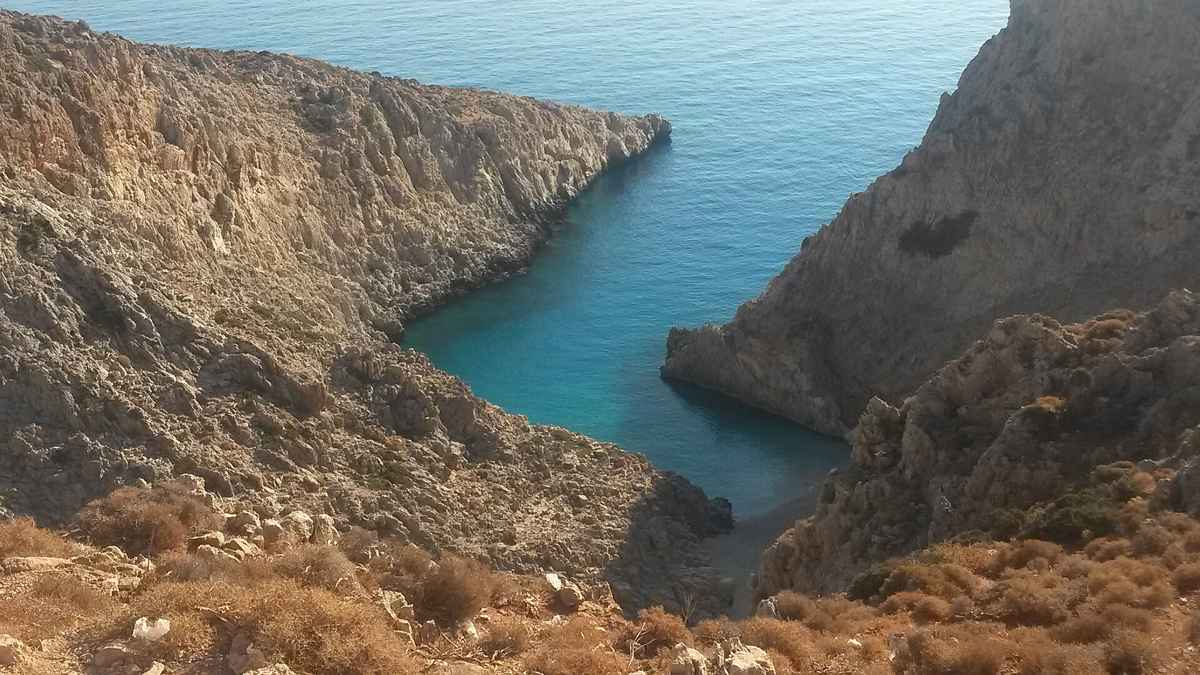
Seitan Limania stands among the most photographed locations on Crete, a slender turquoise inlet slicing through bare rock cliffs on the Akrotiri peninsula. The dramatic cove, also known as Stefanou beach, rewards visitors with vivid blue-green water framed by towering stone walls that create a fjord-like atmosphere rare in the Mediterranean. Reaching this natural wonder requires effort: a steep descent down a rough path and an equally demanding climb back up. The tiny beach offers no facilities or shade, yet its striking beauty draws travelers from across the island. Plan your visit carefully to make the most of this spectacular natural formation with My Greece Tours.
Located just northwest of Chania on the Akrotiri peninsula, this narrow cove combines adventure with breathtaking scenery. The sections below cover everything you need to know before making the journey: how to reach the clifftop car park, what the descent entails, the best times to visit, and what conditions to expect once you arrive. Strong swimmers particularly appreciate the deep, crystalline water, though the small beach fills quickly during peak season. Our comprehensive Crete travel guide offers additional insights into exploring the island’s diverse coastline and natural attractions.
How do you reach Seitan Limania on Crete?
Drive northeast from Chania toward the Akrotiri peninsula, following signs to Stavros beach, then continue on narrower roads to the clifftop car park. The final approach involves unpaved track suitable for most vehicles, ending at a parking area above the cove.
The journey from Chania takes roughly thirty minutes, winding through the Akrotiri peninsula’s arid landscape. Roads are paved for most of the route, becoming narrower as you leave the main coastal highway. Signage exists but can be sparse in places, so using navigation apps helps ensure you stay on track. The final stretch transitions to a dirt track that most rental cars handle without difficulty, though driving slowly prevents dust clouds and protects the undercarriage. Parking space is limited at the clifftop area, with room for perhaps twenty vehicles at most. Arriving early in the morning not only secures a spot but also means cooler temperatures for the descent.
The things to do in Crete extend well beyond beaches, yet this particular cove ranks among the island’s most memorable natural attractions.
From the car park, the path descends steeply down the cliff face, marked by loose stones and uneven footing. Sturdy footwear with good grip is essential; flip-flops or sandals create genuine risk on this terrain. The descent takes fifteen to twenty minutes for most visitors, requiring careful placement of each step. Handholds on rock faces help in the steepest sections, and some travelers find trekking poles useful. The return climb proves more demanding, particularly under midday sun, so carrying water is crucial. Families with young children or visitors with mobility concerns should carefully assess whether the scramble suits their abilities. The dramatic scenery visible from the car park offers consolation for those who choose not to descend.
Chania itself provides easier coastal access for those seeking swimming without the challenging approach.
What makes Seitan Limania unique among Crete beaches?
The narrow, fjord-like inlet cutting between vertical rock walls creates scenery unlike typical Mediterranean beaches. Vivid turquoise water contrasts sharply with bare stone cliffs, producing the dramatic visual impact that makes this cove one of the island’s most photographed natural features.
The geological formation resembles Scandinavian fjords more than typical Greek island coves, with sheer rock faces plunging directly into deep water. The inlet measures only fifteen to twenty meters wide at points, creating an enclosed, almost secret atmosphere. Water color shifts from pale turquoise in the shallows to deep sapphire where the channel opens toward the sea, a gradient intensified by the clarity of the water. Bare rock walls rise dramatically on both sides, their pale gray and tan tones providing stark contrast to the vivid blues below. Vegetation is minimal, with only scattered hardy plants clinging to crevices in the stone. This barren quality enhances the otherworldly feel of the location.
The tiny beach at the inlet’s head consists of pale pebbles mixed with coarse sand, barely large enough for two dozen visitors. Crete beaches offer remarkable diversity, yet few deliver the concentrated visual drama found at this particular spot.
Photography enthusiasts arrive specifically for the unique perspectives available from various points along the descent and from the beach itself. The high cliffs framing the narrow channel create natural leading lines that draw the eye toward the open sea. Midday light can be harsh, washing out colors, so morning and late afternoon hours produce richer tones and more dramatic shadows. Swimmers venturing into the channel find the water exceptionally clear, with visibility extending many meters down into the depths. The lack of facilities means the water remains pristine, undisturbed by the infrastructure that accompanies more developed beaches. Strong currents can develop near the mouth of the inlet, so staying closer to the beach provides safer swimming.
The combination of dramatic geology, vivid color, and relative inaccessibility places this cove firmly among the hidden gems in Crete that reward adventurous travelers.
When is the best time to visit Seitan Limania?
Early morning visits in May, June or September work best, with cooler air for the climb, fewer people on the small beach, and softer light for photos. Midday summer heat makes the ascent gruelling and the cove fills fast.
Arriving at the clifftop car park by eight in the morning during summer months ensures parking space and a less crowded beach. The descent remains physically demanding but far more comfortable in morning coolness than under afternoon sun. By midday in July and August, the tiny beach often reaches capacity, with barely enough space for newcomers to spread a towel. The lack of shade means prolonged sun exposure becomes unavoidable during peak hours, and the surrounding rock walls radiate stored heat. Shoulder season months provide the ideal balance: warm enough for comfortable swimming yet cool enough to make the climb manageable.
Water temperature remains pleasant from May through October, though early and late season visits may find it bracing. Winter months see far fewer visitors, but weather can be unpredictable and the sea rougher. The where to stay in Crete decision often depends on which attractions you prioritize, with Chania offering convenient access to this northwestern cove.
Weekdays see lighter crowds than weekends, particularly outside the peak July and August period. Tour groups occasionally visit, though the difficult access limits large organized excursions. Sunset visits are possible but require descending and ascending in fading light, which increases the risk on the already challenging path. The golden hour before sunset does produce beautiful photography, with warm light painting the rock walls. Wind conditions vary throughout the day, with mornings typically calmer than afternoons. Strong winds can make the water choppy and swimming less pleasant, though the protected inlet offers more shelter than exposed beaches. Checking weather forecasts before making the journey prevents wasted effort on days with poor conditions.
The best time to visit Crete overall aligns well with optimal conditions at this particular cove, making it easy to incorporate into broader island exploration.
What should you bring to Seitan Limania?
Sturdy grippy footwear, plenty of water, a hat and high-SPF sunscreen, snacks, and a waterproof bag for electronics are essential. The cove has no facilities, so you carry everything you need down and back up the cliff path.
Footwear choice significantly impacts safety and comfort on the steep, rocky descent. Hiking boots or trail running shoes with aggressive tread provide the best grip on loose stones and smooth rock faces. Athletic shoes with worn soles can slip dangerously, and open sandals offer neither protection nor stability. Carrying at least two liters of water per person prevents dehydration during the climb back up, which proves surprisingly strenuous. Electrolyte drinks or salty snacks help replace minerals lost through sweating in the heat. A lightweight backpack distributes weight more comfortably than shoulder bags during the scramble. Reef-safe sunscreen protects both your skin and the pristine marine environment, while a wide-brimmed hat provides crucial head protection where no shade exists.
A small first-aid kit addresses minor scrapes from the rocky terrain. Waterproof phone cases or dry bags protect electronics from water damage during swimming. Snorkeling gear enhances the experience in the exceptionally clear water, revealing the underwater landscape of the rocky inlet.
Beach umbrellas are impractical given the difficult descent and limited space, so sun protection clothing offers a better solution for extended stays. Lightweight, long-sleeved swim shirts and hats with neck flaps prevent sunburn during hours on the exposed beach. Bringing a small cooler with ice keeps drinks and snacks fresh, though remember you must carry it both down and up the cliff. Trash bags are essential since no bins exist at the beach; responsible visitors pack out everything they bring in. A small towel or sarong takes up less space than full beach towels. Water shoes protect feet from hot pebbles and sharp stones at the water’s edge.
Bringing cash serves no purpose here since no vendors or facilities operate at this remote location. The primitive conditions are part of the appeal, preserving the cove’s natural character. Preparation ensures comfort and safety, allowing you to focus on the spectacular scenery rather than missing necessities.
Is Seitan Limania suitable for all visitors?
The steep, rough descent and complete lack of facilities make this cove unsuitable for young children, elderly visitors, or anyone with mobility limitations. Confident hikers and strong swimmers gain the most from the experience, while others may prefer Crete’s more accessible beaches.
The physical demands begin before you even reach the water, with the clifftop descent requiring balance, strength, and confidence on uneven terrain. Loose rocks shift underfoot, and the steepest sections involve scrambling that uses hands as well as feet. Parents carrying small children face genuine difficulty and risk on this path. Elderly visitors or those with joint problems find the descent challenging and the ascent potentially beyond their capabilities. The absence of railings, steps, or other safety infrastructure means each person must rely entirely on their own ability. Heat exhaustion poses a real risk during the climb back up, particularly for those unaccustomed to physical exertion in high temperatures.
The tiny beach offers no emergency services, no lifeguards, and no easy evacuation route should problems arise. Mobile phone coverage can be unreliable in this remote location. Visitors must honestly assess their fitness level and hiking experience before attempting the journey. Alternative beaches near Chania provide beautiful swimming with far easier access and better facilities for families or less adventurous travelers.
Strong swimmers enjoy the deep water and can explore the inlet’s length, but weak swimmers or non-swimmers find limited shallow areas. The pebble beach drops off relatively quickly into deeper water, and the narrow channel creates currents that require confident swimming ability to navigate safely. No lifeguards monitor the water, so swimmers assume full responsibility for their own safety. The dramatic cliffs and deep water create an environment where accidents could have serious consequences. Claustrophobic visitors may find the narrow, high-walled inlet uncomfortable rather than appealing. The remote location and difficult access mean help would be slow to arrive in any emergency.
These factors do not diminish the cove’s beauty but do require realistic self-assessment before committing to the visit. The reward for capable, prepared visitors is an unforgettable experience at one of the island’s most spectacular natural features. Understanding your own limitations and the site’s demands ensures the visit remains enjoyable rather than stressful or dangerous.
Frequently Asked Questions
Can you visit Seitan Limania with a rental car?
Standard rental cars handle the journey to Seitan Limania without difficulty, though the final approach involves an unpaved track that requires slow, careful driving. The route from Chania follows paved roads through the Akrotiri peninsula for most of the distance, becoming narrower as you progress toward the coast. The dirt track leading to the clifftop car park is relatively well-maintained and suitable for two-wheel-drive vehicles, though ground clearance helps on rougher sections. Driving slowly prevents kicking up excessive dust and protects the car’s undercarriage from protruding rocks. Rental agreements typically permit travel on unpaved roads of this type, though checking your specific contract provides peace of mind.
The limited parking area means arriving early secures a spot, particularly during summer months. Leaving valuables out of sight in the locked car is sensible given the remote location. The return journey retraces the same route back to Chania, where you can explore the old town and harbor after your beach adventure.
Are there any facilities at Seitan Limania beach?
Seitan Limania offers absolutely no facilities: no toilets, no showers, no changing rooms, no food or drink vendors, no shade structures, and no lifeguards. The complete absence of infrastructure preserves the cove’s wild, natural character but requires thorough preparation before your visit. You must bring everything you need for the duration of your stay, including adequate water, food, sun protection, and any other personal items. The nearest facilities are back in the villages along the Akrotiri peninsula or in Chania itself, roughly thirty minutes away by car. This primitive condition means you should use facilities before leaving town and plan your visit duration accordingly.
The lack of trash bins requires packing out all waste, leaving no trace of your visit. This environmental responsibility helps maintain the pristine condition that makes the cove so special. The absence of commercial development means no crowds of vendors or beach chair rentals, just raw natural beauty. Visitors seeking comfort and convenience will find better options among the more developed beaches, but those who appreciate unspoiled nature value this very lack of facilities.
How long should you plan to spend at Seitan Limania?
Most visitors spend two to three hours at Seitan Limania, allowing time for the descent, swimming and photography, and the challenging climb back up. The descent typically takes fifteen to twenty minutes, moving carefully on the steep, rocky path. Time on the beach varies depending on your interests: swimmers and snorkelers may stay longer exploring the clear water, while others focus primarily on photography and soaking in the dramatic scenery. The ascent requires twenty to thirty minutes for most people, moving slowly in the heat with rest breaks as needed. Starting early in the morning allows a more leisurely visit before the beach becomes crowded and temperatures peak.
Combining the visit with other Akrotiri peninsula attractions makes efficient use of the journey from Chania. The nearby Stavros beach offers easier access and facilities, providing a contrasting experience on the same day. Gouverneto Monastery and Katholiko Monastery ruins lie elsewhere on the peninsula for those interested in cultural sites. Planning half a day for the entire excursion, including driving time, provides a comfortable schedule without rushing. The physical demands mean you may feel tired afterward, so scheduling strenuous activities for other days makes sense.