
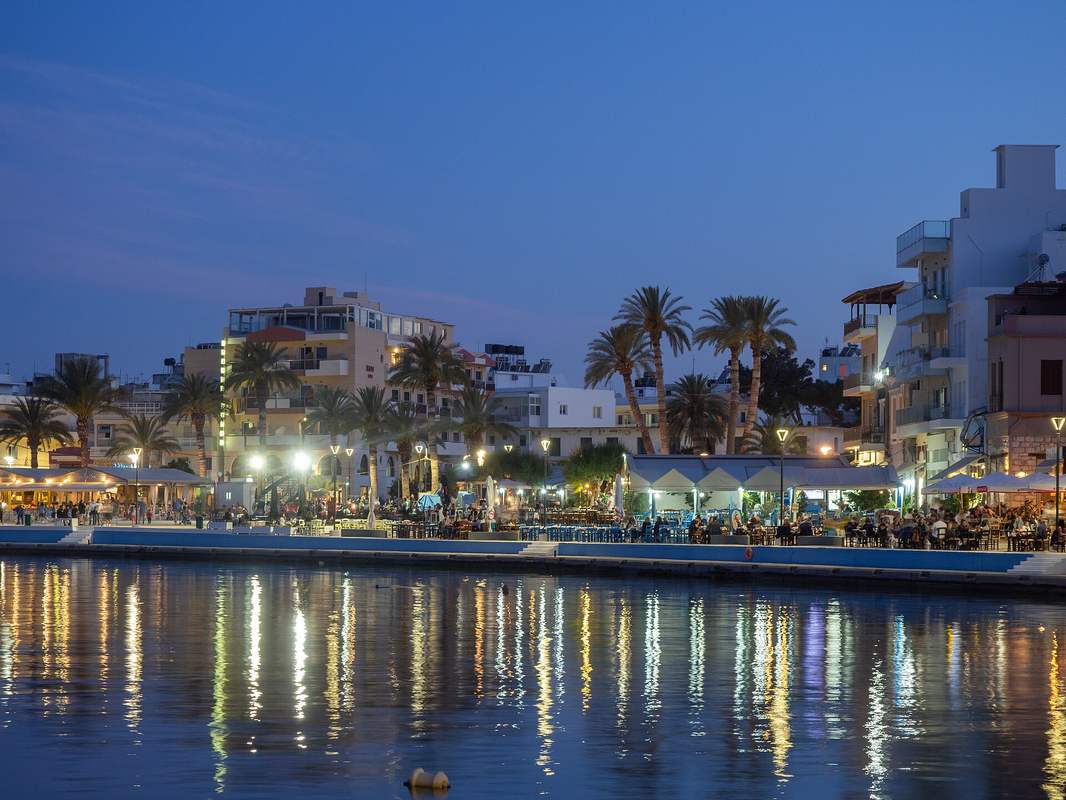
Sitia is a relaxed port town at the far eastern end of Crete, in the Lasithi region. The town rises in tiers above a wide bay, and a palm-lined waterfront runs along a long town beach. The restored Venetian Kazarma fortress crowns the hill and looks down over the harbour and the sea. An archaeological museum holds Minoan finds from the surrounding countryside. Sitia keeps a slower, more authentic feel than the big north-coast resorts, and the hills around it produce good olive oil and wine. Plan the eastern corner of the island with My Greece Tours.
Sitia serves as the gateway to the far east, opening the road to the palm beach at Vai, the Toplou Monastery, and the Minoan palace site of Zakros beyond. The town holds a small airport and a ferry port that links the eastern Aegean, so it works as a base for exploring this quiet corner. For the wider island context, see our Crete travel guide before you set the route east. The sections below cover the town itself, the fortress and museum, the beaches and waterfront, the day trips beyond, and the practical details of reaching and moving around Sitia.
Where is Sitia in Crete?
Sitia lies at the far eastern end of Crete, in the Lasithi region. The town rises in tiers above a wide bay, well beyond the busy north-coast resorts, and it holds the quietest, most authentic corner of the whole island.
Sitia occupies the northeast coast of Crete, the last real town before the road runs out toward the island’s eastern cape. It belongs to the Lasithi region, the easternmost of the four Cretan regional units, and it sits far from the crowded resorts strung along the north coast near the main airports. The setting is a wide bay, with the town climbing the slope above the water in tiers of pale houses. This position gives Sitia a calmer character than the western resort belt, and it keeps the harbour feeling like a working port rather than a holiday strip.
It also makes the town a natural staging point for the far eastern sites, since the roads to Vai, Toplou and Zakros all begin here and thread through the surrounding hills toward the coast. Far to the southeast, the Kapsa Monastery clings to the cliffs above Goudouras.
The distance from the main gateways shapes how the town feels day to day. Sitia is a long drive east from Heraklion and Chania, so it draws fewer package visitors and keeps a working-port rhythm through the season. The harbour handles fishing boats and the ferry alike, and the palm-lined waterfront stays lively without turning into a resort strip. Around the town, olive groves and vineyards climb the hills, and the produce reaches local tables and shops, giving meals a strong sense of place. For visitors weighing routes and distances across the island, our guide to things to do in Crete helps place Sitia within a wider trip.
The town rewards those who make the effort to reach the eastern end of the island and slow their pace.
What is there to see in Sitia town?
The restored Venetian Kazarma fortress crowns the hill above the harbour, and an archaeological museum holds Minoan finds. The tiered old town, the palm-lined waterfront and the long town beach fill out a quiet day.
The Kazarma fortress is the town’s landmark, a squat Venetian stronghold that stands on the hill above the port. Restored and open to visitors, it offers wide views over the harbour, the bay and the tiered rooftops that step down toward the water. From the walls the whole layout of Sitia reads clearly, from the ferry quay to the long town beach. Below the fortress, the old town spreads in narrow lanes and small squares, with tavernas, cafes and shops that serve the local trade rather than a tour crowd.
The palm-lined waterfront makes an easy stroll at any hour, and the pace stays gentle even in high season, which is a large part of the town’s appeal to those who prefer a quiet, lived-in port over a purpose-built resort.
The archaeological museum gathers Minoan finds from the eastern countryside, giving context to the palace sites that lie beyond the town. Its cases trace the long human story of this corner of Crete, from early settlements to the Minoan world that built Zakros at the island’s edge. A visit here pairs well with a later trip out to the sites themselves. Beyond the museum and the fortress, much of Sitia’s pleasure is unstructured: a coffee on the front, a swim off the town beach, a meal of local olive oil and wine.
Travellers who prefer a lower-key base often compare Sitia with Agios Nikolaos further west, and many choose Sitia for its quieter, more authentic feel and its position at the head of the eastern roads.
What are the beaches like near Sitia?
A long town beach runs along the palm-lined waterfront, easy to reach on foot. Beyond the town, the famous palm beach at Vai lies to the northeast, backed by a natural grove of Cretan palms.
Sitia’s town beach stretches along the waterfront below the tiered houses, a long strip of sand and shingle that is easy to reach on foot from the harbour. The beach sits right in town, so it suits an early swim before sightseeing or a late dip once the heat of the afternoon eases. Palms line the front, and the calm water of the bay makes for gentle bathing that suits families and casual swimmers alike. The town beach never feels crowded in the way the big resort strands do, which fits the relaxed mood of the place.
Loungers and cafes back parts of the sand, while other stretches stay open and simple, so visitors can pick the setting that suits them on any given afternoon.
The most celebrated beach in the far east is the palm beach at Vai, a short drive northeast of Sitia along the coast road. It is famous for a natural grove of Cretan date palms that rise directly behind the golden sand, a scene found nowhere else in Europe on this scale. The water is clear and shallow near the shore, and the setting draws a steady stream of visitors through the warmer months of the year. A trip to Vai beach pairs naturally with the Toplou Monastery, which stands on the same route east across the uplands.
Coming early in the day helps you enjoy the grove before the busiest hours arrive, then return to Sitia for a relaxed evening on the front.
What day trips run from Sitia in east Crete?
Sitia is the gateway to the far east: the palm beach at Vai, the Toplou Monastery and the Minoan palace of Zakros beyond. The surrounding hills and villages add slower detours for quieter days.
The road east from Sitia strings together the region’s best-known sites in a single sweep across the hills. Toplou Monastery stands on the arid uplands, a fortified religious house that guarded this exposed corner for centuries and now holds icons and a quiet, weathered atmosphere. Past the monastery the road drops to Vai and its palm grove, the classic swim stop of the far east. Together the two make an easy half-day loop from town, and many visitors pair them without needing to rush the drive.
The landscape between them is bare and dramatic, a reminder of how remote this end of Crete remains, and how much the town below serves as the practical starting point for the whole circuit out to the far eastern cape.
Beyond Vai and Toplou lies Zakros, the Minoan palace site at the island’s southeastern edge, one of the four great palaces of Minoan Crete. The ruins sit close to the sea, and a walk through the nearby Gorge of the Dead leads down to them for those with the time and energy to spare. These sites reward the drive out from Sitia, and the roads reach them through hills and small villages that are worth a slower look on the way. Renting a car makes the far east far easier to explore, so our notes on driving in Crete are worth reading before you plan the loops.
The town remains the natural base for every eastern excursion, close enough to return to each evening after a full day out, including the remote sands of Xerokambos at the south-eastern tip.
How do you reach Sitia and when should you visit Crete?
Sitia keeps a small airport and a ferry port linking the eastern Aegean, and a long drive connects it to the main gateways. Late spring and early autumn bring warm seas and thinner crowds.
Reaching Sitia takes a little more planning than the central resorts, and that is part of why the town stays quiet through the year. Sitia keeps a small airport, which handles a limited set of routes and gives an alternative to the long road from the main Cretan gateways to the west. The town also has a ferry port that links it into the eastern Aegean network, useful for island-hopping travellers moving between Crete and the islands to the east. For most visitors, though, the approach is by car along the north coast, a scenic drive that passes bays and villages on the way east.
Whichever way you arrive, the reward is a base in the calmest corner of the island, well away from the busy resort crowds of the north.
Timing matters as much as the route you take to get here. The far east of Crete is hot and dry through high summer, so the shoulder seasons often suit exploring best, when the light is soft and the sites stay uncrowded. Late spring and early autumn bring warm seas, open tavernas and a gentler pace that fits Sitia’s easy character. Our notes on the best time to visit Crete weigh the trade-offs between heat, crowds and sea temperature in more detail.
Whatever the season, the town’s own olive oil and wine come into their own at the table, and the quiet palm-lined waterfront makes a fine place to end a long day of driving through the eastern hills and small villages of the interior.
Frequently Asked Questions
Is Sitia worth visiting on a Crete trip?
Sitia rewards travellers who want a quieter, more authentic side of the island, well away from the packed north-coast resorts. The town rises in tiers above a wide bay, with a palm-lined waterfront, a long town beach and the restored Venetian Kazarma fortress on the hill above the harbour. An archaeological museum holds Minoan finds from the surrounding countryside, and the old-town lanes stay pleasantly low-key. The real draw, though, is position: Sitia is the gateway to the far east, the natural base for the palm beach at Vai, the Toplou Monastery and the Minoan palace of Zakros. The surrounding hills produce good olive oil and wine, which reach local tables.
Those who value slow days, working harbours and easy access to the eastern sites tend to leave glad they made the long drive out to this corner of Crete.
How far is Sitia from the main sites in east Crete?
Sitia sits at the eastern end of Crete, in the Lasithi region, and serves as the launching point for the far-eastern sites. The road northeast leads to the Toplou Monastery and then drops to the palm beach at Vai, a pairing many visitors do as a single half-day loop from town. Further out lies Zakros, the Minoan palace at the island’s southeastern edge, reached through hills and small villages and near the Gorge of the Dead. The terrain between these places is bare and dramatic, so allow more time than the map distances suggest. Renting a car makes the whole circuit far easier, since public transport thins out this far east.
The town itself has a long town beach and the Kazarma fortress right at hand, so short days can stay local while longer ones head out to the palace sites and the palm grove.
Does Sitia have an airport and ferry connections?
Sitia keeps a small airport that handles a limited set of routes, giving an alternative to the long road from the main Cretan gateways along the north coast. The town also has a ferry port that links it into the eastern Aegean network, which suits island-hopping travellers moving between Crete and the islands to the east. These connections make Sitia more reachable than its remote position might suggest, though most visitors still arrive by car on the scenic coastal drive. The harbour handles fishing boats and the ferry alike, and the waterfront keeps a working rhythm rather than a resort feel.
From this base the far-eastern sites open up: Vai, Toplou and Zakros all lie within a manageable drive. For exact schedules and seasonal services it is best to check current timetables directly, since routes to and from this quiet eastern corner shift with the season.