
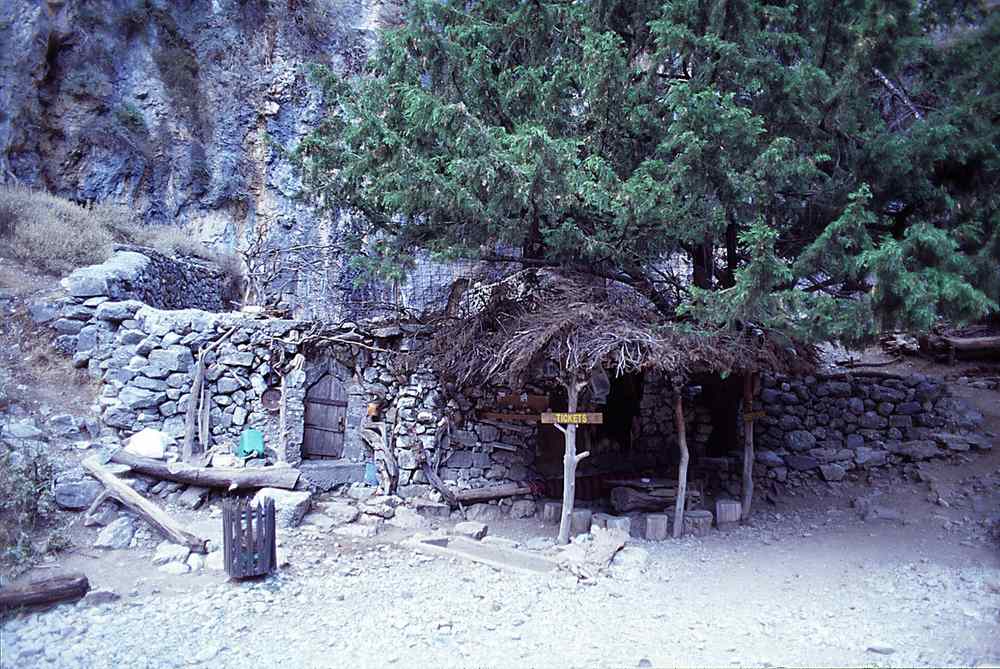
Imbros Gorge is one of the most rewarding short hikes in south-west Crete, a walk that gives you dramatic scenery without the effort a bigger canyon demands. The trail sits in the Sfakia region of the Chania regional unit, running for about 8 km from the mountain village of Imbros down to Komitades near the coast. It is shorter and easier than the famous Samaria route, mostly downhill, and takes roughly two to three hours. Families, casual walkers and first-time hikers all find it manageable. If you want a gorge day that stays relaxed rather than gruelling, plan your Cretan hiking trip with My Greece Tours.
This walk pairs a quiet trail with towering rock walls, shady cypress and pine trees, and old stone bridges that once carried a mule path. It suits travellers who want scenery and history without a punishing schedule, and it slots neatly into a wider Crete travel guide covering the south coast around Chora Sfakion. The sections below cover what the hike involves, how it compares with its bigger neighbour, how to reach the trailhead, what to pack, and who the route suits best. Read them in order and you will arrive at Imbros knowing exactly what to expect on the day.
What is the Imbros Gorge hike in Crete like?
Imbros Gorge is an 8 km downhill walk in the Sfakia region of south-west Crete, running from Imbros village to Komitades near the coast in roughly two to three hours.
The route begins at the mountain village of Imbros, high above the south coast, and descends steadily toward the sea. Most of the walking is downhill on a well-marked path, so you spend your energy watching the scenery rather than fighting the terrain. The gorge floor is stony in places, with loose rocks and dry stream beds, but the grade stays gentle enough for a wide range of walkers. Towering limestone walls rise on both sides, and shade from cypress and pine trees keeps stretches of the trail cool. Old stone bridges, remnants of the mule path that once linked the highlands to Sfakia, appear along the way.
The whole descent to Komitades takes most people two to three hours at a comfortable pace.
The scenery shifts as you walk, opening into wide rocky bowls and then squeezing into narrow corridors. At its tightest point the gorge closes to a couple of metres, and you pass directly beneath sheer rock faces that block out the sky. These narrows are the highlight for a variety of hikers, a reminder of how water carved this route over long ages. The path is quieter than the busier trails elsewhere on the island, so you often hear only wind, birdsong and your own footsteps. There is a small entry fee and a canteen at each end for water and snacks.
For more hiking and outdoor options, browse the wider list of things to do in Crete before you go.
How does Imbros compare with the Samaria Gorge in Crete?
Imbros is shorter and easier than Samaria, about 8 km against sixteen, with a gentler descent, fewer crowds, and a two-to-three-hour walk that suits families and less experienced hikers.
The Samaria Gorge is the headline hike of the region, longer and more demanding, drawing large numbers of walkers through a full day on the trail. Imbros offers a similar sense of dramatic canyon scenery but asks far less of your legs and your schedule. At roughly half the length, it fits comfortably into a morning or an afternoon, leaving time for the coast afterward. The descent is steady rather than steep, and the ground, though stony, rarely feels punishing. Walkers who feel daunted by a longer route find Imbros a welcome alternative that still delivers narrow passages and towering walls.
To weigh the two side by side, read our guide to the Samaria Gorge and decide which fits your day.
Crowds are the other big difference. Samaria pulls in coach loads of visitors in high season, and the trail can feel busy at its narrowest points. Imbros stays far quieter, so you move at your own rhythm and stop for photos without a queue behind you. That calm makes it a strong pick for travellers who value solitude and for parents walking with children. The gorge still rewards you with the same essential drama, the sheer rock, the shade, the sudden narrows, but in a gentler frame. A variety of visitors treat Imbros as the relaxed counterpart to its famous neighbour, and certain hike both on the same trip.
For quieter corners like this, explore our roundup of hidden gems in Crete.
How do you reach the Imbros Gorge trailhead?
The trail starts at Imbros village on the road toward Sfakia and ends at Komitades near Chora Sfakion. Most walkers take a bus or taxi back up from the coast.
Imbros sits on the mountain road that climbs south from the Chania area toward the Sfakia coast. A variety of visitors arrive by car or on an organised excursion, dropping in at the village where the marked trail begins. The walk then runs one way, downhill, ending near Komitades a short distance from the south-coast town of Chora Sfakion. This point-to-point layout means you finish certain way from where you started, so planning the return matters. Drivers often leave a vehicle at one end or arrange a lift back to the top. The route is straightforward to follow, with the gorge itself guiding you toward the sea.
Reaching the trailhead is part of the adventure, winding through highland scenery on the way in.
From the coast at the end of the hike, most walkers take a bus or taxi back up to Imbros to collect their car or continue their day. Services run along the Sfakia road, though times vary by season, so it is wise to check locally before you set out rather than rely on a fixed schedule. The nearby town of Chora Sfakion makes a natural base, with tavernas and a harbour for a rest after the descent, and the Venetian castle of Frangokastello lies a short drive east along the coast. The larger city of Chania lies to the north and works well as a launch point for a day trip.
Arriving early helps you beat the midday heat and gives you room to enjoy the narrow passages at a gentle pace.
What should you pack for the Imbros Gorge walk?
Bring sturdy shoes, ample water and sun cover for the exposed stretches. A small entry fee applies, and a canteen at each end sells drinks and snacks along the way.
Sturdy shoes matter most on this trail. The gorge floor is stony, with loose rocks and uneven ground in places, so trainers with good grip or light hiking boots keep your footing secure. Sandals struggle here and can turn a relaxed walk into a careful one. Water is the next priority, as the descent, though shaded in parts, still leaves you exposed to the sun in the open sections. Carry more than you think you need, especially in the warmer months. A hat, sunglasses and sunscreen guard against glare bouncing off the pale rock.
Light, breathable clothing works best for the steady effort of walking downhill for two to three hours through changing scenery and temperature along the route.
The trail is well signed and easy to follow, so heavy gear is unnecessary, but a handful of extras help. A small daypack holds your water, snacks and a layer for the cooler highland start. A canteen sits at each end of the gorge, at Imbros and near Komitades, where you can buy drinks and refuel before or after the walk. A small entry fee applies at the trail, so keep certain cash handy. Timing your visit to the milder parts of the day makes the whole experience more comfortable, and our guide to the best time to visit Crete helps you pick a season when the heat stays manageable and the trail feels its best.
Is the Imbros Gorge good for families and beginners?
Yes. The gentle downhill grade, short 8 km length and two-to-three-hour duration make Imbros well suited to families and less experienced walkers who want scenery without a demanding hike.
Imbros earns its reputation as a family-friendly gorge for good reason. The walk is short enough to hold a child’s interest, the descent is gentle rather than steep, and the two-to-three-hour duration fits a young walker’s stamina. There is an abundance to keep everyone engaged along the way, from the sudden narrows where the walls close in to the old stone bridges and shady groves of cypress and pine. The quiet trail means parents are not shepherding children through crowds, and the pace stays relaxed throughout. Less experienced adult hikers find the same reassurance, a real gorge experience that never tips into a serious mountain challenge.
It is an ideal first taste of Cretan hiking for anyone unsure about a longer route.
A little preparation makes the day smoother for families. Start early, carry enough water and snacks, and let children set part of the pace so the walk stays fun rather than forced. The stony ground calls for proper shoes on small feet as considerable as large ones. Rest stops at the shady narrows give everyone a breather and a chance to marvel at the towering rock overhead. Because the route ends at the coast, you can reward the effort with a swim or a meal near Chora Sfakion once you finish.
For more relaxed, scenic outings that work with children in tow, the wider selection of things to do in Crete offers ample gentle options to round out your trip.
Frequently Asked Questions
How long does it take to walk the Imbros Gorge?
Most walkers complete the Imbros Gorge in roughly two to three hours, though the exact time depends on your pace and how often you stop. The trail runs for about 8 km from the mountain village of Imbros down to Komitades near the south coast, and the descent is steady and mostly downhill. The stony ground and loose rocks in places mean you tend to slow down slightly, so allow the fuller end of that range if you are hiking with children or stopping often for photos at the narrow passages. There is no reason to rush.
The gorge rewards a gentle pace, with shady groves, old stone bridges and towering rock walls to take in along the way. Starting in the morning helps you avoid the midday heat and leaves time to relax at the coast afterward. Building in short breaks at the canteens or in the cool narrows keeps the walk comfortable from start to finish for everyone.
Is the Imbros Gorge easier than the Samaria Gorge?
Yes, Imbros is widely regarded as the easier of the two gorges. At about 8 km it runs roughly half the length of the Samaria route, and the descent is gentler, so it asks far less of your legs over a shorter span of time. The walk takes most people two to three hours rather than a full day, which makes it far more manageable for families and less experienced hikers. The scenery still delivers, with narrow passages where the walls close to a couple of metres, shady cypress and pine trees, and old stone bridges from the former mule path. Crowds are lighter too, so the trail feels calmer and more relaxed throughout.
Travellers who feel daunted by the longer, busier Samaria route often choose Imbros as a gentler alternative that still captures the essential drama of a Cretan gorge. Certain visitors hike both on the same trip to compare them directly and enjoy each one.
When is the best time to hike the Imbros Gorge?
The Imbros Gorge is best hiked in the milder parts of the year and the cooler hours of the day, since the open stretches leave you exposed to the sun. Spring and autumn tend to bring comfortable temperatures for walking, while high summer can feel hot on the pale rock, so an early start makes a real difference. Setting out in the morning lets you enjoy the narrow passages and shady groves before the heat builds, and it leaves time for a swim or a meal near Chora Sfakion afterward. Whatever the season, bring ample water, sun cover and sturdy shoes for the stony ground.
The trail stays quieter than the busier gorges nearby, so you rarely need to worry about crowds regardless of when you go. Checking local conditions before you set off helps, as weather in the mountains can shift, and planning around the calmer, cooler windows makes for the most pleasant and rewarding day on the trail.