
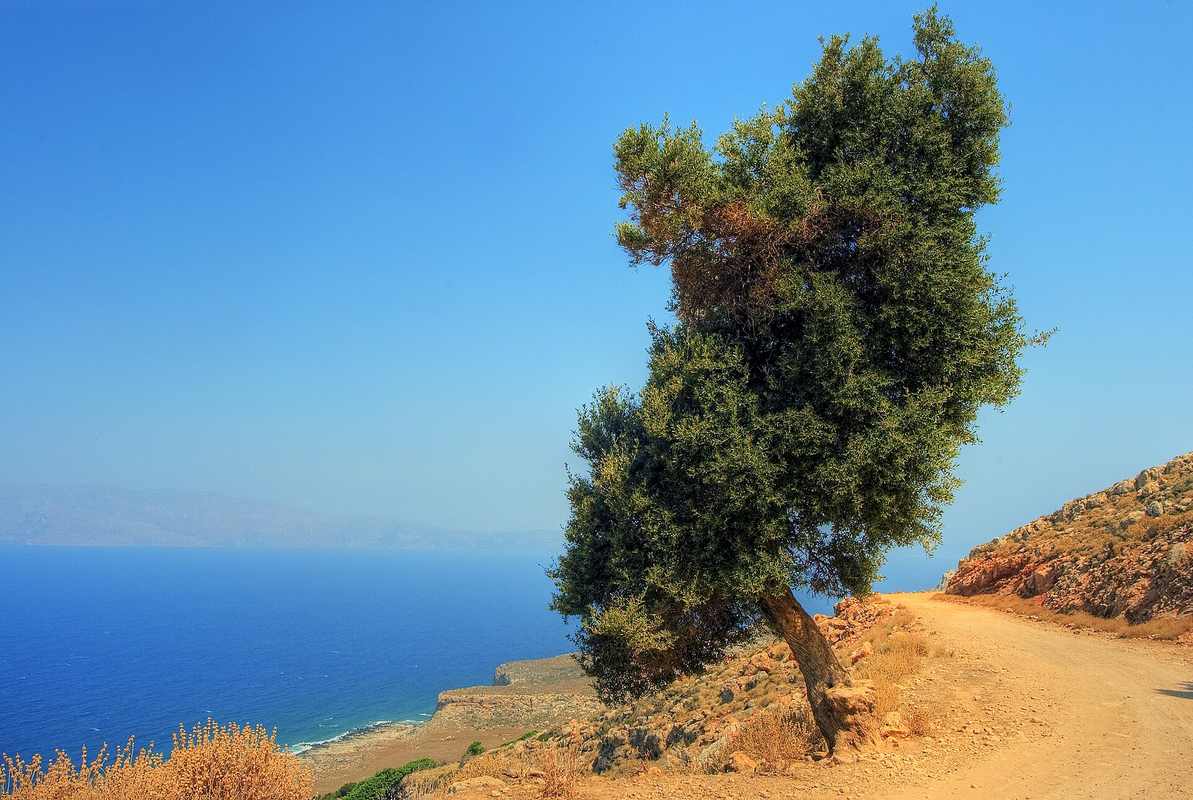
Driving in Crete is the practical way to reach the island’s best beaches, gorges and villages, most of which sit well off the bus routes. A hire car turns a fixed itinerary into a flexible road trip, letting you chase a quiet cove or a mountain taverna on your own schedule. Rental cars wait at the Heraklion and Chania airports and in the main towns, so you can collect one on arrival and set off the same day. Traffic drives on the right, and a small car handles almost every route you will want. This guide maps the roads, the rules and the practicalities you need for driving in Crete with My Greece Tours.
This road-trip primer sits alongside our wider Crete travel guide, which frames how the island fits together and where a car earns its keep. The sections below cover car rental basics, the fast north-coast national road, the narrow mountain and south-coast routes, fuel and parking, and the rough tracks that a hire car should avoid. Each part pairs a short direct answer with practical detail, so you can plan a loop that links cities, beaches and gorges without backtracking. Read it before you book, and you will drive Crete with confidence rather than surprise.
Where can you rent a car in Crete?
Rental cars are available at the Heraklion and Chania airports and in the main towns, so you can collect one on arrival. Book ahead for summer, when demand is high and small cars sell out.
The two big gateways make renting simple. Heraklion and Chania airports both host car rental desks, and the main towns along the north coast add their own pickup points, so you rarely travel far to collect a vehicle. This spread lets you tailor the pickup to your plan: land at Chania for the west, or at Heraklion for the centre and east. Collecting on arrival means you skip the airport bus and drive straight to your first base.
Our page on how to get to Crete explains the ferry and flight routes that feed these airports, so you can line up your arrival with the desk that suits your itinerary and avoid a long transfer at the start of the trip.
Summer demand runs high, and the small, cheap cars that suit Cretan roads go first. Booking ahead secures both the vehicle you want and a fairer rate, since walk-up prices climb once the popular categories are gone. Reserve early if your dates fall in peak months, and read the terms before you sign, because some routes and surfaces fall outside standard cover. A car reshapes what you can see: our overview of things to do in Crete shows how many of the highlights sit beyond the reach of scheduled buses. With wheels booked in advance, you arrive knowing the keys are waiting and the island is open to you from the first morning.
What is the fast national road across Crete?
The north-coast national road, the VOAK or E75, is the fast spine linking the cities. It runs the length of the north shore, and slower vehicles often pull onto the wide shoulder to let you pass.
The VOAK, signed as the E75, threads the north coast and connects the main cities in a single fast corridor. This is the road you use to cover distance: it links Chania, Rethymno, Heraklion and the towns beyond in far less time than the older inland routes. It is well travelled and easy to follow, making it the natural backbone of any island loop because it carries most through-traffic. Use it to close the gaps between regions, then peel off onto local roads for the beaches and gorges. A base near this spine keeps every direction within reach, and our guide to where to stay in Crete weighs the north-coast towns that sit conveniently along it.
The VOAK has a local rhythm worth knowing. Slower vehicles often ease onto the wide shoulder to let faster cars pass, a courtesy that keeps the traffic flowing but can surprise first-time visitors. Read the move rather than assume it is a turn, hold your line, and pass only when the road ahead is clear. The national road speeds you east toward quieter country: from it you can reach the far corner around Sitia, where the coast grows calmer and the crowds thin. Treat the VOAK as the fast leg of a journey and the smaller roads as the reward, and you will balance covering ground with actually seeing the island rather than racing past it.
What are the mountain and south-coast roads in Crete like?
Mountain and south-coast roads are narrow and winding, with hairpin bends. Drivers should watch for goats, rockfall and oncoming traffic on blind corners, and take these routes slowly rather than to a schedule.
Away from the national road, Crete climbs and folds. The routes into the mountains and down to the south coast turn narrow and winding, stacking hairpin bends as they gain or lose height. These roads reward patience, not speed: the surface can be tight, the edges unguarded, and the corners sharp enough to hide what lies beyond. Drop your pace, use the horn on blind bends where locals do, and let the scenery justify the slower crawl. Many of the finest beaches sit at the foot of these descents, and the drive is part of the experience. The southern shore near Matala rewards the effort, with a coastline that feels a world away from the busy north.
The hazards here are natural as much as mechanical. Goats wander onto the tarmac, rockfall can litter a lane after weather, and oncoming traffic may appear mid-corner where sightlines vanish. Watch the road, expect the unexpected around each blind bend, and give way early rather than late on the tightest sections. Allow far more time than distance suggests, because average speeds fall sharply on these routes. The payoff is real: gorge walks and remote beaches open up once you commit to the slower roads.
Our rundown of things to do in Crete covers many sights that only a careful mountain drive will reach, so plan short daily distances and let the winding roads set the pace of your trip.
Where do you find fuel and parking when driving in Crete?
Fuel stations are sparse inland, so fill up in towns before heading into the mountains. Park outside the old-town cores, where lanes are tight, and walk in to reach the centre on foot.
Fuel planning matters more here than on the mainland. Stations cluster in and around towns, and grow sparse once you head inland or into the mountains, so a tank that looks fine on the map can run low before the next pump. Fill up in town before any long rural leg, especially heading toward remote gorges or the south coast, and top off when you pass a station rather than gambling on the next one. This habit removes a real worry from mountain driving.
A gorge day out of a village such as Imbros Gorge is far more relaxing when you set off with a full tank and no need to detour back to the coast for fuel midway.
Parking asks for a similar bit of foresight. The old-town cores of Cretan towns run on tight, tangled lanes that were never built for cars, so the sensible move is to park on the edge and walk in. You reach the centre faster on foot than by inching a hire car through alleys, and you avoid the stress of a dead-end reverse. Look for parking on the approach roads or in signed areas outside the historic quarter, then explore the harbour and squares at a stroll.
This works at coastal bases too: our guide to where to stay in Crete notes towns where leaving the car outside the core is simply the easiest way to arrive and settle in.
Which roads should a hire car avoid in Crete?
A small car handles most routes, but rough tracks such as the one to Balos are hard on a hire car and may breach the rental terms. Check your agreement before tackling any unsealed road.
Most of Crete is comfortable in a small car. The national road, the north-coast towns and the paved routes down to the popular beaches all suit a modest hire vehicle, and you rarely need anything larger or tougher. The exceptions are the rough, unsealed tracks that lead to a few remote spots. The dirt approach to Balos is the classic example: it is hard on a hire car and may breach the rental terms, which often exclude damage on unpaved roads. Read your agreement before you leave the tarmac. Well-served sandy beaches on sealed roads, such as Falassarna beach, give you the same swim without risking the car or the contract behind it.
Weigh the alternatives before you commit when a track looks rough. Some remote beaches are reached by boat from a nearby harbour, which spares your car and often makes for an easier day. Others simply have a paved neighbour that delivers most of the reward. Check the cover, judge the surface, and turn back rather than push a low car over ruts and rock if you do face an unsealed stretch. The point of a hire car in Crete is freedom, not a repair bill or a voided deposit.
Plan around the handful of tracks that cause trouble, keep to the sealed roads that the small car was built for, and the island stays wide open without the worry of a breakdown far from help.
Frequently Asked Questions
Do I really need a car to explore Crete?
A hire car is the practical way to explore Crete, because the best beaches, gorges and villages lie off the scheduled bus routes. Buses connect the main north-coast towns well enough, but they thin out fast once you head inland or toward the south coast, and they run to timetables rather than to your plans. With a car you decide when to leave, how long to linger, and which quiet cove to chase next. The island rewards this freedom: many of the sights in our overview of things to do in Crete are hard to reach any other way. You can base yourself on the coast and strike out each morning into the mountains or along the shore.
For a short, city-focused stay a car matters less, but for a road trip that touches beaches, gorges and hill villages, wheels turn a limited trip into an open one.
Is driving in Crete difficult for visitors?
Driving in Crete is manageable for most visitors who take it steadily. Traffic drives on the right, the national road is straightforward, and the signage on main routes is clear enough to follow. The challenge lies on the smaller roads: mountain and south-coast routes are narrow and winding, with hairpin bends, goats on the tarmac, rockfall and oncoming traffic on blind corners. These call for slow, alert driving rather than special skill. Keep to modest daily distances, use the horn on blind bends as locals do, and give way early on tight sections. On the VOAK, expect slower vehicles to pull onto the wide shoulder so you can pass.
Fill up in towns, since fuel stations are sparse inland, and park outside the old-town cores. A base along the north coast keeps the driving gentle: our guide to where to stay in Crete favours towns that make each day trip easy.
How should I plan a road trip route around Crete?
Plan a Crete road trip around the VOAK north road as your fast spine, then branch off it for beaches, gorges and villages. Use the national road to move between regions, and pick one or two bases rather than a new hotel each night, which cuts packing and driving fatigue. Line up your arrival with the airport nearest your first region, a choice our guide to how to get to Crete helps you make. Keep daily distances short on the mountain legs, where average speeds drop on the winding roads, and build in time for the drive itself.
Push east toward the calmer coast around Sitia if you want quieter country, or focus west for the famous beaches and gorges. Book the car ahead for summer, fill up in towns before rural legs, and leave the roughest tracks off the plan to protect the vehicle.