
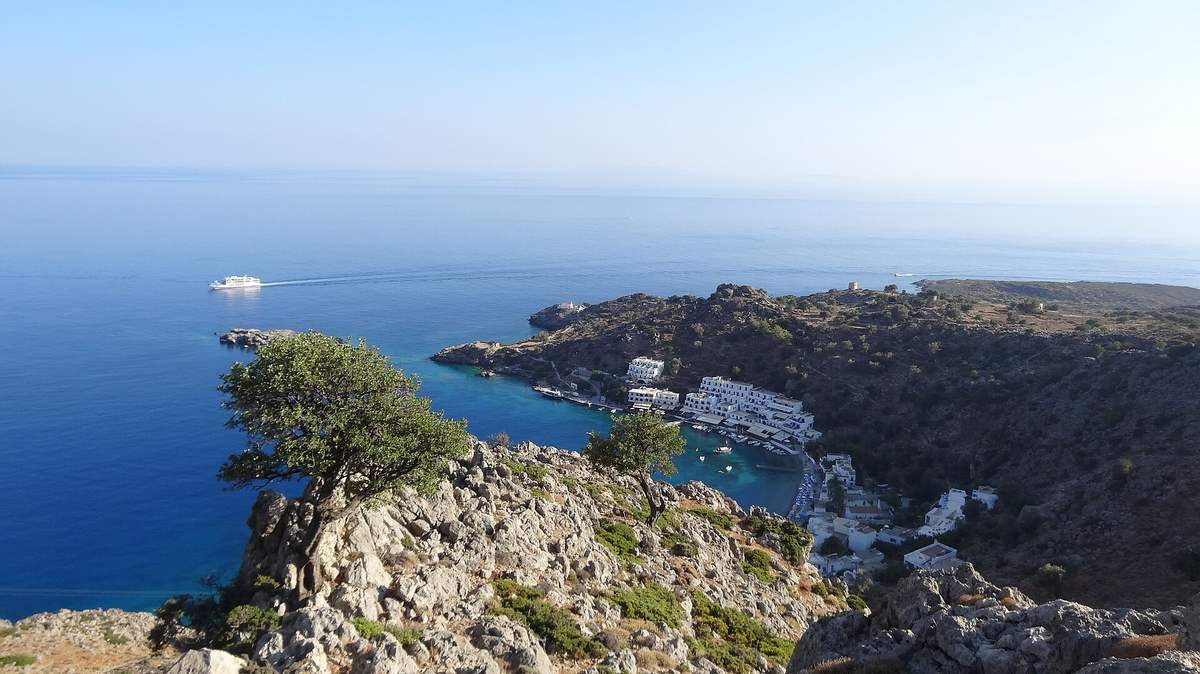
Loutro sits tucked into a sheltered bay on the south coast of Crete, where whitewashed houses curve around impossibly blue water and no road reaches the shore. This tiny village in the Sfakia region remains accessible only by boat or on foot, preserving a rare quietness that has vanished from most Mediterranean coastlines. Tavernas line the waterfront, small pensions offer simple rooms, and the absence of cars creates a rhythm dictated by ferries, footpaths, and the slow arc of the sun. Walkers, couples, and anyone craving stillness find refuge here, far from traffic and crowds. Plan your escape to this peaceful corner with My Greece Tours.
The village serves as a base for coastal hikes along the European E4 trail, boat trips to secluded beaches, and days spent swimming in crystalline water. Visitors arrive by ferry from Chora Sfakion or Sougia, stepping off the boat into a world where footsteps and waves replace engine noise. The sections below cover how to reach Loutro, what makes it unique, where to explore nearby, and practical tips for your stay. For broader island planning, consult our comprehensive Crete travel guide before you book your journey south.
How do you reach Loutro on Crete’s south coast?
Loutro has no road access. Ferries run daily from Chora Sfakion and Sougia during the season, taking thirty to forty-five minutes. Hikers reach the village on foot via the coastal E4 path from either direction.
The ferry from Chora Sfakion departs multiple times each day between spring and autumn, carrying day-trippers and overnight guests across the turquoise water. Chora Sfakion itself sits an hour’s drive south of Chania, connected by a winding mountain road that drops steeply to the Libyan Sea. Boats also link Loutro with Sougia to the west, Agia Roumeli at the mouth of the Samaria Gorge, and Paleochora further along the coast. Schedules vary with the season, so confirm departure times in advance. The journey offers views of sheer cliffs, sea caves, and isolated coves inaccessible by land. Tickets cost a modest fare, and the short crossing becomes part of the experience rather than a chore.
Walkers approach Loutro along the coastal E4 trail, which threads between the sea and the mountains for much of the south coast. The path from Chora Sfakion takes roughly ninety minutes, descending through rocky terrain with sweeping views over the bay. From Sougia to the west, the hike requires three to four hours, passing through wild landscape with little shade. Both routes demand sturdy footwear, water, and sun protection. The trails form part of the longer European E4 route that crosses Crete from east to west. Arriving on foot rewards you with a sense of remoteness that ferry passengers only glimpse. The village appears suddenly as you round the final headland, its white buildings bright against the blue.
What makes Loutro unique among Crete villages?
Loutro remains entirely car-free, with no roads connecting it to the rest of Crete. The absence of traffic creates profound quiet. Only footpaths and boats link the village to the outside world, preserving a pace of life rare on the island.
The lack of vehicles transforms daily rhythms. Mornings begin with the sound of water lapping against the harbour wall, not engines revving or horns blaring. Taverna owners carry supplies from the ferry by hand or wheelbarrow. Guests walk everywhere within minutes, and children play safely along the waterfront. The village occupies a natural amphitheatre, its houses rising in tiers from the pebble beach. Fishing boats bob at anchor, and the ferry arrival becomes a communal event. This isolation has kept development minimal. You find no large hotels, no souvenir shops selling mass-produced trinkets, no nightclubs or jet skis. The scale remains human, the atmosphere unhurried, the focus on simple pleasures: swimming, eating, walking, resting.
The cliff path east leads to Sweet Water beach and its cold springs.
Loutro counts among the hidden gems in Crete precisely because it resists easy access. The effort required to reach the village filters out casual visitors seeking convenience and crowds. Those who make the journey tend to stay longer, settling into the slower tempo. Pensions offer basic rooms with balconies overlooking the bay. Tavernas serve fresh fish, grilled octopus, and local wine. The water stays calm inside the protected harbour, ideal for swimming directly from the shore. Sunset paints the cliffs gold and pink, and after dark the Milky Way stretches overhead with startling clarity.
The village proves that remoteness need not mean hardship, only a different set of priorities and a willingness to let go of the car keys.
Which nearby beaches and coves can you explore from Loutro?
Sweetwater Beach lies thirty minutes east on foot, named for freshwater springs that seep through the pebbles. Marmara Beach sits west, reachable by a short hike. Water taxis shuttle to both, and to isolated coves accessible only by sea.
Sweetwater Beach draws visitors for its unusual springs and the dramatic cliffs that rise behind the narrow strand. The walk from Loutro follows a rocky path that hugs the coastline, offering views back toward the village and out across the Libyan Sea. The beach itself consists of smooth pebbles rather than sand, and the water deepens quickly. Freshwater bubbles up through the stones near the shore, creating cool patches where swimmers pause to feel the temperature change. Tavernas operate in season, serving drinks and simple meals. The setting feels wild despite the modest facilities.
Water taxis make the trip in ten minutes for those who prefer not to hike, departing from Loutro harbour throughout the day and returning in the late afternoon.
Marmara Beach lies in the opposite direction, a quieter alternative with fewer visitors. The path takes roughly twenty minutes, winding through low scrub and over rocky outcrops. The beach offers good snorkelling along its eastern edge, where the seabed drops away and fish gather around submerged rocks. Boat trips from Loutro also reach more remote coves that have no land access, their cliffs too steep for trails. Captains know the coast intimately and tailor trips to conditions and interest. These excursions form part of the broader things to do in Crete for visitors seeking natural beauty over archaeological sites.
The water along this coast stays remarkably clear, the seabed visible even in deeper sections, and the absence of development means no runoff clouds the bays.
What should you know about staying overnight in Loutro?
Small pensions and family-run guesthouses provide simple accommodation, most with sea-view balconies. Book ahead in summer, as room numbers are limited. Expect basic amenities, reliable tavernas, and no ATM, so bring sufficient cash for your stay.
Accommodation in Loutro centres on traditional pensions rather than hotels. Rooms tend toward the simple: a bed, a small bathroom, a balcony with chairs where you can watch the harbour. Air conditioning appears in newer properties, but older buildings rely on thick walls and ceiling fans. The village has no large resort, no pool complex, no spa. What it offers instead is proximity to the water, quiet nights, and a genuine sense of place. Proprietors often live on-site and take personal interest in their guests, offering route advice, arranging boat trips, and recommending which taverna serves the best catch that day. Prices remain reasonable compared to north coast resorts.
Deciding where to stay in Crete depends on what you value: Loutro suits those who prioritise peace over amenities.
The village has no bank, no ATM, and limited mobile signal depending on your provider. Tavernas accept cash, and some take cards, but connectivity can be unreliable. Bring enough euros to cover meals, drinks, boat tickets, and incidentals for your entire stay. The best time to visit Crete for Loutro runs from late April through October, when ferries operate daily and the weather suits swimming and hiking. July and August bring heat and fuller guesthouses; May, June, and September offer milder temperatures and more availability. Outside the main season, ferry schedules reduce and some businesses close.
Winter sees the village almost empty, home only to a handful of year-round residents and the occasional hardy walker passing through on the E4.
Who will enjoy Loutro most on a Crete itinerary?
Loutro appeals to walkers tackling the coastal E4 trail, couples seeking romantic seclusion, and anyone craving escape from traffic and noise. Families with young children manage well given the car-free safety and calm water. It suits slow travel over sightseeing.
Hikers use Loutro as a rest point on multi-day treks along the south coast, breaking the journey between Sougia and Chora Sfakion or continuing east toward Agia Roumeli. The village provides a welcome chance to sleep in a bed, eat a proper meal, and wash trail dust away before the next stage. Couples discover a rare intimacy here, the absence of distractions focusing attention on each other and the immediate surroundings. The rhythm of days becomes elemental: wake, swim, eat, walk, read, swim again, watch the light change, dine, sleep. Families with small children appreciate the safety of car-free streets and the shallow water near the shore.
Older children might find the village too quiet, lacking organized activities or entertainment beyond swimming and exploring.
Loutro does not suit travellers who want constant stimulation, shopping, nightlife, or a packed itinerary. The village offers no museums, no ancient ruins within walking distance, no water sports centre. Its appeal lies in what it lacks rather than what it provides. Visitors content to spend hours swimming, reading in the shade, and watching boats come and go will find it perfect. Those who grow restless without scheduled activities will struggle after a day. The village works best as part of a longer Crete journey that balances active exploration elsewhere with a few days of deliberate slowness here.
It reminds you that travel need not always mean covering ground or ticking boxes, that sometimes the point is simply to arrive, to stop, and to be still in a beautiful place far from the noise of the world you left behind.
Frequently Asked Questions
Can you visit Loutro as a day trip or should you stay overnight?
Day trips work perfectly well. The morning ferry from Chora Sfakion reaches Loutro in thirty minutes, giving you five or six hours to swim, eat lunch at a waterfront taverna, and explore the village before the afternoon boat returns. This suits travellers based elsewhere on the south coast or those driving down from Chania for the day. Staying overnight, however, reveals a different side of Loutro. Day-trippers depart in late afternoon, and the village empties. The pace slows further, the tavernas grow quieter, and you experience the profound stillness that defines the place. Sunset and sunrise become yours alone, the water glows in the early light, and you understand why walkers and repeat visitors return year after year.
Two nights allow a full day in the middle for a hike to Sweetwater or a boat trip along the coast without rushing. The choice depends on your schedule and temperament, but those who stay tend to wish they had allowed more time rather than less.
What facilities and services does Loutro have for visitors?
Loutro provides the essentials within its small scale. Half a dozen tavernas line the waterfront, serving breakfast, lunch, and dinner with menus focused on fresh fish, Greek salads, grilled meats, and local wine. Quality tends toward the reliable rather than the exceptional, with little variation between establishments. A minimarket sells basics: bottled water, sunscreen, snacks, and a limited selection of groceries. The village has no pharmacy, no doctor, and no ATM, so bring any medications you need and sufficient cash. Mobile signal reaches the village but can be weak depending on your provider. WiFi appears in some pensions and tavernas, though speeds suit email rather than streaming. A small dock serves the ferries and water taxis.
Public toilets sit near the harbour. The post office operates limited hours. The church of the Panagia holds services on feast days. Everything lies within a three-minute walk of everything else, and the lack of complexity becomes part of the charm once you adjust your expectations.
What should you pack for a stay in Loutro?
Bring enough cash in euros to cover your entire stay, including meals, drinks, accommodation if not prepaid, and boat tickets. No ATM exists in the village. Pack reef shoes or sturdy sandals for the pebble beaches and rocky paths. Sunscreen, a hat, and sunglasses are essential; shade is limited and the sun reflects intensely off the water. A refillable water bottle helps you stay hydrated during walks. Lightweight hiking shoes suit the coastal trails if you plan to explore beyond the village. A small daypack carries your beach gear, snacks, and water. Bring any prescription medications and a basic first aid kit, as the nearest pharmacy sits in Chora Sfakion.
A headlamp or small torch helps after dark, when village lighting is minimal. A book or e-reader fills the quiet hours. Swimwear, obviously, and a snorkel if you have one. Leave fancy clothes behind; the dress code runs to shorts, T-shirts, and sandals. The key is self-sufficiency within reason, remembering you are only a short ferry ride from larger villages if you forget something critical.