
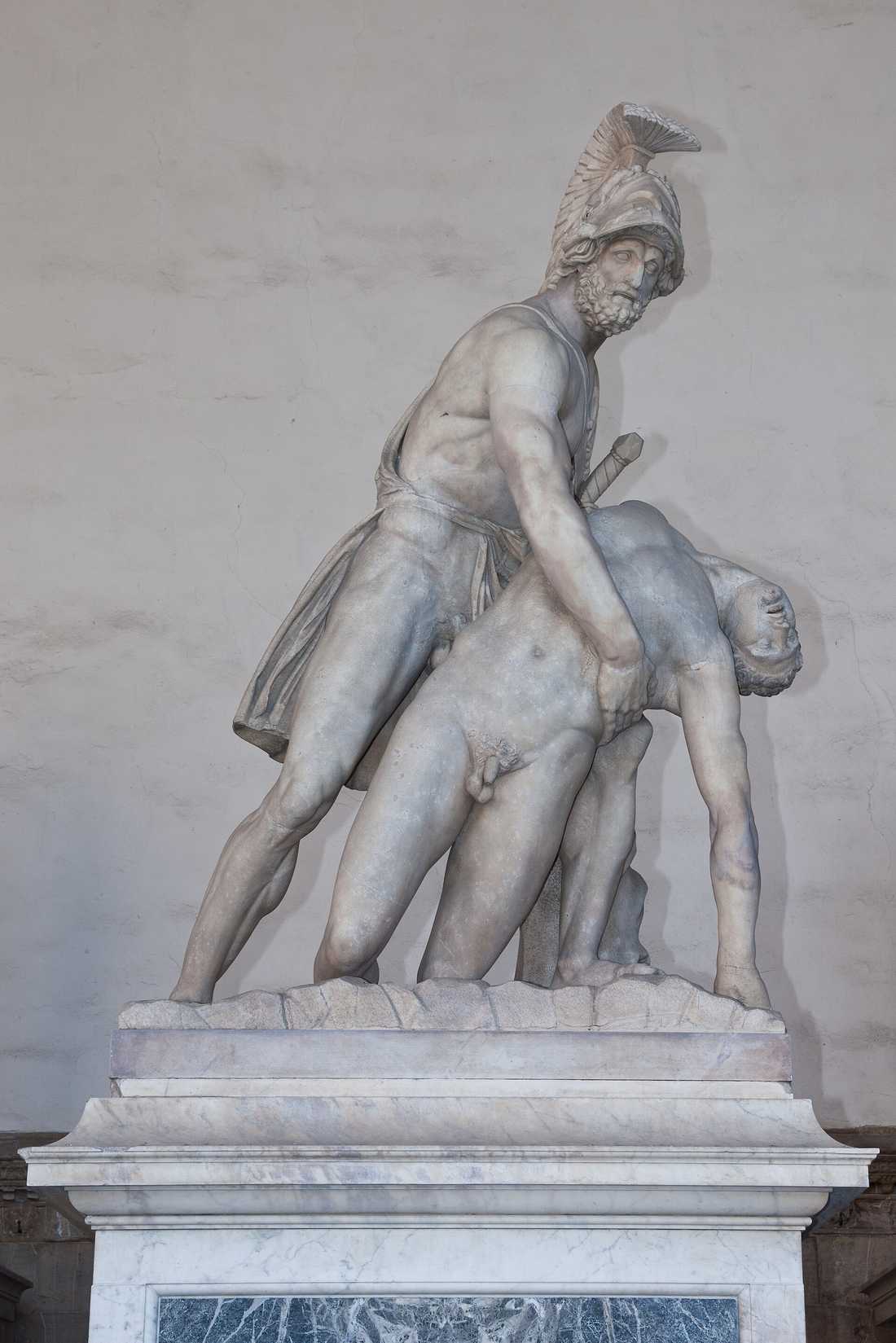
Menelaus stands in Greek myth as the king of Sparta and the younger brother of Agamemnon, the great king of Mycenae. Both were sons of Atreus, raised within a cursed royal line whose seat was the citadel above the plain of Argos. Menelaus married Helen, named the most beautiful woman in the world, and ruled Sparta at her side. His fate turned on her flight to Troy and on the war his brother raised to win her back. Follow the Spartan king and the quarrel that drew the whole of Greece into arms with My Greece Tours.
Menelaus ties the story of Sparta and Helen straight to the royal house of Mycenae through his brother, the war-leader whose stronghold commanded the great expedition. The Spartan king is no bystander in the legend but the wronged husband whose loss set the kings of Greece marching. The sections below cover his royal birth in the line of Atreus, his marriage to Helen, the abduction that sparked the ten-year conflict, his conduct in the long siege, and the homecoming that closed his tale. Weigh the whole quarrel against the ruins where his brother ruled with our Mycenae travel guide.
Who was Menelaus in the myth of Mycenae?
Menelaus was the king of Sparta in Greek myth and the younger brother of Agamemnon, the great king of Mycenae. Both were sons of Atreus, born into the cursed royal line whose seat was the citadel.
Menelaus belongs to the tragic royal family that dominates the later legend of Mycenae, a house marked by crime, revenge and doom across the generations. Greek tradition named him the son of Atreus and the younger brother of Agamemnon, the two princes who grew up together within a dynasty already stained by bloodshed. That shared birth placed Menelaus at the heart of the darkest myths the Greeks told about their oldest citadel. He was no minor figure at its edge but a king in his own right, close kin to the warlord who ruled the stronghold above the plain of Argos. His story runs through the same cursed inheritance that shaped his brother.
That shared fate bound the throne of Sparta to the halls of Mycenae by blood, a doom neither man could escape.
The bond that ties Menelaus most firmly to the citadel is his brotherhood with its king. The elder son of Atreus was Agamemnon, the great warlord who ruled Mycenae and later led the kings of Greece against Troy. Menelaus, the younger, took the throne of Sparta through his marriage, yet he never stood apart from his brother’s power. The two acted together in the crisis that defined them both, the elder commanding the war and the younger supplying its cause. Their partnership gives the legend of Mycenae much of its driving force, one brother the wronged husband and the other the mighty avenger.
Through Menelaus the story reaches south to Sparta and the fairest woman alive, while through his brother it stays anchored to the towering walls of the citadel that commanded the whole campaign.
How did Menelaus become king of Sparta and marry Helen?
Menelaus won the hand of Helen, the most beautiful woman in the world, and gained the throne of Sparta as her husband. Their marriage joined the line of Atreus to the ruling house of the southern kingdom.
Helen was celebrated across Greek legend as the most beautiful woman in the world, a princess whose hand every noble suitor of the age longed to win. Menelaus, younger son of the house of Atreus, prevailed in that contest and took Helen as his wife. Through the marriage he became king of Sparta, ruling the southern realm at her side rather than through his birth alone. The union raised the younger brother to a throne of his own, a match for the power his elder brother held at Mycenae. This marriage sat at the centre of his fortunes and his fame.
It gave him a kingdom, a queen renowned throughout the Greek world, and a place among the foremost rulers of the heroic age. All of it rested on the most sought-after woman in the legend.
The wider royal story behind the match runs back through the twisted line that produced both brothers. The founder of their dynasty was Pelops, whose sons Atreus and Thyestes tore the family apart with rivalry and revenge in the generation before. Out of that poisoned inheritance came Agamemnon and Menelaus, the two princes who rose to command Mycenae and Sparta between them. The marriage to Helen crowned the younger brother’s rise and knit the fortunes of the two kingdoms even closer. It also planted the seed of the war to come, since a bride so beautiful and so coveted drew the eyes of men far beyond the borders of Greece.
The throne Menelaus gained through Helen carried within it the quarrel that would one day empty every hall in the land of its fighting men.
How did Helen’s flight to Troy bring Mycenae to war?
Paris, prince of Troy, carried Helen away to his city, and Menelaus turned to his brother at Mycenae. Agamemnon summoned the kings of Greece to war, launching the ten-year siege fought to win Helen back.
The peace of Sparta shattered when Paris, a prince of Troy, came as a guest to the court of Menelaus and carried his queen away across the sea. The abduction of Helen struck at the honour of the Spartan king and at the sacred bond of host and guest the Greeks held so dear. Menelaus, robbed of his wife, did not answer the outrage alone. He turned north to the greatest power in the land, the citadel of Mycenae and the brother who ruled it. That appeal set the whole tragic machinery of the legend in motion.
The wrong done to one king in the south became the cause of the mightiest expedition the heroic age would ever mount. All of it flowed from the flight of the fairest woman in the world to the walls of Troy.
The response to that appeal turned a private wrong into a war of nations. Agamemnon summoned the kings of Greece to arms and led them against Troy in the long conflict remembered as the Trojan War, a siege that ground on for ten years beneath the enemy walls. The stronghold of Mycenae stood as the seat of that command, the base from which the great warlord marshalled the fleets and armies of the mainland. Menelaus, the injured husband, fought in the host his brother raised, his loss the very reason the ships had sailed.
The quarrel that began in the halls of Sparta thus reached its full weight only through the power of the citadel, where the war-leader gathered every king who owed him faith and hurled them across the sea to fight.
How did Menelaus fight in the ten-year siege of Troy?
Menelaus fought bravely through the long siege as one of the leading Greek warriors. Homer’s tale set him against Paris in single combat, the wronged husband facing the man who had stolen his wife across the field.
Menelaus took his place among the foremost fighters of the Greek host through the ten years the siege dragged on. The great poem of the war set him in the thick of combat. He stood as a brave and steady warrior in the front rank, beside the other kings his brother had summoned. His role carried a weight none of the others bore. The whole war had been fought on his behalf, waged to right the wrong done to him in his own hall. That personal stake ran through every clash he entered before the enemy walls. The Spartan king was not merely one leader among the assembled host.
He was the man whose loss had launched the thousand ships, fighting through the long years to recover the queen carried from his side to the towers of the distant city.
The sharpest moment of his war came in single combat, when he faced Paris himself upon the plain between the armies. The poem set the wronged husband against the prince who had stolen his wife, a duel meant to settle the whole quarrel between the two peoples in one fight. Menelaus pressed the combat hard and had the better of his rival before the gods intervened to snatch Paris from the field. This meeting of the two men drew the entire cause of the war into a single scene, the injured king and the guest who had betrayed him.
The struggle before Troy carried forward the same doom that hung over his brother’s house at Mycenae, a family whose story of the House of Atreus ran through crime, war and revenge from one generation to the next.
How did the homecoming of Menelaus differ from Mycenae’s king?
The fall of Troy freed Menelaus to reconcile with Helen and sail for home. His voyage to Sparta ran long and wandering, yet he regained his kingdom and lived on with his queen, unlike his doomed brother.
The fall of Troy closed the ten-year war and brought Menelaus to the goal he had fought so long to win. Greek tradition told how he was reconciled with Helen after the city fell, taking back the wife whose flight had launched the whole campaign. The recovery of his queen set the Spartan king apart from his brother, whose homecoming ran a far darker course. The warlord of Mycenae returned to murder and ruin. Menelaus regained the woman at the heart of his story and a share of peace at the end of the struggle. His fate offered the legend one of its rare notes of restoration.
He was a king who lost his wife to a foreign prince and won her back through the greatest war the heroic age had known, then turned for home.
The road back to Sparta proved long and full of wandering before it reached its end. Greek story sent Menelaus far off course on the voyage home, drifting through distant lands and seas before he finally regained his own kingdom. He reached Sparta in the end and lived on as its king with Helen at his side, the pair reunited after the years of war and exile. His homecoming stood in stark contrast to the fate that met his brother, whose return brought him death at the hands of his own queen, Clytemnestra, in the halls of Mycenae. The two brothers, born of the same cursed line, met opposite ends.
The elder was cut down in his own citadel, the younger restored to his throne and his wife in the southern kingdom he had ruled through her from the first.
Frequently Asked Questions
How is Menelaus connected to Mycenae if he ruled Sparta?
Menelaus ruled Sparta, yet his bond to Mycenae runs deep through his blood and his cause. He was the younger son of Atreus and the brother of Agamemnon, the great king who held the citadel above the plain of Argos. The two princes grew up together within the same cursed royal line, so Menelaus belonged to the house of Mycenae by birth even though he gained his own throne in the south through marriage. The link grew stronger still when Helen was carried off to Troy. Menelaus turned to his brother at Mycenae for help, and the warlord answered by raising the whole of Greece to war.
The citadel thus became the base and command centre of the campaign fought to recover the Spartan queen. Through brotherhood and through the war his loss set in motion, Menelaus ties the story of Sparta and Helen directly to Mycenae. The royal house and towering walls were the seat of the power that fought on his behalf.
Why did the abduction of Helen lead to such a vast war?
The flight of Helen struck at more than the pride of one king, which is why it drew all of Greece into arms. Helen was the most beautiful woman in the world, and the suitors who had once sought her hand were bound by an oath to defend the man who won her. Paris carried her from Sparta, and that broken oath called the kings of Greece to the side of Menelaus. His brother Agamemnon, ruling from Mycenae, held the power to gather them, and he summoned the fleets and armies of the mainland for the expedition. The abduction also broke the sacred trust between host and guest, an offence the Greeks could not leave unanswered.
A private wrong done to the Spartan king thus became a war of nations, fought for ten long years beneath the walls of Troy. The scale of the conflict flowed from the fame of Helen, the reach of the citadel’s command, and the bonds of oath that tied every king to the cause.
Where can visitors see the world of Menelaus and the Trojan War today?
The legend of Menelaus lives on above all at the citadel of Mycenae, the seat of the brother who led the war fought on his behalf. The walls, the great gate and the royal tombs still crown the hill above the plain of Argos, marking the stronghold from which the expedition to Troy was commanded in the tale. A visit brings the whole story of the two brothers into focus, one the warlord of the citadel and the other the wronged king of Sparta. The finds recovered from the site, from golden masks to weapons and ornaments, are gathered close by. The Mycenae archaeological museum displays the objects that give the Bronze Age kingdom its flesh.
Standing among the ruins, a visitor sees the real citadel behind the myth, the place where Greek storytellers set the command of the war raised to win Helen back from Troy for the king of Sparta.